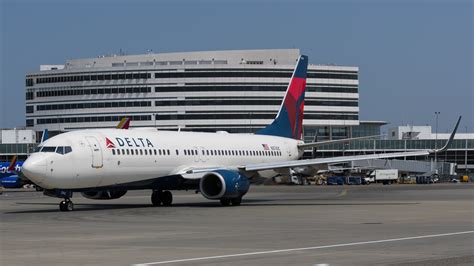
Delta Air Lines remains one of the strongest international carriers in the United States, yet several of its overseas routes are operating with surprisingly weak passenger demand. According to newly updated US Department of Transportation data covering the 12 months through January 2026, Delta carried approximately 29 million international passengers, outperforming major rivals such as American Airlines and United Airlines in overall load factor performance. Even so, a closer look at specific routes reveals a different story unfolding beneath the airline’s broader success.
While Delta filled an average of 84.8% of its international seats, some markets struggled to reach even two-thirds occupancy. A handful of routes operated barely above half full, exposing the risks associated with seasonal experimentation, leisure-heavy markets, and newly launched international services.
The data provides a fascinating snapshot into how modern airlines test routes, adjust capacity, and sometimes tolerate short-term losses while attempting to establish strategic long-haul connectivity.
For Delta, the emptiest international routes of 2026 are not necessarily failures. In many cases, they are calculated bets on future demand growth.
Delta’s weakest-performing international route was the newly launched service between Atlanta Hartsfield-Jackson International Airport (ATL) and St. Vincent. The route recorded a remarkably low 48.2% load factor, meaning fewer than half the available seats were occupied during the measured period.
The Caribbean destination welcomed just 5,250 round-trip passengers, a disappointing result considering Delta introduced the route to strengthen its leisure network from Atlanta. The service covers approximately 1,766 miles each way, making it a medium-haul international operation heavily dependent on vacation traffic.
Because the route only launched in December, the poor figures may partially reflect weak initial market awareness rather than long-term structural problems. Airlines frequently experience soft bookings during the opening months of a new destination, especially in smaller island markets where consumer demand develops gradually.
Still, filling under 50% of seats is difficult to ignore in an industry where profitability often depends on maximizing every available seat mile.
Another major underperformer was Delta’s route between New York JFK Airport and Lagos, Nigeria, which achieved a load factor of only 50.9%. Despite Lagos being one of Africa’s most important business and population centers, the route struggled to consistently attract passengers.
The service carried just 23,808 passengers during the reporting period. Delta initially restarted the route in December 2024 before suspending it again in March 2025. It later returned for the holiday travel season between December 2025 and January 2026.
This stop-start strategy reflects how airlines increasingly deploy aircraft seasonally to capture peak demand while avoiding losses during slower months. DOT figures showed that the route’s February 2025 load factor dropped to a disastrous 37.9%, before improving slightly to 49.1% in March.
Delta appears to have recognized that year-round operations were unsustainable. By limiting flights to the high-demand Christmas season, the carrier hopes to improve profitability while maintaining a presence in the Nigerian market.
Several Caribbean routes also appeared among Delta’s emptiest international services. Flights from JFK to Kingston, Jamaica, recorded a weak 54.3% load factor, while Los Angeles to Mazatlan, Mexico, achieved just 56.3%.
Neither route survived long within Delta’s network.
The JFK–Kingston operation ran between January 2024 and January 2026 before being discontinued. Meanwhile, the LAX–Mazatlan route lasted only from December 2024 through April 2025, highlighting how airlines rapidly terminate routes that fail to mature quickly enough.
These weak results underline the intense competition within leisure markets. Travelers heading to Caribbean and Mexican destinations often prioritize ticket price over airline loyalty, making it difficult for premium network carriers like Delta to sustain yields against ultra-low-cost rivals.
The situation becomes even more complicated when routes depend heavily on seasonal tourism. Flights may perform strongly during holidays and school breaks but struggle during off-peak periods.
Delta’s Miami to Havana route produced another surprisingly soft performance. Despite carrying over 118,000 passengers, the route filled only 56.8% of available seats.
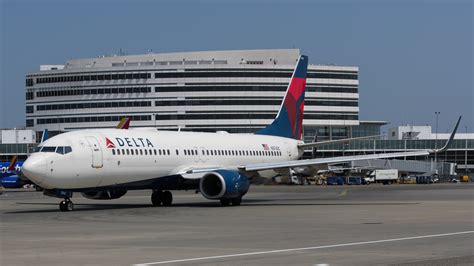
The airline has served Havana continuously since April 2023, initially operating primarily with twice-daily frequencies. However, the weak load factor forced Delta to scale back the service significantly. By mid-2026, the route had been reduced to a single daily flight using the carrier’s workhorse Boeing 737-800 fleet.
Cuba remains a uniquely challenging market for airlines. Political uncertainty, fluctuating tourism demand, operational restrictions, and fuel supply concerns all complicate scheduling decisions. Several Canadian airlines have suspended Cuban operations entirely because of local fuel shortages.
Delta’s solution has been relatively straightforward: tanker fuel into Havana from Miami, minimizing dependence on Cuban fuel infrastructure. While operationally effective, the approach adds costs and demonstrates how airlines sometimes maintain routes for strategic or political reasons despite weak commercial performance.
Two routes tied for Delta’s sixth-lowest load factor position at 61.4%: JFK to Barbados and Orlando to London Heathrow.
The Barbados service returned in December 2024 as a seasonal offering aimed at affluent winter travelers escaping colder climates in the northeastern United States. Although demand remained soft, Delta continues operating the route seasonally, suggesting management still sees long-term potential.
The Orlando–Heathrow route was perhaps the most unusual addition in Delta’s international network. Rather than functioning as a traditional Delta business route, it was designed to complement the airline’s transatlantic partnership with Virgin Atlantic.
Despite Heathrow’s importance as one of the world’s busiest premium travel hubs, Orlando’s leisure-heavy passenger mix created challenges for sustaining profitable yields. The route ultimately disappeared after failing to establish sufficient demand.
Other weak-performing international routes included JFK to Antigua, JFK to Grand Cayman, Atlanta to Grenada, and Atlanta to Accra, all recording load factors between 65% and 67%.
Importantly, most of these services had only recently resumed operations following pandemic-era disruptions or network restructuring. Airlines typically require multiple seasons to fully evaluate route viability, especially in international markets where travel patterns evolve slowly.

The broader picture surrounding Delta’s emptiest international routes reveals an airline aggressively experimenting with network flexibility rather than simply chasing short-term perfection. Seasonal scheduling, targeted leisure expansion, and selective long-haul resumptions all reflect a modern strategy focused on adaptability.
Even Delta’s weakest routes exist within a wider international operation that still outperforms many competitors. The airline continues maintaining one of the highest international load factors among major US carriers while simultaneously testing underserved destinations and niche seasonal markets.
In many ways, these lightly filled flights demonstrate the realities of today’s aviation industry. Airlines no longer expect every route to succeed immediately. Instead, they increasingly use flexible scheduling, temporary suspensions, and seasonal operations to probe markets without committing permanently.
Some of Delta’s emptiest international routes may eventually disappear entirely. Others could evolve into highly profitable niche services once demand matures.
For now, the numbers reveal a carrier balancing ambition with experimentation across an increasingly unpredictable global aviation landscape.