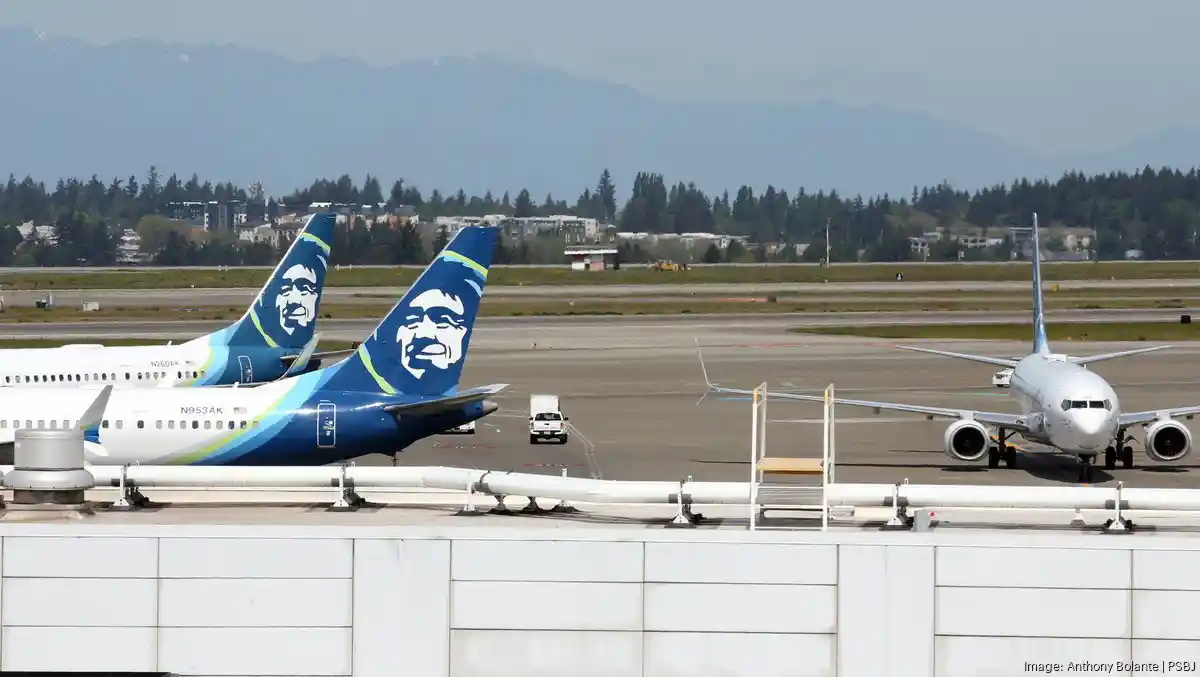
Alaska Airlines delivered a record-breaking performance in 2025, transporting 47.1 million passengers and edging past its pre-pandemic peak. On the surface, the airline’s momentum appears unstoppable—buoyed by strategic expansion, a growing international footprint, and the integration of Hawaiian Airlines under a unified operational code. Yet beneath these headline achievements lies a more nuanced story: a network peppered with underperforming routes, some operating at barely 39% capacity.
This contrast between macro success and micro inefficiencies offers a rare glimpse into the real economics of airline route planning, where ambition, experimentation, and seasonal demand often collide.
The Reality Behind Alaska Airlines’ Load Factor Performance
Load factor—the percentage of seats filled on a flight—is one of the most critical indicators of airline efficiency. In 2025, Alaska Airlines posted an average load factor of 82.9%, rising slightly to 83.6% when excluding intra-Alaska flights. While respectable, this figure masks significant disparities across individual routes.
The most striking example is the Seattle–Vail route, which recorded a staggering low 39.4% load factor, making it the emptiest route in Alaska’s network.
This figure isn’t just low—it’s operationally alarming. Airlines typically aim for load factors above 75% to ensure profitability, depending on yield and cost structures. At 39%, even premium pricing struggles to compensate for the sheer volume of empty seats.
Seattle–Vail: A Bold Experiment That Fell Flat
The Seattle to Vail route, spanning 817 nautical miles, was launched in December 2024 as a pioneering nonstop connection. Prior to its introduction, no airline had attempted this direct pairing, making it a classic case of network experimentation.
However, timing proved critical. The route operated only during the winter season and had limited frequency, resulting in just 2,348 passengers carried. Its ultra-seasonal nature and niche demand profile severely constrained its performance.

Despite its weak debut, the route is scheduled to return in December 2026, signaling Alaska’s long-term confidence in premium leisure demand, particularly among ski travelers. The gamble? That future seasons will see stronger uptake as awareness builds.
Seasonal Routes Dominate the Bottom Rankings
A clear pattern emerges when analyzing Alaska’s weakest routes: seasonality plays a decisive role. Many of the lowest-performing services are tied to winter destinations, where demand is both concentrated and unpredictable.
San Diego–Vail ranks second, with a 43.7% load factor, closely mirroring Seattle–Vail in both structure and performance. Like its counterpart, it operates primarily during peak ski season, leaving aircraft underutilized outside narrow demand windows.
Similarly, San Diego–Jackson Hole—despite being in operation since 2020—posted a modest 55.1% load factor, largely due to increased capacity rather than falling demand. This highlights a crucial aviation truth: adding seats faster than demand grows inevitably dilutes load factor performance.
New Routes: Growth Comes at a Cost
Not all underperforming routes are seasonal. Some are simply too new to have matured.
Take San Diego–Phoenix, launched in August 2025. Despite carrying 56,908 passengers, the route achieved only a 52.4% load factor. Rapid frequency increases—from three to four daily flights—outpaced demand, leading to excess capacity.
This is a classic airline growth dilemma:
expand aggressively to capture market share, or scale gradually to maintain profitability.
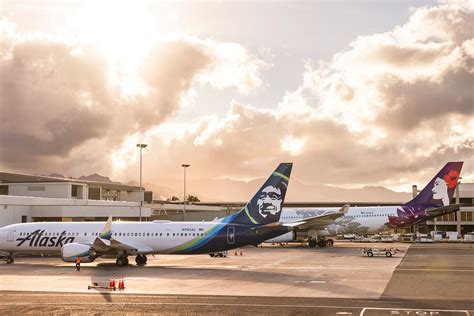
Alaska’s decision to ramp up quickly suggests a strategic priority on market dominance in key hubs like San Diego, even if short-term efficiency suffers.
Short-Haul and Niche Markets Under Pressure
Routes such as Santa Rosa–Palm Springs, with a 60.8% load factor, illustrate the challenges of thin, leisure-driven markets. These routes often rely on highly specific traveler segments—retirees, weekend tourists, or seasonal visitors—making demand inherently volatile.
Interestingly, Alaska replaced another carrier on this route, signaling confidence in its ability to succeed where others exited. However, early data suggests that stimulating consistent demand remains difficult, particularly on shorter sectors with limited business travel appeal.
International Ambitions Face Early Headwinds
Among Alaska’s international routes, Seattle–Nassau stands out as the weakest performer, recording a 61.9% load factor. Covering over 2,500 nautical miles, this route represented a bold expansion into Caribbean leisure markets.
Despite initial optimism, frequency reductions and eventual suspension in April 2025 highlight the realities of long-haul demand uncertainty, especially for a carrier still building its global brand recognition.
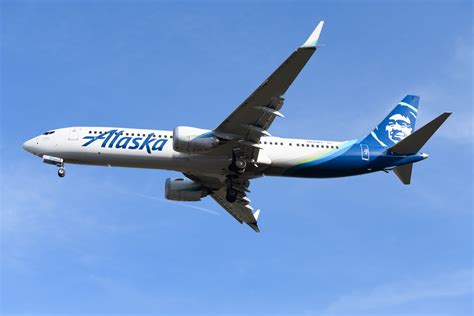
With Alaska preparing to launch transatlantic flights using the Boeing 737 MAX 8, these early lessons will be critical. Long-haul operations demand not only strong demand but also consistent yield and network connectivity—areas where underperformance can quickly become costly.
The Bottom 10: A Snapshot of Strategic Risk
Alaska Airlines’ ten emptiest routes collectively reveal a network in transition. Beyond the headline figures, they represent calculated risks taken in pursuit of long-term growth.
Key underperformers include:
- San José–Kahului (61.0%)
- San Diego–Denver (61.4%)
- Boise–Bozeman (61.6%)
- Kansas City–Puerto Vallarta (62.0%)
Each route tells a similar story: ambition outpacing immediate demand, often in competitive or emerging markets.
Why Empty Seats Don’t Always Mean Failure
It’s tempting to view low load factors as outright failures, but the reality is far more strategic. Airlines routinely accept short-term inefficiencies to achieve broader objectives, such as:
- Establishing brand presence in new markets
- Securing airport slots and competitive positioning
- Building long-term customer awareness
- Testing demand elasticity before scaling
In this context, Alaska’s emptiest routes are less about failure and more about strategic experimentation.
A Pivotal Year Ahead for Alaska Airlines
The year 2026 marks a turning point. The consolidation of Hawaiian Airlines flights under Alaska’s code, combined with the launch of transatlantic services, will dramatically reshape its network.
The key question is whether Alaska can convert experimental routes into sustainable revenue generators. Success will depend on precise capacity management, smarter scheduling, and the ability to align supply with increasingly fragmented demand patterns.
What’s clear is this: behind every half-empty flight lies a deliberate decision—a bet on future demand, evolving travel trends, and the airline’s ability to adapt faster than its competitors.
And in an industry where margins are razor-thin, those bets define who leads—and who lags—into the next decade.