
British Airways remains the dominant airline connecting Europe and the United States, carrying an enormous 7.4 million passengers between March 2025 and February 2026. Yet beneath that impressive scale lies a surprising reality: several of the carrier’s major US routes are flying with significant numbers of empty seats. While BA achieved an overall transatlantic load factor of 84.4%, some services performed dramatically below the airline’s average, exposing shifting passenger demand, aggressive competition, and evolving network strategies.
The updated figures from the US Department of Transportation reveal which British Airways routes struggled most during the examined 12-month period. The results highlight a fascinating contrast between historically strong leisure markets and the increasingly competitive dynamics of premium long-haul aviation.
British Airways’ weaker-performing routes also reveal broader trends affecting international airlines in 2026. Demand patterns have normalized after years of volatile post-pandemic travel behavior, but profitability pressures remain intense. Airlines are now balancing capacity with precision rather than simply chasing passenger volume.
The most striking figure in the report belongs to Tampa, where British Airways filled just 68.9% of available seats.

Tampa Becomes British Airways’ Weakest US Route
The route between London Gatwick and Tampa International Airport recorded the lowest load factor in British Airways’ US network. Across the year, nearly one-third of all seats went unsold, despite the airline transporting 142,899 round-trip passengers.
For a route that has existed since 1985, the decline is notable. Tampa was historically a stable Florida destination for British Airways, benefiting from strong leisure demand and relatively limited direct competition. That environment changed significantly when Virgin Atlantic launched its own Tampa flights from London Heathrow in 2022.
The arrival of a major rival transformed the market almost overnight. British Airways suddenly faced direct competition not only for leisure travelers heading to Florida beaches but also for premium passengers seeking Heathrow connectivity and stronger loyalty benefits.
Half of the months analyzed showed BA filling fewer than 70% of seats on the Tampa service. That is an unsustainable figure on a long-haul operation using large Boeing 777 aircraft configured with 336 seats.
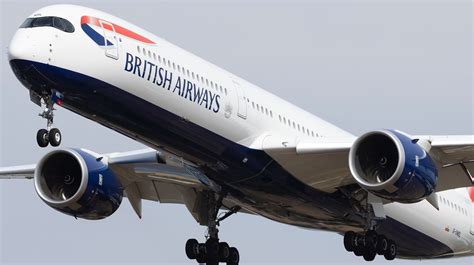
British Airways has already responded decisively. Beginning in October 2026, Tampa flights will move from Gatwick to Heathrow. The airline will also replace the high-capacity Boeing 777-200ER with the smaller Boeing 787-10, reducing available capacity by almost 25%.
The move is clearly designed to improve both load factors and revenue performance. Fewer seats combined with Heathrow’s stronger premium traffic base could significantly strengthen yields.
Ironically, Tampa is also reported to be Virgin Atlantic’s weakest-performing US route, suggesting the issue may simply be excessive market capacity rather than airline-specific weakness.
Atlanta’s Surprisingly Weak Performance Raises Questions
Among Heathrow routes, Atlanta produced the weakest load factor at just 74.9%. For one of the busiest airports in the world, that figure stands out sharply.
British Airways carried 124,642 passengers on the route, yet one out of every four seats remained empty. Compared to BA’s overall US average of 84.4%, Atlanta underperformed substantially.
The explanation largely comes down to competitive positioning.
Atlanta is Delta Air Lines’ fortress hub, and Delta operates four daily Heathrow flights alongside partner Virgin Atlantic. Together, the SkyTeam carriers dominate local premium traffic and corporate contracts. British Airways, by comparison, relies much more heavily on connecting passengers transferring through Heathrow.

That difference matters enormously in long-haul economics. Local point-to-point travelers generally pay higher fares than connecting passengers. Even if British Airways maintained reasonable passenger numbers, the route likely faced pricing pressure due to Delta’s overwhelming market presence.
Delta achieved an 83.7% load factor on Atlanta-Heathrow during the same period, significantly outperforming BA. Virgin Atlantic reached 78.1%, also ahead of British Airways.
The Atlanta market demonstrates how difficult it can be for even a global powerhouse like BA to compete against entrenched hub dominance in the United States.
Las Vegas And Washington Dulles Also Underperformed
British Airways’ Gatwick-to-Las Vegas service ranked as the third emptiest US route, filling just 75.9% of seats. The route carried only 41,043 passengers before BA eventually discontinued the service.
Las Vegas has become increasingly difficult for international airlines. The market is heavily seasonal, strongly leisure-oriented, and highly sensitive to economic fluctuations. Travelers heading to Las Vegas also tend to prioritize price over premium cabin experience, creating margin challenges for full-service carriers.
Washington Dulles performed somewhat better but still ranked fourth weakest overall with a 77.4% load factor. Despite transporting more than 406,000 passengers, the Heathrow route lagged behind BA’s wider network averages.
Houston Intercontinental rounded out the bottom five at 78.9%. Energy-sector travel traditionally supports Houston’s transatlantic market, but changing corporate travel patterns and fluctuating business demand appear to have weakened performance.
Orlando, Boston, Denver, And JFK Join The List
Several additional routes narrowly avoided falling below the 80% threshold.
London Gatwick to Orlando achieved an 80.1% load factor despite carrying over 302,000 passengers. Orlando remains a massive leisure market, but intense competition and price-sensitive tourism continue to suppress profitability across the sector.
Boston, often considered one of BA’s stronger US destinations, surprisingly appeared on the list with an 81.7% load factor. Heathrow-to-Boston transported nearly half a million passengers, showing that high passenger volume does not always translate into optimal seat utilization.
The now-discontinued Gatwick-to-New York JFK route recorded an 82.3% load factor. Although that figure might appear relatively healthy, it was evidently insufficient given the intense competition across the London-New York corridor, one of the world’s most contested aviation markets.
Denver also struggled at 82.7%, reflecting broader weakness among foreign airlines serving Colorado. Lufthansa, Air France, Turkish Airlines, and Edelweiss all reported relatively poor performance on Denver routes as well. High-altitude operations, seasonal demand swings, and capacity growth have created difficult conditions for international carriers.
New Orleans completed the top ten emptiest British Airways US routes with an 83.3% load factor.
British Airways Is Prioritizing Efficiency Over Expansion
The broader message behind the data is not that British Airways is failing across the Atlantic. Far from it. The airline still dominates Europe-US traffic volumes and maintains one of the world’s largest long-haul networks.
However, the era of indiscriminate capacity growth appears to be ending.
Instead, British Airways is increasingly focused on precision deployment: smaller aircraft, stronger hub optimization, and routes capable of generating higher premium revenue. The Tampa aircraft downgrade perfectly illustrates this strategy shift.
The airline’s evolving network decisions also reflect changing consumer behavior. Leisure demand remains strong overall, but passengers are spreading across more destinations while expecting lower fares. At the same time, corporate travel has not fully returned to pre-2020 patterns, reducing premium demand on some traditionally lucrative routes.
For British Airways, maintaining profitability now depends less on filling every seat and more on ensuring the right aircraft operates in the right market at the right time.