The story of Avelo Airlines is one of ambition meeting harsh market realities. Launched with the promise of connecting underserved cities with low fares, the airline carved out a niche in secondary airports and overlooked routes. Yet, beneath the surface of expansion lies a more sobering truth: some of its routes in 2025 struggled dramatically, with load factors plunging as low as 26.5%—a figure that signals not just underperformance, but structural miscalculations.
In a year where the broader US airline industry averaged a healthy 81.8% seat load factor, Avelo’s network-wide performance lagged behind at 75.8%, already below expectations. But averages conceal extremes. A closer examination reveals a cluster of routes that failed to attract sufficient demand, many of which were quietly discontinued within months.
What emerges is a revealing case study of how route planning, aircraft choice, timing, and market demand must align precisely—or risk leaving aircraft flying half empty across the skies.
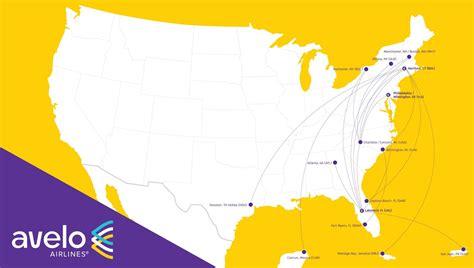
A Network Under Pressure: Growth That Failed to Translate
Avelo’s passenger growth tells a restrained story. In 2025, the airline carried 2.6 million passengers, an increase of just 15% compared to 2023. While growth is growth, the pace appears modest—especially when compared to competitors that scaled far more aggressively during the same period.
The issue wasn’t just expansion—it was where and how that expansion happened. Many routes were launched into markets with uncertain demand, often connecting smaller cities that lacked strong, consistent passenger flows. While the strategy aimed to avoid competition, it also meant operating in environments where demand could collapse quickly.
Compounding this challenge was Avelo’s reliance on Boeing 737 aircraft, which, while efficient, bring a relatively high seat count. Filling nearly 150 seats on thin routes is no small feat. When demand doesn’t materialize, the result is painfully visible in load factors.
The Bottom 10: Routes That Couldn’t Survive
Avelo’s weakest routes in 2025 form a pattern of short-lived experiments. Each route listed below operated briefly before being discontinued, highlighting the airline’s willingness to cut losses quickly—but also underscoring misjudgments in planning.
- Tweed New Haven – Portland (Maine): 26.5% load factor
- Wilmington (DE) – Atlanta: 37.2%
- Wilmington (DE) – Concord: 39.0%
- Wilmington (NC) – Houston Hobby: 40.3%
- Lakeland – Islip: 44.3%
- Concord – Hartford: 45.6%
- Concord – West Palm Beach: 46.8%
- Tweed New Haven – Traverse City: 49.5%
- Ontario – Santa Rosa: 50.4%
- Raleigh/Durham – Montego Bay: 52.5%
These figures are more than statistics—they represent routes where aircraft often departed with more empty seats than occupied ones. In a business built on maximizing seat utilization, such performance is unsustainable.
The Most Extreme Case: 26.5% Load Factor Explained
The most striking example is the route between Tweed New Haven and Portland, Maine. At just 183 nautical miles, this route was unusually short for jet operations. In practical terms, the journey could be completed by car in roughly four hours—hardly a compelling alternative for travelers when factoring in airport procedures.
Operating twice weekly, the route offered 8,940 seats over the summer season, yet only 2,368 passengers flew. That translates to roughly 28 passengers per flight on a 149-seat aircraft.
The underlying issue wasn’t just weak demand—it was a mismatch between product and market. A route this short struggles to justify air travel unless it offers significant time savings or unique convenience. In this case, it offered neither.
When Geography Works Against You
Several of Avelo’s weakest routes share a common trait: they connect secondary or tertiary cities without strong business or tourism ties. While the idea of linking underserved markets is appealing, it relies heavily on latent demand—demand that doesn’t always exist.
Routes like Wilmington (Delaware) to Concord or Lakeland to Islip illustrate this challenge. These city pairs lack the population density, corporate travel demand, or established tourism flows needed to sustain regular flights. Without these pillars, airlines must rely on price-sensitive leisure travelers, who are often inconsistent and unpredictable.
Even when fares are low, passengers won’t fly simply because a route exists. Travel demand is driven by purpose—family, business, or tourism—and without a strong reason to travel, seats remain empty.
Aircraft Size: A Silent Contributor to Low Loads
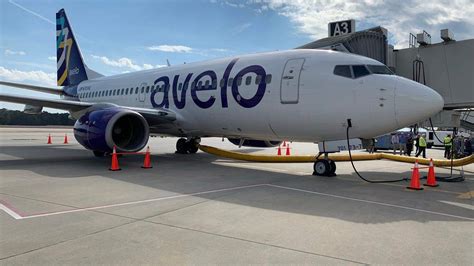
Avelo’s use of the Boeing 737-700 plays a subtle but critical role in these outcomes. With approximately 149 seats, the aircraft is efficient when filled—but unforgiving when demand is weak.
Smaller aircraft, such as regional jets, would allow airlines to match capacity more closely to demand. However, operating a single aircraft type simplifies maintenance and training, reducing costs elsewhere. Avelo chose efficiency at scale—but on thin routes, that decision magnified the visibility of low demand.
When only 30–50 passengers board a jet designed for 149, the economics quickly become unfavorable.
International Ambitions That Didn’t Last
Avelo’s challenges weren’t confined to domestic routes. Its brief foray into international flying tells a similar story of ambition curtailed by reality.
Routes from Hartford and Raleigh/Durham to Caribbean destinations such as Montego Bay and Punta Cana were launched with optimism but ended within a year. Among them, the Raleigh/Durham to Montego Bay route recorded a 52.5% load factor, making it one of the better performers on this list—yet still insufficient.
External factors also played a role. Weather disruptions, including a major hurricane, impacted demand and operations. However, even without such disruptions, sustaining international leisure routes requires consistent demand and strong brand presence—both difficult for a young airline to establish quickly.

Why These Routes Failed: A Clear Pattern Emerges
The data reveals several recurring themes behind Avelo’s weakest routes:
- Insufficient demand in secondary markets
- Overcapacity relative to passenger volume
- Limited differentiation from alternative travel options
- Seasonal or inconsistent traveler interest
- External disruptions impacting fragile routes
These factors combined to create a perfect storm where even low fares couldn’t stimulate enough demand to fill seats.
Strategic Lessons for Low-Cost Carriers
Avelo’s experience offers broader insights into the challenges of ultra-low-cost expansion. While avoiding major hubs reduces competition, it also removes access to large, reliable passenger pools. Success in such markets requires precise targeting, flexible capacity, and often, patience.
The rapid discontinuation of underperforming routes suggests that Avelo is learning quickly. Cutting losses early prevents prolonged financial strain, allowing the airline to redeploy resources more effectively.
Yet the lesson is clear: not every underserved market is an opportunity. Some are underserved for a reason.
A Turning Point or a Temporary Setback?
Despite these setbacks, Avelo’s story is far from over. The airline continues to adjust its network, refine its strategy, and explore new opportunities. The introduction of smaller, more efficient aircraft in the future could help align capacity with demand more effectively.
What 2025 ultimately represents is not failure, but experimentation—albeit costly experimentation. In the volatile world of aviation, even missteps contribute to long-term success if the lessons are absorbed.
For Avelo, the path forward depends on striking a delicate balance: maintaining its identity as a low-cost disruptor while ensuring that its routes are grounded in sustainable demand. The skies may be vast, but not every path through them leads to profitability.