Southwest Airlines built its reputation on domestic dominance, efficient operations, and a loyal customer base that values simplicity over luxury. Yet beyond US borders, the airline’s international expansion has revealed a more fragile reality. A closer look at its least-filled routes in 2025 exposes a network stretched across uneven demand, limited frequency strategies, and shifting traveler preferences. While the airline achieved a respectable overall international load factor of 81.4%, these figures conceal a set of underperforming routes that struggled to even approach profitability.
Twelve years after launching its first international flights in July 2014, Southwest’s global footprint remains modest. Out of its vast passenger base, only 2.4% traveled internationally in 2025. That imbalance matters. International flying demands different economics, longer planning cycles, and stronger route-specific demand. When those conditions aren’t met, even a well-run airline can see seats go empty.
Colorado Springs–Cancun: A Record-Setting Underperformer
The weakest link in Southwest’s international network was the Colorado Springs–Cancun route, which posted a strikingly low 42.9% load factor. This was not just a marginal underperformance—it was a structural failure in demand generation. With only 1,725 passengers carried, the route highlighted a fundamental mismatch between capacity and local market needs.
Colorado Springs had never seen sustained international service at this scale, and while Cancun is a proven leisure destination, proximity to Denver proved decisive. Travelers overwhelmingly chose Denver International Airport for its broader flight options, better schedules, and competitive fares. The convenience gap was simply too large to overcome.
Seasonality compounded the issue. Operating primarily on Saturdays during peak summer months, the route lacked consistency. Limited frequency meant fewer booking options, making it less attractive for travelers seeking flexibility. By early 2026, the route quietly disappeared from schedules—an expected outcome for a service that never gained traction.

Tampa–Havana: Declining Demand in a Volatile Market
Tampa–Havana ranked as the second weakest route, with a load factor of 53.9%. Unlike Colorado Springs–Cancun, this was not a new experiment but a long-standing service dating back to 2016. Its decline reflects broader geopolitical and economic realities affecting US–Cuba travel.
Capacity increased slightly in 2025, but passenger numbers dropped significantly. This imbalance drove load factors downward, signaling a classic case of overcapacity in a shrinking market. Regulatory uncertainty, limited tourism infrastructure in Cuba, and changing traveler sentiment all contributed to weakening demand.
Southwest attempted to stabilize performance by cutting frequencies in late 2025. The result was a modest improvement, with load factors rising to 65.6% in the final months of the year. Even so, the route remained far below the threshold needed for long-term sustainability.
Kansas City–Montego Bay and Other Underperforming Routes
Kansas City–Montego Bay ranked third, with a 60.4% load factor and just over a thousand passengers. Despite being Kansas City’s first regular Caribbean connection, the route struggled to build consistent demand. The novelty of international access did not translate into sustained bookings, particularly when travelers could connect through larger hubs.
Atlanta–Cancun followed at 63.8%, while San Diego–Los Cabos reached 65.0%. Both routes serve popular leisure markets, yet their performance suggests oversaturation and intense competition. Cancun and Los Cabos are heavily served by multiple airlines, giving travelers abundant choices. In such environments, Southwest’s limited frequency and lack of premium offerings can weaken its competitive position.
The reduction of Atlanta–Cancun flights in 2026 underscores a broader trend: trimming capacity to align with realistic demand levels rather than pursuing aggressive expansion.

Mid-Tier Strugglers: Marginal Gains, Persistent Weaknesses
Routes ranked sixth through tenth reveal a different pattern—not outright failure, but persistent underperformance. Orange County–Puerto Vallarta achieved a 69.5% load factor, followed closely by Fort Lauderdale–Montego Bay at 69.7%. Cancun–New Orleans, Baltimore–Los Cabos, and Orlando–Grand Cayman all hovered between 70% and 72%.
These figures are not disastrous, but they fall short of optimal efficiency. Airlines typically aim for load factors above 80% to maximize profitability, particularly on international routes with higher operational costs. Sitting below that threshold means reduced margins and increased vulnerability to market fluctuations.
Interestingly, most of these routes were launched in 2023, suggesting that newer international services may require longer maturation periods. However, Fort Lauderdale–Montego Bay stands out as an exception—it failed to improve despite reduced frequency and was ultimately discontinued.
The Hidden Challenge of Connectivity
One overlooked factor behind these weak performances is connectivity. Southwest’s network is built around point-to-point operations rather than traditional hub-and-spoke systems. While this works well domestically, it creates challenges internationally.
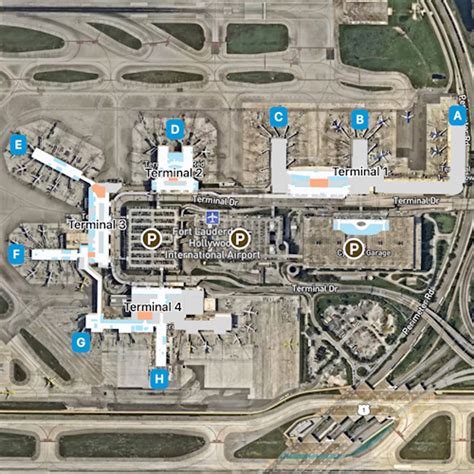
For example, nearly half of the passengers on Fort Lauderdale–Montego Bay were connecting travelers. Yet Fort Lauderdale is not a major connecting hub for Southwest, limiting its effectiveness as a transfer point. Passengers often faced indirect itineraries, longer travel times, and fewer scheduling options.
In some cases, travelers flew significantly longer routes to reach their destination due to the lack of nonstop alternatives. This inefficiency reduces the overall appeal of Southwest’s international offerings, especially when competitors provide more seamless connections.
Why Load Factor Alone Doesn’t Tell the Full Story
While load factor is a critical metric, it does not capture the full economic picture. A route with a lower load factor can still be viable if yields are high, while a fuller flight may underperform financially if ticket prices are too low. However, when load factors dip below 60%, as seen on several of these routes, it becomes increasingly difficult to justify continued operations.
Southwest’s international strategy appears to be evolving in response. Rather than expanding aggressively, the airline is refining its network—cutting weak routes, reducing frequencies, and focusing on markets with stronger demand fundamentals.
A Network in Transition
The story of Southwest’s emptiest international routes is not one of failure, but of recalibration. International expansion presents unique challenges, from competition and seasonality to geopolitical influences and infrastructure limitations. These ten routes illustrate the complexity of finding the right balance between ambition and sustainability.
As Southwest moves into 2026, its approach is becoming more measured. New routes are being added cautiously, while underperforming ones are trimmed or restructured. The airline’s core strength remains its domestic network, but its international ambitions are far from over.
What these underfilled flights reveal is not just where demand fell short, but where strategy must evolve. In a market where every seat counts, precision—not expansion—will define the next phase of Southwest’s international journey.