
John F. Kennedy International Airport remains one of the world’s most coveted international gateways. As New York City’s premier global aviation hub, JFK connects travelers to every inhabited continent and serves as a critical entry point to the United States. Yet despite its prestige and enormous passenger demand, not every long-haul route enjoys strong occupancy rates. Between March 2025 and February 2026, several international services departing from and arriving at JFK posted surprisingly weak load factors, revealing the challenges airlines face in one of the most competitive aviation markets on earth.
According to data from the U.S. Department of Transportation, the average load factor across JFK’s long-haul network stood at approximately 83.2%. However, a select group of routes performed far below that benchmark, with some flights operating barely half full. These figures highlight the complex realities of international aviation, where market demand, competition, geopolitical developments, seasonality, and network strategy can significantly impact performance.
The data provides a fascinating look into which carriers are struggling to attract enough passengers and which destinations may require airlines to rethink their long-term strategies.

Kuwait Airways’ New York–Kuwait Route Recorded the Lowest Load Factor
At the bottom of the rankings sits Kuwait Airways’ service between New York-JFK and Kuwait International Airport (KWI). During the analyzed period, the route achieved a load factor of only 50.63%, making it the emptiest long-haul route operating from JFK.
The airline scheduled 112,808 seats across the route, but barely half were occupied. Such a figure is particularly striking when compared to JFK’s long-haul average. While Kuwait Airways maintains an important connection between North America and the Gulf region, the numbers suggest demand has not matched available capacity.
Several factors may contribute to this performance. Competition from major Gulf carriers, including Emirates, Qatar Airways, and Etihad Airways, provides travelers with extensive one-stop connectivity throughout Asia, Africa, and the Middle East. Meanwhile, direct demand between New York and Kuwait remains relatively niche compared with larger Gulf markets.
The route’s performance demonstrates how even strategically important international services can struggle when faced with intense competition and limited local demand.
African Routes Occupy Two of the Bottom Three Positions
The second and third emptiest long-haul routes at JFK were both African services.
Delta Air Lines’ route to Lagos, Nigeria (LOS) posted a load factor of 57.57% while offering 18,173 seats. Lagos represents one of Africa’s most important economic centers, but the route’s relatively weak performance illustrates the challenges airlines face in balancing capacity with fluctuating demand patterns.
Close behind was Ethiopian Airlines’ service from Addis Ababa (ADD) via Abidjan (ABJ). The route recorded a load factor of 57.92% across 72,677 seats.
Despite these numbers, Ethiopian Airlines continues to demonstrate confidence in the New York market. The carrier has repeatedly emphasized its commitment to JFK and future growth opportunities, particularly through enhanced facilities and connectivity. Its planned move into JFK’s new Terminal One reflects a long-term investment strategy aimed at strengthening passenger experience and expanding its North American footprint.

European Routes Dominate the Middle of the Ranking
While African and Gulf routes occupy several of the lowest positions, Europe accounts for much of the middle section of the list.
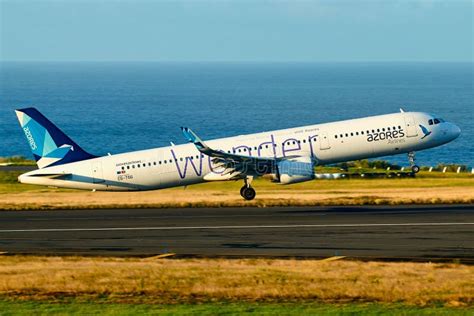
The fourth-emptiest route was operated by Azores Airlines between JFK and Terceira (TER). The service achieved a load factor of 63.71% based on 6,286 seats. Although the Azores maintain strong cultural connections with communities in the northeastern United States, demand remains highly seasonal.
Fifth place belonged to Air Serbia’s daily service between Belgrade (BEG) and New York-JFK. The route recorded a load factor of 66.56% while offering 87,227 seats. Despite remaining one of the few direct links between the Balkans and the United States, passenger demand has not consistently filled the airline’s Airbus A330 fleet.
Between those two routes sat Delta Air Lines’ service to Dakar’s Blaise Diagne International Airport (DSS) in Senegal, which achieved a load factor of 67.98% across 52,853 seats.
The appearance of multiple European and African routes in this section reflects the delicate balance airlines must maintain when serving smaller international markets from major hubs like JFK.
Azores Airlines Appears Twice Among the Weakest Performers
One of the most notable findings from the data is the presence of two Azores Airlines routes within the ten emptiest long-haul services.
In addition to Terceira, the carrier’s route to Ponta Delgada (PDL) ranked seventh with a load factor of 68.27% based on 43,945 seats.
Although these figures may appear disappointing compared with JFK averages, the routes serve highly specialized markets driven by diaspora traffic, tourism, and seasonal demand. Such services often experience significant fluctuations throughout the year, particularly outside peak summer travel periods.
Current schedules indicate that Ponta Delgada remains operational, with the airline continuing regular Airbus A321neo flights between the Azores and New York.
Gulf Air Faces Challenges on Its Bahrain Service
Eighth place in the ranking belongs to Gulf Air’s route between New York-JFK and Bahrain (BAH).
The relatively new service posted a load factor of 68.35% across 24,671 seats. While Bahrain serves as an important regional financial center, attracting consistent long-haul traffic remains challenging.
The route continues operating despite geopolitical uncertainty across parts of the Middle East. Gulf Air appears committed to maintaining its North American presence and strengthening connectivity between Bahrain and major U.S. markets.
For airlines launching new intercontinental routes, lower load factors are not always unusual during the early stages of network development. Building awareness and establishing customer loyalty often requires several years before traffic reaches sustainable levels.
Cairo and Palermo Complete the Bottom Ten
The final two positions on the list were separated by an extremely narrow margin.
EgyptAir’s service between Cairo (CAI) and New York-JFK achieved a load factor of 69.62% while offering 83,350 seats. The route remains a critical link between Egypt and the United States and continues to be served by modern widebody aircraft, including the Airbus A350 and Boeing 787 Dreamliner.
Meanwhile, Italian carrier Neos recorded a load factor of 69.84% on its route between Palermo (PMO) and New York-JFK, based on 15,371 seats.
Although both routes fell below the 70% threshold, their performance remained considerably stronger than the bottom-ranked Kuwait Airways service.
JFK’s 10 Emptiest Long-Haul Routes (March 2025 – February 2026)
| Rank | Airline | Route | Load Factor |
|---|---|---|---|
| 1 | Kuwait Airways | Kuwait (KWI) | 50.63% |
| 2 | Delta Air Lines | Lagos (LOS) | 57.57% |
| 3 | Ethiopian Airlines | Addis Ababa (ADD) via Abidjan (ABJ) | 57.92% |
| 4 | Azores Airlines | Terceira (TER) | 63.71% |
| 5 | Air Serbia | Belgrade (BEG) | 66.56% |
| 6 | Delta Air Lines | Dakar (DSS) | 67.98% |
| 7 | Azores Airlines | Ponta Delgada (PDL) | 68.27% |
| 8 | Gulf Air | Bahrain (BAH) | 68.35% |
| 9 | EgyptAir | Cairo (CAI) | 69.62% |
| 10 | Neos | Palermo (PMO) | 69.84% |
What These Load Factors Reveal About the JFK Market
The data underscores a reality often overlooked by casual observers: operating flights to New York does not guarantee success. JFK may be one of the world’s most desirable aviation destinations, but it is also among the most fiercely contested.
Routes serving niche markets, seasonal leisure destinations, emerging business corridors, or regions facing geopolitical uncertainty frequently encounter demand challenges. Nevertheless, many airlines continue operating these services because they fulfill broader strategic objectives, support network connectivity, strengthen brand presence, or serve important diaspora communities.
As JFK continues expanding its infrastructure and attracting new international carriers, the airport’s competitive environment is unlikely to become any easier. The routes appearing on today’s list offer a compelling snapshot of the complex economics shaping long-haul aviation and demonstrate that even at one of the world’s busiest airports, filling seats remains one of the industry’s greatest challenges.