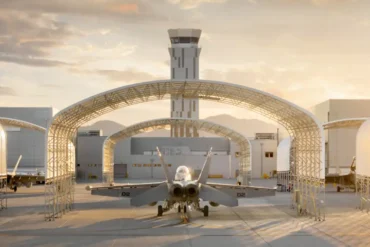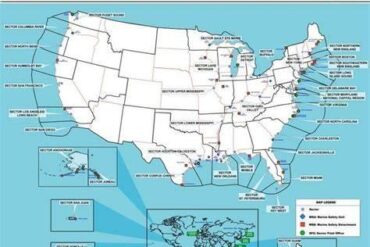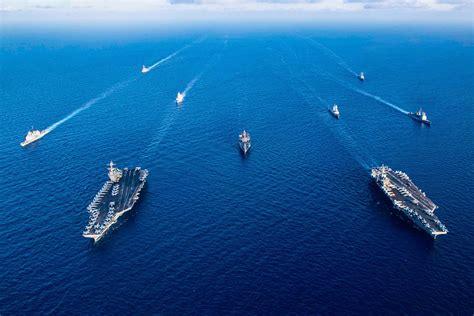
America’s aircraft carriers may spend months at sea, but the aircraft that make them effective depend on a vast network of shore facilities long before they reach a flight deck. In 2026, U.S. naval aviation remains a highly distributed enterprise, with fighter squadrons, electronic-warfare units, test organizations, aggressor aircraft, logistics platforms, and carrier air-wing staffs operating from specialized installations across the country. These bases are where aircraft are maintained, pilots are trained, new technologies are validated, and crews prepare for the demanding cycle of carrier deployment.
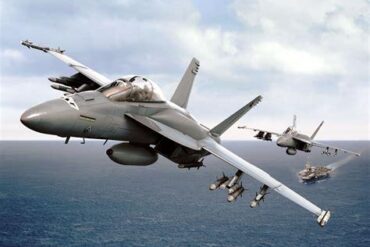
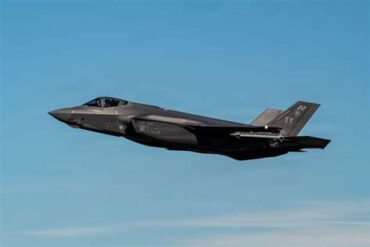
The centerpiece of the carrier air wing remains the F/A-18E/F Super Hornet, a multirole strike fighter that continues to provide the bulk of the Navy’s carrier-based tactical aviation. Alongside it, the F-35C Lightning II is expanding the stealth and sensor capabilities available to carrier strike groups. The transition is particularly visible at Naval Air Station Lemoore, where the Navy concentrates much of its Super Hornet and F-35C force. Official Navy information identifies Lemoore as the home of Commander Strike Fighter Wing Pacific and the Joint Strike Fighter Wing, while F-35C squadrons continue to grow there.
Yet carrier aviation is about far more than fighter jets. A carrier air wing needs electronic attack, airborne early warning, logistics, test and evaluation, adversary training, maintenance, and weapons development. That is why installations such as NAS Whidbey Island, Chambers Field at Naval Station Norfolk, NAS Fallon, NAS Key West, and NAS Patuxent River matter just as much as the major fighter bases. Together, they create a shore-based ecosystem that allows carrier aviation to remain ready for another deployment.
NAS Lemoore: The Center of U.S. Navy Strike Fighter Power
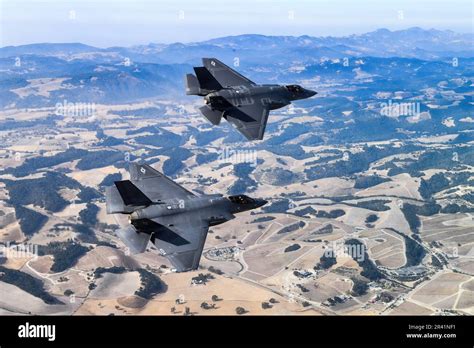
Located in California’s Central Valley, Naval Air Station Lemoore is arguably the most important shore installation for the Navy’s carrier strike-fighter community. Its inland location may seem unusual for an organization built around aircraft carriers, but the geography provides a major advantage: enormous airspace, extensive training areas, and comparatively fewer conflicts with dense coastal commercial aviation.
Lemoore was selected as the Navy’s central West Coast home for its Super Hornet force, and the installation has since become the principal home of Pacific Fleet strike-fighter aviation. Official Navy facilities information says the station hosts 16 operational strike-fighter squadrons, two fleet replacement squadrons, a search-and-rescue squadron, and four West Coast carrier air-wing commands and staffs. It also records roughly 210,000 flight operations annually, illustrating the extraordinary tempo required to keep carrier aircraft and crews proficient.
The transition toward fifth-generation carrier aviation is equally important. Lemoore is the Navy’s principal F-35C installation, with the Joint Strike Fighter Wing responsible for generating combat-ready F-35C squadrons. Fleet Replacement Squadron VFA-125 trains pilots for the F-35C, while operational squadrons such as VFA-86 and VFA-97 operate the stealth fighter from Lemoore. In February 2026, VFA-115 also completed its transition to the F-35C, demonstrating how the installation is becoming increasingly central to the Navy’s fifth-generation carrier force.
Lemoore’s importance therefore goes beyond simply housing aircraft. It is a readiness engine for the Pacific carrier fleet. Pilots can conduct demanding training sorties over large military operating areas, maintenance crews can work within a concentrated aviation community, and replacement pilots can transition onto carrier aircraft without the logistical complexity of operating from an urban coastal base. The result is a specialized ecosystem designed around keeping carrier strike fighters ready to move from California to an aircraft carrier thousands of miles away.
NAS Oceana: The East Coast Super Hornet Stronghold
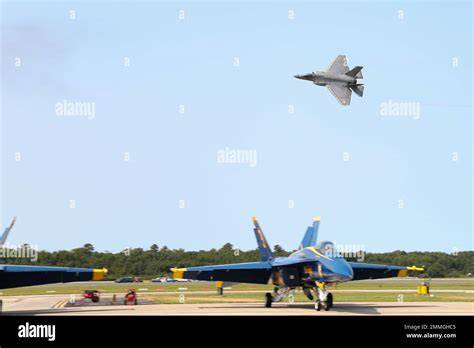
If Lemoore is the heart of West Coast strike-fighter aviation, Naval Air Station Oceana performs a comparable role on the Atlantic side. Situated in Virginia Beach, Virginia, Oceana is the Navy’s principal East Coast master jet base and the headquarters location for the Atlantic strike-fighter community.
The installation is home to numerous F/A-18E/F Super Hornet squadrons supporting multiple carrier air wings. Navy squadron information confirms that units including VFA-11, VFA-32, VFA-103, VFA-105, VFA-143, VFA-211, and VFA-213 operate from Oceana while remaining operationally connected to their respective carrier air wings. Fleet Replacement Squadron VFA-106 is also based there and trains aircrews on both the single-seat F/A-18E and two-seat F/A-18F.
The base’s proximity to Naval Station Norfolk gives it an especially important relationship with the Atlantic Fleet. Norfolk is the Navy’s largest concentration of naval forces, while Oceana provides the fighter infrastructure that supports many of the carriers associated with that fleet. The geographical relationship allows aircraft, personnel, maintenance organizations, and carrier commands to operate within a relatively concentrated regional network.
Oceana also illustrates one of the hardest realities of modern military aviation: high readiness must coexist with civilian development. Virginia Beach has grown substantially around the installation, creating pressure over aircraft noise, operating hours, and compatible land use. Nevertheless, the Navy continues to require extensive day and night flying to maintain carrier qualifications. Field Carrier Landing Practice at Oceana and nearby Naval Auxiliary Landing Field Fentress is particularly important because pilots must repeatedly practice simulated carrier approaches before deploying to sea.
NAS Fallon: Where Carrier Air Wings Learn to Fight
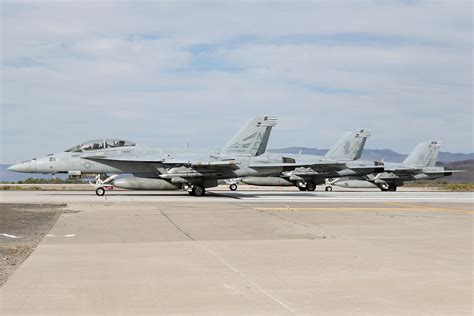
Naval Air Station Fallon in Nevada performs a completely different function. Rather than being a major permanent home for operational carrier fighter wings, Fallon is where naval aviators are pushed toward the highest levels of tactical proficiency.
The installation hosts the Naval Aviation Warfighting Development Center, or NAWDC, which incorporates the Navy’s famous TOPGUN program. NAWDC evolved from organizations that included the Naval Strike Warfare Center and the Navy Fighter Weapons School, with Fallon becoming the center of advanced naval aviation training.
TOPGUN is not an introductory flight school. It is an advanced tactical program for experienced naval aviators and naval flight officers selected from operational squadrons. Graduates return to the fleet as instructors and tactical specialists, allowing the expertise developed at Fallon to spread throughout carrier air wings.
The modern course also reflects how dramatically air combat has changed. The popular image of TOPGUN is dominated by close-range dogfights, but contemporary naval warfare increasingly depends on beyond-visual-range engagements, electronic warfare, sensors, networking, missile employment, and complex threat environments. Fallon gives crews access to enormous restricted training areas where large-scale exercises can be conducted without the constraints imposed by crowded civilian airspace.
Fallon consequently functions as the Navy’s tactical laboratory. Carrier air wings can arrive with experienced pilots and leave with a much deeper understanding of how their aircraft, weapons, sensors, and electronic systems operate together. For a carrier strike group preparing for a contested environment, that expertise can be as important as the aircraft themselves.
NAS Key West: America’s Dedicated Air Combat Training Laboratory
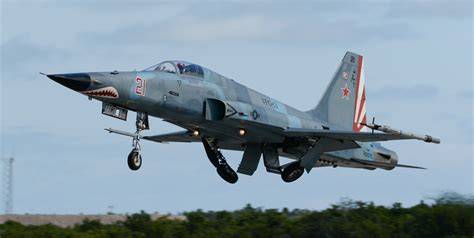
Further east, Naval Air Station Key West provides a dramatically different training environment. Located in the Florida Keys, the installation combines favorable flying weather with extensive military operating areas over the Gulf of Mexico and Atlantic Ocean.
That geography makes Key West particularly valuable for air-to-air combat training. Fighter squadrons can deploy temporarily to the Florida Keys and conduct realistic training over offshore ranges without attempting to replicate the entire environment at their home stations.
The Navy’s aviation directory identifies NAS Key West as a home for F-5N/F aircraft alongside F/A-18s and MH-60S helicopters. The F-5N/F remains valuable because an aggressor aircraft can reproduce aspects of an opposing fighter threat rather than simply providing another friendly Super Hornet for training.
The value of this arrangement is straightforward. Pilots become better at fighting when they are exposed to aircraft, tactics, and maneuvering characteristics that differ from their own. These dissimilar air combat training scenarios force crews to recognize threats rather than simply rehearse familiar procedures.
Key West therefore complements Fallon. Fallon provides large-scale advanced tactical development, while Key West offers an exceptionally useful environment for recurring air-combat training. Carrier fighter squadrons can rotate through temporary detachments, sharpen their skills, and return to their home bases with greater tactical confidence.
NAS Patuxent River: Where Naval Aircraft Become Fleet-Ready
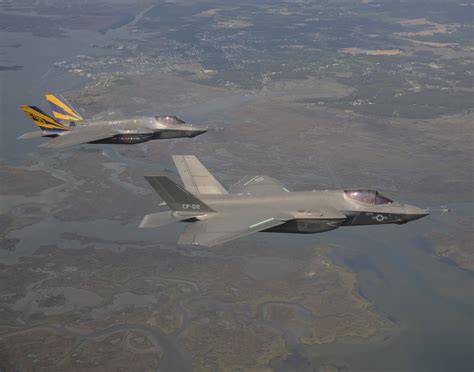
Naval Air Station Patuxent River, commonly known as Pax River, Maryland, is perhaps the least obvious installation on this list because it is not primarily a home for operational carrier fighter squadrons. Its importance is instead tied to the technology and certification behind virtually every modern naval aircraft.
Pax River houses Naval Air Systems Command headquarters, the Naval Air Warfare Center Aircraft Division, and the U.S. Naval Test Pilot School. The installation conducts more than 200,000 air operations annually and hosts more than 50 tenant organizations. NAWCAD’s Test Wing Atlantic includes the Naval Test Pilot School, VX-23, VX-20, and HX-21, together operating a broad fleet of test aircraft.
This is where new systems are tested before sailors depend on them at sea. Aircraft flight characteristics, weapons integration, software, sensors, electronic systems, and other technologies must be evaluated under controlled conditions. Test pilots and engineers deliberately explore the limits of an aircraft so fleet crews do not have to discover those limits unexpectedly during combat.
The U.S. Naval Test Pilot School adds another layer of expertise. Its mission is to train developmental test pilots, flight officers, engineers, and other specialists in the full spectrum of flight-test and aircraft-system evaluation. The school’s demanding curriculum creates professionals capable of translating complex engineering questions into safe and measurable flight testing.
For carrier aviation, that makes Pax River an upstream source of readiness. Lemoore and Oceana keep operational aircraft flying, but Pax River helps determine whether the next aircraft modification, weapon, sensor, or software release is ready to join them.
NAS Whidbey Island: The Navy’s Electronic-Warfare Powerhouse
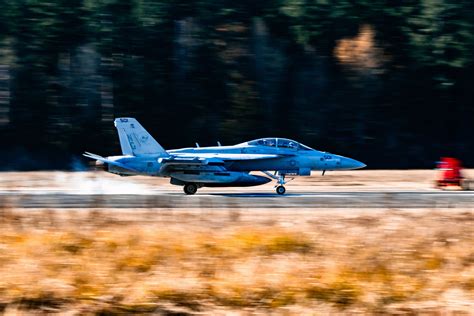
Carrier aviation cannot survive on fighters alone. Modern carrier strike groups operate in environments saturated with radar systems, surface-to-air missiles, communications networks, and electronic sensors. That makes NAS Whidbey Island in Washington indispensable.
Whidbey Island is the Navy’s principal center for the EA-18G Growler, an aircraft derived from the Super Hornet but extensively modified for airborne electronic attack. The Navy describes the Growler’s primary role as suppressing enemy air-defense systems, while the Electronic Attack Wing at Whidbey provides tactical and technical leadership for the Navy’s EA-18G community.
The Growler is particularly important to carrier air wings because it can accompany strike aircraft into contested airspace and help disrupt or suppress hostile electronic and radar threats. Its presence allows Super Hornets and F-35Cs to operate as part of a broader network rather than as isolated fighters.
Whidbey’s role has also evolved alongside the Navy’s wider electronic-warfare requirements. Official Navy information states that most Navy EA-18G squadrons are stationed at Whidbey, with the notable exception of VAQ-141, which is associated with the forward-deployed carrier air wing in Japan.
The installation also demonstrates that readiness has environmental and community dimensions. The Navy completed a final amended analysis in December 2025 concerning EA-18G operations at the Whidbey Island complex, addressing issues including greenhouse-gas calculations, impacts on birds and childhood learning, and alternatives for the Growler community.
Chambers Field: The Carrier Fleet’s Eyes, Ears, and Lifeline
The final location is technically different from the others. Chambers Field at Naval Station Norfolk is not an independent Naval Air Station. NAS Norfolk was disestablished as a standalone installation in 1999, and Chambers Field became part of Naval Station Norfolk.
Its contribution to carrier aviation is nevertheless enormous. Chambers Field supports aircraft that perform some of the least glamorous but most consequential missions in a carrier air wing.
Among them is the E-2D Advanced Hawkeye, the Navy’s airborne early-warning and command-and-control aircraft. Its large radar system gives carrier strike groups a powerful airborne surveillance capability, helping commanders detect and track aircraft and other threats while extending the fleet’s awareness far beyond the horizon.
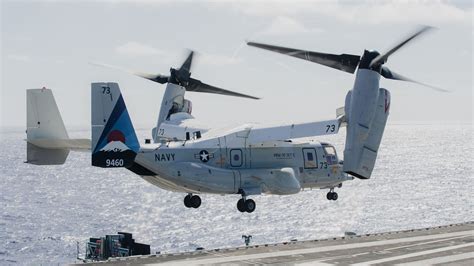
Chambers Field also supports the logistics aircraft that connect carriers with the shore. The Navy has moved from the C-2A Greyhound toward the CMV-22B Osprey for carrier onboard delivery missions, providing a modern tiltrotor option for transporting personnel, mail, spare parts, and other critical cargo.
Helicopters operating from the Norfolk complex add another essential layer. Aircraft such as the MH-60R Seahawk contribute to anti-submarine and surface warfare missions, while MH-60S aircraft support logistics, search and rescue, and other shipboard requirements.
Why These Seven Bases Matter to the Carrier Fleet
Taken individually, these installations perform radically different jobs. Lemoore generates strike fighters. Oceana sustains the Atlantic Super Hornet force. Fallon develops advanced tactics. Key West provides air-combat training. Pax River tests the technology. Whidbey Island supplies electronic warfare. Chambers Field provides airborne command and logistics support.
Together, they form something much more important than a collection of military airfields.
A modern aircraft carrier is a floating air base, but it cannot generate combat power independently. Its aircraft require trained crews, replacement pilots, tested weapons, sophisticated maintenance, electronic-warfare support, airborne surveillance, spare parts, and a continuous flow of personnel and equipment. The carrier is therefore only the visible portion of a much larger aviation system.
The shift toward the F-35C Lightning II makes that network even more significant. Stealth aircraft demand sophisticated maintenance, software management, sensor integration, and specialized training. At the same time, the Super Hornet remains a major part of the carrier fighter force, while Growlers, Hawkeyes, helicopters, and logistics aircraft provide capabilities that no single fighter can replace.
In 2026, the Navy’s carrier fleet is consequently supported by an aviation infrastructure designed around specialization. Lemoore and Oceana keep the fighter force ready. Fallon and Key West make those fighters tactically sharper. Whidbey protects their ability to operate in an electronic battlefield. Chambers Field keeps the carrier air wing connected to the shore and supplies its airborne command-and-control backbone. Pax River ensures that emerging technologies are tested before they become operational dependencies.
The most important lesson is that carrier aviation does not begin when a fighter launches from a carrier deck. It begins months and sometimes years earlier at these shore installations. Every successful carrier sortie reflects the work of pilots, maintainers, engineers, instructors, test personnel, logisticians, and support crews spread across the United States.
That is why these seven locations remain essential to American sea power in 2026. The aircraft carrier may project power from the ocean, but the infrastructure behind its air wing gives that power endurance, precision, adaptability, and readiness. Without the bases behind them, America’s carrier aircraft would simply be impressive machines. With them, they become a continuously trained and supported combat aviation force capable of operating across the world.