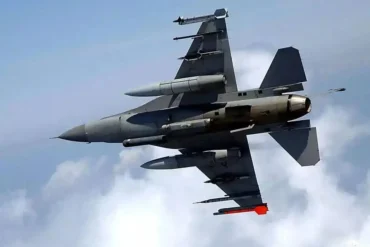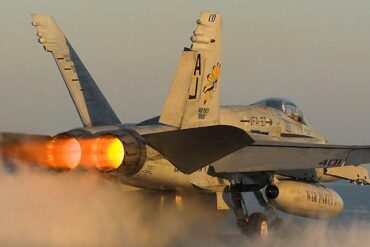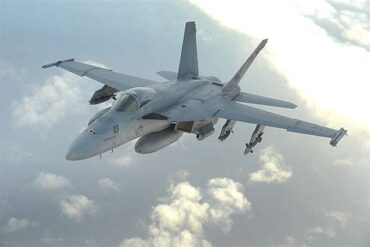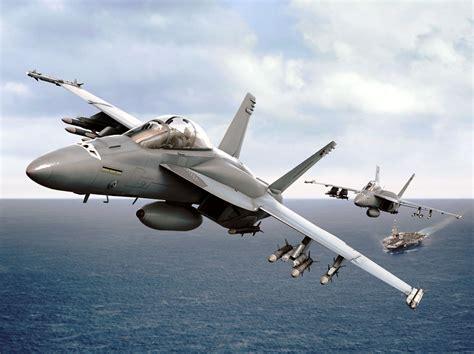
The evolution of modern air combat is no longer defined solely by speed, maneuverability, or raw firepower. Instead, it is increasingly shaped by information—how quickly it is gathered, processed, and acted upon. In that shifting landscape, the Boeing F/A-18E/F Super Hornet is undergoing one of the most profound transformations in its operational history. The Block III upgrade is not just an incremental improvement; it is a deliberate reengineering of the aircraft’s cognitive architecture, designed to ensure that the Navy’s workhorse fighter remains lethal, relevant, and adaptable deep into the 2040s.
For decades, the Super Hornet has served as the backbone of carrier aviation, bridging the gap between legacy platforms and emerging fifth-generation systems. Yet the strategic environment it now faces has changed dramatically. Advanced integrated air defense systems, long-range missile threats, and increasingly capable adversary fighters demand more than durability—they require intelligence dominance. The Block III program answers that demand by fundamentally redefining how the aircraft thinks, communicates, and fights.
Rather than replacing the Super Hornet outright, the U.S. Navy has chosen a more pragmatic and arguably more powerful approach: transform what already exists into something far more capable. This decision reflects both operational necessity and economic reality, but more importantly, it signals a shift in how airpower itself is conceptualized in the 21st century.
Why the Super Hornet Still Matters in a Fifth-Generation Era
The arrival of the Lockheed Martin F-35C Lightning II was expected to mark a decisive transition toward stealth-dominated carrier air wings. Yet reality has proven more complex. Production constraints, cost considerations, and operational demands have ensured that the Super Hornet remains indispensable.
At the heart of the Navy’s decision lies a simple but unavoidable equation: fleet size versus capability. While the F-35C delivers unmatched stealth and sensor fusion, it cannot be fielded in sufficient numbers quickly enough to replace the hundreds of Super Hornets currently in service. Meanwhile, the future F/A-XX remains years—if not decades—away from operational maturity.
This creates a strategic gap, one that cannot be ignored. The Block III upgrade fills that gap not by attempting to turn the Super Hornet into a stealth aircraft, but by enhancing the dimensions that matter most in modern warfare: connectivity, processing power, and situational awareness.
Equally important is the economic calculus. Upgrading existing airframes through the Service Life Modification (SLM) program allows the Navy to extend operational life from 6,000 to 10,000 flight hours. That alone transforms the aircraft from a near-term asset into a long-term pillar of carrier aviation. When combined with advanced avionics upgrades, the result is a platform that delivers disproportionate value relative to its cost.
Extending Life, Preserving Relevance
An aircraft’s lifespan is no longer dictated solely by structural fatigue. In modern combat, obsolescence is far more likely to occur in silicon than in metal. Mission computers, sensors, and data links age rapidly in an environment where technological cycles are measured in years, not decades.
The SLM program addresses the physical longevity of the Super Hornet, but the Block III upgrade tackles something far more critical: technological relevance. Without this transformation, even a structurally sound aircraft would struggle to survive in contested airspace dominated by advanced threats.
Potential adversaries such as China and Russia have invested heavily in layered air defense systems and next-generation fighters. These systems are designed to exploit weaknesses in legacy platforms, particularly those reliant on outdated processing architectures.
The Block III initiative is a direct response to that challenge. It replaces the aging digital backbone of the Super Hornet with a new architecture designed not just for today’s threats, but for those still emerging.
The Digital Backbone: A 17-Fold Leap in Processing Power
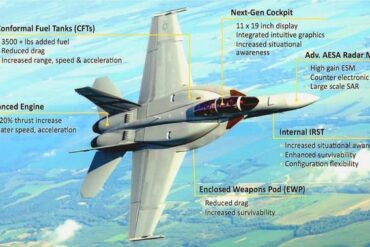
At the core of the Block III transformation lies the Distributed Targeting Processor-Networked (DTP-N), a system that represents a quantum leap in computational capability. With approximately 17 times the processing power of its predecessor, the DTP-N fundamentally changes how the aircraft handles information.
This is not simply about faster calculations. It is about enabling a new mode of warfare—one where the aircraft acts as a node within a larger network, constantly exchanging and synthesizing data with other platforms.
The integration of Tactical Targeting Network Technology (TTNT) turns the Super Hornet into a high-speed information hub. Data flows seamlessly between aircraft, ships, and airborne command platforms such as the E-2D Advanced Hawkeye. Instead of operating in isolation, each aircraft contributes to—and benefits from—a shared battlespace picture.
This shift has profound implications. Pilots are no longer overwhelmed by raw data streams; instead, they receive curated, actionable intelligence. The system does the heavy lifting, filtering noise and highlighting what truly matters.
From Data Overload to Decision Superiority
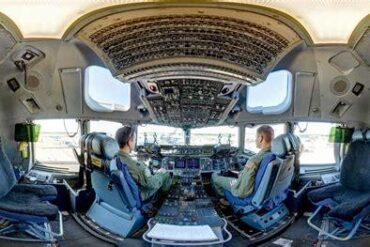
The transformation becomes most visible in the cockpit, where the Advanced Cockpit System (ACS) introduces a large-area touchscreen display that replaces traditional multi-screen layouts.
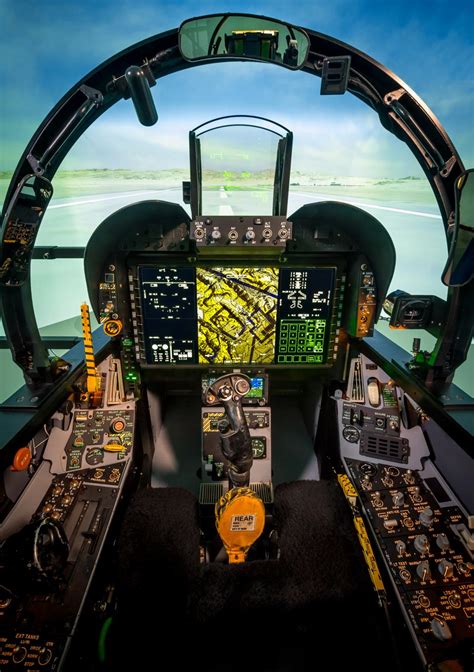
This is more than a visual upgrade. It represents a philosophical shift in human-machine interaction. The display is fully customizable, allowing pilots to prioritize information based on mission requirements. Whether conducting air-to-air engagements or strike missions, the interface adapts to the task at hand.
Crucially, the system is designed to reduce cognitive workload rather than increase it. By integrating inputs from radar, infrared sensors, and networked sources, the cockpit presents a unified picture of the battlespace. Decisions that once required multiple steps and cross-referencing can now be made almost instinctively.
The architecture also anticipates future technologies. Artificial intelligence-driven decision aids and augmented overlays are expected to integrate seamlessly, further enhancing situational awareness and response speed.
Passive Dominance: The Power of Seeing Without Being Seen
One of the most significant additions to the Block III Super Hornet is the Infrared Search and Track system, specifically the AN/ASG-34 built around the IRST21 sensor.
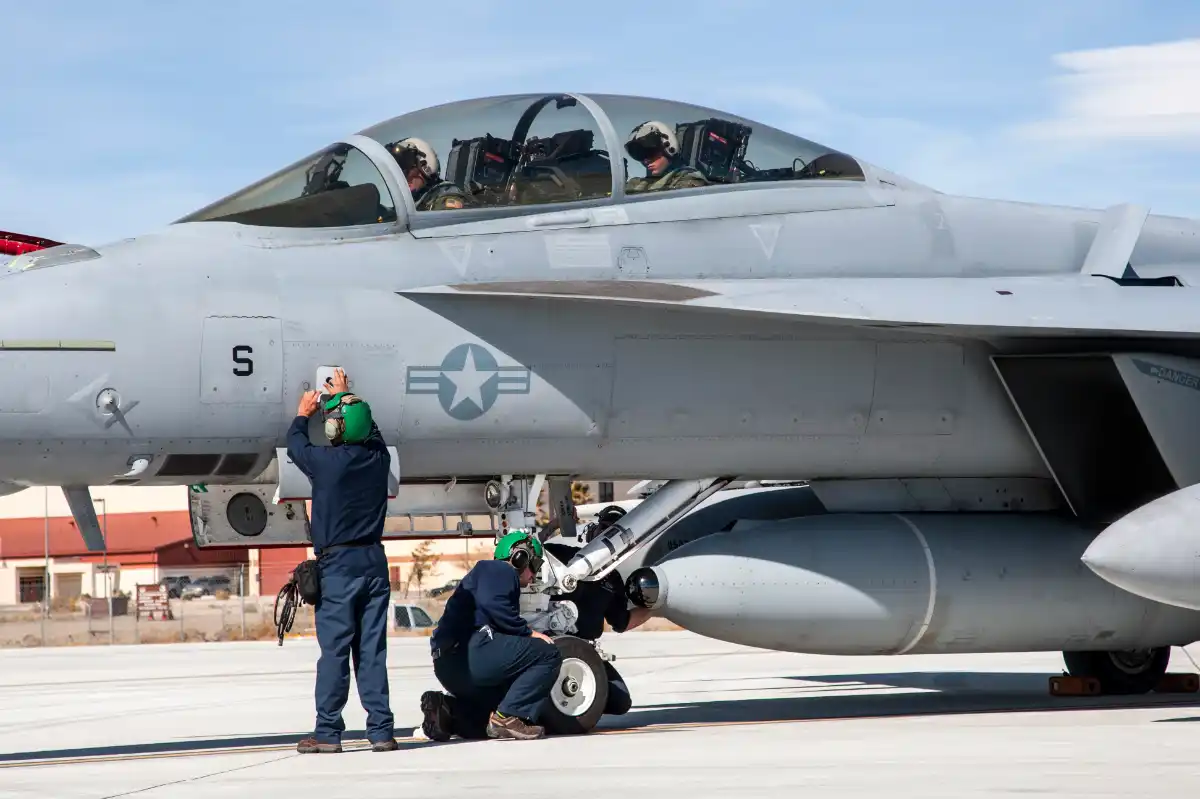
Unlike traditional radar systems, IRST operates passively. It detects heat signatures emitted by aircraft engines, allowing the Super Hornet to identify and track targets without revealing its own position.
This capability addresses a critical vulnerability in modern air combat. Active radar emissions can be detected by adversaries, effectively announcing the aircraft’s presence. In contrast, passive sensing restores an element of stealth—without requiring a stealth airframe.
The IRST21 system is capable of detecting targets at long range and distinguishing between multiple aircraft within a formation. When integrated with the DTP-N and TTNT network, its data contributes to a comprehensive, multi-source picture of the battlespace.
This fusion of passive and active sensing blurs the line between fourth- and fifth-generation capabilities. While the Super Hornet may lack the radar cross-section of stealth fighters, its ability to gather and process information begins to approach similar levels of effectiveness.
Sensor Fusion: Closing the Gap with Fifth-Generation Fighters
The defining feature of fifth-generation aircraft is not just stealth, but sensor fusion—the ability to combine data from multiple sources into a single, coherent picture. The Block III Super Hornet moves decisively in this direction.
Through its upgraded architecture, the aircraft integrates radar data, infrared inputs, and networked intelligence into a unified interface. This reduces ambiguity and accelerates decision-making, allowing pilots to act faster and with greater confidence.
The implications are significant. In a contested environment, the side that understands the battlespace first—and most accurately—holds a decisive advantage. By enhancing its sensor fusion capabilities, the Super Hornet ensures it remains competitive even against more advanced platforms.
A Global Perspective: Parallel Evolution in Adversary Systems
The logic behind the Block III upgrade is not unique. Other nations have pursued similar modernization paths, recognizing that avionics and processing power are the true determinants of combat effectiveness.
The Sukhoi Su-35 represents a parallel evolution within the Flanker family. Like the Super Hornet, it incorporates advanced radar systems, digital flight controls, and integrated avionics.
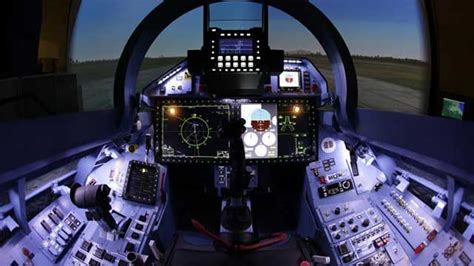
However, the key difference lies in architecture. The Super Hornet’s open-mission-systems approach allows for rapid upgrades and third-party integration. This flexibility ensures that new capabilities can be introduced without extensive hardware modifications.
In contrast, more closed systems often require comprehensive overhauls to achieve similar improvements. This gives the Block III Super Hornet a critical advantage in adaptability—an increasingly important factor in a rapidly evolving technological landscape.
Industrial Scale and Strategic Impact
The scope of the Block III program is as მნიშვნელოვანი as its technological ambition. With more than 500 aircraft expected to reach Block III standard, the upgrade represents one of the largest modernization efforts in naval aviation history.
Facilities across the United States are engaged in the transformation process, including production lines in St. Louis and modification centers in San Antonio. The involvement of naval maintenance facilities further enhances sustainability, reducing reliance on external contractors.
This distributed approach ensures that upgrades can be carried out efficiently and at scale. It also reflects a broader shift toward resilience in defense logistics, ensuring that critical capabilities can be maintained even under operational pressure.
Bridging the Gap to the Future of Air Combat
The Block III Super Hornet is not intended to replace next-generation systems. Instead, it serves as a bridge—one that connects current capabilities with the future vision of air dominance.
As the United States Navy prepares for the eventual introduction of sixth-generation platforms, the Super Hornet provides a stable and capable foundation. Its upgraded systems allow it to integrate seamlessly with newer aircraft, contributing to a layered and networked force structure.
This interoperability is critical. Future conflicts are unlikely to be fought by individual platforms operating in isolation. Instead, they will involve complex networks of manned and unmanned systems, all sharing information in real time.
The Block III Super Hornet is designed to thrive in that environment. Its enhanced connectivity and processing power make it not just a participant, but a key enabler of network-centric warfare.
Conclusion: Reinventing a Workhorse for a New Era
The transformation of the Super Hornet into its Block III configuration is a case study in strategic adaptation. Faced with evolving threats and constrained resources, the Navy has chosen to invest in intelligence, connectivity, and flexibility rather than pursuing costly replacements alone.
This approach recognizes a fundamental truth: in modern warfare, superiority is determined not just by what an aircraft can do, but by how effectively it can think and communicate.
By redefining its digital core, the Super Hornet has been given a new lease on life—one that extends far beyond its original design parameters. It remains a workhorse, but one that has been fundamentally reengineered for the demands of 21st-century combat.
And in that transformation lies its greatest strength: not the ability to outfly every adversary, but the ability to outthink them.