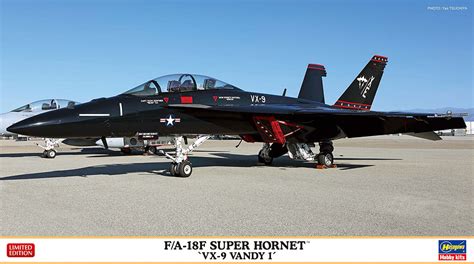
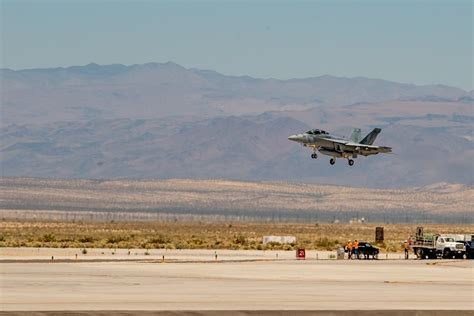
The U.S. Navy has once again revived an iconic paint scheme with a stunning gloss-black F/A-18F Super Hornet. Assigned to Air Test and Evaluation Squadron Nine (VX-9) “Vampires”, this jet represents a visual and historical tribute to the legendary “Vandy 1” color scheme. The aircraft, stationed at Naval Air Weapons Station (NAWS) China Lake, California, was recently photographed during flight trials near Naval Base Ventura County Point Mugu.
The Return of “Vandy 1”
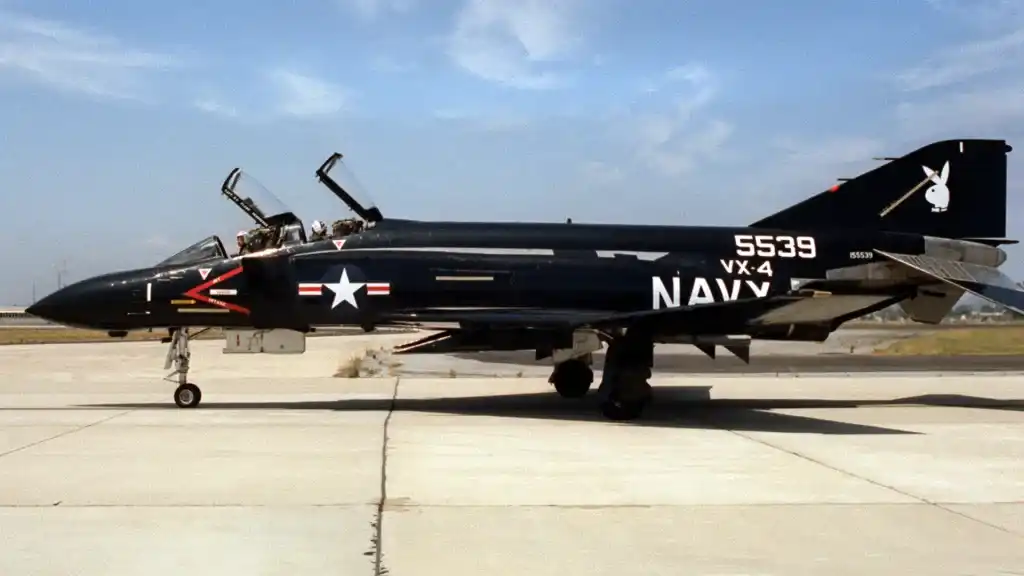
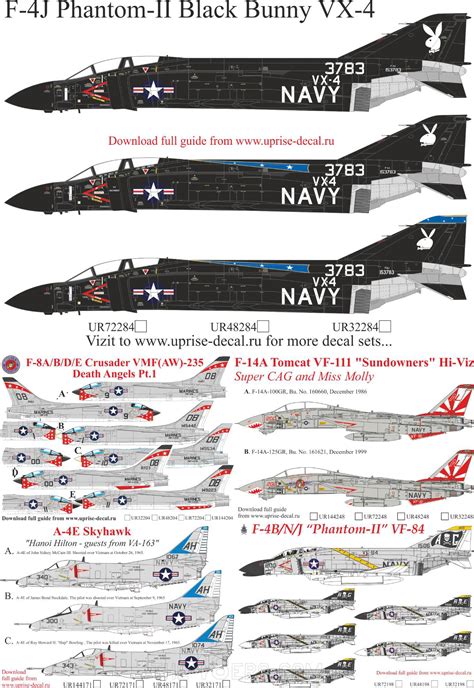
The striking black and white paint scheme pays homage to a tradition that dates back to the days of VX-4 “Evaluators”, a squadron known for its distinctive aircraft. The “Vandy 1” moniker was originally associated with the squadron commander’s aircraft and featured prominently on F-4 Phantom II jets in the 1980s. This scheme, sometimes called “Black Bunny”, was most famously adorned with a white Playboy Bunny emblem on the tail fin.
The VX-4 squadron, previously based at Naval Air Station (NAS) Point Mugu, was responsible for the original “Vandy 1” designs, applying them to select aircraft for evaluation programs. Over the years, this tradition extended from the F-4 Phantom II to the F-14 Tomcat, maintaining a powerful visual legacy in naval aviation.
VX-4 and the Playboy Bunny Legacy
The connection between VX-4 and the Playboy Bunny is deeply ingrained in aviation history. The black-painted F-4 Phantom IIs with the white bunny insignia became synonymous with the squadron’s experimental testing role. The motif extended beyond VX-4, appearing on other aircraft, including the SR-71 Blackbird (Rapid Rabbit) and Hugh Hefner’s private DC-9 jet.
During the 1980s and early 1990s, the VX-4 fleet featured several F-4S Phantom IIs and F-14 Tomcats in black paint schemes. However, when VX-4 merged with VX-5 in 1994, forming VX-9 “Vampires”, the “Vandy 1” tradition slowly faded.
The Evolution of “Vandy 1” in VX-9
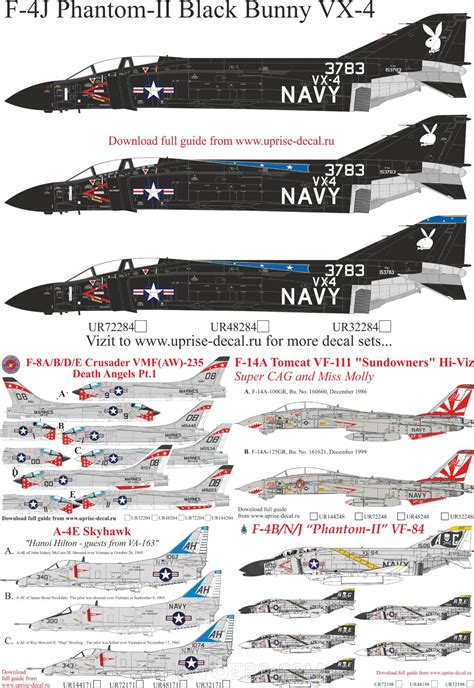
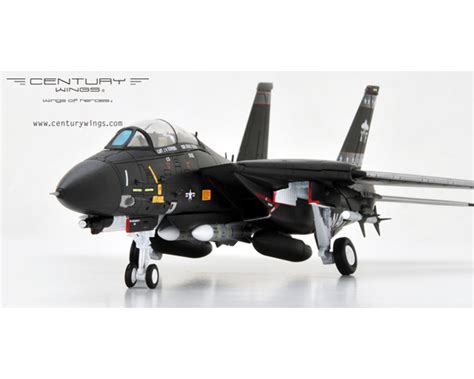
The final F-14D Tomcat to wear the “Vandy 1” colors was delivered to Point Mugu in 1994. This aircraft, while painted in gloss black, did not feature the bunny emblem but instead carried VX-9’s vampire insignia. Before the F-14’s retirement in 2004, the bunny markings were briefly reinstated, marking the end of an era.
By the mid-2000s, the tradition of an all-black squadron flagship faded. A gray VX-9 F/A-18E Super Hornet briefly bore a small Playboy Bunny emblem on its inner vertical stabilizers in 2004, but this was short-lived.
The 2023 Revival: VX-9’s Black F/A-18F Super Hornet
Nearly 19 years after the last “Vandy 1” aircraft, VX-9 has resurrected the black flagship tradition with an F/A-18F Super Hornet (BuNo 166673). Unlike its predecessors, the new “Vandy 1” does not feature a white bunny emblem but instead carries a white VX-9 “Vampires” logo on the tail fins. The aircraft also retains the traditional “1” modex on the nose, red stripes, white stars, and the “XE” tail code associated with VX-9.
This return to an all-black paint scheme aligns with the 30th anniversary of VX-4 and VX-5 merging into VX-9, a significant milestone in naval aviation. The modernized Vandy 1 made its appearance during flight trials over the Pacific Ocean test ranges, hinting at potential participation in upcoming airshows.
The Significance of “Vandy 1” in Modern Naval Aviation
The revival of Vandy 1’s black livery is more than just a visual tribute; it symbolizes the legacy of VX-4 and VX-9’s contributions to the development of naval fighter aircraft. Over the decades, these squadrons have played a crucial role in testing and evaluating new combat systems, ensuring that the U.S. Navy maintains air superiority.
The return of the black Super Hornet also rekindles nostalgia among aviation enthusiasts and naval personnel, many of whom recall the days when black-painted Phantoms and Tomcats dominated the skies. Whether this new “Vandy 1” Super Hornet will remain a long-term flagship or a one-time commemorative paint scheme remains to be seen. However, its presence serves as a powerful reminder of naval aviation’s rich history.
FAQ
1. Why did the U.S. Navy bring back the black “Vandy 1” paint scheme?
The revival of the black F/A-18F Super Hornet is likely tied to the 30th anniversary of VX-4 and VX-5 merging into VX-9. This scheme pays tribute to decades of naval aviation testing and evaluation and brings back a beloved visual tradition.
2. What was the original “Vandy 1” aircraft?
The first “Vandy 1” aircraft was an F-4J Phantom II from VX-4, stationed at NAS Point Mugu in the 1970s and 1980s. It later transitioned to the F-4S Phantom II and eventually to the F-14A/D Tomcat, maintaining its black paint scheme with white Playboy Bunny markings.
3. Does the 2023 VX-9 “Vandy 1” Super Hornet have a Playboy Bunny emblem?
No, the new VX-9 F/A-18F Super Hornet does not feature a Playboy Bunny logo. Instead, it sports a white VX-9 “Vampires” insignia on the tail, reflecting a modernized approach in line with current U.S. Navy standards.
The return of “Vandy 1” marks a significant moment in naval aviation history, ensuring that the legacy of VX-4 and VX-9 continues to inspire future generations of aviators and aviation enthusiasts alike.