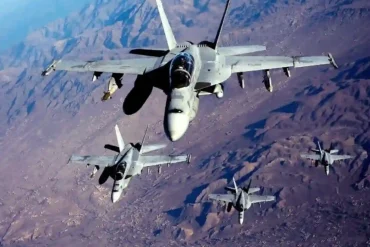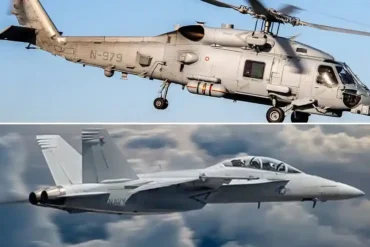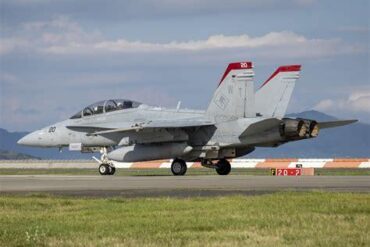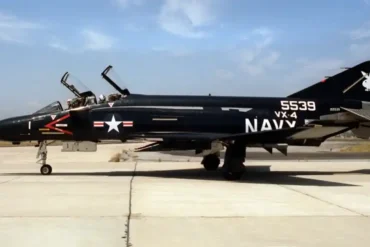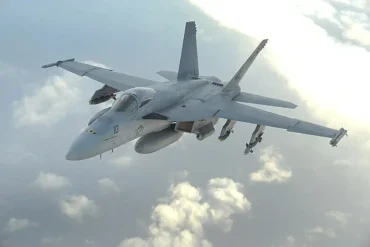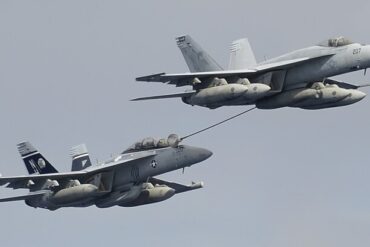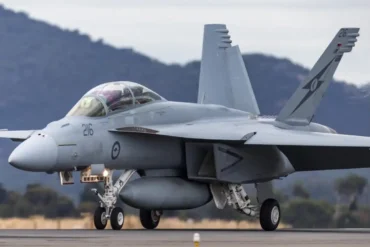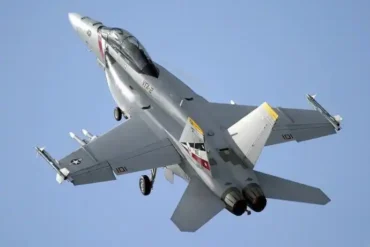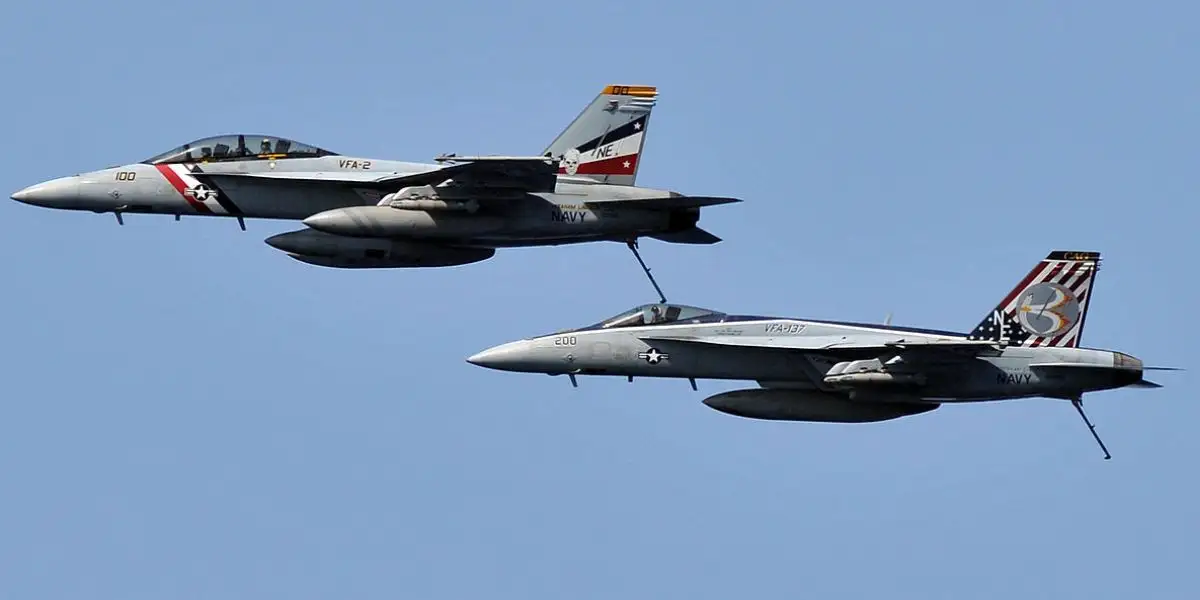
The F/A-18E and F/A-18F Super Hornet variants represent the cornerstone of the United States Navy’s carrier-based tactical aviation capability. Both aircraft are part of the Super Hornet family, which evolved from the original F/A-18 Hornet to address limitations in range, payload, and survivability. The distinction between these two variants lies not in performance or capabilities alone, but in how they are employed operationally, maintained across squadrons, and integrated into evolving air wing compositions.
Fleet Composition and Production Trends
The U.S. Navy fields significantly more F/A-18E (Echo) than F/A-18F (Foxtrot) aircraft. The reason for this disparity is both historical and strategic. The majority of F-model jets were built early in the Super Hornet program, whereas E-model production has continued longer and in greater volume, especially with the advent of Block III upgrades.
Fleet Replacement Squadrons (FRS), test squadrons, and specific mission sets continue to utilize the F-models, but in terms of frontline operational strength, the E-model outnumbers the F-model in a 2 to 3:1 ratio. This imbalance has been influenced by cost considerations, pilot workload analyses, and the increasing sophistication of single-seat cockpit avionics.
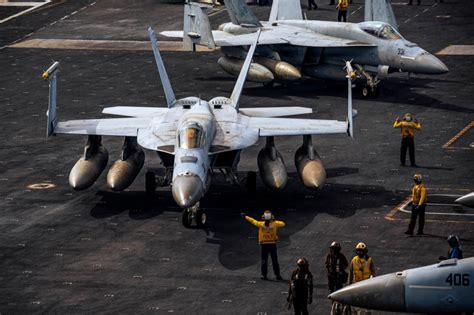
Additionally, recent unit transitions reflect this trend. For example, VFA-211 and VFA-94, once two-seat squadrons, have shifted to single-seat configurations, and new Block III squadrons like VFA-25 and VFA-113 have adopted the E-model exclusively.
Operational Doctrine and Role Distribution
From a systems and weapons integration perspective, the F/A-18E and F/A-18F are nearly identical. Their airframes share the same radar, electronic warfare systems, weapons loadouts, and mission software. The key distinction is the presence of a second seat in the F-model, designed for a Weapons Systems Officer (WSO).
Operationally, the Navy does not assign dramatically different missions based on variant. In combat packages, both Es and Fs are mixed and perform identical mission sets, from combat air patrol (CAP) to close air support (CAS) and strike missions. Pilots trained on the E-model are fully capable of flying the F-model, and vice versa. The curriculum and certifications are unified for both.
However, certain mission types do emphasize the advantage of the second crew member:
- Forward Air Controller (Airborne) – FAC(A): This designation is limited to aircrew in the F-model due to their ability to handle complex communication and coordination tasks more effectively.
- Combat Search and Rescue (CSAR): F/A-18F crews are expected to lead CSAR missions, where task saturation is high and situational awareness benefits from a second set of eyes and ears.
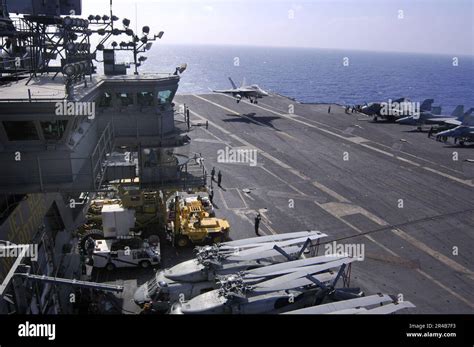
These designations are largely administrative holdovers from the early transition period when the Navy was retiring multi-crew aircraft like the F-14, A-6, and S-3, which relied on Naval Flight Officers (NFOs). At that time, there was strong internal pressure to preserve WSO positions, resulting in broader use of the F-model.
Task Management and Cockpit Dynamics
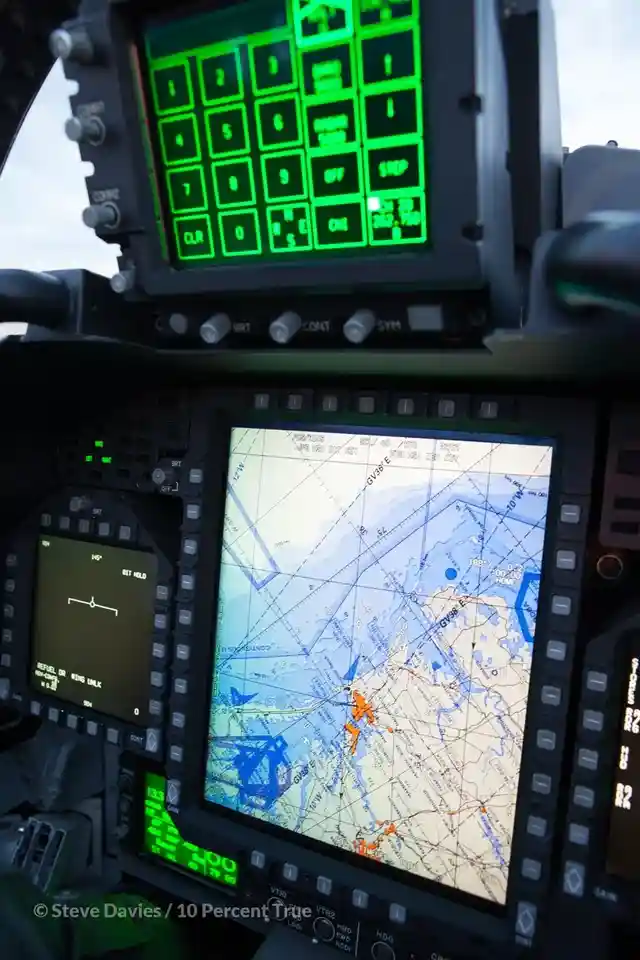
The division of labor in the cockpit of the F/A-18F provides a tactical edge during multiphase missions, especially under high workload conditions such as low-level night interdiction, deep strike, or multi-ship coordination. The WSO manages targeting pods, coordinates with airborne controllers, and handles complex data streams.
In contrast, the E-model places all of these tasks on a single pilot. However, modern avionics suites in Block II and III aircraft significantly reduce cognitive load through automated threat prioritization, intuitive display layouts, and sensor fusion. These advancements have proven that single-seat pilots can execute multi-role missions effectively, closing the perceived gap in capability.
Critically, cockpit integration in Block II+ jets allows each station (front and back) to operate independent displays and sensor instances. This was a leap over the earlier Block I models, whose avionics were rooted in legacy Hornet designs with limited processing capability.
Mission Flexibility and Crew Availability
Theoretically, the F-model can be flown solo, but this is rarely practiced in active two-seat squadrons. In units with mixed airframes or during maintenance cycles, solo flights in the F-model do occur, but are the exception. Missionized F-models typically do not include flight controls in the rear cockpit. The WSO station is equipped with side-stick controllers, sometimes referred to colloquially as “wizard sticks.”
Interestingly, the F/A-18F differs from its USAF counterpart, the F-15E Strike Eagle, in that the latter maintains full flight control authority in the rear cockpit. Cultural and operational preferences likely influence this design decision. In Navy jets, placing full flight controls in the back seat is avoided to prevent accidental control inputs and because the physical layout (e.g., throttle positioning) makes dual controls less practical.
Air Wing Integration and Combat Experience
In modern Carrier Air Wing (CVW) structures, every wing contains only one F-model squadron, with the remaining squadrons comprising E-models and increasingly, F-35C squadrons. This shift reflects the Navy’s confidence in the E-model’s multirole capability and the growing emphasis on networked warfare where human-machine teaming reduces dependency on multiple human operators.
Despite fewer F-models in service, their contribution remains vital in training, special mission execution, and test and evaluation roles. In major exercises and real-world missions, E and F jets operate interchangeably within the same strike packages. There is no functional segregation in tactical planning or sortie allocation based on model alone.
Strategic Evolution and Future Outlook
The long-term procurement strategy shows a clear preference for the F/A-18E, especially in its Block III configuration, which introduces conformal fuel tanks, a modernized cockpit, enhanced stealth treatments, and improved network-centric capabilities. These upgrades help compensate for the absence of a second operator by amplifying the pilot’s situational awareness and reducing sensor management burden.
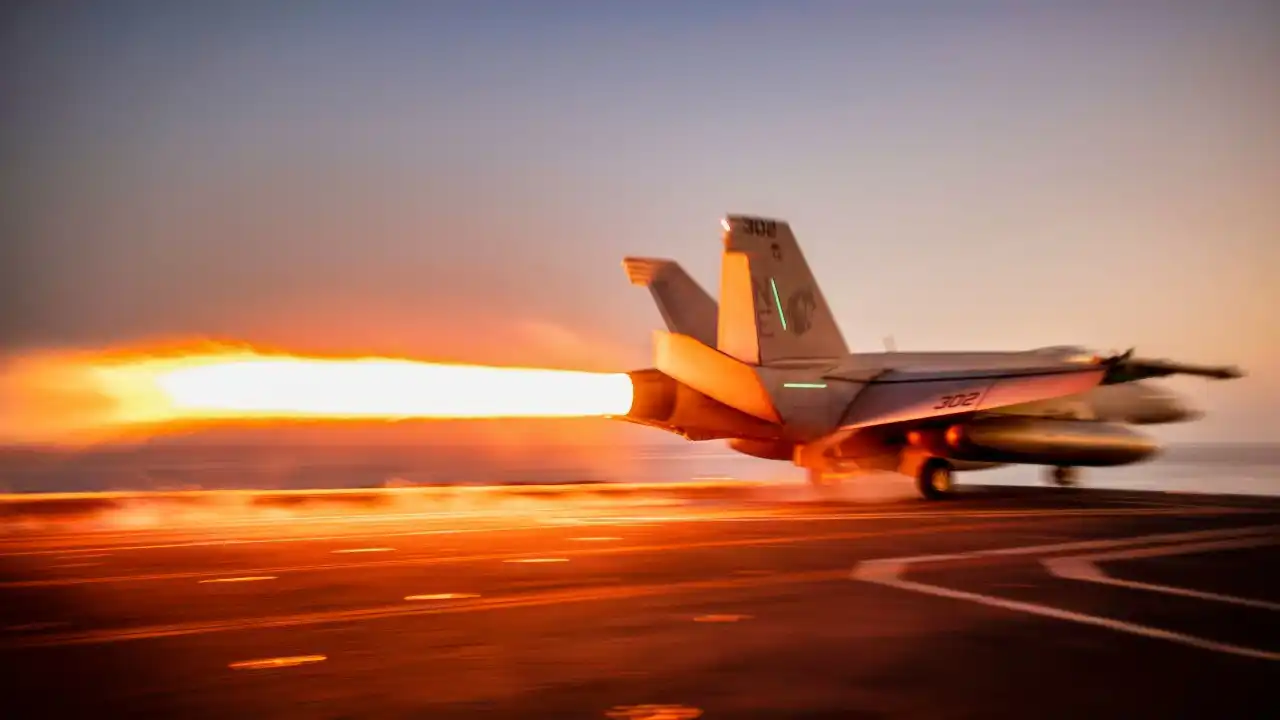
Nonetheless, the F/A-18F remains relevant in scenarios requiring extensive coordination, such as joint terminal attack control (JTAC) integration, coalition warfare, and deep strike missions in complex terrain. The adaptability of the Super Hornet platform ensures that both variants remain indispensable, tailored to specific mission demands rather than confined to rigid operational doctrines.
As legacy platforms phase out and the Navy shifts towards next-generation air dominance (NGAD) concepts, the E and F models will continue to serve as interoperable platforms, seamlessly integrating with manned-unmanned teams, carrier-based drones, and advanced sensor fusion networks.
Conclusion
The U.S. Navy’s employment of the F/A-18E and F/A-18F Super Hornet variants showcases a deliberate balance between human capital, platform capability, and mission flexibility. While the E-model now dominates the fleet numerically and operationally, the F-model maintains niche relevance where crew coordination enhances mission effectiveness. With shared systems, training pipelines, and tactical interchangeability, the Navy has forged an exceptionally adaptable strike fighter force capable of meeting 21st-century maritime challenges head-on.