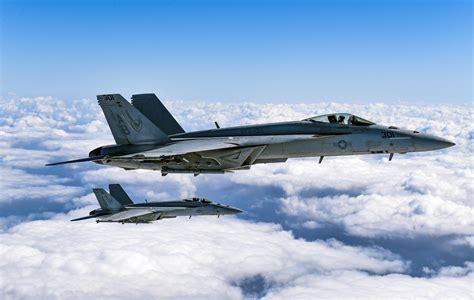
The dogfight—the ultimate test of aerial combat supremacy—has long been a defining element of air warfare. Although modern missiles and stealth capabilities dominate strategic doctrines today, the ability to win a close-quarters, high-G turning engagement remains a critical benchmark of fighter performance. A recent, brutally honest assessment by former US Navy Super Hornet pilot Adam Daymude has reignited an age-old debate: how do the Navy’s carrier-based F/A-18E/F Super Hornets compare against the Air Force’s F-15 Eagle and F-16 Fighting Falcon in a traditional dogfight?
Daymude, a former F/A-18 and EA-18G Growler pilot, didn’t mince words. According to his firsthand insights, the USAF’s F-15 and F-16 almost always come out on top in within-visual-range (WVR) air combat scenarios—especially when pilot skills are matched. His explanation sheds light on the very design DNA of these aircraft, revealing how engineering tradeoffs can dramatically tilt the odds in aerial engagements.
The Roots of the Super Hornet: Designed for the Sea, Not the Sky
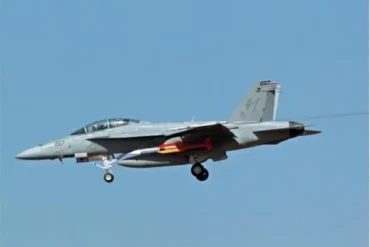
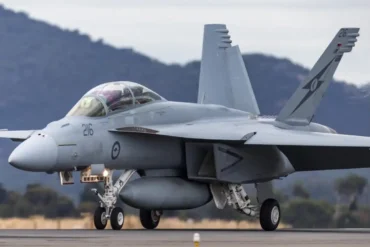
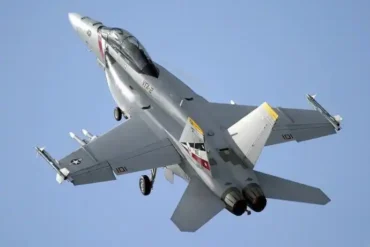
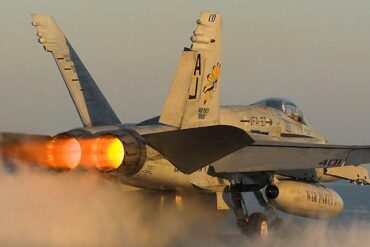
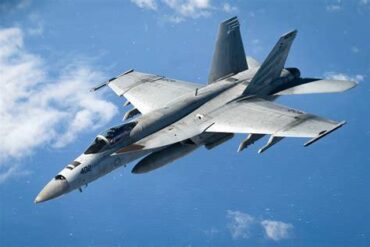
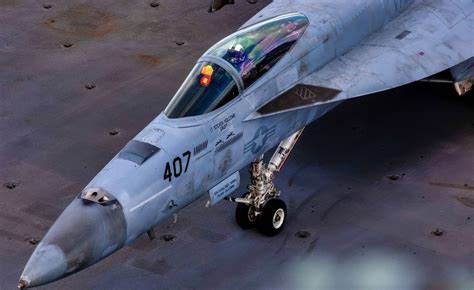
The F/A-18E/F Super Hornet, a derivative of the original YF-17 Cobra, was born from the US Navy’s need for a multirole, carrier-capable platform. As such, it was inherently shaped by the constraints of naval aviation. Its design emphasized structural reinforcement, enhanced low-speed handling, and high-lift features to facilitate safe carrier landings. These features, while lifesaving at sea, impose a performance tax during air combat.
One of the Super Hornet’s defining characteristics is its large Leading-Edge Extensions (LEXs), which help generate lift at low speeds—critical for carrier recoveries. However, that same feature significantly increases induced drag, making the aircraft lose energy faster in tight turns.
“Our Navy jets have to generate a lot of lift at slow speeds in order to land safely at the boat,” Daymude explained. “That’s great for recovery at the boat but all that lift comes at a price: induced drag.”
In a dogfight, this means the Super Hornet bleeds speed and energy more quickly than its Air Force counterparts.
The F-15 and F-16: Born to Rule the Skies
In contrast, both the F-15 Eagle and F-16 Fighting Falcon were purpose-built by the USAF with aerial superiority as a priority.
The F-15 Eagle, first introduced in the 1970s, was designed from the outset to dominate the air domain. It features twin engines, a massive thrust-to-weight ratio (often exceeding 1:1 in clean configuration), and powerful radar. The F-15 can accelerate vertically, a capability that few fourth-generation fighters can claim.
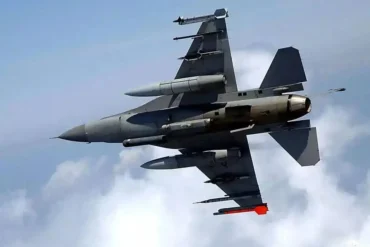
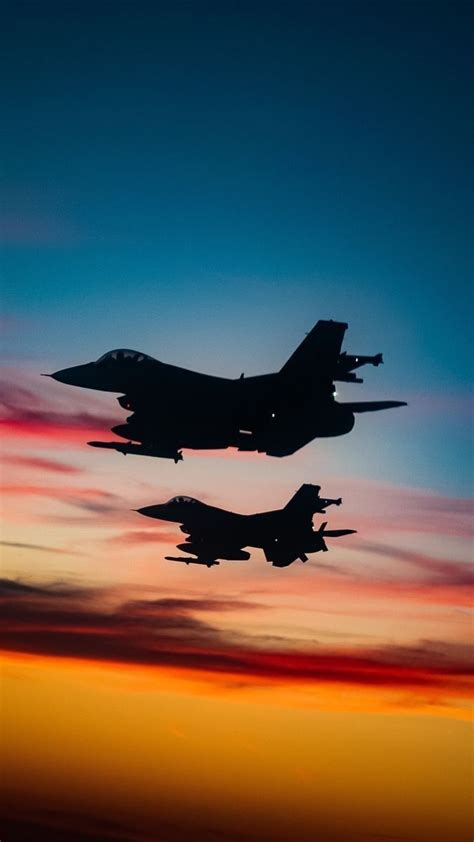
The F-16 Fighting Falcon—or “Viper” as it’s affectionately known—was engineered as a lightweight, highly agile dogfighter. Able to pull up to 9 Gs, it offers incredible turn performance, and its frameless bubble canopy and side-mounted control stick give pilots exceptional situational awareness and control.
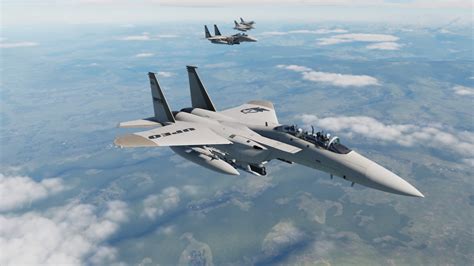
Daymude didn’t hesitate to praise these jets: “The Eagle, when it isn’t carrying anything on its wings, has a thrust to weight ratio greater than 1:1. That means it can accelerate in the vertical. Wha?!”
Why the Super Hornet Falls Behind in a Dogfight
Despite being a versatile and combat-proven platform, the Super Hornet’s carrier-based limitations prevent it from competing toe-to-toe in high-G, high-energy maneuvers with the F-15 or F-16.
One glaring disadvantage is G-limitations. The Super Hornet is capped at 7.5 Gs, while the F-16 can handle 9 Gs. This might sound like a small difference, but in the split-second decisions of air combat, it can mean the difference between life and death—or at the very least, a win or a loss.
Then there’s energy management. In a turning engagement, being able to sustain energy—that is, maintain speed while pulling high Gs—is critical. The F-15 and F-16, with their superior thrust-to-weight ratios and lower drag profiles, can stay in the fight longer without losing momentum.
As Daymude succinctly put it: “An F/A-18 has to be flown damn near perfectly to beat either of those two.”
When Pilots Are Equal, The Jet Makes the Difference
In discussions of air combat, the phrase “it’s not the plane, it’s the pilot” often gets tossed around. While pilot skill is unquestionably critical, Daymude argues that when skills are equal, the outcome becomes a question of hardware advantage. And in this scenario, the Super Hornet is disadvantaged by default.
“In the hierarchy of importance to winning a dogfight, skill trumps tools,” he acknowledged, “but when the skills are equal, it comes down to the aircraft.”
Still, there’s room for nuance. A Navy Weapons School graduate, Daymude noted, could defeat a junior USAF pilot in many situations. But when all variables are matched—skill, altitude, weapons loadout—the Super Hornet loses the edge.
The Drag Penalty: A Cost of Naval Design
At the heart of the Super Hornet’s dogfighting disadvantage lies its induced drag penalty, a direct byproduct of its naval design philosophy. All the systems required for carrier suitability—reinforced landing gear, tailhooks, folding wings, high-lift surfaces—add weight and complexity.
More significantly, they generate drag that saps performance in WVR engagements. More drag means more fuel burn and more engine demand, which translates to less available energy for maneuvering.
As Daymude framed it, “Take away our drag penalty and the tables would be turned.”
The Role of Modern Air Combat Doctrine
However, Daymude was also quick to note that dogfighting is increasingly irrelevant in modern U.S. military doctrine. With beyond visual range (BVR) missiles becoming increasingly accurate and lethal, modern fighters rarely engage in close combat.
“Dogfighting isn’t a thing anymore (for the US anyway),” he said. “Our missiles work now and we lean heavily on their capabilities. If the missiles don’t work the first time around, we reset and there’s another group of fighters set up and waiting for you.”
Still, the romanticism and prestige of fighter-versus-fighter aerial duels persist in military culture and public imagination. For that reason, understanding how these aircraft would fare in a hypothetical WVR showdown remains both a technical curiosity and a point of pride.
Final Verdict: Why the Super Hornet Loses Most of the Time
To recap the key reasons why the USAF’s F-15 and F-16 typically outperform the Navy’s Super Hornet in dogfights:
- Superior thrust-to-weight ratios allow F-15s and F-16s to accelerate vertically and recover energy more efficiently.
- Higher G limits, especially in the F-16, permit tighter sustained turns.
- Lower induced drag enables better energy retention during prolonged maneuvers.
- Carrier-optimized design elements in the Super Hornet reduce its performance envelope in air combat.
Yet, it’s not all doom for the Super Hornet. In joint operations, multirole capacity, survivability, and mission versatility matter more than WVR prowess. And when flown by elite Navy pilots, the Super Hornet is still a formidable threat.
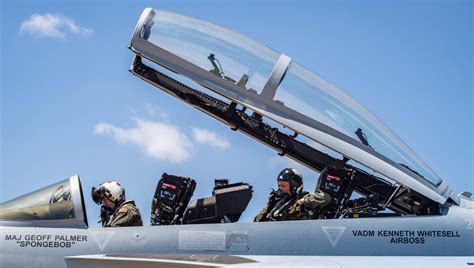
Daymude’s honest take offers a rare window into how real-world operational constraints influence the performance of America’s premier fighter jets. It also highlights the brutal physics of aerial combat, where every pound of drag and every G of turn performance can decide who flies home—and who doesn’t.
In the skies, as in life, design choices always come with tradeoffs. The Super Hornet may not win most dogfights against an F-15 or F-16—but that doesn’t make it any less of a warrior. It simply fights a different kind of war, one shaped by the waves below rather than just the winds above.