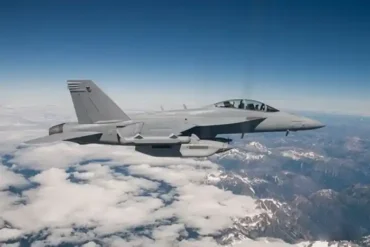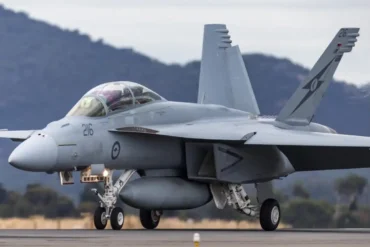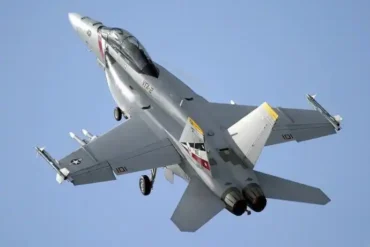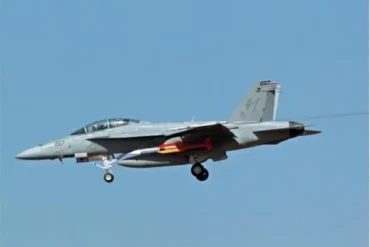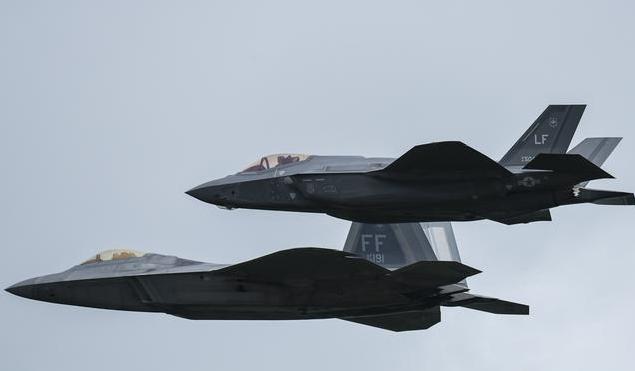
The F/A-18 Super Hornet and modern stealth fighters like the F-35 Lightning II and F-22 Raptor represent distinct philosophies in air combat design. While the Super Hornet is an advanced fourth-generation multirole fighter, stealth platforms dominate in high-threat environments. This article provides a detailed comparison of these aircraft, examining their capabilities, strengths, and limitations.
Stealth Capabilities
Radar Cross-Section (RCS)
Stealth fighters prioritize low observability by utilizing radar-absorbent materials, specialized airframe shaping, and internal weapon bays. The F-35 Lightning II has an RCS of approximately 0.005 m², making it nearly invisible to conventional radar.
In contrast, the F/A-18 Super Hornet, even with 2025 stealth upgrades, has an estimated RCS of ~1 m², which can be reduced to ~0.5 m² with stealth coatings and conformal fuel tanks. Despite these enhancements, it remains roughly 100 times more detectable than the F-35.
Infrared (IR) Signature
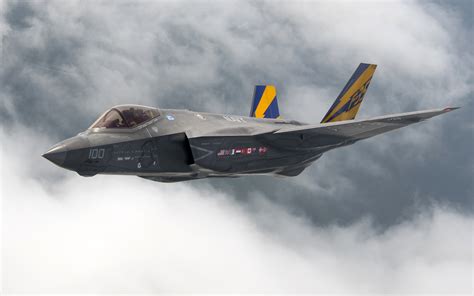
Stealth fighters incorporate advanced cooling measures to minimize their IR emissions. The F-35 and F-22 reduce their heat signatures by 80-90%, making them significantly harder to track with infrared sensors.
The Super Hornet, on the other hand, lacks comparable IR suppression and instead relies on countermeasures like flares and electronic jamming to evade heat-seeking missiles.
Sensor and Electronic Warfare Systems
F-35’s Sensor Fusion
The F-35 Lightning II integrates AN/APG-81 AESA radar, Distributed Aperture System (EODAS), and Electro-Optical Targeting System (EOTS), offering a 360-degree situational awareness advantage. This allows the F-35 to detect and engage threats before being detected itself.
F/A-18’s Electronic Upgrades
The 2025 Super Hornet upgrade features a modernized AN/APG-79 radar and improved electronic warfare suites, enhancing survivability. However, its sensor fusion remains less integrated than the F-35’s, making it more reliant on traditional pilot situational awareness and external sensor inputs.
Mission Flexibility and Payload Capacity
Stealth Fighters: Precision and Survivability
Stealth fighters are optimized for high-risk missions in contested airspace. The F-35 can carry 4-6 internal weapons (AIM-120 missiles, JDAMs) without compromising stealth, allowing it to engage targets undetected. However, external weapons reduce stealth effectiveness.
F/A-18 Super Hornet: Versatility and Heavy Payload
The Super Hornet excels in permissive environments, carrying up to 13,000 lbs of ordnance, including anti-ship missiles, bombs, and electronic pods. This enables it to perform roles such as air superiority, close air support, reconnaissance, and suppression of enemy air defenses (SEAD).
Cost and Operational Roles
Stealth Fighters: Expensive but Dominant
Stealth aircraft are costly to develop and maintain. The F-35 has a unit cost of approximately $80 million, with high operational expenses due to its advanced coatings and maintenance needs. However, its ability to operate in denied environments makes it indispensable for modern air superiority.
F/A-18: Cost-Effective Multirole Fighter
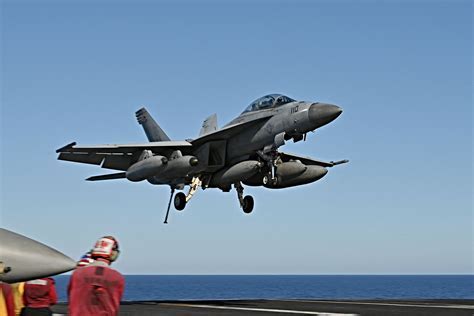
The 2025 Super Hornet variant costs around $70 million, making it a more budget-friendly alternative for missions where stealth is unnecessary. It plays a crucial role in carrier operations, maritime patrol, and coalition support missions.

Future Outlook: Where Do These Aircraft Stand?
Stealth Fighters and Next-Gen Warfare
Stealth aircraft are at the forefront of network-centric warfare, acting as force multipliers by coordinating drones, satellites, and allied assets in battle. Their ability to integrate with AI-powered command systems ensures their dominance in future conflicts.
The F/A-18’s Role in a Stealth-Dominated Future
While stealth fighters redefine air combat, the Super Hornet remains relevant through its adaptability, cost-effectiveness, and 2025 upgrades. It serves as a reliable multirole platform, ensuring Navy carrier groups maintain air superiority in lower-risk scenarios.
Conclusion: Complementary Roles in Modern Air Combat
The F/A-18 Super Hornet and stealth fighters serve complementary roles in modern warfare:
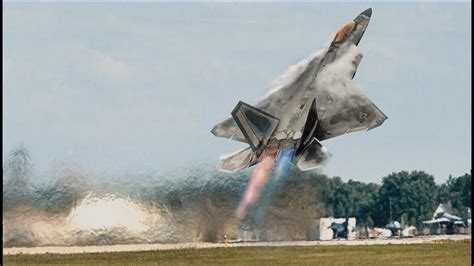
- Stealth Fighters (F-35, F-22): Best for first-strike missions, contested airspace operations, and advanced sensor warfare.
- F/A-18 Super Hornet: Ideal for carrier-based operations, close air support, and general multirole tasks where stealth is not a priority.
While the Super Hornet’s 2025 upgrades close some gaps, it cannot match the generational leap of dedicated stealth platforms. Instead, it remains a highly capable workhorse, ensuring air dominance alongside next-gen fighters.
FAQ
1. Why is the F-35 considered superior in stealth compared to the F/A-18?
The F-35’s RCS is approximately 0.005 m², making it nearly invisible to radar. It also features internal weapons bays, radar-absorbent coatings, and infrared suppression, all of which significantly enhance its stealth capability. The F/A-18, even with upgrades, remains 100 times more detectable than the F-35.
2. Can the F/A-18 Super Hornet still be effective against modern air defenses?
Yes, but with limitations. The Super Hornet relies on speed, agility, electronic warfare systems, and external countermeasures to survive. However, against advanced integrated air defense systems (IADS), stealth fighters like the F-35 are far more survivable due to their low RCS and superior sensor fusion.
3. Why do militaries continue to use non-stealth aircraft like the F/A-18?
Stealth fighters are expensive and specialized for high-threat missions. The F/A-18 is cost-effective, versatile, and can carry a larger payload, making it ideal for missions where stealth is unnecessary, such as air-to-ground strikes, maritime operations, and carrier-based missions.