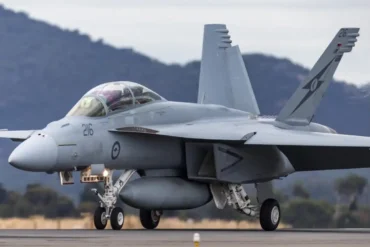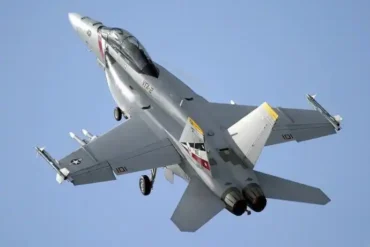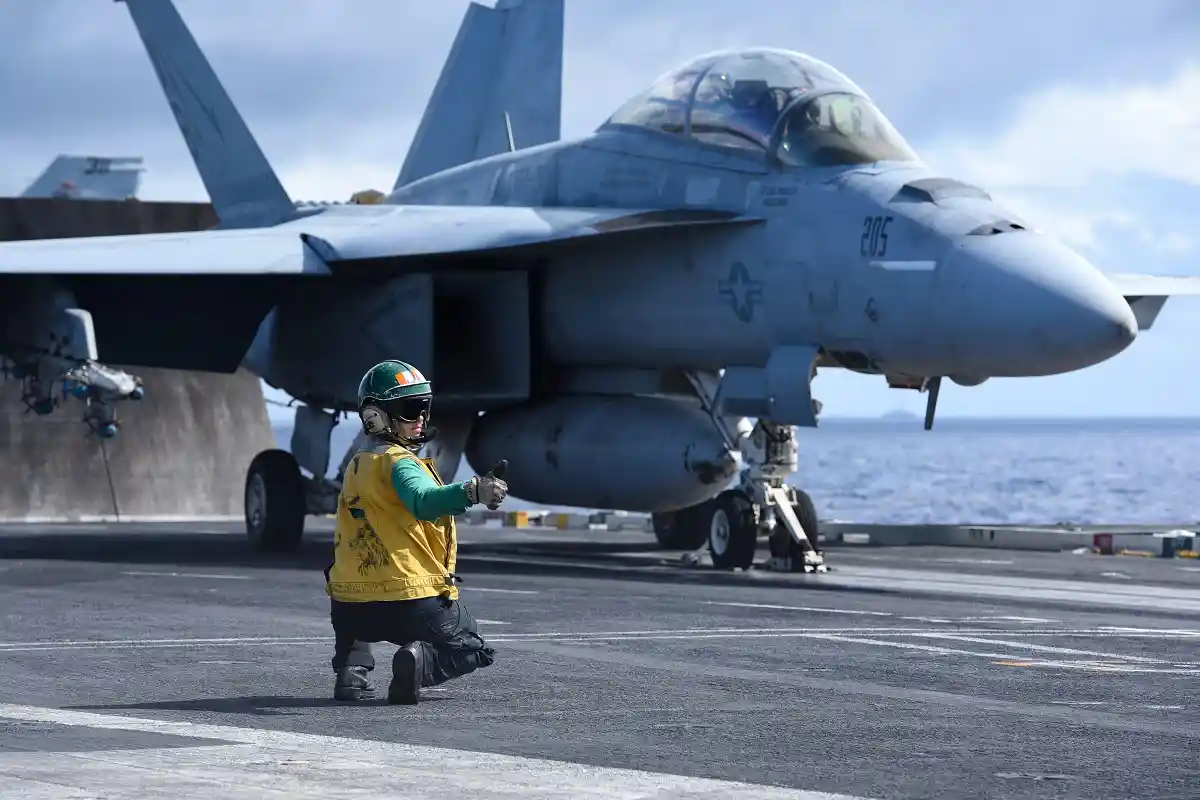
The F/A-18 Super Hornet and the Su-57 Felon represent two distinct generations of fighter aircraft, each tailored for different strategic roles. The Super Hornet, an advanced fourth-generation multirole fighter, is the backbone of U.S. Navy carrier air wings, while the Su-57, a fifth-generation stealth fighter, is designed to dominate air superiority battles. This comparison examines their stealth capabilities, maneuverability, avionics, weapon systems, and combat effectiveness.
Generational Difference and Stealth Capabilities
Su-57: A Fifth-Generation Stealth Fighter
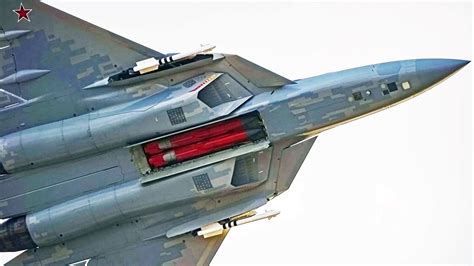
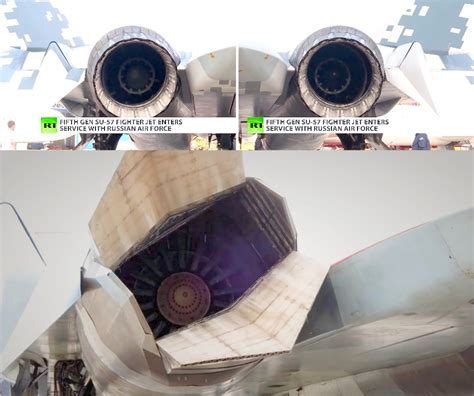
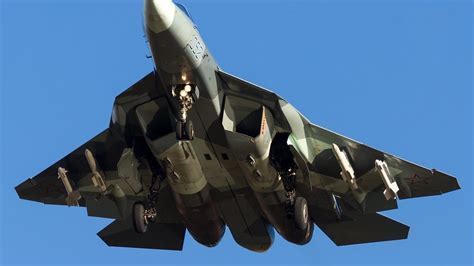
The Su-57 is a Russian fifth-generation fighter with an emphasis on stealth, agility, and advanced avionics. About 70% of its airframe consists of composite materials, significantly reducing its radar cross-section (RCS). The aircraft’s internal weapons bay minimizes radar reflection, while its advanced electronic warfare (EW) suite disrupts enemy tracking systems. However, the circular exhaust nozzles of its AL-41F1 engines may compromise its stealth capabilities to some extent.
F/A-18 Super Hornet: A Non-Stealthy Fourth-Generation Fighter
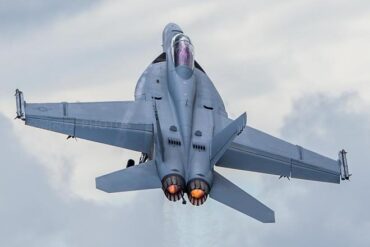
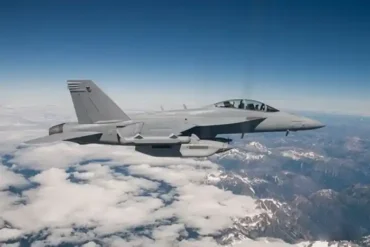
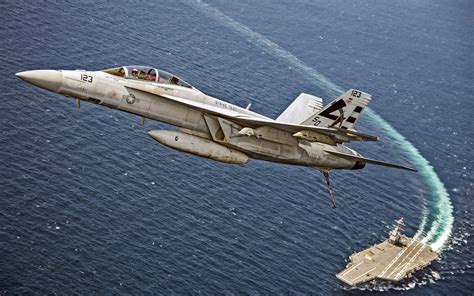
The F/A-18 Super Hornet is an evolution of the F/A-18 Hornet, optimized for carrier operations and multirole missions. Unlike fifth-generation fighters, the Super Hornet lacks a stealth-oriented airframe and has a larger radar signature. While radar-absorbing coatings and airframe modifications have been explored, its RCS remains significantly higher than the Su-57.
Maneuverability and Close-Range Dogfighting
Su-57: Superior Agility with Thrust Vectoring
The Su-57 is equipped with 3D thrust vectoring nozzles, granting it exceptional maneuverability in close-range engagements. This feature allows the aircraft to perform extreme post-stall maneuvers such as the Pugachev’s Cobra and Kulbit, giving it a decisive advantage in within-visual-range (WVR) combat. Additionally, its R-73 infrared-guided missiles and 30mm GSh-30-1 cannon enhance its dogfighting lethality.
F/A-18: High-Angle-of-Attack Capability
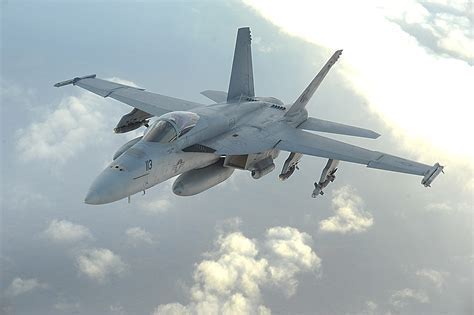
The F/A-18 Super Hornet is highly maneuverable, with an exceptional high-angle-of-attack (AoA) performance. While it lacks thrust vectoring, it compensates with aerodynamic stability and advanced fly-by-wire controls. It can engage adversaries effectively using AIM-9X Sidewinder missiles, coupled with helmet-mounted cueing systems (HMCS) for off-boresight targeting.
Beyond Visual Range Combat and Avionics
Su-57: Advanced Sensor Fusion and Multi-Band Radar
The Su-57 boasts the PAK-FA-SH121 integrated radar system, which incorporates X-band and L-band radars for superior multi-spectral detection. This allows the Su-57 to track and engage multiple targets at extended ranges, even against stealth aircraft. However, limitations in Russian avionics development may impact its sensor fusion effectiveness.
F/A-18: Proven AESA Radar with Networked Warfare Capabilities
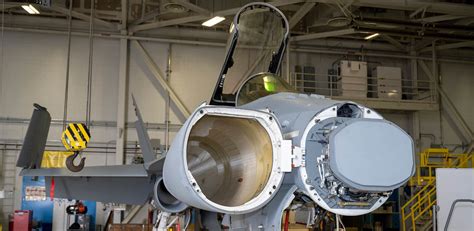
The Super Hornet utilizes the AN/APG-79 active electronically scanned array (AESA) radar, offering high-resolution target tracking and electronic warfare (EW) capabilities. Integrated with Link 16 data-sharing networks, the Super Hornet benefits from real-time battlefield awareness, compensating for its lack of stealth by leveraging support from E-2D Hawkeye early warning aircraft and EA-18G Growler electronic attack jets.
Weapon Systems and Combat Loadout
Su-57: Heavy Payload with Versatile Arsenal
The Su-57 carries up to 10 tons of ordnance, including R-77 and R-37M long-range air-to-air missiles, along with a variety of precision-guided bombs and cruise missiles. It integrates internal and external weapon stations, allowing for both stealthy and non-stealthy configurations.
F/A-18: Flexible Multirole Armament
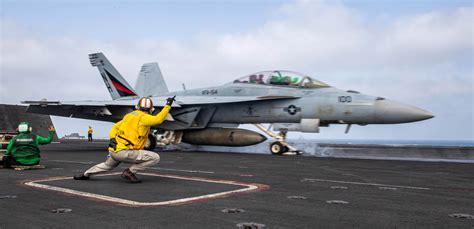
The F/A-18 Super Hornet features eleven external hardpoints, enabling it to deploy a mix of AIM-120 AMRAAM missiles, JDAM precision bombs, and AGM-84 Harpoon anti-ship missiles. Although it lacks an internal weapons bay, its combat flexibility across air, sea, and ground missions gives it a strategic advantage in carrier strike operations.
Operational Role and Strategic Deployment
Su-57: Limited Production and Deployment Challenges
The Su-57 remains in limited service, with fewer than 15 units operational as of 2024. While it showcases advanced capabilities, Russia’s constraints in mass production, maintenance infrastructure, and export market penetration impact its widespread adoption. Nonetheless, it has been tested in conflicts such as Syria and Ukraine, demonstrating its strike capabilities and electronic warfare integration.
F/A-18: Carrier-Based Workhorse of the U.S. Navy
The F/A-18 Super Hornet is a mainstay of the U.S. Navy, playing a critical role in air superiority, strike missions, and fleet defense. Its proven track record in combat operations over Iraq, Afghanistan, and Syria underscores its combat reliability and strategic versatility.
Conclusion
The Su-57 Felon and F/A-18 Super Hornet cater to vastly different mission profiles. The Su-57 excels in stealth, agility, and beyond-visual-range engagements, while the F/A-18 remains a highly adaptable, multirole fighter with extensive operational support. In a one-on-one encounter, the Su-57’s stealth and advanced sensors may provide an advantage. However, in a network-centric warfare scenario, the Super Hornet’s interoperability with supporting assets enhances its combat effectiveness.
FAQ
1. Can the F/A-18 Super Hornet defeat the Su-57 in combat?
The F/A-18 Super Hornet could potentially counter the Su-57 with superior tactics, electronic warfare support, and cooperative engagement capabilities. However, in a one-on-one dogfight, the Su-57’s stealth and maneuverability may give it an edge.
2. Why is the Su-57 not widely deployed like the F/A-18?
The Su-57’s limited production stems from budgetary constraints, technological hurdles, and logistical challenges. In contrast, the F/A-18 is mass-produced and benefits from extensive carrier-based operational experience.
3. How does the F/A-18 compensate for its lack of stealth?
The F/A-18 leverages networked warfare, electronic countermeasures, and advanced AESA radar to mitigate its lack of stealth, allowing it to function effectively in modern air combat environments.