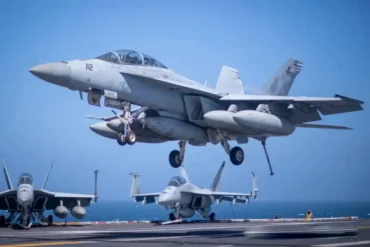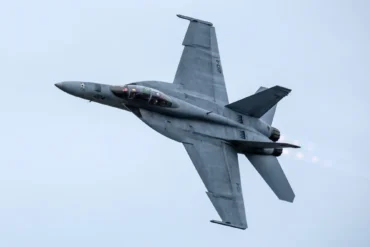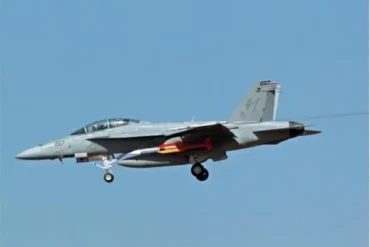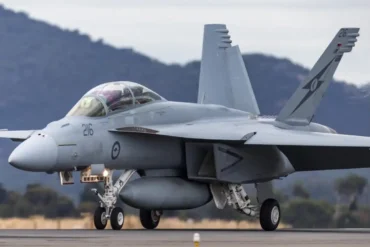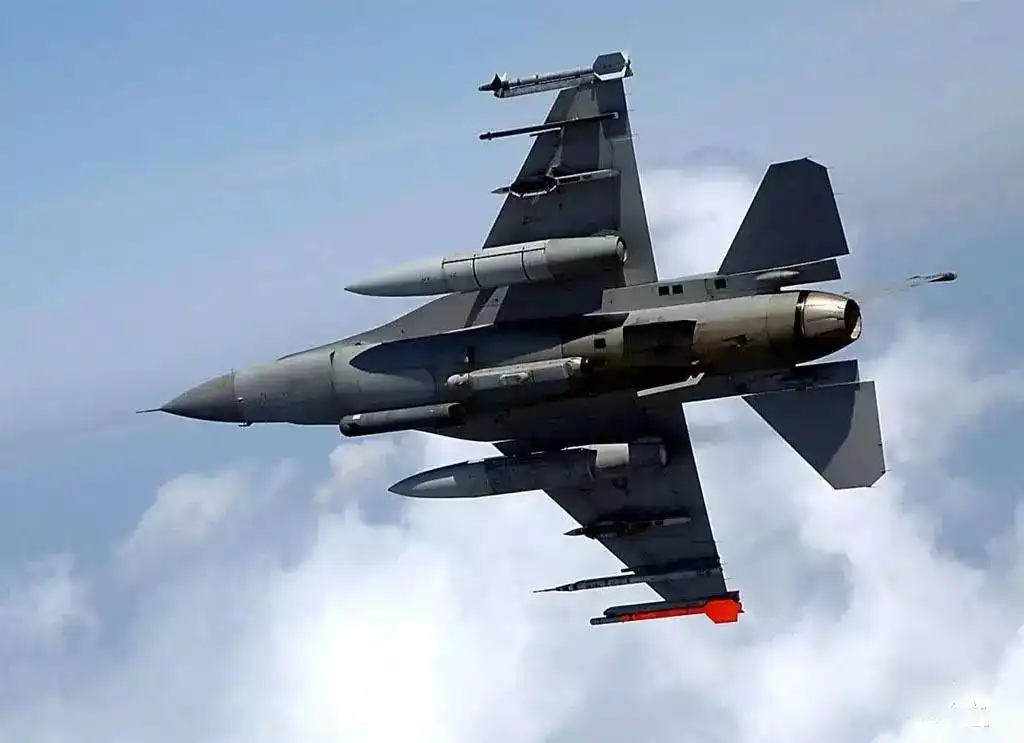
The F/A-18 Hornet and its advanced successor, the F/A-18E/F Super Hornet, are among the most versatile multirole fighter aircraft used by the U.S. Navy and allied forces. One of the key performance metrics for any fighter jet is its operational range, which determines its effectiveness in combat missions, fleet defense, and long-distance deployments. The range of the F-18 varies significantly depending on factors such as fuel capacity, external fuel tanks, mission type, and aerodynamic improvements.
Range Specifications by Model
The range of the F-18 Hornet and Super Hornet depends on the specific variant and mission configuration. The F/A-18C/D Hornet, widely used for both air-to-air and strike missions, has a standard range of 1,089 nautical miles (nm) when operating in a clean configuration with two AIM-9 Sidewinder missiles. Meanwhile, the F/A-18E/F Super Hornet, with an increased internal fuel capacity and improved aerodynamics, extends this range to 1,275 nm.
| Model | Standard Range (nm) | Combat Range (nm) (Air-to-Air) | Combat Range (nm) (Interdiction, 3 Drop Tanks) | Ferry Range (nm) |
|---|---|---|---|---|
| F/A-18C/D Hornet | 1,089 | 400 | Not specified | 1,800 |
| F/A-18E/F Super Hornet | 1,275 | 462 | 489 | 1,800 |
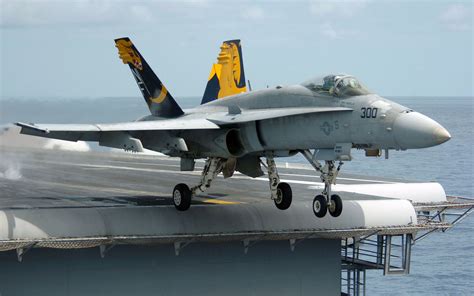
Ferry Range vs. Combat Range
The ferry range of an aircraft represents its maximum distance when flown under optimal fuel efficiency conditions without a combat payload. The F/A-18C/D and F/A-18E/F both reach a ferry range of 1,800 nm when equipped with external fuel tanks. In contrast, the combat range is significantly shorter, as it accounts for fuel consumption during high-G maneuvers, afterburner use, and weapons payload impact.
For example, during an air-to-air engagement, the F/A-18C/D Hornet has a combat range of 400 nm, while the Super Hornet extends this to 462 nm due to its larger fuel capacity. For strike missions, the Super Hornet achieves a combat range of 489 nm when carrying three 480-gallon drop tanks, giving it a significant operational advantage.
Enhancements to Extend Range
External Fuel Tanks and Drop Tanks
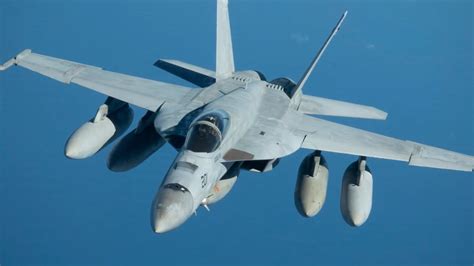
Both the Hornet and Super Hornet can be equipped with external fuel tanks to increase their range. These drop tanks, available in 330-gallon and 480-gallon configurations, extend the aircraft’s combat radius, allowing it to engage targets at greater distances without relying on in-flight refueling.
Conformal Fuel Tanks (CFTs)
The F/A-18E/F Block III Super Hornet incorporates Conformal Fuel Tanks (CFTs), which are mounted along the fuselage to provide an additional 3,500 pounds (1,600 kg) of fuel. These tanks improve the combat range by approximately 260 nm, making them a crucial enhancement for missions requiring long-range strikes and extended patrols.
In-Flight Refueling Capabilities
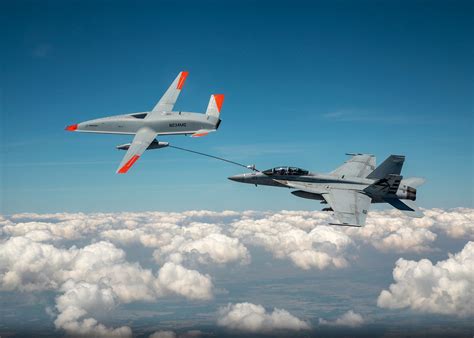
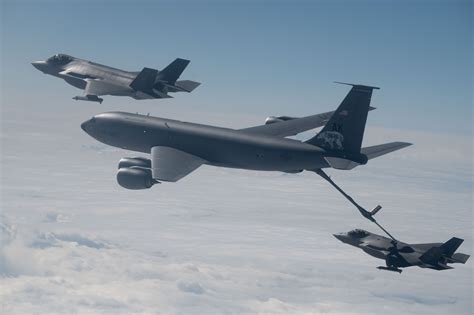
The F/A-18 family supports mid-air refueling, allowing aircraft to significantly extend their mission endurance. Equipped with probe-and-drogue refueling systems, the Hornet and Super Hornet can refuel from KC-130, KC-135, and KC-10 tankers. This capability enhances carrier strike group operations and allows long-range missions deep into contested airspace.
Tactical and Strategic Impact of Range
Carrier Operations and Naval Strike Capability
The U.S. Navy operates the F/A-18 Hornet and Super Hornet from aircraft carriers, where range is a critical factor in mission planning. The ability to conduct long-range interdiction strikes while maintaining a combat-effective fuel reserve is essential for carrier-based warfare.
Air Superiority and Power Projection
In air superiority missions, extended range allows fighter escorts and patrols to cover greater distances, securing airspace over disputed maritime zones and land-based theaters of operation. The Super Hornet’s improved range makes it a valuable asset in multi-national operations and forward-deployed squadrons.
Comparison to Other Fighter Jets
When compared to contemporary aircraft, the F/A-18E/F Super Hornet offers a competitive range, but it remains below fifth-generation stealth fighters like the F-35C Lightning II, which has a range of approximately 1,200 nm without drop tanks. However, the F/A-18’s external fuel options and refueling capability help close this gap.
Conclusion
The range of the F/A-18 Hornet and Super Hornet varies depending on the model, fuel configuration, and mission type. The F/A-18C/D Hornet provides a standard range of 1,089 nm, while the F/A-18E/F Super Hornet extends this to 1,275 nm. With external tanks, both aircraft achieve ferry ranges of 1,800 nm, and combat ranges are influenced by mission profiles and fuel enhancements like CFTs and aerial refueling. These capabilities make the F/A-18 family a crucial component of modern naval aviation and multi-role combat operations.
FAQ
1. How does the F-18’s range compare to the F-35?
The F/A-18E/F Super Hornet has a slightly longer standard range than the F-35C, at 1,275 nm vs. 1,200 nm. However, the F-35C features more advanced stealth and fuel efficiency, making it better suited for penetrating enemy defenses without detection.
2. Can the F/A-18 refuel in the air?
Yes, the F/A-18 Hornet and Super Hornet are equipped with probe-and-drogue refueling systems, allowing them to extend their operational range by receiving fuel from aerial tankers like the KC-135, KC-10, and KC-130.
3. What is the significance of Conformal Fuel Tanks (CFTs) on the Super Hornet?
CFTs increase the combat range of the Super Hornet by approximately 260 nm, allowing for longer strike missions without increasing drag significantly. They are especially useful for carrier-based operations requiring deep penetration into contested airspace.