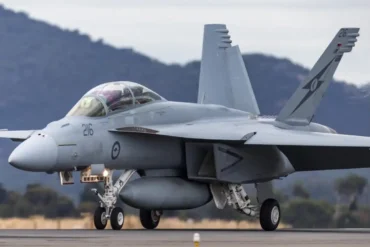
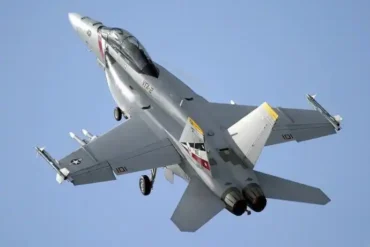
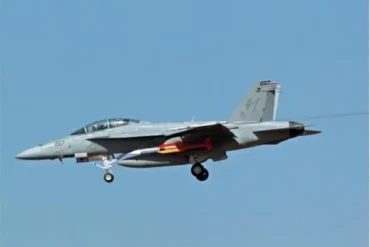
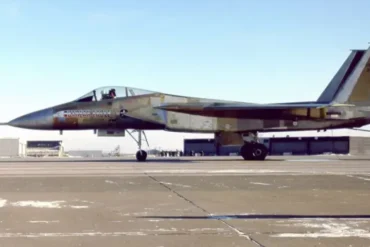
The F/A-18 Super Hornet, a cornerstone of modern naval aviation, is renowned for its versatility and combat prowess. A critical aspect of its operational capability is its flight time or endurance, which varies based on mission profiles, payload configurations, and external support.
Factors Influencing Flight Time
Several key factors influence the Super Hornet’s flight time:
- Mission Profile: High-intensity combat missions involving aggressive maneuvers and afterburner usage consume more fuel, reducing flight time. In contrast, routine training or low-intensity patrols are less demanding.
- Payload: Carrying heavy ordnance increases the aircraft’s weight and aerodynamic drag, leading to higher fuel consumption and reduced endurance.
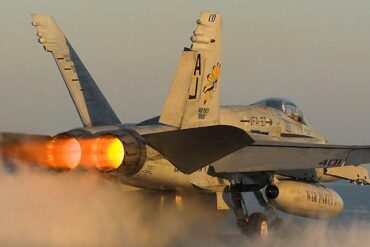
- Speed and Altitude: Operating at subsonic speeds (Mach 0.8–0.9) and optimal altitudes maximizes fuel efficiency. However, supersonic speeds, especially with afterburner engagement, significantly decrease flight time.
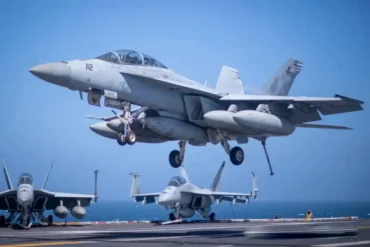
- External Fuel Tanks: Equipping the Super Hornet with external fuel tanks can substantially extend its range and endurance by increasing total fuel capacity.
- Aerial Refueling: The ability to refuel mid-air allows the Super Hornet to extend its flight time indefinitely, limited primarily by crew endurance and mission requirements.
Typical Flight Durations
Understanding the Super Hornet’s flight time across various mission profiles is essential:
- Combat Missions: For high-threat environments requiring afterburner use and heavy payloads, flight durations typically range from 1.5 to 2 hours. The unrefueled combat radius is approximately 500 nautical miles.
- Ferry Flights: When configured for maximum range with external fuel tanks, the Super Hornet can achieve flight times of up to 3–4 hours, covering distances between 1,800 and 2,000 nautical miles.
- Training/Patrol: During routine training or low-intensity patrols, flight times generally range from 1.5 to 2.5 hours, depending on specific mission parameters.
Fuel Capacity and Consumption
The Super Hornet’s fuel capacity and consumption rates are pivotal in determining its endurance:
- Internal Fuel Capacity: Approximately 14,400 pounds.
- External Fuel Tanks: Up to three 480-gallon tanks can be mounted, increasing total fuel capacity to around 24,400 pounds.
- Fuel Consumption: At cruising speeds, the Super Hornet consumes approximately 8,000–10,000 pounds of fuel per hour.
Example Calculation:
- Without External Tanks: 14,400 lbs (internal fuel) ÷ 8,000 lbs/hour ≈ 1.8 hours of flight time.
- With External Tanks: 24,400 lbs (total fuel) ÷ 8,000 lbs/hour ≈ 3 hours of flight time.
Conclusion
The F/A-18 Super Hornet’s flight time is a dynamic parameter influenced by mission demands, payload, speed, and refueling opportunities. Its design emphasizes flexibility, allowing it to adapt to a wide range of operational scenarios.
Frequently Asked Questions
How does afterburner usage affect the Super Hornet’s flight time?
Engaging the afterburner significantly increases fuel consumption, reducing overall flight time. While specific figures are mission-dependent, afterburner use can decrease endurance from hours to mere minutes.
Can the Super Hornet conduct long-range missions without aerial refueling?
Yes, with external fuel tanks, the Super Hornet can undertake ferry flights up to 2,000 nautical miles. However, combat missions typically require aerial refueling to maintain operational effectiveness over extended ranges.
What is the impact of payload on the Super Hornet’s endurance?
Heavier payloads increase aerodynamic drag and weight, leading to higher fuel consumption and reduced flight time. Mission planning must balance payload requirements with desired endurance to achieve operational objectives.