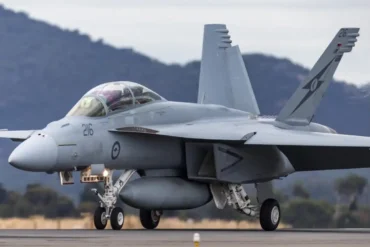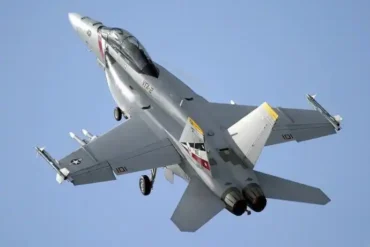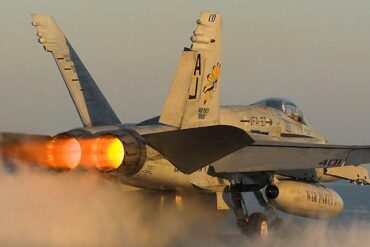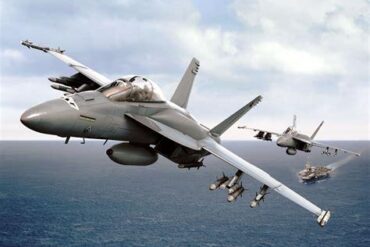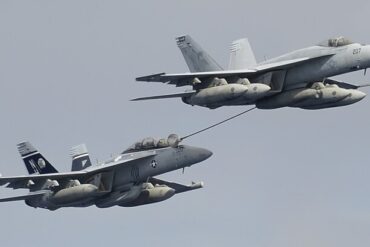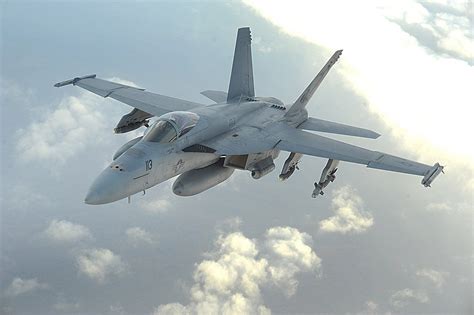
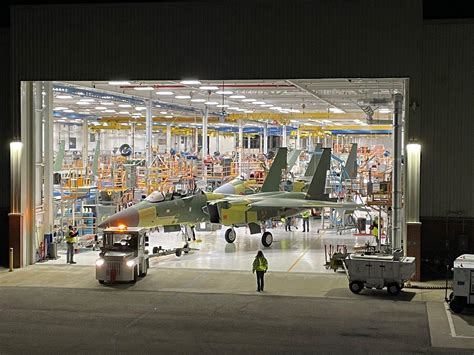
Boeing is preparing to relocate its F/A-18 Super Hornet upgrade operations from its long-standing St. Louis facility starting in 2026, a decision that underscores both the shifting defense priorities of the U.S. Navy and the internal challenges facing one of America’s most significant defense contractors. The move comes after the company secured an additional $200 million sustainment contract for the Navy’s final batch of Super Hornets, providing temporary life-extension support for the aircraft as the U.S. military increasingly shifts focus toward stealth fighters and sixth-generation platforms.
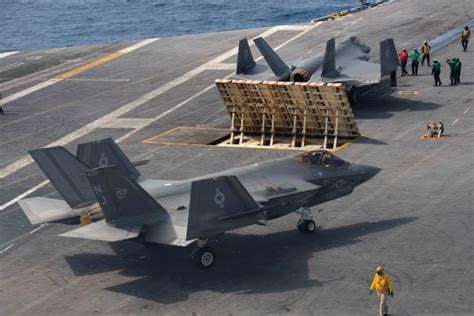
The decision aligns with the Navy’s long-term strategy of reducing reliance on fourth-generation aircraft while channeling funding toward next-generation systems, including the F/A-XX program and the F-35C Lightning II, which is rapidly becoming the cornerstone of carrier-based air power. While Boeing initially planned to keep Super Hornet production active until 2027, the final order for the jet was already placed in 2024, marking the symbolic beginning of the end for an aircraft that has been the backbone of U.S. carrier aviation for over two decades.
Transitioning From the Super Hornet to the Next Era of Air Dominance
The U.S. Navy’s transition away from the F/A-18E/F reflects broader trends within defense aviation: a shift toward stealth capabilities, network-centric warfare, and autonomous platforms. With the Navy having finalized its last $1.1 billion Super Hornet purchase in 2024, the aircraft will continue flying for decades, but modernization efforts will taper off as newer platforms assume frontline roles.
Boeing’s Air Dominance division in St. Louis will pivot toward other major defense programs, including:
- F-15EX Eagle II – a heavily modernized variant of the legendary F-15, designed for high survivability and long-range strike capability.
- T-7A Red Hawk – the U.S. Air Force’s next-generation advanced trainer aircraft, critical for preparing future fighter pilots.
- MQ-25 Stingray – a carrier-based unmanned aerial refueling drone, designed to extend the range of the F-35C and Super Hornet fleets.
- F-47 (in development) – a forthcoming fighter concept within Boeing’s classified and next-gen program portfolio.
This transition highlights how Boeing intends to retain its place within the Pentagon’s industrial base, even as one of its most recognizable fighter lines sunsets. However, the move has significant implications for St. Louis’s workforce, which has built the F/A-18 for decades and is now grappling with both uncertainty and labor disputes.
Workers on Strike: A Battle for Fair Compensation
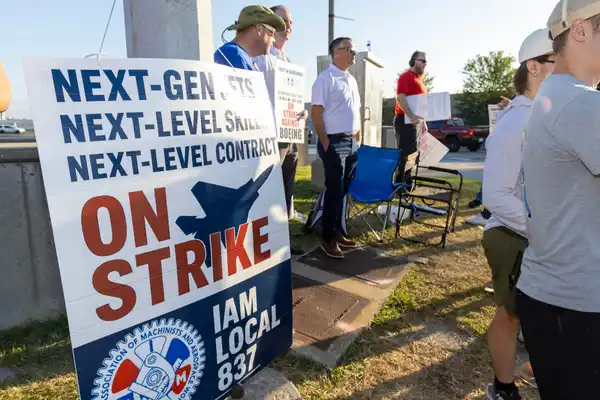
The International Association of Machinists and Aerospace Workers District 837 (IAM 837) has been on strike for nine weeks, representing thousands of skilled technicians whose craftsmanship underpins Boeing’s military production lines. These workers, many of whom have spent their entire careers at the St. Louis facility, demand fair compensation, stronger job security, and respect for their role in sustaining America’s aerospace dominance.
Union representatives, including Tom Boelling, have criticized Boeing’s timing, arguing that the relocation announcement during an active strike reflects disregard for the workforce. While Boeing continues to negotiate under federal mediation, the dispute underscores a deeper issue: the irreplaceable value of America’s skilled machinists. Without them, aircraft production lines would grind to a halt, threatening delivery schedules for aircraft critical to national security.
The strike has drawn national attention not only because of its economic impact on the St. Louis region but also because of its symbolic weight. Boeing employs nearly 16,000 people directly in the area and supports 34,000 additional jobs indirectly, spending over $750 million annually with more than 350 local suppliers. These numbers reflect how deeply the company is woven into the region’s industrial and economic fabric.
The Super Hornet’s Legacy and Sunset
Introduced in the late 1990s as the successor to the original F/A-18 Hornet, the Super Hornet (E/F variants) became the Navy’s premier carrier-based strike fighter, capable of air-to-air combat, ground attack, and maritime strike missions. Its versatility allowed it to replace multiple aircraft types and sustain the Navy’s strike wings during the long gap before the F-35C’s arrival.
Over the years, the Super Hornet has been deployed in Iraq, Afghanistan, Syria, and countless carrier deployments, proving itself as a workhorse capable of sustaining America’s global naval presence. Despite its proven combat record, the platform’s non-stealth design has made it increasingly vulnerable against advanced adversary air defenses. This reality cemented the Navy’s decision to fully pivot toward stealth and next-gen systems, effectively writing the end of new Super Hornet production.
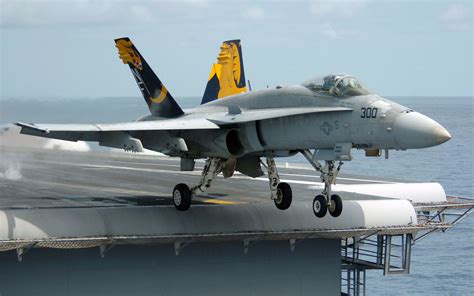
Boeing’s upgrade programs—designed to enhance avionics, radar systems, and airframe life extension—will continue for existing fleets. However, relocating these upgrades away from St. Louis signifies the final stage of transition, where Boeing consolidates resources toward sustaining current jets while prioritizing future fighter programs.
Boeing’s Crisis of Confidence and Strategic Challenges
For Boeing, the relocation decision comes at a time of broader corporate turbulence. Over the past decade, the company has weathered multiple crises that have damaged its reputation and financial stability:
- The 737 MAX disasters, which killed 346 people and nearly resulted in Boeing facing felony charges.
- The 777X program, delayed by nearly a decade due to technical and certification issues.
- Persistent delays and cost overruns with the Air Force One modernization program.
Despite these setbacks, Boeing remains a top-tier defense contractor, receiving approximately $20 billion annually from Pentagon contracts across its portfolio. The relocation of Super Hornet upgrades is therefore less about winding down operations entirely and more about strategically reallocating resources to higher-priority projects, especially as the Pentagon’s sixth-generation fighter program ramps up.
The Broader Industrial Base at Risk
Beyond Boeing itself, the decision exposes vulnerabilities within the broader American defense industrial base. Skilled machinists and technicians, particularly those trained in CNC machining, multi-axis robotics, and advanced aerospace manufacturing, are increasingly rare. With an aging workforce and fewer young workers entering the field, the U.S. faces the risk of losing core industrial competencies to retirement and foreign competition.
The national security implications are profound. Without sufficient skilled labor, the U.S. risks delays in producing critical defense systems, forcing greater reliance on foreign suppliers. This not only threatens jobs but also undermines the ability to rapidly respond to emerging threats.

The decline in America’s skilled labor pipeline contrasts sharply with the Pentagon’s demand for ever more advanced, precise, and rapid manufacturing. As platforms like the F-35, MQ-25, and future fighters require increasingly sophisticated components, the gap between labor supply and defense demand widens—making labor disputes like IAM 837’s strike a microcosm of a national-level crisis.
What Relocation Means for St. Louis and Beyond
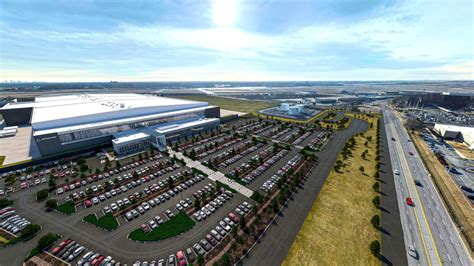
Relocating F/A-18 upgrade work is more than a logistical decision; it represents a shift in the aerospace landscape of St. Louis, a city historically tied to McDonnell Douglas and later Boeing after the 1997 merger. For decades, St. Louis symbolized America’s dominance in fighter production, producing icons from the F-4 Phantom II to the F-15 Eagle and the Super Hornet.
As Boeing shifts resources, St. Louis risks losing part of that legacy. The city will remain central to Boeing’s defense operations—particularly with ongoing F-15EX, T-7A, and MQ-25 programs—but the loss of Super Hornet sustainment work will inevitably reduce the scope of its aerospace role. For workers, it heightens uncertainty about whether Boeing will prioritize their livelihoods or continue consolidating operations elsewhere to cut costs and refocus investments.
Conclusion: The End of One Era, the Uncertain Dawn of Another
The relocation of F/A-18 Super Hornet upgrades from St. Louis represents the latest chapter in the long evolution of U.S. naval aviation and the defense industrial base. It symbolizes the sunset of a combat-proven aircraft, the struggles of American labor in a critical industry, and the strategic pivot toward next-generation systems designed to maintain U.S. dominance in an era of great power competition.
Yet beneath the strategic shifts lies a deeper question: Can the United States sustain the skilled workforce necessary to meet the demands of modern defense? Boeing’s decision may be a business necessity, but it is also a warning. Without investing in its workers as much as in its technology, America’s aerospace giant risks eroding the very foundation of its industrial might.