Aircraft carriers remain the ultimate symbols of maritime power. While submarines, destroyers, and missile systems have transformed naval warfare, the ability to launch fighter jets hundreds of miles from shore continues to define the reach and influence of the world’s leading navies. In 2026, the global balance of carrier aviation reveals a striking reality: one nation dominates overwhelmingly, while a handful of emerging and established naval powers compete to expand their carrier-based air capabilities.
The distribution of carrier-based fighter jets is not merely a measure of fleet size. It reflects industrial capacity, technological sophistication, strategic ambition, and geopolitical influence. Nations capable of operating fighters from moving flight decks possess one of the most complex military capabilities ever developed. Training pilots for carrier landings, maintaining specialized aircraft, and sustaining carrier strike groups requires decades of investment and an extensive defense-industrial ecosystem.
Today, the global carrier aviation landscape is shaped by the overwhelming dominance of the United States, the rapid expansion of China, the modernization efforts of India, and the continuing relevance of European naval aviation powers such as the United Kingdom, France, Italy, and Spain. Meanwhile, Japan is entering a new era as it gradually restores fixed-wing naval aviation after decades of postwar restrictions.
The world’s carrier-based fighter fleets tell the story of shifting power in the twenty-first century, where aircraft carriers remain indispensable tools of deterrence, diplomacy, and combat projection.
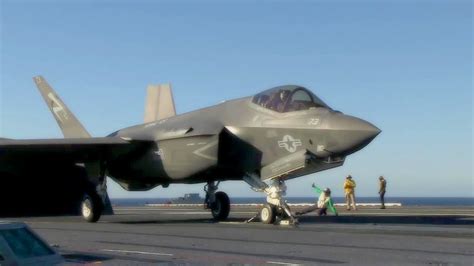
The United States Navy and Marine Corps: Unmatched Carrier Aviation Dominance
No discussion of carrier-based fighter aviation can begin anywhere except with the United States. The U.S. Navy and Marine Corps collectively operate more carrier-capable combat aircraft than the rest of the world combined, maintaining a level of naval air superiority unmatched in modern history.
The United States currently fields a force of more than 1,100 carrier-capable fighter and strike aircraft, distributed across eleven nuclear-powered aircraft carriers and nine amphibious assault ships capable of operating fixed-wing combat aircraft. Even as USS Nimitz approaches retirement and USS John F. Kennedy completes sea trials, the United States remains far ahead of every competitor.
The backbone of American carrier aviation continues to be the Boeing F/A-18E/F Super Hornet. With approximately 560 aircraft in operational service, the Super Hornet forms the primary strike and air superiority platform of carrier air wings worldwide. These aircraft conduct missions ranging from fleet defense and deep-strike operations to maritime interdiction and close air support.
Supporting the Super Hornet fleet is the EA-18G Growler, the world’s premier carrier-based electronic warfare aircraft. With roughly 140 examples in service, the Growler provides critical capabilities in radar suppression, electronic attack, communications disruption, and network warfare. Modern air campaigns increasingly depend on electronic dominance, making the Growler one of the most strategically valuable aircraft in naval aviation.
The future of American carrier aviation increasingly revolves around the Lockheed Martin F-35C Lightning II. More than seventy F-35Cs are already operational, with procurement accelerating significantly. The aircraft brings stealth, sensor fusion, advanced networking, and enhanced survivability to carrier strike groups. Fiscal Year 2027 procurement plans indicate the largest annual F-35C acquisition yet, underscoring the Navy’s commitment to fifth-generation carrier aviation.
The Marine Corps contributes substantial additional capability through its fleet of F-35B short takeoff and vertical landing fighters. Operating from amphibious assault ships, these aircraft effectively transform smaller vessels into light aircraft carriers, greatly expanding American airpower projection options.
Why America’s Carrier Fleet Remains the Global Benchmark
The United States possesses advantages that extend far beyond aircraft numbers. Its naval aviation ecosystem includes global logistics networks, extensive pilot training programs, decades of combat experience, and unmatched carrier operational tempo.
American carriers routinely deploy across the Atlantic, Pacific, Mediterranean, Persian Gulf, and Indian Ocean. This global presence ensures that U.S. carrier aviation remains continuously tested under real-world operational conditions. Few nations can sustain even one carrier deployment for extended periods; the United States routinely maintains multiple carrier strike groups at sea simultaneously.
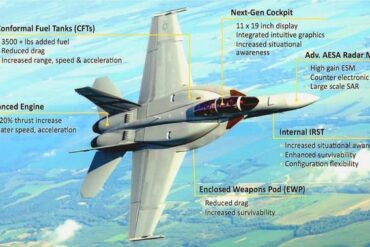
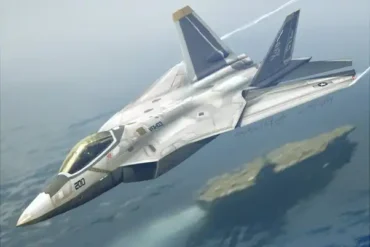
Moreover, American naval aviation benefits from continuous technological innovation. Programs such as the sixth-generation F/A-XX fighter promise to maintain U.S. superiority well into the coming decades, eventually replacing aging Super Hornets and introducing entirely new levels of combat capability.
China’s PLANAF: The Rising Challenger
If the United States represents established dominance, China represents rapid transformation. Over the past two decades, the People’s Liberation Army Navy has evolved from a largely coastal defense force into one of the world’s most ambitious blue-water navies.
China’s carrier aviation journey began with the commissioning of Liaoning in 2012, a refurbished Soviet-designed vessel originally intended for the Soviet Navy. Although initially viewed as a training platform, Liaoning laid the foundation for China’s future carrier ambitions.
It was followed by Shandong, China’s first domestically built aircraft carrier, and later by the significantly more advanced Fujian, commissioned in 2025. Fujian represents a major leap forward, incorporating modern launch systems and significantly expanded aviation capabilities.
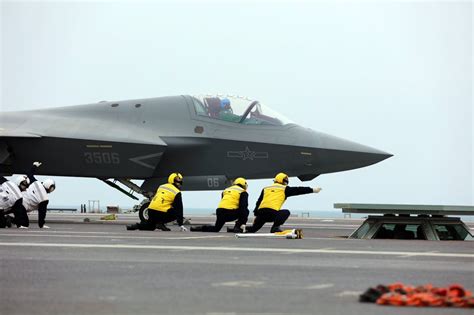
Current estimates suggest China operates more than 100 carrier-based fighter aircraft, although exact figures remain difficult to verify due to limited transparency.
The core of the fleet remains the Shenyang J-15, an extensively modified derivative of the Soviet Su-33. While often criticized in its early years for weight and reliability concerns, newer J-15 variants have received substantial improvements in avionics, weapons integration, and operational performance.
China’s most significant development is the emergence of the J-35, a low-observable carrier-based fighter frequently categorized as a fifth-generation aircraft. Officially unveiled in late 2024 and reportedly entering serial production in 2025, the J-35 is expected to become the future centerpiece of Chinese carrier aviation.
The combination of expanding carrier construction, growing industrial capacity, and increasingly sophisticated aircraft places China firmly in second place globally. More importantly, its trajectory suggests continued growth for decades to come.
The Strategic Importance of China’s Carrier Expansion
China’s carrier program serves multiple strategic objectives. Beyond military utility, carriers provide political influence, crisis response capability, and visible demonstrations of national power.
As China’s economic interests expand across Africa, the Middle East, and the Indo-Pacific, carrier strike groups provide the means to protect maritime trade routes and overseas interests. The expected construction of a nuclear-powered fourth carrier would further extend China’s operational reach, reducing one of the key advantages currently held by the United States.
Carrier aviation has become a central component of Beijing’s broader effort to transform the People’s Liberation Army Navy into a globally deployable force.
India’s Carrier Aviation Modernization
India occupies a unique position among carrier-operating nations. While its carrier force remains far smaller than those of the United States or China, it plays a crucial role in maintaining regional balance across the Indian Ocean.
The Indian Navy currently operates two aircraft carriers: INS Vikramaditya and INS Vikrant. Together, these ships provide India with a continuous carrier aviation capability that few countries can match.
The nation’s carrier fighter fleet consists primarily of approximately 36 to 40 MiG-29K fighters. Derived from the Soviet MiG-29 family, these aircraft have served as India’s principal carrier-based fighters for years.
However, India is now pursuing significant modernization. A major procurement of 26 Dassault Rafale M fighters is expected to dramatically improve carrier air wing performance. The Rafale M offers superior sensors, weapons integration, reliability, and multirole flexibility compared with the aging MiG-29K fleet.
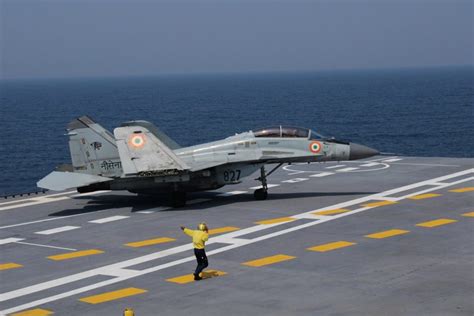
India’s ambitions extend beyond aircraft acquisition. Plans for additional carriers, including future projects such as INS Vishal, demonstrate New Delhi’s determination to maintain a robust maritime presence across critical sea lanes and strategic chokepoints.
The United Kingdom’s Return to Large-Scale Carrier Operations
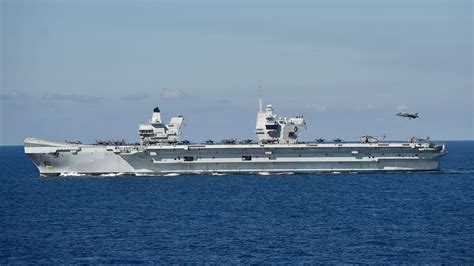
The Royal Navy has reestablished itself as a major carrier aviation force through the introduction of the Queen Elizabeth-class aircraft carriers.
HMS Queen Elizabeth and HMS Prince of Wales represent the largest warships ever built for the Royal Navy. Designed around the F-35B Lightning II, these vessels restored Britain’s fixed-wing carrier capability after nearly a decade of absence.
The United Kingdom currently operates 47 F-35B fighters, shared between the Royal Navy and Royal Air Force. Additional purchases are expected, increasing total fleet size substantially over the coming years.
Unlike traditional catapult-equipped carriers, the Queen Elizabeth class uses ski-jump launch systems optimized for short takeoff and vertical landing operations. This design simplifies carrier operations while maintaining significant combat capability.
British carriers increasingly participate in multinational deployments, reinforcing NATO operations and supporting allied maritime security efforts worldwide.
France’s Nuclear-Powered Naval Aviation Force
France remains Europe’s only operator of a nuclear-powered aircraft carrier. The Charles de Gaulle serves as the flagship of French naval power and provides Paris with independent global strike capability.
The carrier’s air wing centers on approximately 41 Dassault Rafale M fighters. These aircraft are among the most capable multirole naval fighters in service today, combining air superiority, strike, reconnaissance, and nuclear deterrence missions within a single platform.
French carrier aviation emphasizes flexibility and expeditionary operations. Charles de Gaulle has participated extensively in operations across the Middle East, Mediterranean, and Indo-Pacific regions, demonstrating the enduring value of a carrier-centered naval strategy.
France is already planning a next-generation nuclear carrier that will eventually replace Charles de Gaulle during the 2040s, ensuring continuity of French naval aviation power.
Italy and Spain: Sustaining Carrier Aviation Traditions
Italy and Spain maintain smaller but strategically important carrier aviation forces.
Italy operates both the aircraft carrier Cavour and the amphibious assault ship Trieste, providing flexibility for power projection and expeditionary operations. The Italian Navy is transitioning from AV-8B Harrier aircraft to the advanced F-35B.
With approximately twenty-one carrier-capable fighters and additional deliveries planned, Italy is steadily increasing the sophistication of its naval aviation force.
Spain continues operating AV-8B Harrier aircraft from its amphibious assault ship Juan Carlos I. Although the fleet remains effective, uncertainty surrounds future replacement plans. Without a successor aircraft program, Spain’s fixed-wing naval aviation capability may face long-term challenges.
Japan’s Emerging Carrier Fighter Capability
Japan’s reentry into carrier aviation marks one of the most significant naval developments in Asia.
Although constitutional and political sensitivities prevent Japan from officially describing its vessels as aircraft carriers, the reality is increasingly clear. The Izumo-class ships are being modified specifically to operate F-35B fighters.
Japan has already ordered 42 F-35Bs, with deliveries underway. Initial aircraft have entered service, while pilot training and operational integration continue.
The strategic rationale is compelling. Japan faces growing security concerns across the East China Sea and around its southwestern island chain. Carrier-capable F-35Bs provide flexible airpower that can be rapidly repositioned during crises.
As operational experience grows, Japan’s carrier aviation capability is expected to become a major component of regional deterrence architecture.
The Decline of Russia’s Carrier Aviation
One of the most striking developments in global naval aviation is Russia’s disappearance from the carrier aviation rankings.
For years, Admiral Kuznetsov represented Russia’s sole carrier capability. However, prolonged refits, accidents, maintenance failures, and financial constraints have left the vessel effectively inactive since 2017.
Although carrier-capable MiG-29K and Su-33 aircraft remain in inventory, they now operate primarily from land bases. Without an operational carrier, Russia no longer functions as a meaningful carrier aviation power.
This decline highlights the immense challenges involved in sustaining aircraft carrier operations. Building and maintaining carriers requires consistent investment, industrial expertise, and long-term strategic commitment.
The Future of Carrier-Based Fighter Fleets
The future of carrier aviation is being shaped by stealth technology, advanced networking, artificial intelligence, and unmanned systems. While aircraft carriers continue evolving, they remain central to naval strategy among the world’s leading maritime powers.
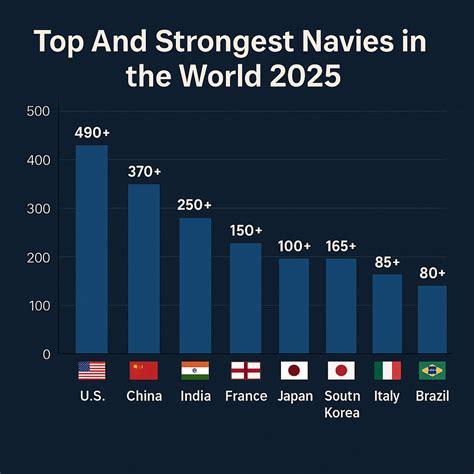
The United States retains overwhelming superiority, fielding more carrier-based fighter jets than all competitors combined. China is rapidly narrowing certain capability gaps and expanding its fleet at an unprecedented pace. India is modernizing to secure its regional influence, while European navies continue investing in advanced carrier aviation platforms.
Japan’s emergence adds a new dimension to Indo-Pacific security, while Russia’s decline illustrates how quickly carrier capability can disappear without sustained support.
In 2026, the ranking of carrier-based fighter fleets reveals more than military statistics. It provides a snapshot of global power itself. Nations that control the skies above the oceans possess the ability to influence events far beyond their shores, making carrier aviation one of the most consequential indicators of maritime strength in the modern era.