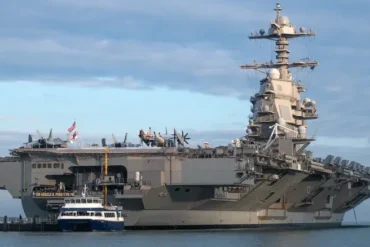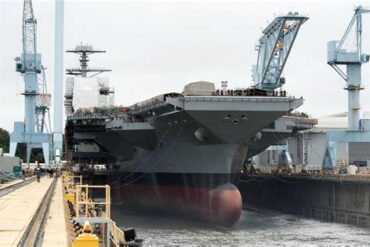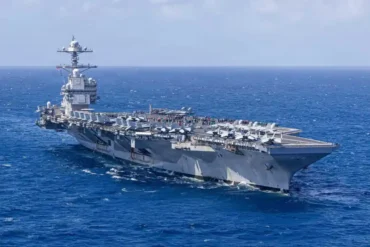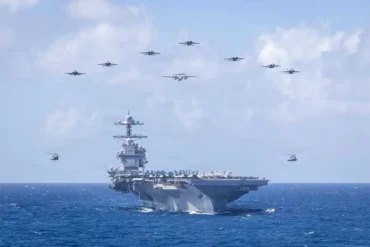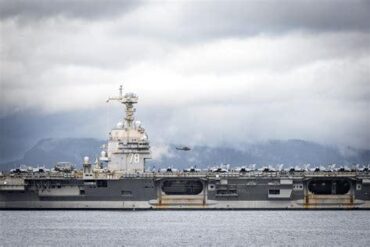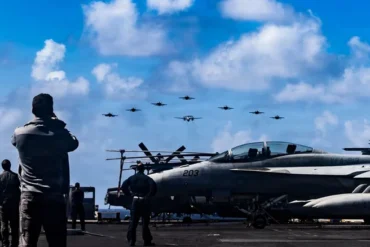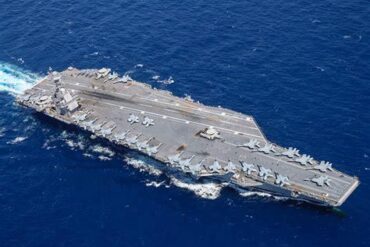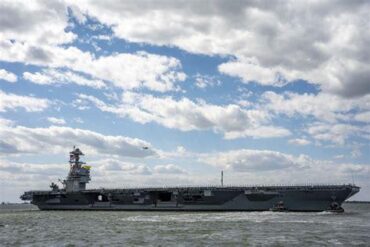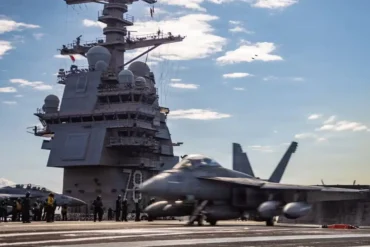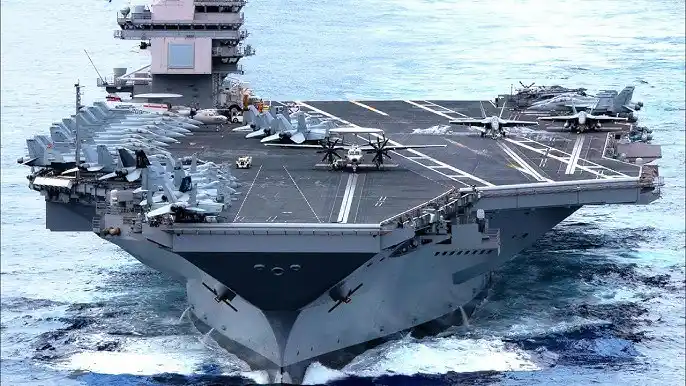
The evolution of naval aviation has reached an awe-inspiring pinnacle with the advent of the USS Gerald R. Ford (CVN 78) — a colossal engineering marvel that redefines what it means to project air power at sea. More than just a warship, the Gerald R. Ford is a floating city, a mobile airbase, and a symbol of next-generation warfare. Since Eugene Burton Ely’s historic flight in 1911, aircraft carriers have transformed dramatically, and none embodies this transformation more than the Ford-class flagship.
Dimensions and Dominance: A New Standard in Naval Architecture
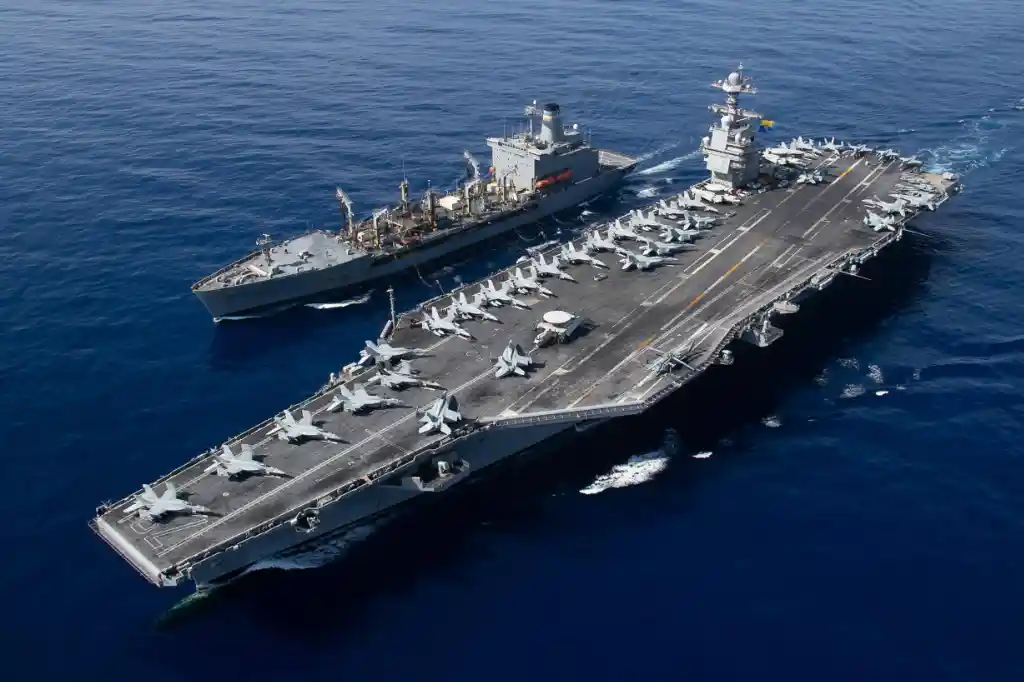
At 1,100 feet in length and tipping the scales at over 100,000 tons, the USS Gerald R. Ford claims the title of the largest aircraft carrier in the world. This titanic vessel dwarfs even its formidable predecessor, the Nimitz-class carrier, thanks to a design philosophy that blends brute size with cutting-edge innovation.
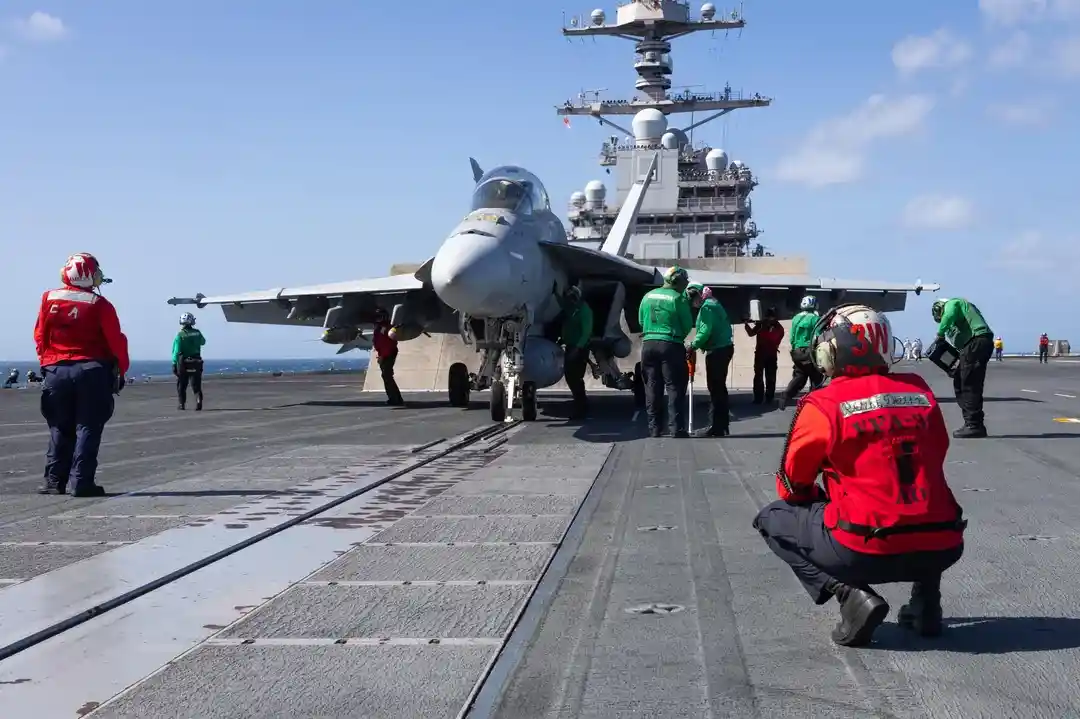
The ship’s deck spans nearly five acres, a space large enough to host over 75 aircraft at full operational capacity. These include both single-seat F/A-18E Super Hornets and two-seat F/A-18F variants, known for their multi-role combat capabilities. The Gerald R. Ford currently does not operate F-35C Lightning II stealth fighters, but upcoming retrofits will make her fully compatible with fifth-generation aircraft technology, bridging today’s missions with tomorrow’s battlefield requirements.
Electromagnetic Breakthrough: EMALS Launch System
Central to the Gerald R. Ford’s technological superiority is its Electromagnetic Aircraft Launch System (EMALS) — a revolutionary leap forward from the steam-powered catapults used on Nimitz-class carriers. EMALS replaces complex steam mechanisms with a streamlined system that uses stored energy and linear induction motors to launch aircraft with precision.
The advantage? Not only does EMALS reduce the stress endured by airframes during launch, but it also enables the launch of a wider range of aircraft, including lightweight UAVs and heavy strike jets, with greater control. This flexibility is pivotal in modern combat where missions can range from precision strikes to surveillance.
Furthermore, EMALS dramatically reduces maintenance complexity and the need for a large crew, minimizing operational costs over time. For a fleet expected to serve for over 50 years, these savings are not just beneficial—they’re transformative.
Arresting the Future: Advanced Arresting Gear (AAG)
If EMALS is the takeoff game-changer, the Advanced Arresting Gear (AAG) is its perfect counterpart for landings. This system replaces traditional hydraulic arresting wires with an electromechanical energy absorption system, enabling safer, more adaptable aircraft recovery.
AAG is optimized to decelerate a variety of aircraft — from heavily loaded fighter jets to unmanned aerial systems (UAS) — with smoother force distribution. This mitigates wear and tear on both the arresting systems and the aircraft themselves, extending their service life and improving mission readiness.
Weapons at the Speed of War: Advanced Weapons Elevators (AWE)
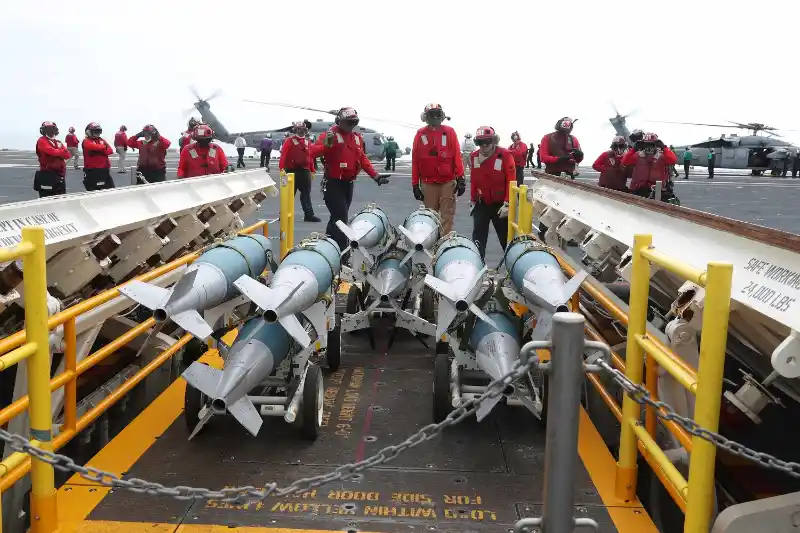
The Ford-class carrier is also defined by its speed — not just in propulsion, but in ordnance delivery. The Advanced Weapons Elevators (AWE) onboard use electromagnetic motors instead of hydraulics to shuttle bombs and missiles between storage decks and the flight deck.
With 11 elevators, these systems drastically reduce the time needed to arm aircraft, which translates to a faster sortie generation rate — a key advantage in high-tempo operations. Perhaps more importantly, they reduce the manual labor required for weapons handling, contributing to a leaner, more efficient crew.
The Power Beneath: A1B Nuclear Reactors
Driving all these advanced systems is the twin A1B nuclear reactors, designed specifically for the Ford-class. Together, they produce a 25% higher thermal output than the A4W reactors in the Nimitz-class, despite being smaller and more efficient.
This immense power output not only propels the 100,000-ton ship at over 30 knots but also feeds the energy-hungry EMALS, AAG, radars, and future-directed energy weapons. In theory, the electrical capacity onboard could power a mid-sized American city, highlighting the Ford’s unmatched energy reserves.
Radar and Defense Systems: Eyes and Shields of the Sea
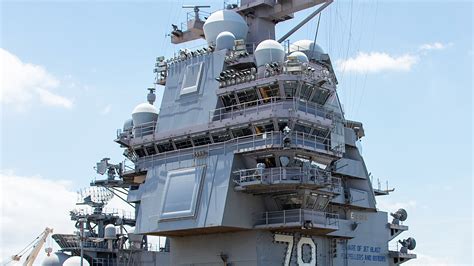
Detection and defense capabilities are equally impressive, owing to the Dual Band Radar (DBR) — a first-of-its-kind integration of S-band volume search radar and X-band AN/SPY-3 radar systems. This combination ensures real-time threat tracking, missile guidance, and low-latency interception.
The radar system feeds data to the ship’s Evolved Sea Sparrow Missiles (ESSMs) and Rolling Airframe Missiles (RAM), forming a tightly integrated network of air defense. These systems allow the Gerald R. Ford to defend against high-speed cruise missiles, enemy aircraft, and incoming threats before they ever reach the horizon.
Crew Comfort and Operational Efficiency
One of the most underrated yet impactful changes in the Ford-class design lies in its habitability upgrades. The crew of approximately 4,500 personnel (including the air wing) benefits from improved living quarters, wider passageways, and optimized workspaces. Fewer sailors are needed to operate the ship compared to Nimitz-class carriers, thanks to automation and smarter layout design.
This human-centric innovation directly impacts morale and efficiency. Better rest, sanitation, and recreation spaces ensure that sailors remain focused and mission-ready over extended deployments.
A Legacy in Motion: Replacing the Nimitz-Class
The Gerald R. Ford is not a standalone marvel — it represents the dawn of an entire class of next-generation carriers. Currently, two more Ford-class carriers are under construction:
- USS John F. Kennedy (CVN 79)
- USS Enterprise (CVN 80)
These ships will gradually replace the Nimitz-class, which has served for over four decades, starting with the decommissioning of older vessels in 2026. Each Ford-class carrier incorporates lessons learned from both war and peacetime operations, adapting continuously to meet the demands of 21st-century conflict.
Aircraft Capacity and Future Integration
While the USS Gerald R. Ford currently supports more than 75 aircraft, this number represents more than just a statistic. It reflects an integrated air wing capable of conducting:
- Strike missions (via Super Hornets and eventually F-35Cs)
- Airborne Early Warning (E-2D Advanced Hawkeye)
- Electronic warfare (EA-18G Growler)
- Logistics and personnel transport (C-2 Greyhound, CMV-22B Osprey)
- Unmanned operations (MQ-25 Stingray)
With the anticipated full deployment of the F-35C Lightning II, alongside autonomous refueling drones and stealth surveillance UAVs, the Gerald R. Ford’s deck will soon host one of the most diverse, capable, and lethal aerial strike groups in naval history.
Conclusion: More Than a Warship
The USS Gerald R. Ford is more than just the largest aircraft carrier in the world — it is a monument to the future of naval warfare. With its advanced electromagnetic systems, vast aircraft capacity, nuclear propulsion, and modernized crew operations, it represents a fundamental shift in how naval power is projected across the globe.
In an era of emerging threats and evolving warfare, the Gerald R. Ford stands as a strategic deterrent, a technological testbed, and a forward-operating fortress—all in one. As future Ford-class carriers enter service, this new fleet will not only uphold the U.S. Navy’s maritime dominance but reshape the very concept of sea-based power projection for generations to come.