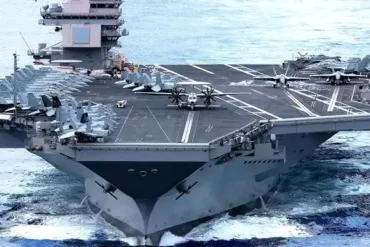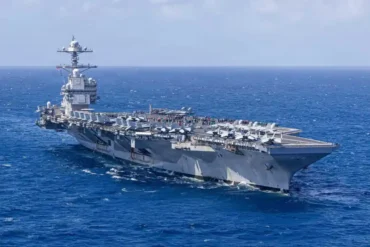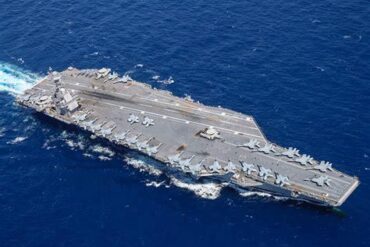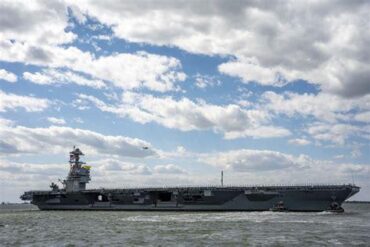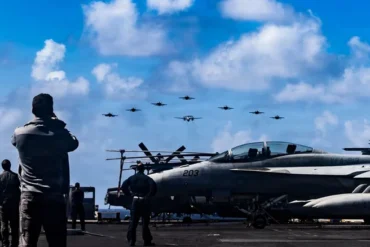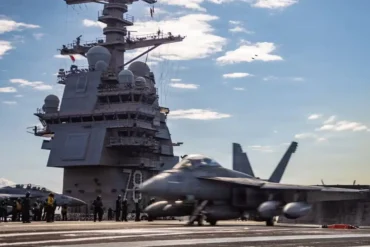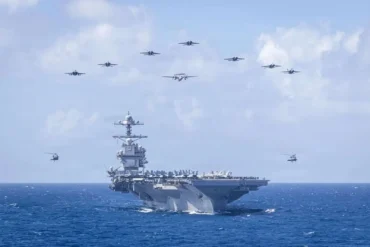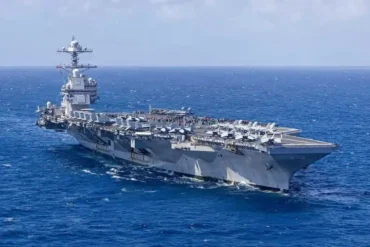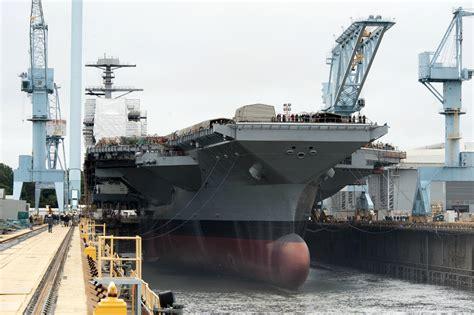
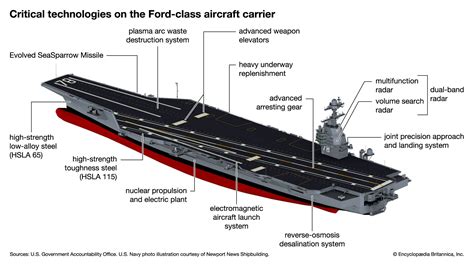
The USS Gerald R. Ford, the most expensive and technologically ambitious aircraft carrier ever built, was designed to redefine naval power. At $13 billion, it showcases next-generation reactors, advanced radar, and the cutting-edge Electromagnetic Aircraft Launch System (EMALS). Fighter jets roar off its deck, missions are executed with precision, and its presence alone reshapes geopolitics. Yet beneath the steel decks and nuclear-powered confidence lies a problem so mundane it borders on absurd: the toilets do not reliably work.
With a crew of roughly 4,600 sailors, the Ford functions like a floating city. Cities, as history has taught us repeatedly, live or die by their infrastructure. According to documents obtained through a Freedom of Information Act request, the ship has struggled with persistent sewage system failures since 2023, turning routine life aboard the carrier into an ongoing logistical headache. This is not an isolated glitch but a chronic issue that has demanded constant attention from exhausted maintenance crews.
The heart of the problem is the ship’s Vacuum Collection, Holding and Transfer (VCHT) system, a sewage design similar to what is used on large cruise ships. In theory, this system should efficiently move waste through narrow pipes using vacuum pressure. In practice, the Ford’s plumbing is far more complex than any civilian vessel, and that complexity has proven fragile under real-world conditions. Internal Navy documents reveal that every single day the full crew is aboard, at least one trouble call is logged to repair or unclog part of the system.
Over more than two years, the carrier has requested 42 external assistance calls, with 32 of them occurring in 2025 alone. That trend suggests the problem is worsening rather than stabilizing. Sailors have reported repeated toilet shutdowns across different sections of the ship, forcing crews to reroute usage and adapt under conditions that are far from ideal during active operations.
Inside the Navy’s Explanation: Misuse and Material Failures
The Navy’s official position places much of the blame on crew behavior. Emails from the engineering department describe sailors introducing improper materials into the system, overwhelming pipes never designed for foreign objects. Hull maintenance technicians have reportedly been working up to 19 hours a day to keep the sewage network functional, an unsustainable tempo on a warship expected to deploy globally.
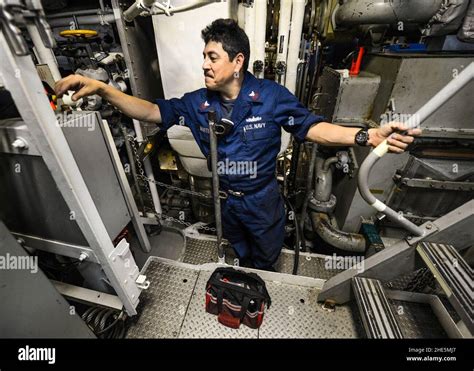
Beyond misuse, there is also a chemistry problem. Calcium buildup inside the pipes gradually narrows the system, reducing flow efficiency until clogs become inevitable. The only effective solution is an acid flush, a procedure that sounds simple but comes with a staggering price tag. Each flush costs the U.S. government around $400,000, and the Ford has required roughly ten flushes since 2023, according to the Government Accountability Office.
Why a Broken Toilet Is a Strategic Risk
It is tempting to laugh at the idea of a supercarrier humbled by plumbing, but history warns against that instinct. Even minor mechanical failures can cascade into mission-ending disasters. A World War II German U-boat was once lost due to a malfunctioning toilet that allowed seawater into critical systems. On a modern carrier, persistent sanitation failures degrade crew morale, strain maintenance resources, and quietly erode readiness.
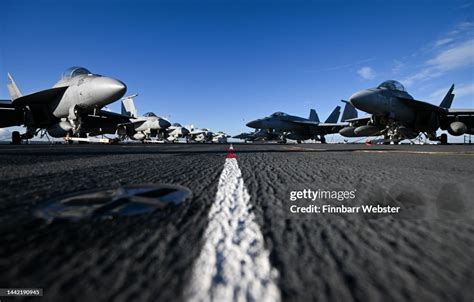
The USS Gerald R. Ford remains a marvel of engineering, but its toilet troubles expose an uncomfortable truth: advanced warfare platforms are only as strong as their most basic systems. Nuclear reactors and electromagnetic catapults may win wars, but without reliable plumbing, even the most powerful ship afloat can find itself compromised by the simplest human necessity.