The American airline industry has changed dramatically since the pandemic, and pilot compensation in 2026 reflects that transformation. Regional airlines once relied on relatively low pilot pay as part of a career structure in which pilots accepted modest earnings in exchange for gaining experience before moving to a major carrier. That model has not disappeared, but the financial gap has become more complicated.
For regional airline captains, 2026 represents a considerably stronger salary environment than the industry saw before the pandemic. Captains at established regional carriers can now earn well into six figures, with the most experienced pilots potentially exceeding $200,000 annually. Yet the ceiling rises much higher at major airlines, where experienced narrowbody captains can earn more than $300,000 and senior widebody captains can approach or exceed $500,000 per year.
The difference is not simply a matter of one airline paying more than another. Aircraft type, seniority, flight hours, contract provisions, bonuses, profit sharing, retirement contributions, per diem payments, and premium flying can all change a pilot’s total compensation. Understanding these factors gives us a much clearer picture of what a regional airline captain salary really means compared with major-airline captain earnings in 2026.
Regional Airline Captain Salary in 2026
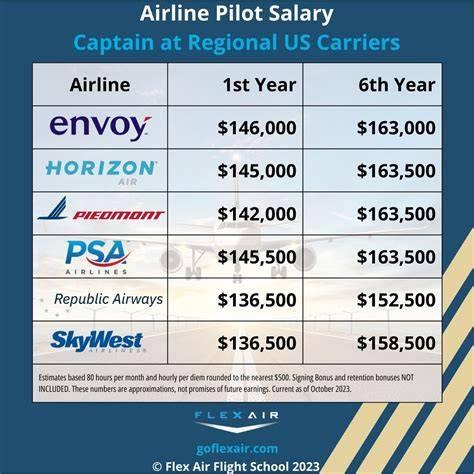
In 2026, regional airline captains generally earn between $100 and $150 per flight hour under the representative pay rates provided in the reference data. That figure varies substantially by carrier, seniority, aircraft, contract, and additional compensation. A captain at one regional airline can therefore have a noticeably different annual income from a captain flying a similar regional jet elsewhere.
SkyWest Airlines, for example, lists a representative captain rate of approximately $120 per hour, while Endeavor Air also sits around $120. Republic Airways is around $110, and Mesa Airlines and GoJet Airlines are approximately $100. Air Wisconsin is lower at about $95. These figures demonstrate why simply labeling someone a “regional captain” does not provide enough information to determine annual earnings.
The annual salary picture is more useful. American Flyers estimates that regional airline captain salaries generally fall around $140,000 to $150,000, although experienced captains can earn considerably more. At Endeavor Air, a captain with approximately 12 years of experience can reportedly exceed $200,000, while a similarly experienced SkyWest captain can reach roughly $189,000.
This is an important development in the regional airline market. A regional captain’s compensation is no longer automatically associated with the relatively modest pay that characterized the profession before the pilot shortage intensified. The industry has established a significantly higher compensation floor, even though the long-term earnings potential remains well below that of the largest airlines.
Why Regional Pilot Pay Increased So Quickly
The biggest catalyst was the severe pilot shortage that emerged as air travel recovered from the pandemic. Major airlines began hiring aggressively, creating a powerful pull on regional carriers. Pilots who previously needed to remain at regional airlines for extended periods suddenly had opportunities to move to larger operators much sooner.
Regional airlines faced a difficult choice. They could continue offering comparatively low wages and risk losing pilots, or they could increase compensation dramatically to retain experienced crews. Many chose the second option. Pay raises, signing bonuses, retention bonuses, and improved contracts became central tools for keeping cockpits staffed.
The changes were particularly significant in 2022. Regional airlines raised starting wages substantially, while bonuses pushed total first-year compensation much higher than historical levels. The subsequent major-airline contract negotiations in 2023 and 2024 further strengthened the market for experienced pilots.
By 2026, the environment has normalized. Major airlines are no longer recruiting at the extraordinary pace seen during the recovery, but the higher regional pay structure has largely remained. That means regional airline captains now benefit from a salary environment that would have been difficult to imagine a few years earlier.
Regional Captain Pay at Major Regional Carriers
The differences between regional airlines become especially visible when we examine representative hourly rates. SkyWest’s captain rate is approximately $120 per hour, with preferential opportunities toward United Airlines. Endeavor Air, which has a direct relationship with Delta Air Lines, is also around $120. Republic Airways is approximately $110, while Mesa and GoJet sit near $100.
Envoy Air, PSA Airlines, and Piedmont Airlines stand out because their representative captain rates reach approximately $146 or more, according to the supplied data. Their relationship with American Airlines also gives pilots a clear pathway toward a major carrier.
These flow arrangements matter because compensation is only one part of the regional airline career equation. A pilot may accept a particular regional position because it provides a stronger pathway to a major airline, even if another regional carrier offers a slightly higher hourly rate.
Major Airline Captain Salary in 2026
The financial difference becomes much clearer when we move from regional airlines to major carriers. In 2026, major airline captain salaries commonly exceed $300,000 annually once pilots reach established seniority levels. The numbers become even more striking for highly experienced captains and pilots operating larger aircraft.
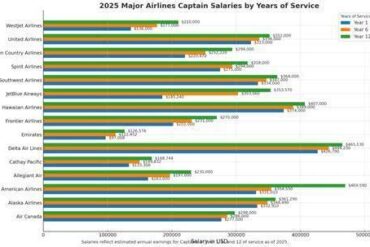
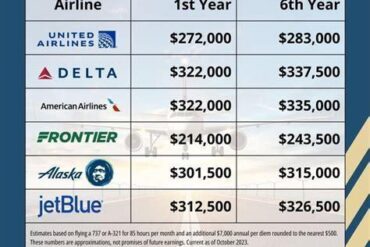
According to the supplied American Flyers data, Delta Air Lines first-year first officers earn approximately $117,735, while a sixth-year captain reaches about $334,178 and a 12-year captain approximately $349,540. Southwest Airlines shows a similar pattern, with approximately $328,241 for a sixth-year captain and $343,541 for a 12-year captain.
United Airlines reports approximately $340,756 for a sixth-year captain and $356,443 for a 12-year captain in the reference data. American Airlines reaches approximately $335,680 and $351,339 at those respective experience levels.
The figures demonstrate a major feature of airline pilot compensation: seniority has an enormous financial impact. A pilot does not simply receive the same annual salary throughout a career. Pay scales increase with longevity, and pilots can also move onto larger aircraft with higher rates.
Narrowbody Captains Can Earn More Than $300,000
Narrowbody aircraft are often associated with domestic flying, but they can still provide exceptionally strong compensation at major airlines. The supplied 2026 figures show captain salaries above $300,000 across all of the major carriers listed.
Spirit Airlines reaches approximately $313,467 for a sixth-year captain and $338,500 for a 12-year captain. JetBlue Airways and Alaska Airlines are around $307,044 and $323,460, respectively, at the sixth- and 12-year levels shown in the reference material.
Frontier Airlines presents another interesting case. Its representative sixth-year captain compensation is approximately $345,247, rising to around $362,212 after 12 years.
At the upper end of the market, the most experienced narrowbody captains can reportedly earn around $450,000 annually, particularly when additional flying and premium compensation are included.
Widebody Captains Have the Highest Earnings
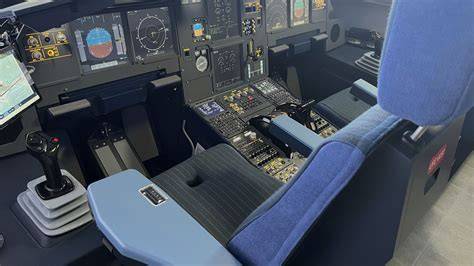
The biggest gap between regional and major airline pilots appears when we examine widebody aircraft. Experienced captains flying aircraft such as the Boeing 787, Boeing 777, Boeing 767, Airbus A330, or Airbus A350 operate at the top end of the airline compensation structure.
Senior widebody captains can expect annual earnings of approximately $500,000, according to the supplied reference material. In some circumstances, additional flying at premium rates can push total compensation higher.
The difference is substantial. A regional captain earning $150,000 annually may already have an excellent professional salary, but a senior major-airline widebody captain earning $500,000 is operating in an entirely different compensation category. The gap can exceed $350,000 per year.
Aircraft size is not the only explanation. Widebody operations typically involve longer flights, international routes, greater operational complexity, and different contract provisions. Seniority also plays a critical role because the pilots reaching the highest-paying positions have usually accumulated many years of airline experience.
Regional Captain vs Major Captain: The Real Pay Gap
If we use approximately $150,000 as a representative experienced regional captain salary and $350,000 as a representative senior major-airline narrowbody captain salary, the major-airline pilot earns more than twice as much.
The difference becomes even larger when comparing the regional captain with a senior widebody captain earning approximately $500,000. In that scenario, the major-airline captain’s base earnings are more than three times the regional captain’s.
However, we should not interpret the comparison as meaning that regional airline captains are poorly compensated. In 2026, they are not. The regional industry has undergone a structural shift that has made captain positions financially attractive in their own right.
The more accurate conclusion is that major airlines provide a much higher long-term earnings ceiling. Regional aviation can now offer a strong income, but major-airline seniority can transform that income into one of the most lucrative careers available to professional pilots.
Bonuses and Benefits Change the Calculation
Hourly pay and annual salary are only part of a pilot’s compensation package. Airlines can offer signing bonuses, retention bonuses, profit sharing, per diem payments, retirement contributions, insurance, and premium pay.
Per diem is particularly relevant because pilots spend substantial amounts of time away from their home bases. The supplied data indicates that United Airlines and Southwest Airlines can provide around $7,000 annually through per diem, although the precise amount varies according to schedules and contract terms.
Retirement benefits can be even more important over a full career. Delta Air Lines is noted in the reference material for a particularly strong 401(k) contribution structure, with matching reaching approximately 17%. When retirement contributions are calculated over decades, the value can become enormous.
Profit sharing can also materially increase compensation during strong financial years. Consequently, a salary comparison based only on hourly rates may underestimate the true economic difference between airlines.
Cargo Captains Offer Another Six-Figure Path
Major passenger airlines are not the only place where experienced captains can earn substantial incomes. FedEx Express and UPS Airlines have traditionally attracted pilots because their fleets include large widebody aircraft.
The supplied reference material indicates that experienced widebody cargo captains can still earn more than $400,000 annually, although current cargo compensation can be lower than the highest passenger-airline packages.
ACMI operators such as Atlas Air and Kalitta Air provide another path. Atlas Air’s representative Boeing 747 captain rate reaches approximately $332 per hour after 12 years, while Kalitta’s average across aircraft types reaches approximately $316. At one year, the corresponding rates are around $247 and $165.
These numbers highlight another fundamental principle of aviation compensation: aircraft type and seniority matter enormously.
Charter Pilots Have a Wider Salary Range
Charter aviation presents a much broader salary spectrum. Captains operating larger narrowbody aircraft can earn more than $200,000, while pilots flying much smaller aircraft may earn around $50,000.
The Bureau of Labor Statistics data cited in the reference material illustrates the difference between scheduled and non-scheduled operations. In May 2024, the median annual wage for pilots, copilots, and flight engineers in scheduled transportation was approximately $239,200, compared with $226,870 in the non-scheduled sector.
Small-aircraft charter operations can produce substantially lower salaries. A Part 135 operator flying Pilatus PC-12 aircraft, for example, may offer first-year first officers around $50,000 and new captains approximately $70,000.
That creates an interesting alternative for pilots seeking to avoid the traditional regional-airline route, but the financial ceiling can be much lower.
Is Being a Regional Captain Still Worth It in 2026?
For pilots evaluating their careers, the answer is increasingly positive. Regional airline captain pay in 2026 is strong enough to support a professional career, especially for pilots who value rapid command opportunities and a pathway toward a major airline.
The critical distinction is long-term earning potential. Remaining at a regional airline can provide six-figure compensation, but moving to a major carrier can eventually unlock $300,000-plus narrowbody earnings and potentially $500,000-plus widebody compensation.
Regional airlines therefore occupy a different position in the modern pilot career ladder. They are no longer simply low-paying training grounds, yet their most valuable advantage may still be the experience they provide.
The Bottom Line for 2026 Pilot Salaries
In 2026, regional airline captains can generally expect around $140,000 to $150,000 annually, with experienced pilots at some carriers exceeding $200,000. Major-airline captains, by contrast, can earn more than $300,000 on narrowbody aircraft, while the most senior widebody captains can reach approximately $500,000 per year before considering certain additional compensation.
The gap is therefore substantial, but it reflects more than a difference in employer size. Seniority, aircraft type, contract terms, bonuses, retirement contributions, per diem, and premium flying all shape the final paycheck.
The most important change is that regional airline captain compensation has permanently moved upward from its pre-pandemic position. A regional captain can now earn a very respectable six-figure income, while a successful transition to a major airline can eventually multiply that earning power. For pilots planning a career in 2026, the regional cockpit remains a meaningful destination—but the major-airline cockpit offers the far higher financial ceiling.