The salary gap between junior airline pilots and senior captains in the United States has never been wider than it is in 2026. Across the industry, major airline captains are now earning compensation packages that rival executives in other professions, especially those flying long-haul widebody aircraft for legacy carriers and cargo giants. Years of pilot shortages, aggressive union negotiations, post-pandemic travel demand, and expanding international networks have pushed captain pay to historic highs.
While the average American commercial pilot salary often gets quoted around the $200,000 mark, that figure barely scratches the surface of what experienced captains at the nation’s largest airlines actually earn. At the upper end of the pay scale, some senior captains operating Boeing 777s, Boeing 787s, Airbus A350s, and Boeing 747 freighters are bringing home total compensation packages well above $500,000 annually, with a few even crossing the $600,000 threshold once bonuses, retirement contributions, and premium flying incentives are added.
The reality inside the cockpit is that airline pilot pay in 2026 is heavily determined by seniority, aircraft type, union contracts, and route structure. A first-year first officer flying domestic narrowbody routes may earn under $120,000 in base pay, while a veteran international captain flying ultra-long-haul missions can earn three to five times as much.
For aspiring aviators, these numbers explain why the competition to secure positions at America’s largest carriers remains fierce despite the demanding training pipeline and lifestyle sacrifices associated with airline flying.
Why Major Airline Captains Earn So Much in 2026
The modern airline industry depends heavily on experienced captains who can safely command increasingly complex operations across congested global airspace. Airlines are willing to pay enormous salaries because replacing highly experienced pilots is neither fast nor easy.
Becoming a captain at a major US airline typically requires decades of progression. Most pilots begin as flight instructors or regional airline first officers before gradually accumulating thousands of flight hours. Many spend years flying smaller jets for regional carriers before advancing to low-cost airlines or cargo operators. Only after building substantial experience do they become competitive for positions at legacy airlines such as Delta Air Lines, United Airlines, or American Airlines.
Even after reaching a major airline, pilots must continue climbing through seniority systems. Upgrading from first officer to captain can take years depending on hiring cycles, retirements, and fleet growth. Widebody international captain positions sit at the very top of the ladder and are usually occupied by pilots with decades of operational experience.
The pilot shortage that intensified during the early 2020s has also fundamentally reshaped compensation. Mandatory retirements, surging travel demand, and reduced military pilot output created enormous pressure on airlines to retain experienced aviators. Union bargaining power strengthened dramatically, resulting in contracts that substantially increased hourly rates and long-term compensation.
Another critical factor is aircraft type. Captains flying large international aircraft generate far more revenue for airlines than those operating domestic narrowbody routes. A Boeing 777 or Airbus A350 flying intercontinental services can carry hundreds of premium passengers across lucrative business markets. Airlines therefore place their most experienced crews on these aircraft and compensate them accordingly.
Delta Air Lines Captain Pay in 2026
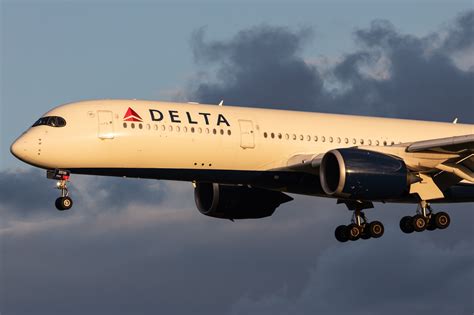
Delta Air Lines remains one of the most desirable destinations for airline pilots in the United States. The carrier operates one of the world’s largest and most sophisticated fleets, including a substantial widebody network built around Airbus A330s, Airbus A350s, and Boeing 767s.
For many pilots, flying as a Delta captain represents the culmination of a lifelong career journey. The airline’s reputation for operational reliability, premium international routes, and strong profitability has helped it maintain some of the industry’s most competitive pilot compensation packages.
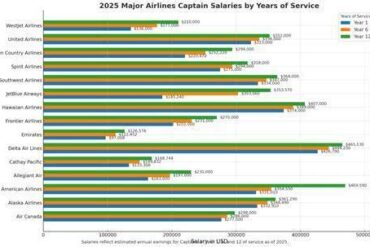
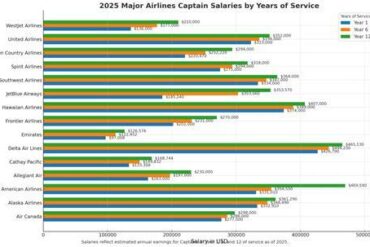
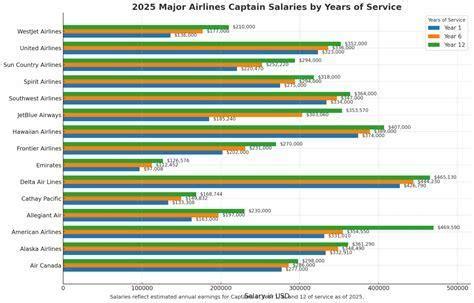
A first-year Delta first officer in 2026 earns approximately $117,735 in base salary. However, compensation rises dramatically with seniority upgrades. A Year 6 captain earns roughly $334,178 annually, while a senior Year 12 captain earns approximately $349,540 in base pay alone.
Those figures often understate actual earnings. Profit sharing, international overrides, premium pay, training incentives, and retirement contributions can significantly increase annual income. Captains flying high-demand international schedules frequently add substantial overtime compensation through voluntary extra trips.
Delta’s long-haul captains operating Airbus A350s to destinations in Asia, Europe, and the South Pacific are among the airline’s highest earners. These pilots often manage some of the carrier’s most complex operations, including ultra-long-haul flights exceeding 12 hours.
United Airlines Offers Some of the Highest Legacy Carrier Captain Salaries
United Airlines continues to compete aggressively for experienced pilots, especially as it rapidly expands its international network and modernizes its fleet. The airline now operates the world’s largest mainline fleet and maintains one of the largest widebody operations globally outside the Middle East giants.
United’s massive order book for Boeing 787 Dreamliners and Airbus A321neos reflects the carrier’s long-term growth ambitions. For pilots, that growth translates into more captain upgrade opportunities and access to premium international flying assignments.
In 2026, United first officers reportedly earn around $119,968 during their first year. By Year 6, captains earn approximately $340,756, while Year 12 captains reach around $356,443 in base salary.
These numbers place United at the top of the major US passenger airlines for senior captain base compensation. The airline’s global network spanning Europe, Asia, Australia, and South America creates enormous demand for experienced long-haul crews.
Many United captains view flying aircraft such as the Boeing 787 or Boeing 777 as the pinnacle of their commercial aviation careers. International schedules operating from hubs like San Francisco, Newark, Chicago, and Houston often involve premium international routes where business-class demand generates enormous airline revenue.
Senior captains on these aircraft frequently accumulate compensation far beyond published salary charts due to overtime flying, international per diem payments, and contractual premium pay protections.
American Airlines Maintains Competitive Captain Compensation
American Airlines remains deeply competitive in the pilot salary race despite financial pressures and comparatively lower market valuation than Delta or United.
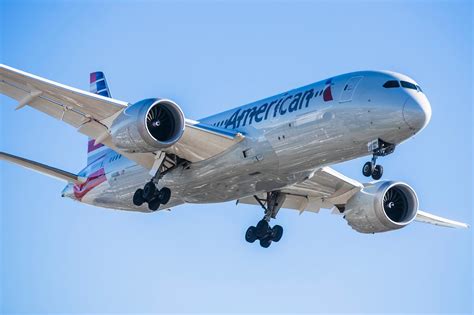
The airline operates a massive fleet exceeding 1,000 aircraft and maintains extensive international operations using Boeing 777 and Boeing 787 fleets. Because American operates an exceptionally large number of daily departures, its pilots are among the busiest in the industry.
American Airlines first officers entering the company in 2026 earn roughly $117,735 in base salary. Captain compensation climbs rapidly thereafter, with Year 6 captains earning approximately $335,680 and Year 12 captains earning around $351,339 annually.
For senior international captains, especially those flying Boeing 777s and Boeing 787s on transatlantic or transpacific routes, total compensation can move dramatically beyond published salary scales. Some experienced widebody captains reportedly approach or exceed $500,000 annually once premium flying pay and incentives are included.
Pilots often spend decades working toward these positions. Commanding a Boeing 787 to destinations across Europe or Asia represents a career-defining milestone for many aviators who started their careers flying small regional jets years earlier.
Southwest Airlines Operates a Different Pay Model
Southwest Airlines stands apart from the legacy carriers because of its unique operational structure. The airline exclusively flies Boeing 737 aircraft and primarily focuses on domestic and near-international leisure markets.
Unlike Delta, United, and American, Southwest does not operate widebody aircraft or ultra-long-haul international routes. That distinction significantly impacts pilot compensation structures.
In 2026, a first-year Southwest first officer earns approximately $75,600 in base pay. A Year 1 captain earns around $216,900, while Year 12 captains earn approximately $246,600 annually.
Although those salaries trail the legacy carriers, Southwest pilots still enjoy highly competitive compensation packages compared to many global airlines. The carrier also maintains a reputation for strong workplace culture and relatively efficient scheduling systems.
Southwest’s compensation model differs because the airline uses the Trip for Pay system, commonly referred to as TFP. Instead of relying solely on traditional block-hour calculations, pilot pay factors in route distance, trip structure, and operational complexity.
As a result, published salary estimates may not fully capture actual annual earnings for productive Southwest captains who maximize their schedules.
Alaska Airlines and Hawaiian Airlines Are Expanding Opportunities
Alaska Airlines has evolved far beyond its historic regional roots. Following its integration with Hawaiian Airlines, the Alaska Group now possesses growing long-haul ambitions and increasing access to international markets.
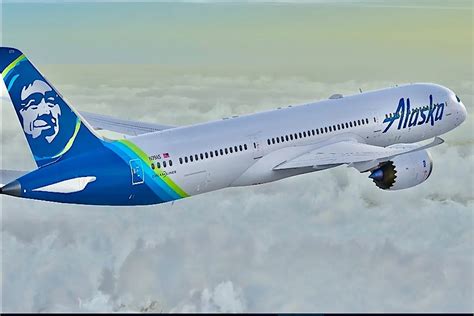
Traditionally known for operating Boeing 737 aircraft on domestic and West Coast routes, Alaska is now entering the long-haul widebody market through Hawaiian’s Airbus A330 fleet and incoming Boeing 787 Dreamliners.
This strategic transformation could significantly elevate future pilot compensation opportunities within the Alaska system.
Alaska Boeing 737 captains in 2026 earn approximately $203,400 during Year 1, rising to around $239,400 by Year 12. Hawaiian Airlines Airbus A321 captains earn slightly more, with Year 12 compensation reaching approximately $247,500.
The most intriguing unknown remains widebody pay. Captains operating future Boeing 787 services across the Pacific will almost certainly command significantly higher compensation than narrowbody crews due to longer missions and more complex international operations.
For many pilots, Alaska’s expanding global ambitions create an attractive middle ground between the lifestyle advantages of smaller carriers and the earning potential associated with long-haul flying.
Cargo Airlines Quietly Offer Some of the Highest Pilot Salaries in Aviation
While passenger airlines dominate public attention, cargo airlines have become some of the most lucrative employers for senior pilots.
FedEx and UPS operate enormous fleets of widebody freighters connecting global logistics networks around the clock. These operations demand highly experienced crews capable of handling challenging overnight schedules, international operations, and heavy aircraft.
FedEx first officers reportedly earn around $82,690 in their first year. Year 6 captains earn approximately $287,566, while Year 12 captains earn around $300,859.
UPS, however, has emerged as the standout salary leader. First officers begin at roughly $65,275, but captain compensation rises dramatically with seniority. Year 6 captains reportedly earn approximately $370,216, while Year 12 captains can reach an astonishing $687,454 in base salary.
Those figures place senior UPS captains among the highest-paid pilots in the world.
Several factors contribute to these extraordinary salaries. UPS pilots are represented by the Independent Pilots Association, which has secured highly favorable contractual rates. Cargo operations also rely heavily on widebody aircraft such as Boeing 747s and Boeing 767s operating intensive global schedules.
Unlike passenger airlines, cargo carriers generate revenue continuously through overnight logistics operations, express delivery demand, and e-commerce growth. The explosive expansion of global shipping networks has made experienced cargo pilots increasingly valuable.
The Real Difference Between Base Salary and Total Compensation
Published pilot salaries only tell part of the story. Airline pilot compensation packages in 2026 are extraordinarily layered and often include substantial additional earnings beyond base pay.
Captains frequently receive:
- International per diem allowances
- Overtime and premium flying pay
- Profit-sharing bonuses
- Retirement contributions
- Training pay
- Holiday pay multipliers
- Scheduling incentives
- Widebody international overrides
For senior captains at legacy airlines and cargo carriers, these additions can increase annual compensation by tens or even hundreds of thousands of dollars.
A captain officially listed at $350,000 in base pay may ultimately earn over $500,000 depending on schedule optimization and contract structure. Cargo captains and international widebody pilots often see the largest boosts due to demanding operational requirements.
Why Widebody Aircraft Still Command the Highest Salaries
Aircraft size remains one of the strongest predictors of pilot earnings in 2026. Widebody aircraft typically operate the airline industry’s most profitable routes and require extensive pilot training and experience.
Flying a Boeing 777, Boeing 787, Airbus A350, or Boeing 747 involves significantly greater operational complexity than domestic narrowbody flying. Crews must manage ultra-long-haul fatigue regulations, international airspace systems, oceanic procedures, and large multinational passenger loads.
These flights also generate immense airline revenue through premium cabins and cargo operations. Airlines therefore place their most trusted and senior captains in these positions.
As global international demand continues rebounding and airlines expand long-haul fleets, experienced widebody captains remain some of the most financially rewarded professionals in aviation.
The result is an industry where cockpit seniority, aircraft assignment, and airline choice can create enormous income differences. In 2026, becoming a captain at a major US airline is no longer simply a stable career achievement — it has become one of the highest-paying transportation professions in the world.