In 2026, the question of how much fighter jet pilots in Europe earn does not have a single, tidy answer. Unlike the United States, where pay scales follow a unified federal military system, Europe is a mosaic of sovereign states, each with its own defense budget, taxation structure, cost of living, and strategic priorities. The result is a wide salary spectrum that reflects economics as much as aeronautics.
Military aviators sit at the sharp edge of national defense. They fly aircraft that cost tens or even hundreds of millions of dollars. They train for years. They operate in environments that compress time, physics, and human cognition into razor-thin margins. Their compensation reflects that responsibility—but it also reflects national wealth, political will, and geopolitical pressure.
Across Europe, military pilot salaries in 2026 range from modest incomes in parts of Eastern Europe to remarkably high compensation packages in wealthy neutral states like Switzerland. Base salary figures only tell part of the story; allowances, pensions, combat bonuses, housing support, and tax treatment dramatically alter real take-home value.
Western Europe: High-Income Economies, High Pilot Pay
Western Europe remains the highest-paying region for fighter jet pilots on the continent. Wealthier NATO members and neutral states with advanced air forces tend to offer six-figure compensation packages once pilots reach mid-career rank.
The United Kingdom’s Royal Air Force provides a structured pay progression. Entry-level aviators begin around £26,300, but promotion to Flight Lieutenant raises earnings significantly. Experienced RAF pilots, particularly those at mid-to-senior ranks, earn compensation equivalent to roughly $122,000 annually when converted to US dollars. That number reflects base salary and structured progression rather than entry pay.
France, Italy, Spain, and Sweden cluster slightly below that figure. French military pilots average approximately $118,000 annually. Italian pilots sit near $109,000, Spanish pilots around $104,000, and Swedish pilots roughly $112,000. These numbers align closely with national GDP per capita and defense spending levels.
Germany, the Netherlands, Norway, and Denmark edge higher. German Air Force pilots average around $143,000 per year. Dutch pilots approach $137,000. Norwegian aviators earn approximately $141,000. Denmark stands out at roughly $161,000 annually—an impressive figure reflecting both high living standards and a strong defense commitment.
Then there is Switzerland.
Swiss Air Force pilots are estimated to earn around $230,000 per year. That figure makes Switzerland the highest-paying European country for military pilots by a significant margin. The Swiss model blends high national income, a professional military culture, and strong retention incentives. While Switzerland is neutral, its air force maintains a capable fighter fleet and invests heavily in personnel.
The Swiss example illustrates a broader truth: compensation tracks national wealth. Countries with strong currencies, high GDP per capita, and competitive labor markets must offer correspondingly competitive pay to attract and retain technically elite aviators.
The Hidden Value: Allowances, Housing, and Pension Benefits
Salary figures alone can mislead. Military compensation includes layers of non-salary benefits that significantly increase real earnings.
In the United Kingdom, RAF personnel receive subsidized food, reduced-cost accommodation on or off base, comprehensive healthcare, dental coverage, and long-term pension benefits. Similar structures exist across NATO air forces. In many cases, housing allowances alone represent tens of thousands of dollars in effective annual value.
Healthcare systems across Western Europe further amplify this benefit. Unlike in the United States, where healthcare costs can erode civilian salaries, European military pilots operate within national healthcare frameworks that reduce out-of-pocket exposure.
Pensions are equally critical. Military aviation careers are physically demanding. Early retirement provisions and defined-benefit pension structures can translate into decades of stable post-service income. When measured across a lifetime, total compensation often far exceeds the published annual salary figures.
Eastern Europe: Modernization Without Western Pay Levels
Eastern European fighter pilot salaries in 2026 reflect lower GDP per capita and smaller defense budgets. Yet these countries are modernizing rapidly, particularly in response to regional security pressures.
Slovakia and the Czech Republic both offer military pilot salaries around $67,000 annually. Poland pays approximately $73,000. Hungary averages about $56,000, while Romania sits near $46,000. Bulgaria remains one of the lowest in the European Union, at roughly $40,000 annually—similar to entry-level RAF pay in the UK.
These numbers may appear modest compared to Western Europe, but purchasing power parity shifts the picture. A $67,000 salary in Prague or Bratislava stretches significantly further than the same nominal amount in London or Zurich. Housing costs, taxation, and general consumer prices alter real income comparisons.
Eastern European air forces also operate smaller fleets. The Czech Republic and Hungary fly Saab Gripens. Slovakia has transitioned to F-16 Block 70 aircraft. Bulgaria is upgrading from Soviet-era MiG-29s to modern F-16s. Poland stands apart, fielding F-16s and preparing to integrate F-35As into service.
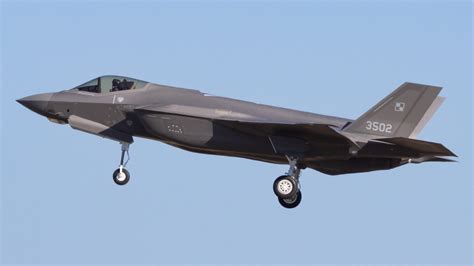
Modernization programs create upward pressure on pilot pay. Advanced aircraft require highly trained aviators, and retention becomes crucial when conversion training costs millions per pilot. Over time, salary convergence with Western Europe is possible, but economic fundamentals still impose constraints.
Far Eastern Europe: Conflict, Bonuses, and Risk Premiums
Moving beyond the European Union into Russia, Belarus, and Ukraine, base salaries decline sharply—yet raw figures fail to capture wartime economics.
Belarusian air force pilots reportedly earn around $16,000 annually. Russian pilots are estimated near $34,500. Ukrainian pilots’ base pay sits around $25,000. On paper, these numbers are dramatically lower than Western Europe.
However, wartime conditions alter compensation structures. Russian pilots receive combat bonuses and hazard pay that can exceed base salary levels. Ukraine similarly offers substantial monthly bonuses—reportedly up to $3,500 for combat operations. The difference between peacetime and wartime pay can be enormous.
Risk is priced into compensation. Attrition rates, operational tempo, and recruitment pressures all drive salary adjustments. Since the outbreak of large-scale conflict, Russia has reportedly increased pilot pay significantly to attract and retain personnel.
It is crucial to interpret these numbers cautiously. Official transparency is limited, currency volatility affects dollar conversions, and inflation can erode nominal increases. Still, the pattern is clear: conflict amplifies financial incentives.
How Europe Compares to the United States and Beyond
In the United States, the average Air Force pilot earns approximately $156,000 annually, with variation by state and service length. This places US compensation roughly on par with high-paying Western European countries such as Denmark and Germany, though below Switzerland.
Canada’s military pilots earn around $119,000 annually. Australia offers approximately $144,000. These figures align closely with advanced Western European economies.
By contrast, Chinese military pilots reportedly earn around $67,000—similar to Czech and Slovak levels, though purchasing power in China significantly enhances effective income. Indian pilots earn around $26,000 annually, while Pakistani pilots are estimated near $15,000.
The global picture reveals a strong correlation between national wealth and pilot compensation. Advanced economies with high defense spending consistently offer six-figure salaries to experienced military aviators.
Commercial Aviation: A Different Financial Universe
In the United States, military aviation often serves as a pathway to commercial airline careers, where senior captains can earn far more than military pilots. Military-funded training reduces the financial barrier to entry.
In Europe, that pathway exists but is less direct. Civil aviation conversion requirements, certification processes, and airline hiring models differ from the US system. As a result, European fighter pilots do not universally transition into high-paying airline roles as seamlessly as their American counterparts.
Commercial airline pilots in Europe generally earn more than military pilots, particularly at major flag carriers. Yet the gap varies widely by airline, seniority, and contract structure. Military service remains a distinct professional track rather than simply a stepping stone.
The Scale of Europe’s Pilot Corps in 2026
Europe’s military aviation workforce is smaller than many assume. Excluding Russia and Ukraine, Europe (including the EU, the United Kingdom, Norway, and Switzerland) is estimated to employ around 12,000 military pilots in total.
France fields close to 2,000 pilots. Italy and the United Kingdom each operate roughly 1,500. Germany has around 1,200. Spain maintains approximately 1,000. Smaller nations operate proportionally smaller pilot corps.
Russia may maintain between 4,000 and 5,000 pilots, though aircraft readiness and pilot-to-aircraft ratios remain debated. Ukraine’s pilot corps is estimated near 450.
The ratio of pilots to aircraft typically ranges around two pilots per aircraft in modern NATO air forces. Russia is believed to operate closer to one or 1.2 pilots per aircraft, reflecting different training pipelines and operational doctrine.
Why Switzerland Leads the Salary Rankings
Switzerland’s estimated $230,000 annual compensation stands out dramatically. Several factors explain this outlier status.
First, Switzerland has one of the highest GDP per capita figures globally. Second, its cost of living is extremely high, requiring elevated salary baselines. Third, Switzerland competes in a tight labor market where technically skilled professionals command premium wages.
Military aviation in Switzerland is also highly selective. With a relatively small force structure, pilot positions are limited, increasing the importance of retention and compensation competitiveness.
The Swiss example underscores a broader principle: fighter pilot pay is not simply about flying jets. It is about macroeconomics, currency strength, fiscal policy, and national defense priorities.
Risk, Responsibility, and the Economics of Skill
Fighter pilots operate some of the most complex machines ever built. Aircraft like the F-35, Eurofighter Typhoon, and Rafale integrate stealth, sensor fusion, supersonic flight, and network-centric warfare. Training a single fighter pilot can cost millions of dollars.
That investment shapes salary decisions. Governments must balance fiscal discipline with retention. Losing a trained pilot is not merely losing an employee—it is losing years of training and millions in sunk cost.
Compensation structures therefore reflect a mixture of:
- National economic strength
- Defense budget allocation
- Strategic threat environment
- Retention and recruitment pressures
- Cost of living
- Currency exchange dynamics
When all variables are considered, Western European fighter pilots generally earn between $100,000 and $160,000 annually, with Switzerland significantly above that band. Eastern European pilots typically earn between $40,000 and $75,000. Far Eastern European conflict-zone salaries vary widely depending on operational bonuses.
Final Perspective: Pay Reflects Power and Priorities
Fighter jet pilot salaries in Europe in 2026 mirror the continent itself—diverse, economically stratified, and strategically complex. There is no single European standard. Instead, compensation maps directly onto national wealth and security pressures.
Wealthy Western states offer six-figure incomes and robust benefits. Eastern European countries pay less in nominal terms but are rapidly modernizing and investing in their air forces. Conflict zones distort salary figures through combat bonuses and risk premiums.
At the highest end, Switzerland sets the benchmark. At the lower end, Belarus illustrates the economic limitations faced by smaller, less affluent states.
Ultimately, fighter pilot compensation is not merely about flying fast aircraft. It is about the intersection of economics, geopolitics, and human capital. In 2026, Europe’s skies are guarded by aviators whose salaries reveal as much about national priorities as they do about individual skill.