The dream of becoming a United States Marine Corps fighter pilot remains one of the most demanding and prestigious career paths in military aviation. Flying advanced combat aircraft such as the Lockheed Martin F-35B Lightning II and F-35C Lightning II places Marine aviators at the forefront of American expeditionary warfare. Yet despite the elite status associated with fighter aviation, compensation in the Marine Corps follows a structured military pay system rather than the high salaries often seen in the commercial aviation industry.
In 2026, Marine fighter pilots earn competitive compensation that combines base salary, aviation incentive pay, housing allowances, and various military benefits. While the total package can become substantial, particularly for experienced officers, the profession attracts individuals motivated by leadership, service, and the challenge of combat aviation rather than financial rewards alone.
Unlike their counterparts in many air forces around the world, Marine pilots are first trained as Marine officers and combat leaders. Their aviation mission is deeply connected to supporting Marines on the ground, making the role fundamentally different from traditional air force fighter operations.
Understanding US Marine Corps Fighter Pilot Pay in 2026
The salary structure for Marine Corps fighter pilots is governed by federal military pay tables established by the Department of Defense. Every officer receives compensation based on rank and years of service, regardless of aircraft assignment. Whether an officer flies an F-35B, an F-35C, or serves in another aviation specialty, the foundation of compensation begins with military base pay.
In 2026, the ranks most commonly associated with operational fighter squadrons range from Second Lieutenant (O-1) through Colonel (O-6). Most pilots spend the majority of their tactical flying careers as lieutenants, captains, majors, and lieutenant colonels.
The approximate annual base salaries are:
| Pay Grade | Rank | Average Annual Base Salary |
|---|---|---|
| O-1 | Second Lieutenant | $56,220 |
| O-2 | First Lieutenant | $68,400 |
| O-3 | Captain | $87,000 |
| O-4 | Major | $101,400 |
| O-5 | Lieutenant Colonel | $121,200 |
| O-6 | Colonel | $144,600 |
These figures represent only the foundation of a pilot’s compensation package. Most Marine aviators receive additional financial incentives that significantly increase actual annual earnings.
Aviation Incentive Pay Adds Thousands to Annual Income
One of the most important supplements available to Marine fighter pilots is Aviation Career Incentive Pay (ACIP), commonly referred to as flight pay.
Flight pay exists because military aviation requires extensive training, ongoing qualifications, and exceptional professional commitment. The government uses this incentive to encourage experienced aviators to remain in service and continue flying operational aircraft.
Depending on years of aviation service, a Marine pilot may receive between $150 and $1,000 per month in flight pay. Although this amount varies based on career stage and eligibility requirements, it can add several thousand dollars annually to overall compensation.
For younger officers, flight pay represents a useful financial enhancement. For more experienced aviators approaching senior leadership positions, the additional income becomes even more meaningful when combined with rank progression and housing allowances.
Importantly, flight pay is only one component of a broader military compensation package that includes benefits often overlooked when comparing military and civilian aviation careers.
Housing Allowances Can Dramatically Increase Take-Home Earnings
One of the largest financial advantages available to Marine fighter pilots is the Basic Allowance for Housing (BAH).
Because many officers live off-base, the military provides a tax-advantaged housing allowance designed to offset local living costs. The amount varies considerably depending on geographic location, rank, and dependency status.
Marine aviators stationed in high-cost areas can receive housing allowances worth $20,000 to $40,000 annually, and in some cases even more. Locations near major military aviation hubs often generate significant housing benefits because of elevated local rental markets.
Unlike ordinary salary income, portions of military allowances may receive favorable tax treatment. As a result, a Marine fighter pilot’s effective compensation frequently exceeds what base salary figures alone suggest.
A captain flying combat aircraft with flight pay and housing allowances may see total annual compensation reach levels substantially above published base pay numbers.
Total Compensation for Marine Fighter Pilots
When all major compensation elements are combined, Marine fighter pilots often earn significantly more than the headline salary associated with their rank.
A typical captain assigned to an operational fighter squadron could receive:
- Base pay
- Flight pay
- Housing allowance
- Subsistence allowance
- Healthcare benefits
- Retirement contributions
- Tax advantages on allowances
For many mid-career aviators, total compensation can comfortably exceed six figures.
However, military aviation still trails the highest-paying civilian airline positions. Experienced airline captains at major carriers frequently earn substantially more than military pilots, especially after reaching seniority milestones.
This reality explains why military aviation recruitment emphasizes mission, leadership, and service rather than financial incentives.
Why Marine Pilots Have a Different Career Than Air Force Pilots
The Marine Corps operates under a philosophy unlike any other aviation service in the United States military.
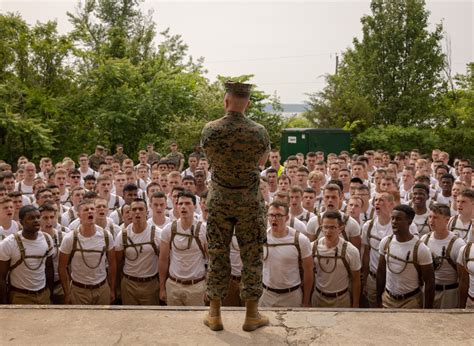
The phrase “Every Marine a Rifleman” is more than a slogan. It reflects a foundational doctrine that influences every stage of a Marine officer’s development.
Before learning to fly advanced fighter aircraft, future Marine pilots attend The Basic School (TBS) in Quantico, Virginia. There, they receive intensive leadership and ground-combat instruction alongside officers headed for infantry, logistics, artillery, and intelligence assignments.
Marine aviators are expected to understand the realities faced by infantry units because their aircraft directly support those forces during combat operations.
This approach creates a unique culture in which fighter pilots are evaluated not only on flying performance but also on leadership ability, decision-making, and effectiveness as Marine officers.
Marine Aviation Exists to Support Ground Forces
The Marine Corps aviation branch serves a specific purpose within the larger Marine Air-Ground Task Force, commonly known as the MAGTF.
Unlike strategic air forces focused on independent air campaigns, Marine aviation exists primarily to support Marines engaged in ground combat. Fighter aircraft often function as highly responsive airborne firepower positioned close to frontline operations.
This mission shapes everything from aircraft procurement decisions to pilot training requirements.
Marine fighter pilots routinely train for:
- Close air support
- Battlefield reconnaissance
- Expeditionary operations
- Amphibious assault support
- Tactical strike missions
- Forward deployment operations
Because of this operational focus, Marine pilots frequently operate from locations far more austere than traditional air force installations.
The F-35B and F-35C Form the Backbone of Marine Fighter Aviation
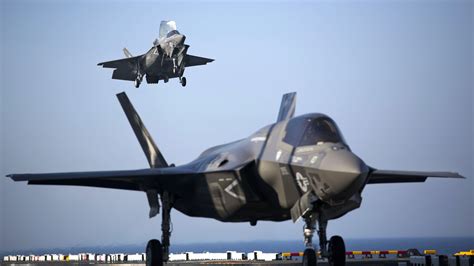
Marine Corps tactical aviation in 2026 revolves around two primary variants of the F-35 Lightning II.
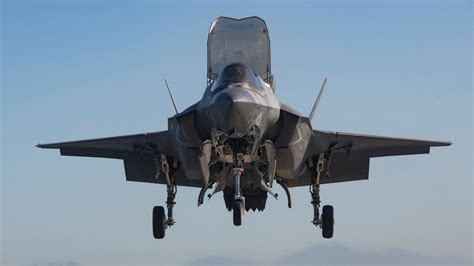
The F-35B is the Corps’ short-takeoff and vertical-landing variant. Equipped with an advanced lift-fan system, the aircraft can operate from short runways, expeditionary bases, and amphibious assault ships.
The F-35C serves as the carrier-capable variant designed for operations aboard U.S. Navy aircraft carriers.
Both aircraft share stealth technology, advanced sensors, and network-centric combat capabilities, yet each fulfills distinct operational requirements.
The F-35B provides unmatched flexibility for expeditionary warfare. It can deploy from remote islands, improvised airfields, and temporary forward operating bases established near combat zones.
The F-35C, meanwhile, emphasizes carrier operations and long-range maritime power projection. Its larger wings, reinforced landing gear, and tailhook enable it to withstand the demanding conditions of carrier aviation.
Expeditionary Advanced Base Operations Define Modern Marine Air Power
One of the most significant developments in Marine aviation strategy is the growing emphasis on Expeditionary Advanced Base Operations (EABO).
Rather than concentrating aircraft at large, vulnerable airfields, the Marine Corps increasingly disperses fighter assets across numerous small operating locations.
This strategy enhances survivability while complicating enemy targeting efforts.
Marine F-35 pilots train to operate from:
- Remote island airstrips
- Temporary expeditionary bases
- Austere dirt runways
- Highway landing zones
- Forward combat airfields
The concept reflects the Corps’ broader focus on mobility and rapid deployment, particularly in the Indo-Pacific region.
Life During Marine Fighter Pilot Deployments
Daily life for Marine fighter pilots depends heavily on deployment location and mission assignment.
Pilots assigned to expeditionary units may find themselves operating from temporary facilities close to frontline operations. Conditions can be challenging, with limited infrastructure and frequent movement between locations.
Others deploy aboard amphibious assault ships such as the USS America, where aviation operations are integrated with Marine infantry forces, helicopters, armored vehicles, and logistical support elements.
These ships serve as floating bases capable of projecting Marine combat power around the globe.
Carrier-assigned F-35C pilots experience a different environment entirely. Operating from massive nuclear-powered aircraft carriers alongside Navy squadrons, they participate in carrier strike group missions that can range from deterrence operations to combat deployments.
Although life aboard a carrier remains demanding, larger vessels generally provide more extensive amenities and support facilities than expeditionary sites or amphibious ships.
How to Become a US Marine Corps Fighter Pilot
The journey to the cockpit begins long before flight school.
Prospective Marine pilots must first earn a bachelor’s degree and receive a commission as Marine officers. Several pathways exist, but all candidates eventually attend Officer Candidates School and The Basic School.
One popular route is the Naval Reserve Officers Training Corps Marine Option program. Students compete for aviation contracts while completing their university education.
Another option is the Platoon Leaders Class Air Program, which allows college students to pursue Marine officer training during summer sessions while attending civilian universities during the academic year.
Regardless of commissioning source, all future aviators eventually enter the Navy and Marine Corps aviation training pipeline.
Flight School and Jet Selection
Following officer training, candidates report to Naval Air Station Pensacola and begin a multi-year aviation training process.
Students first learn basic flight principles and military aviation procedures before advancing into specialized training tracks.
The initial phase includes flying the T-6B Texan II, a turboprop trainer used throughout naval aviation.
Performance during training plays a major role in determining future aircraft assignments. Only the strongest candidates secure positions in the highly competitive jet pipeline.
Those selected eventually earn their coveted Wings of Gold before reporting to Fleet Replacement Squadrons for transition training in the F-35B or F-35C.
The process from commissioning to operational fighter squadron assignment commonly requires two to three years and represents one of the most demanding training pipelines in the military.
Is the Salary Worth the Challenge?
For most Marine fighter pilots, compensation is only one aspect of the profession.
The career involves extensive deployments, rigorous training requirements, operational risk, and significant leadership responsibilities. Pilots must master advanced aircraft systems while simultaneously serving as Marine officers responsible for personnel, mission planning, and combat readiness.
Financially, the profession offers stable earnings, strong benefits, housing support, healthcare coverage, retirement opportunities, and aviation incentives. Experienced officers can achieve impressive levels of total compensation, particularly as they advance into senior ranks.
Yet the true appeal of Marine fighter aviation remains rooted in the mission itself. Flying fifth-generation stealth fighters, supporting Marines in combat, operating from aircraft carriers and expeditionary bases, and leading fellow Marines represent experiences few professions can match.
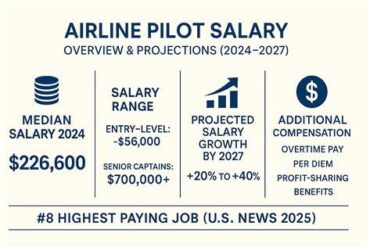
In 2026, a US Marine Corps fighter pilot can earn anywhere from roughly $56,000 in base pay as a newly commissioned second lieutenant to more than $144,000 as a colonel, with flight pay, housing allowances, and military benefits significantly increasing total compensation. While commercial aviation may offer larger paychecks, Marine fighter pilots occupy one of the most respected and operationally demanding roles in modern military aviation, combining leadership, combat readiness, and advanced aerospace technology in a career unlike any other.