The question of how much Royal Air Force fighter jet pilots make sounds simple. The answer is anything but. Pay in the RAF is not a single headline number; it is a layered structure of rank-based salary, flying supplements, subsidised living costs, and long-term pension guarantees that, when combined, create a compensation package far more complex than a standard civilian paycheck.
In 2026, public attention around military pilot earnings has intensified. European air forces continue to face retention pressure, while commercial airlines recruit aggressively from experienced military talent pools. Against that backdrop, understanding RAF fighter pilot salary, benefits, and long-term financial trajectory is more relevant than ever.
The United Kingdom invests approximately £6.1 million to train a single fast-jet pilot. That figure alone reveals something profound: the RAF does not treat pilots as short-term employees. It treats them as strategic national assets. Pay reflects that philosophy—not through massive early salaries, but through structured progression and institutional support.
How RAF Fighter Pilot Salary Actually Works
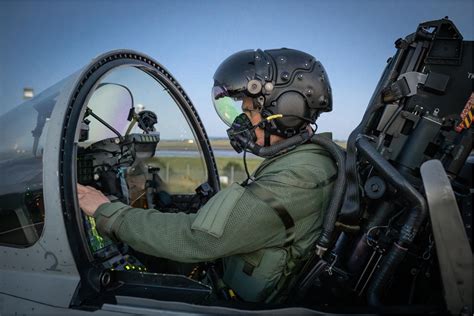
RAF fighter pilots do not negotiate salaries individually. Compensation follows the UK Armed Forces officer pay structure, which means earnings are tied directly to rank and years of service. The Armed Forces Pay Review Body reviews pay annually, aligning adjustments with public-sector policy rather than private market bidding wars.
An officer begins training at roughly £34,700 per year during initial Pilot Officer training. Converted at a conservative 2026 exchange rate, that equals approximately $44,000. This is the foundational stage: intense academic study, flight training, and military development. It is not yet the glamorous high-speed chapter.
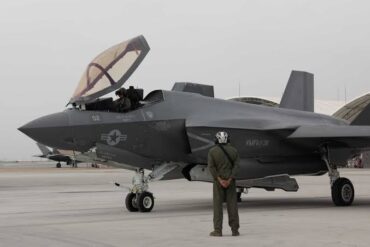
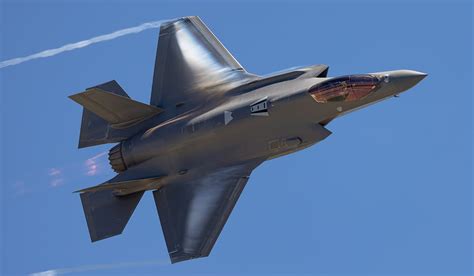
Once qualified and promoted—typically to Flight Lieutenant (Flt Lt)—basic pay rises significantly. Operational fast-jet pilots at this level earn around £64,600 annually, before additional supplements. This is the phase where pilots fly aircraft such as the Eurofighter Typhoon or F-35 Lightning II, shoulder operational responsibility, and form the backbone of RAF front-line squadrons.
Promotion beyond Flight Lieutenant into Squadron Leader and higher ranks pushes total earnings into upper-middle income territory within the UK. By mid-career, combined cash salary and benefits can represent a six-figure-equivalent value when fully accounted for.
The Role of Flying Pay and Professional Supplements
Base salary tells only part of the story. RAF fighter pilots receive Flying Pay, a professional supplement designed to reward the maintenance of operational flying status. In 2026, this typically ranges between £2,500 and £10,000 per year, depending on aircraft type, experience level, and sustained flying qualification.
Eligibility is conditional. Medical fitness must be maintained. Operational currency must be preserved. Extended staff assignments—common in mid-career development—can reduce or temporarily eliminate this supplement. Flying Pay is therefore performance-linked in a structural sense, even if not individually negotiated.
Unlike older tiered systems, the current framework simplifies aircrew remuneration while maintaining incentives to remain in cockpit roles. The intention is clear: retain trained aviators in operational capacity as long as feasible.
Non-Cash Benefits That Quietly Boost Real Income
Here is where the financial architecture becomes interesting. RAF fighter pilots receive substantial non-cash benefits that dramatically increase real purchasing power.
Subsidised accommodation through Service Family Accommodation (SFA) or Single Living Accommodation significantly reduces housing expenses compared with UK market rental rates. In many regions of the country, this difference can represent several thousand pounds annually in avoided costs.
Healthcare is provided through Defence Medical Services, eliminating private insurance premiums. The Armed Forces Pension Scheme (AFPS) operates as a defined-benefit pension, meaning retirement income is calculated through a formula based on salary and years of service, not volatile investment returns.
Defined-benefit pensions have become rare in the civilian sector. Their long-term value is difficult to overstate. While airline captains may earn higher peak salaries, many rely on defined-contribution schemes tied to market performance. The RAF pension provides predictability—a financial anchor in a turbulent world.
When these elements are quantified, total compensation meaningfully exceeds base salary alone.
Career Earnings Over 20 Years
A typical RAF fast-jet career spans two decades or more. Early years focus on qualification and conversion training. Pay is modest but stable. Institutional support is high. Living costs are controlled.
By mid-career, promotion to Flight Lieutenant and later Squadron Leader raises gross income substantially. With Flying Pay included, annual cash earnings frequently reach or exceed £70,000–£80,000, depending on role continuity and allowances. When pension accrual and housing subsidy are factored in, effective total reward climbs significantly higher.
The growth is steady rather than explosive. This is not Silicon Valley equity volatility. It is structured progression. The trade-off is predictable advancement over speculative upside.
What Official Sources Emphasise About RAF Pilot Pay
The Ministry of Defence consistently frames RAF fighter pilot compensation as part of a broader retention and capability strategy. Fully funded training, early command responsibility, and long-term employment security are presented as core advantages.
Commercial airlines periodically exert competitive pressure, particularly during global pilot shortages. However, military experience provides early exposure to complex decision-making environments that civilian pathways rarely match at comparable age or seniority.
There is also prestige—an intangible factor that does not appear on payslips but influences career satisfaction. Flying supersonic combat aircraft while representing national defence carries psychological weight that transcends salary comparisons.
How RAF Pay Compares With Other European Air Forces
In the European context, RAF fighter pilot earnings sit in the upper-middle range. Countries such as Germany may show higher base figures at senior ranks, while others rely more heavily on allowances or mission-based supplements.
The difficulty lies in structural variation. Some nations emphasise base salary. Others incorporate family allowances, cost-of-living adjustments, or irregular operational bonuses that obscure direct comparison. Taxation systems further complicate the picture; Scandinavian models combine higher taxation with stronger social safety nets.
Broadly speaking, mid-career RAF fast-jet pilots earn competitively relative to France, Italy, Spain, the Netherlands, and Sweden. Germany may offer higher potential ceilings at senior ranks, though family status and supplemental structures influence totals significantly.
Ukraine provides contextual contrast rather than direct equivalence. Even with combat bonuses, compensation remains far below NATO standards, reflecting economic realities rather than professional valuation.
The key insight: headline salary comparisons rarely capture full economic reality. Pension security, housing subsidy, and healthcare provision materially shape long-term financial outcomes.
Risks, Limitations, and Financial Trade-Offs
Not every RAF pilot remains in continuous flying roles. Staff assignments, instructional duties, or medical disqualification can interrupt Flying Pay eligibility. Fast-jet aviation places sustained stress on the human body. High G-forces, neck strain, and ejection risk are not abstract hazards—they are occupational realities.
Frequent relocation is standard. Deployments may separate families for extended periods. Work hours during operational cycles are demanding. These factors influence quality of life in ways that pure salary numbers cannot quantify.
Accommodation benefits also vary. Availability differs by base location. While housing is subsidised, geographic assignment affects overall financial comfort.
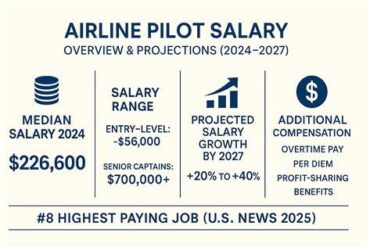
Civilian airline pathways, by contrast, may offer higher long-term earning ceilings, especially for wide-body captains on international routes. Yet they rarely provide £6.1 million worth of training at zero personal cost.
Every financial structure contains trade-offs. The RAF prioritises stability, progression, and institutional backing. Airlines prioritise market-based earnings potential.
Is Becoming an RAF Fighter Pilot Worth It Financially?
Financially, the RAF offers a compelling mid-career package. By the time a pilot reaches Squadron Leader, total compensation—cash salary, Flying Pay, pension accrual, and housing subsidy—represents strong upper-middle income value within the UK context.
It is not the highest-paying aviation route in raw salary terms. A long-haul commercial captain may eventually out-earn a military counterpart. But that comparison overlooks training investment, early leadership exposure, and pension guarantees.
The real calculus depends on time horizon. Short-term maximisation favours commercial aviation. Long-term stability, defined-benefit retirement income, and structured advancement favour military service.
Beyond numbers lies something less quantifiable. Flying a Typhoon or F-35 Lightning II is not merely employment. It is immersion in high-performance aerospace engineering, operational strategy, and national defence. Few professions combine physics, leadership, and public service so directly.
A rational evaluation balances income against purpose, security against volatility, and lifestyle against peak earnings. In 2026, Royal Air Force fighter jet pilots earn competitive, steadily increasing salaries supported by powerful non-cash benefits that elevate real economic value well beyond base pay.
The financial structure reflects institutional logic: invest heavily, retain carefully, reward progressively. For individuals motivated by advanced aviation, structured career growth, and long-term security, the RAF remains one of the most economically stable pathways into elite fast-jet operations in Europe.
Money matters. So does meaning. The RAF compensation model attempts—imperfectly, but deliberately—to account for both.