The question “How much do US Air Force fighter jet pilots make?” seems simple. The answer is anything but. Unlike civilian airline captains who receive a single published annual salary, USAF fighter pilot pay is a layered system built on rank, flight status, location, incentive bonuses, and long-term benefits that quietly add enormous value over time.
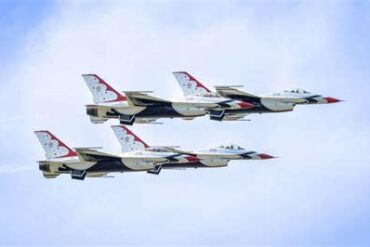
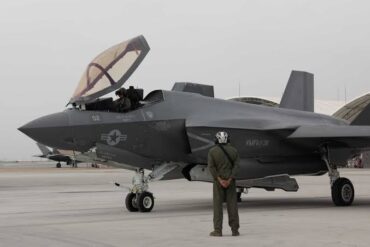
Flying an F-35 Lightning II, F-22 Raptor, or F-16 Fighting Falcon is one of the most technically demanding professions in the world. These aircraft cost tens or even hundreds of millions of dollars apiece. The pilot strapped into the cockpit carries not just a helmet and oxygen mask, but strategic responsibility. Compensation reflects that responsibility — not just through base pay, but through structured financial incentives designed to reward skill, longevity, and continued aviation service.
Understanding how fighter pilots are paid requires unpacking each component of the system. When combined, total compensation in 2026 ranges roughly from $75,000 at the earliest operational stages to over $200,000 for senior officers, with additional retirement and healthcare benefits that extend well beyond active duty years.
What Is the Salary Range for US Air Force Fighter Pilots in 2026?
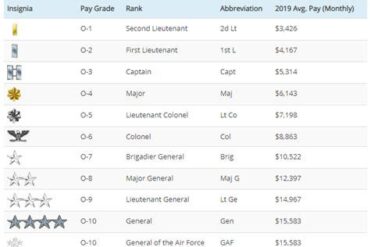
At its foundation, fighter pilot compensation begins with base pay, determined by rank (pay grade O-1 through O-6) and years of service. In 2026, commissioned officer pay increased approximately 3.8%, continuing a multi-year upward trend to remain competitive.
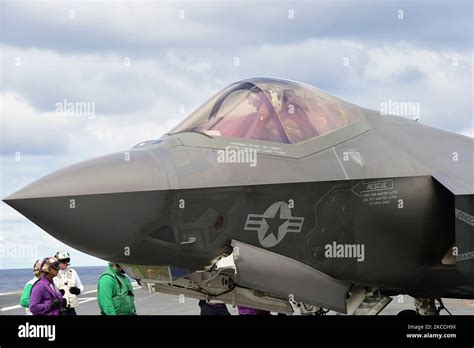
An entry-level fighter pilot — typically a Second Lieutenant (O-1) or First Lieutenant (O-2) during initial training and early squadron assignments — earns base pay in the neighborhood of $50,000 per year. That figure, however, tells only part of the story. Once aviation incentives and tax-free allowances are included, first-tour pilots often see effective compensation between $75,000 and $95,000, especially in higher-cost duty stations.
By the time a pilot promotes to Captain (O-3), total annual compensation commonly rises into the $100,000 to $140,000 range. Advancement to Major (O-4) and Lieutenant Colonel (O-5) can push compensation well beyond $150,000, while senior Colonels (O-6) with maximum aviation incentive pay and housing allowances may approach or exceed $200,000 annually.
The steady climb reflects a deliberate structure: the Air Force rewards experience in both command leadership and sustained aviation service.
How Base Pay Works for USAF Fighter Pilots
Base pay is governed by annually published Defense Finance and Accounting Service (DFAS) tables. It depends strictly on pay grade and total years of commissioned service.
For example:
- An O-3 with 6–8 years of service earns significantly more than a newly promoted O-3 with four years.
- Promotions typically occur at predictable career milestones, provided performance standards are met.
- Pay increases continue incrementally even without promotion, rewarding longevity.
Because these figures adjust yearly, precise numbers change, but the principle remains constant: rank plus time equals predictable base salary growth.
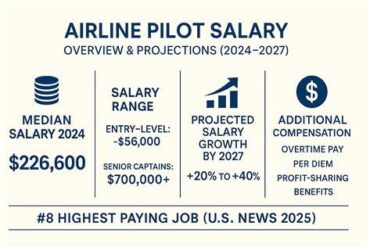
Unlike private-sector aviation where seniority systems dominate earnings, military compensation is structured around federal pay scales. There is transparency. There is stability. There is no sudden pay cut if airline demand dips.
Aviation Career Incentive Pay (ACIP): The Flying Premium
Base pay alone does not reflect the premium placed on flight status. That premium appears in Aviation Career Incentive Pay (ACIP), often referred to informally as “flight pay.”
ACIP is tied not to total time in uniform but specifically to years of aviation service. This distinction matters. A pilot may have ten years in the Air Force but fewer years credited in rated aviation service.
In 2026, ACIP begins modestly — around $150 per month in the earliest aviation years — but scales steadily. By 14 or more years of aviation service, monthly incentive pay can reach $840 to $1,000, depending on statutory adjustments.
This system encourages pilots to remain in flying billets. To qualify, aviators must meet minimum flight hour requirements. If reassigned to non-flying staff positions without proper designation, ACIP eligibility may decline or disappear. The message is clear: continued cockpit proficiency is financially rewarded.
Tax-Free Allowances: BAH and BAS Explained
One of the most misunderstood components of fighter pilot compensation is the role of tax-advantaged allowances.
The Basic Allowance for Housing (BAH) offsets local rental costs and varies dramatically depending on:
- Duty station
- Rank
- Dependent status
In high-cost regions such as California, Florida, or certain overseas bases, BAH can range from $2,800 to $3,500 per month or more for officers with dependents. In lower-cost areas, it may range between $1,200 and $1,800 monthly.
Because BAH is non-taxable, its effective value exceeds equivalent taxable income. A $3,000 monthly housing allowance can represent the equivalent of significantly higher civilian pre-tax salary.
The Basic Allowance for Subsistence (BAS), roughly $280 per month, covers food expenses and is also tax-free.
These allowances materially increase take-home pay and explain why headline “base salary” figures underestimate total compensation.
Mid-Career Earnings: Crossing Into Six Figures
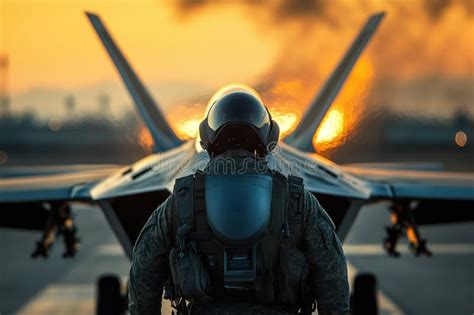
By mid-career — typically 8 to 12 years of service — most operational fighter pilots hold the rank of Captain or Major. At this stage:
- Base pay has increased significantly.
- ACIP has climbed into higher brackets.
- BAH often rises with rank and family status.
- Retention bonuses may become available.
Total compensation during this period frequently lands solidly in the six-figure range.
Retention bonuses are particularly important. Facing aggressive recruitment from commercial airlines, the Air Force periodically offers aviation retention incentives, sometimes worth up to $35,000 annually, depending on program year and aircraft community. In 2026, fighter pilot-specific retention packages have reached figures exceeding $30,000 per year for multi-year commitments.
This is not merely generosity. It is strategic necessity. Training a fighter pilot costs millions of dollars. Retaining experience is cheaper than replacing it.
Senior Officer Compensation and Retirement Value
As fighter pilots advance into senior ranks — Lieutenant Colonel and Colonel — compensation can exceed $180,000 or $200,000 annually when base pay, ACIP, and allowances combine.
Yet the most powerful financial lever emerges at the 20-year mark: military retirement eligibility.
Under current blended retirement systems, eligible officers receive a defined pension based on a percentage of their highest earning years, plus access to the Thrift Savings Plan (TSP) with government matching contributions.
A pilot retiring after 20 years may receive roughly 50% or more of base pay for life, adjusted for inflation. This lifetime annuity, combined with healthcare benefits under TRICARE, dramatically enhances long-term financial security.
Few civilian careers offer guaranteed indexed pensions at age 42–45.
Official Perspective: What the Department of Defense Emphasizes
The Department of Defense consistently frames fighter pilot pay as part of a comprehensive compensation package, not a standalone salary.
Official briefings highlight:
- Full healthcare coverage with minimal out-of-pocket expense
- Tuition assistance and GI Bill education benefits
- Low-cost life insurance
- Retirement pension eligibility
- Tax advantages
- Professional flight training valued at millions of dollars
While military pay may not always match the peak earnings of senior airline captains, it includes stability, training investment, and early retirement eligibility rarely found in the private sector.
USAF Fighter Pilot Salary vs Russian Air Force Pilot Pay
International comparison places US compensation in stark perspective.
Available salary data suggests the average annual income for a Russian Air Force pilot is approximately 2.6–2.9 million rubles, roughly $30,000 to $35,000 USD at current exchange rates. Senior pilots may earn somewhat more depending on location and assignment.
In active combat roles or under special contracts, pay may increase through bonuses and stipends. However, structural benefits such as defined retirement pensions, comprehensive healthcare, and housing allowances are generally less robust than those available to US service members.
By contrast, USAF pilots benefit from transparent pay tables, structured advancement, tax-free allowances, and long-term retirement security. The gap is not merely salary; it is systemic support.
Deployments, Incentives, and Variable Pay
Deployments can temporarily increase compensation through:
- Family Separation Allowance
- Hardship Duty Pay
- Per diem entitlements
However, deployment income varies and should not be treated as guaranteed annual salary. It often comes at personal cost: extended hours, operational stress, and family separation.
Additionally, pilots assigned to non-flying staff roles may see reduced ACIP eligibility. Medical disqualification can abruptly end flight status and alter earnings trajectory. The system rewards those who remain qualified and actively flying.
Risks and Tradeoffs
No financial discussion is complete without acknowledging risk.
Fighter aviation involves exposure to high-G forces, ejection seat hazards, complex combat environments, and long-term physical strain. Accident rates, while historically improved, remain higher than in commercial aviation.
Frequent relocations — sometimes every two to three years — affect family stability. Overseas assignments, remote bases, and high operational tempo are common.
Civilian airline careers may offer higher peak income and more predictable schedules, but they require rebuilding seniority from scratch and do not include military pension benefits unless the pilot completes full service.
The compensation equation cannot be separated from lifestyle.
Is It Worth It? The Financial and Professional Equation
By mid-career, most US Air Force fighter pilots earn solid six-figure total compensation. By senior rank, annual earnings can rival many upper-management civilian roles. After 20 years, a lifetime pension becomes the defining financial advantage.
Yet money alone does not explain why individuals pursue the path.
The opportunity to fly supersonic, multi-role combat aircraft at the cutting edge of aerospace technology is rare. The professional credibility gained from operating platforms such as the F-35 or F-22 carries enduring value. Leadership experience, decision-making under pressure, and mission execution in high-stakes environments translate into powerful civilian credentials.
For some, the calculus is straightforward: gain world-class flight training, serve in elite operational squadrons, secure retirement eligibility, and later transition into commercial aviation with both experience and pension intact.
For others, the mission itself is the reward.
Bottom Line: How Much Do US Air Force Fighter Jet Pilots Make?
In 2026, US Air Force fighter pilots earn:
- $75,000–$95,000 in early career stages
- $100,000–$140,000 as mid-career Captains
- $150,000–$200,000+ as senior Majors, Lieutenant Colonels, and Colonels
These figures include base pay, Aviation Career Incentive Pay, and tax-free allowances such as BAH and BAS. Additional bonuses and retention incentives may increase totals further.
When retirement pensions, healthcare coverage, education benefits, and tax advantages are factored in, total lifetime compensation extends well beyond headline annual salary figures.
Becoming a fighter pilot demands years of training, exceptional physical standards, and willingness to accept operational risk. The compensation structure reflects that reality. It rewards those who remain proficient, committed, and qualified to operate some of the most advanced combat aircraft ever built.
For individuals evaluating the path, the numbers matter — but they are only one part of a career defined by precision, discipline, and the rare privilege of commanding speed measured in Mach numbers rather than miles per hour.