The Airbus A380 does not merely move people across continents; it moves entire economies of scale through the sky. With its double-deck structure and capacity that can exceed 800 passengers in dense configurations, it represents the upper extreme of commercial aviation—and the pilots entrusted with its operation sit at the pinnacle of airline compensation. In 2026, Airbus A380 pilots are among the highest-paid professionals in aviation, commanding salaries that reflect not just skill, but rarity.
To understand why these pilots earn so much, it helps to think in layers. The paycheck is only the visible surface. Beneath it lies a dense structure of experience, training, operational complexity, and global demand. Salary figures alone tell part of the story, but the forces shaping them reveal something more interesting: a profession where time, responsibility, and scarcity compound into extraordinary value.
How Much Airbus A380 Pilots Earn in 2026
At the highest level, Airbus A380 pilot salaries in 2026 fall into two primary categories: first officers and captains. The difference between the two is not just rank—it is the difference between assisting decisions and owning them.
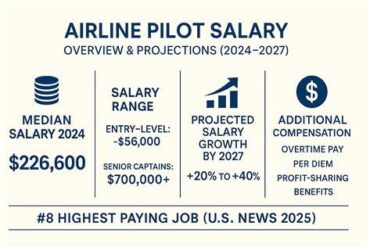
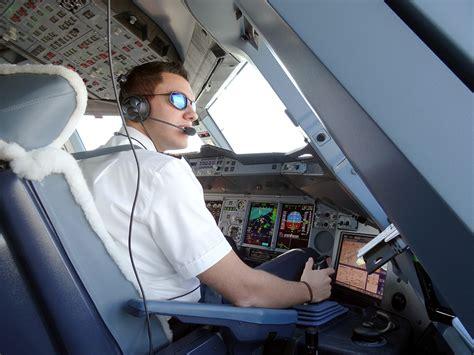
First officers, the second-in-command, typically earn between $120,000 and $250,000 annually. Their compensation depends heavily on experience, airline contracts, and accumulated flight hours. Meanwhile, captains—those with ultimate authority over the aircraft—earn significantly more, with salaries ranging from $250,000 to $450,000, and in some cases exceeding $500,000 when bonuses and overtime are included.
This pay structure is not arbitrary. It reflects a combination of technical mastery, leadership responsibility, and the sheer operational scale of the A380. Flying a narrow-body jet is like driving a high-performance car. Flying an A380 is more like managing a moving city.
Why the Airbus A380 Commands Higher Pilot Salaries
The A380 is not just large—it is engineered complexity embodied in aluminum and composite materials. With a maximum takeoff weight of 1.268 million pounds and a wingspan stretching nearly 80 meters, the aircraft demands precision at every stage of flight. Small miscalculations scale quickly when multiplied by mass, speed, and altitude.
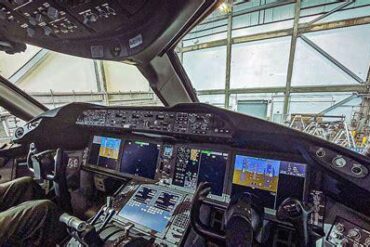
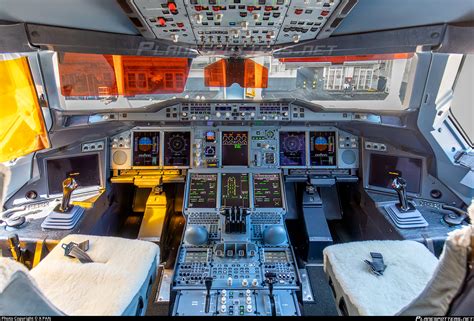
Pilots must manage advanced avionics systems, coordinate with international air traffic control across multiple regions, and monitor performance metrics over flights that can exceed 15 hours. Fatigue management alone becomes a science, with augmented crews rotating through rest cycles mid-flight.
Airlines compensate accordingly. Operating such an aircraft requires pilots who are not only technically proficient but also psychologically resilient. Long-haul operations introduce variables—weather systems, geopolitical airspace restrictions, and mechanical contingencies—that smaller aircraft rarely encounter at the same scale.
Hourly Pay Structure: The Engine Behind the Salary
Airline pilots are not paid like traditional salaried employees. Their income is largely driven by block hours, which measure the time from when the aircraft begins moving for departure to when it reaches the gate at its destination.
For A380 pilots, hourly rates are substantial:
- First officers typically earn $200 to $310 per hour
- Captains can earn between $350 and $700 per hour
These numbers might seem astronomical until one considers the constraints. Pilots are generally limited to 65 to 90 flight hours per month, a regulatory safeguard designed to prevent fatigue. The paradox is elegant: fewer hours, but each hour carries immense responsibility—and therefore, high value.
Long-haul flights amplify this dynamic. A single A380 flight from Dubai to Los Angeles can approach 16 hours, meaning a pilot may reach monthly limits in just a handful of trips.
Real-World Salary Example: Emirates A380 Pilots
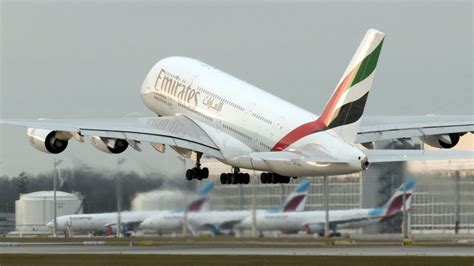
Emirates remains the largest operator of the Airbus A380, making it a useful benchmark for real-world compensation. In 2026, an Emirates first officer earns approximately AED 610,000 annually, or about $165,000, before additional benefits.
Captains earn more, with base salaries around AED 785,000 to AED 835,000 (roughly $210,000 to $225,000). But base salary is only the beginning. Once allowances and bonuses are added, total compensation often exceeds $320,000 annually, and can climb higher depending on experience and productivity.
The interesting twist is that much of this compensation comes in non-traditional forms. Housing allowances, transportation, and tax advantages in certain jurisdictions effectively increase real income without appearing directly in salary figures.
The Long Climb to the A380 Flight Deck
No pilot starts their career in the left seat of an A380. The journey resembles a slow, deliberate ascent rather than a leap.
Pilots typically begin with smaller regional aircraft, gradually building experience over years—often decades. Most airlines require at least 3,000 to 5,000 flight hours before a pilot is even considered for widebody aircraft. For A380 captains, total flight time often reaches 8,000 to 15,000 hours.
Each step introduces new layers of complexity. Transitioning from a narrow-body aircraft like the Airbus A320 to a widebody jet like the A350 or Boeing 777 involves mastering new systems, longer routes, and more intricate operational planning. Only after proving competence at these levels do pilots become candidates for the A380.
This progression explains the salary structure in a very literal way: pilots are not just paid for what they do now, but for everything they had to become to get there.
Benefits and Allowances: The Hidden Multiplier
If base salary is the headline, benefits are the fine print that quietly doubles the value.
A380 pilots often receive:
- Housing allowances or company-provided accommodation
- Comprehensive health insurance
- Retirement or pension contributions
- Travel privileges for themselves and family
- Per diem payments during international layovers
These benefits can add $30,000 to $100,000 or more annually. In some cases, particularly in tax-friendly regions, the effective take-home income becomes significantly higher than equivalent salaries in heavily taxed jurisdictions.

Layovers themselves introduce an unusual perk: pilots are paid to exist in global cities. One week might include a night in London, another in Sydney, another in New York. It is a lifestyle that blends routine with constant geographic novelty.
Global Demand and the Pilot Shortage Effect
The laws of supply and demand operate with ruthless clarity in aviation. As of 2026, the world faces a growing shortage of qualified pilots, with projections suggesting a need for over 600,000 new pilots by 2042.
Widebody pilots—especially those certified on aircraft like the A380—sit at the narrowest point of that supply funnel. Training takes years, costs are high, and not every pilot progresses to that level.
Airlines respond in predictable ways: higher salaries, better contracts, and more aggressive recruitment strategies. In recent years, some carriers have increased pilot pay by 30% to 40%, while also offering signing bonuses and accelerated promotion pathways.
The result is a feedback loop. Higher demand drives higher pay, which attracts more candidates—but the long training timeline prevents immediate supply correction. For A380 pilots, this imbalance translates into sustained high earnings.
Airlines That Operate the Airbus A380 in 2026
Only a select group of airlines operate the A380, which adds another layer of exclusivity to the role. Major operators include:
- Emirates
- Singapore Airlines
- Qantas
- British Airways
- Lufthansa
Each airline has its own pay structure, but all share a common pattern: widebody pilots are compensated at the top end of the industry. Routes typically connect major global hubs such as Dubai (DXB), London Heathrow (LHR), Los Angeles (LAX), and New York JFK, reinforcing the aircraft’s role in high-demand, long-haul travel.
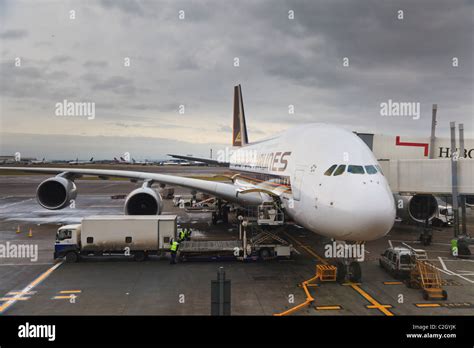
Because the A380 is used on premium, high-capacity routes, airlines have strong financial incentives to ensure experienced crews operate these flights. A single delay or operational error can ripple across thousands of passengers and multiple connecting flights.
What Makes A380 Pilots So Valuable
Strip away the salary figures and a more interesting question emerges: what exactly are airlines paying for?
They are paying for decision-making under pressure. At 35,000 feet, there is no pause button, no external support team stepping in physically. Every system failure, weather deviation, or medical emergency unfolds in real time, requiring immediate judgment.
They are also paying for consistency. A380 pilots must perform at a high level not occasionally, but repeatedly—across time zones, sleep cycles, and operational environments that shift from one continent to another.
Finally, they are paying for trust. Hundreds of passengers, millions of dollars in equipment, and tightly synchronized airline schedules depend on the actions of two individuals in a cockpit.
That combination—skill, endurance, and accountability—is rare. Markets tend to reward rarity.
Future Outlook: Will Salaries Continue to Rise?
Looking forward, the trajectory appears clear. As long-haul travel continues to expand and airlines compete for experienced pilots, A380 pilot salaries are likely to remain elevated.
There is a subtle twist, though. The A380 itself occupies a unique place in aviation history. While some airlines have reduced their fleets, others continue to rely on the aircraft for high-density routes where efficiency per passenger matters more than frequency.
This creates a curious equilibrium. The number of A380s is limited, but so is the pool of pilots qualified to fly them. Scarcity exists on both sides, maintaining high compensation levels.
In a way, the A380 pilot is a specialist in a niche that refuses to disappear—a relic of maximalist aviation that still solves very modern problems.
Conclusion: The Economics of Expertise at 40,000 Feet
Airbus A380 pilots in 2026 earn some of the highest salaries in commercial aviation, with captains reaching $450,000 or more and first officers comfortably in six-figure territory. Yet the numbers alone miss the deeper logic.
These salaries are the result of accumulated expertise, operational complexity, and global demand intersecting in one role. The A380 is not just another aircraft—it is a system that magnifies every variable, from physics to human judgment.
In that environment, experience becomes currency, and precision becomes profit. The cockpit, quiet and controlled, is the final checkpoint where all those forces converge.
And somewhere above the clouds, two pilots manage it all—calmly, methodically, and very well compensated for the trouble.