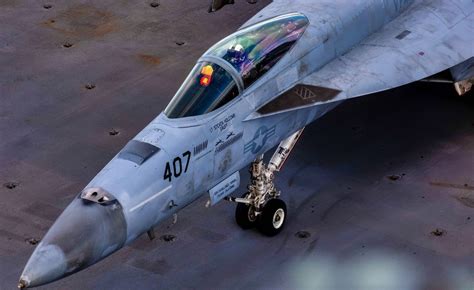
Serving as a U.S. Navy fighter pilot instructor represents one of the most elite positions in military aviation. These officers are responsible not only for flying some of the most advanced combat aircraft ever built but also for shaping the next generation of naval aviators. By 2026, the compensation structure for these instructors reflects both the extraordinary skill required and the strategic importance of retaining experienced tactical aviators within the Navy.
While base pay for Navy officers follows standardized military pay tables, fighter pilot instructors benefit from aviation incentive pay, retention bonuses, tax-free allowances, and extensive benefits. When combined, these elements create a compensation package significantly larger than the base salary alone.
For most instructors, the total compensation package in 2026 ranges between $140,000 and $180,000 annually, even though the direct taxable salary is typically between $70,000 and $90,000 per year. This combination of salary, benefits, and specialized aviation pay makes the instructor tour financially competitive while maintaining the tradition of service and leadership that defines naval aviation.
The journey to becoming a Navy fighter instructor, however, involves far more than pay. It represents years of training, demanding operational deployments, and the ability to operate at the cutting edge of military aviation technology.
The Career Path to Becoming a Navy Fighter Pilot Instructor
Before an officer ever stands in front of a classroom or climbs into a jet as an instructor, they must complete one of the most demanding aviation pipelines in the world. Becoming a Naval Aviator in the United States Navy requires years of academic study, flight training, and operational experience.
The process begins with commissioning as an officer, typically through the United States Naval Academy, Naval Reserve Officer Training Corps (NROTC), or Officer Candidate School (OCS). From there, aspiring aviators report to Naval Air Station Pensacola, the historic birthplace of naval aviation training.
Students progress through a sequence of flight training stages that test their skills in aerodynamics, navigation, instrument flying, and tactical operations. Only the most capable candidates eventually move into advanced jet training, where they learn to operate high-performance aircraft.
Earning the coveted “Wings of Gold” designation marks the transition from student to operational pilot. However, the journey is only beginning. Newly designated pilots are assigned to a Fleet Replacement Squadron (FRS) where they learn to fly operational combat aircraft such as the F/A-18 Super Hornet, F-35C Lightning II, or EA-18G Growler.
Following qualification in their fleet aircraft, pilots join operational squadrons and deploy with Carrier Air Wings, often spending months at sea. After completing a demanding fleet tour that typically lasts several years, the Navy selects the most capable officers to return to training commands as instructors.
These instructor assignments represent a critical stage in the career path. Officers not only accumulate additional flight hours but also develop leadership, teaching, and tactical expertise that will influence promotion opportunities.
Understanding Base Pay for Navy Fighter Pilot Instructors
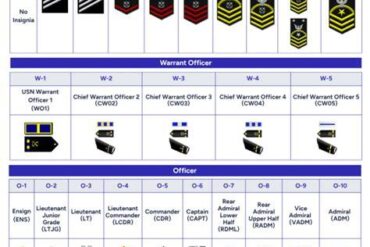
The foundation of military compensation begins with base pay determined by rank and years of service. Fighter pilot instructors typically hold the ranks of Lieutenant (O-3) or Lieutenant Commander (O-4) during their instructor tours.
In 2026, estimated monthly base pay ranges for these ranks fall into the following brackets:
- O-3 (Lieutenant): $5,535 – $7,737 per month
- O-4 (Lieutenant Commander): $6,294 – $8,332 per month
These figures translate to an annual base salary generally ranging from approximately $66,000 to $100,000, depending on seniority within the rank.
For most fighter instructor pilots, the practical yearly base pay lands within $70,000 to $90,000, reflecting the typical experience level of officers returning from their first operational fleet assignment.
Although these figures may initially appear modest compared to certain civilian aviation careers, base salary represents only one component of the compensation structure.
Aviation Incentive Pay: Flight Pay for Naval Aviators
One of the most recognizable financial benefits for military pilots is Aviation Incentive Pay (AvIP), commonly referred to as flight pay. This additional compensation rewards officers who maintain aviation qualifications and continue flying operational aircraft.
Flight pay increases based on the aviator’s years of aviation service. Early in a pilot’s career, the additional pay may begin at approximately $150 per month. As pilots accumulate experience and flight hours, the payment gradually increases.
By the time a pilot reaches the instructor stage—often around a decade of aviation service—they typically qualify for the maximum rate of $1,000 per month.
This adds an additional $12,000 annually to a pilot instructor’s compensation package.
Flight pay serves two critical purposes. First, it recognizes the specialized skill required to operate advanced combat aircraft. Second, it encourages pilots to remain in aviation roles rather than transferring to purely administrative positions within the military hierarchy.
The Aviation Bonus: Retention Incentives for Experienced Pilots
In recent years, the U.S. Navy has faced ongoing shortages of experienced tactical aviators. The combination of high training costs, demanding deployments, and lucrative civilian aviation opportunities has created retention challenges across the military aviation community.
To address this issue, the Navy has significantly increased the Aviation Bonus (AvB) offered to pilots who agree to extend their service commitments.
By 2026, qualified fighter pilots may receive annual bonuses of $35,000 to $50,000, typically in exchange for signing a three-year service extension.
For instructor pilots, these bonuses can dramatically increase annual earnings. When combined with base pay and other allowances, the total financial package can easily surpass $150,000 per year.
The aviation bonus program is particularly important because the Navy invests enormous resources in training its pilots. The cost of producing a fully qualified fighter pilot is estimated to exceed $1 million per aviator, making retention a strategic priority.
Housing and Subsistence Allowances
Beyond salary and bonuses, Navy officers receive several tax-free allowances that significantly increase their effective income.
The two most prominent are:
- Basic Allowance for Housing (BAH)
- Basic Allowance for Subsistence (BAS)
BAH compensates service members for housing expenses when they live off base. The exact amount depends on location, rank, and whether the officer has dependents. In many high-cost regions, BAH can exceed $3,000 per month, adding tens of thousands of dollars annually to total compensation.
BAS provides an additional monthly payment designed to offset food expenses.
Because these allowances are non-taxable, their real value is greater than equivalent taxable income in the civilian world. When combined with base pay and aviation bonuses, they contribute substantially to the overall compensation package for instructor pilots.
The Full Compensation Picture for 2026
When all elements are combined, the financial profile of a Navy fighter instructor becomes far clearer.
A typical 2026 compensation breakdown might include:
- Base salary: $70,000 – $90,000
- Flight pay: up to $12,000 annually
- Aviation bonus: $35,000 – $50,000 annually
- Housing and subsistence allowances: often $25,000 – $40,000 depending on location
Together, these components create a total compensation package valued between $140,000 and $180,000 per year.
This estimate does not even include additional benefits such as comprehensive healthcare, retirement contributions, tax advantages, and educational programs, all of which further increase the financial value of a Navy aviation career.
The Demanding Life of a Fighter Pilot Instructor
Despite the attractive compensation, the life of a fighter instructor is far from easy. These officers carry enormous responsibility, both in the cockpit and in the classroom.
Unlike operational fleet pilots who may fly occasional missions between deployments, instructor pilots often fly multiple sorties per day while simultaneously managing training programs and administrative duties.
A typical instructor day may involve:
- Pre-flight planning sessions
- Multi-hour mission briefings
- High-performance flight training
- Detailed tactical debriefs
- Classroom instruction for student aviators
Instructors must evaluate every maneuver a student performs, ensuring that safety standards are maintained while also teaching advanced combat tactics.
This constant operational tempo can be physically demanding, especially when flying high-performance aircraft that expose pilots to intense G-forces and rapid maneuvering.
Fleet Replacement Squadron Instructors
Most fighter pilot instructors serve in Fleet Replacement Squadrons, where newly designated aviators learn to operate frontline combat aircraft.
FRS units function as the final stage of pilot training before deployment to operational squadrons. Here, instructors guide students through complex mission profiles involving air-to-air combat, strike operations, carrier landings, and advanced tactical coordination.
FRS instructors accumulate significant flight hours because students must complete multiple sorties to achieve qualification. This constant flying schedule helps maintain the instructor’s own proficiency while producing fully mission-capable pilots for the fleet.
TOPGUN: The Elite Instructor Path
Among all instructor assignments in naval aviation, none carries greater prestige than TOPGUN, the Navy’s legendary fighter weapons school located at Naval Air Station Fallon, Nevada.
Selection to become a TOPGUN instructor is extraordinarily competitive. Candidates must demonstrate exceptional tactical ability, leadership, and teaching skill.
Once selected, these instructors train some of the Navy’s most talented pilots in advanced air combat maneuvering, threat analysis, and tactical doctrine.
TOPGUN instructors are responsible for developing many of the tactics used by the U.S. Navy’s carrier strike groups. Their expertise influences the entire fleet, shaping how fighter squadrons prepare for real-world combat scenarios.
Because of the prestige associated with this assignment, TOPGUN instructors often enjoy strong career prospects and are frequently selected for future squadron command roles.
Aircraft Flown by Navy Fighter Instructor Pilots
Navy fighter instructors operate some of the most sophisticated aircraft in the world. These jets represent the cutting edge of aviation technology, combining stealth, advanced sensors, and high-performance aerodynamics.
Three aircraft dominate the modern Navy fighter instructor environment.
F-35C Lightning II
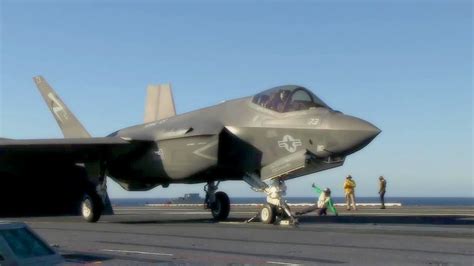
The Lockheed Martin F-35C represents the Navy’s newest carrier-based stealth fighter. Designed for network-centric warfare, the aircraft integrates sensor fusion technology that allows pilots to monitor the entire battlespace in real time.
Training for the F-35C relies heavily on advanced simulators because the aircraft is single-seat, meaning instructors cannot accompany students during early flights.
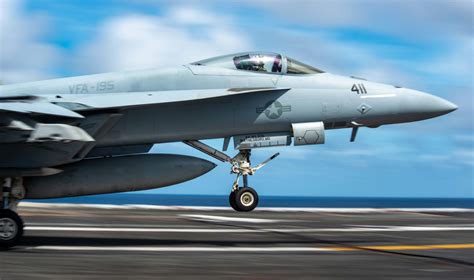
F/A-18E/F Super Hornet
The Boeing Super Hornet remains the backbone of the Navy’s strike fighter fleet. Its two-seat variant allows instructors to sit behind students during training missions, providing real-time coaching and supervision.
The aircraft’s versatility enables pilots to perform air-to-air combat, ground attack missions, and carrier operations within the same training program.
EA-18G Growler
The EA-18G Growler is a specialized electronic warfare aircraft derived from the Super Hornet platform. Growler crews focus on disrupting enemy radar systems and air defenses using sophisticated jamming technology.
Training in the Growler community emphasizes both tactical flying and the complex science of electromagnetic spectrum warfare.
The Role of Naval Flight Officers in Instructor Positions
Not all instructors in Navy fighter squadrons are pilots. Naval Flight Officers (NFOs) play a critical role in multi-crew aircraft such as the EA-18G Growler and certain variants of the Super Hornet.
NFOs manage radar systems, electronic warfare equipment, navigation, and tactical coordination during missions. Their expertise often makes them the tactical brains behind complex air combat scenarios.
The pay structure for NFO instructors closely mirrors that of pilots. They receive the same officer base pay and aviation incentive payments based on their years of aviation service.
Within advanced training environments, some NFO instructors become highly specialized experts known as “Patch Wearers.” These officers graduate from elite weapons schools and may spend extensive time analyzing enemy radar systems, missile capabilities, and electronic warfare strategies.
Military Aviation vs. Civilian Airline Careers
A common comparison for fighter pilots involves the earning potential of civilian airline careers. While commercial airline pilots often achieve higher lifetime earnings, the two career paths differ dramatically in structure and lifestyle.
Airline pilots typically operate under a seniority-based system where their hire date determines schedules, aircraft assignments, and base locations. Once seniority is established, pilots gain substantial control over their monthly schedules and vacation time.
Military aviation operates very differently. Fighter instructor pilots remain active-duty officers with responsibilities extending far beyond flying.
In fact, only about 10% to 20% of an instructor pilot’s work hours are spent in the cockpit. The majority of their time involves teaching, planning missions, writing evaluations, and managing squadron administrative duties.
While airline pilots may earn more money over time, military aviation offers something few other careers can match: the opportunity to operate advanced combat aircraft while serving national defense missions.
The True Value of Being a Navy Fighter Instructor
The salary of a U.S. Navy fighter pilot instructor in 2026 reflects the Navy’s recognition of the unique skills required to train combat aviators. With total compensation packages reaching $140,000 to $180,000 annually, the financial rewards are substantial.
However, the true value of the role goes far beyond compensation.
Instructor pilots occupy a pivotal position in naval aviation. They pass on knowledge gained from operational deployments, shape tactical doctrine, and ensure that new pilots are prepared for the demanding realities of carrier aviation.
Flying supersonic jets from an aircraft carrier at sea remains one of the most challenging feats in aviation. For the instructors responsible for teaching these skills, the job represents a rare combination of technical mastery, leadership responsibility, and operational purpose.
Frequently Asked Questions About Navy Fighter Pilot Instructor Salaries
How much does a US Navy fighter pilot instructor earn in 2026?
A typical instructor receives $70,000 to $90,000 in base salary, but total compensation including bonuses, flight pay, and allowances generally reaches $140,000 to $180,000 annually.
What rank are most Navy fighter instructor pilots?
Most instructors hold the ranks of Lieutenant (O-3) or Lieutenant Commander (O-4) during their instructor assignments.
Do Navy fighter instructors receive bonuses?
Yes. Through the Aviation Bonus program, experienced pilots may receive $35,000 to $50,000 annually for committing to additional years of service.
How long must Navy fighter pilots serve?
As of 2026, pilots incur a minimum eight-year active-duty commitment after earning their wings, meaning the total obligation from the start of training often exceeds a decade.
Do Navy instructors fly often?
Yes. Instructor pilots may fly multiple training sorties per day, especially within Fleet Replacement Squadrons responsible for preparing new aviators for operational assignments.
For those who pursue it, the role of U.S. Navy fighter pilot instructor represents far more than a salary figure. It is a career built on skill, discipline, and the responsibility of shaping the future of naval aviation.