The world of private aviation carries an unmistakable aura of exclusivity. Flying high-profile passengers across continents in cutting-edge aircraft, private jet pilots occupy a niche that blends technical mastery with elite service. Yet behind the polished image lies a more nuanced reality—especially when it comes to compensation. Understanding the typical salary for a private jet pilot requires looking beyond simple averages and into the layered structure of experience, aircraft type, employer, and lifestyle trade-offs.
Breaking Down the Typical Private Jet Pilot Salary
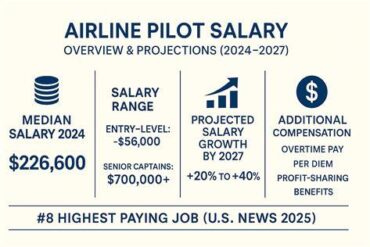
At its core, the salary range for private jet pilots spans widely, reflecting the diversity of roles within business aviation. Entry-level first officers generally earn between $60,000 and $80,000 annually, often with minimum required flight hours around 1,500 and fewer aircraft certifications. As pilots accumulate experience and transition into command roles, compensation rises significantly.
Captains in private aviation commonly earn between $80,000 and $150,000, but those with specialized experience—particularly on high-demand aircraft—can command $150,000 to $250,000 or more. At the very top of the scale, senior captains who also hold managerial or postholder roles may exceed $250,000 annually, especially in lucrative markets.
What stands out is not just the range, but the pace of progression. Compared to commercial aviation, where advancement can take years due to rigid seniority systems, private jet pilots often move up more quickly if they demonstrate skill, adaptability, and strong professional networks.
How Aircraft Type Influences Pilot Earnings
Aircraft type plays a decisive role in determining salary. Not all private jets are created equal, and neither are the paychecks associated with flying them. Pilots operating light jets on short regional routes typically earn less than those commanding ultra-long-range aircraft.

Flying premium aircraft such as the Gulfstream G650, Gulfstream G700, or Bombardier Global 7500 significantly boosts earning potential. These jets require advanced certifications and are often used for intercontinental flights, demanding a higher level of expertise and endurance. The complexity of these aircraft, combined with the expectations of elite clientele, justifies the elevated compensation.
Long-haul operations also introduce additional responsibilities, including fatigue management, international regulations, and extended duty periods. Naturally, these factors are reflected in higher pay scales.
Employer Type: Owner, Corporation, or Charter Operator
Where a pilot works can be just as important as what they fly. Private jet pilots are typically employed in one of three main settings: private ownership, corporate flight departments, or charter operators. Each comes with distinct salary structures and lifestyle implications.
Corporate operators—such as those owned by major companies like Walmart, Coca-Cola, or Starbucks—often provide the most stable and attractive compensation packages. These roles frequently include healthcare, retirement plans, insurance, and structured schedules, making them highly sought after.

Charter operators, on the other hand, offer variety and dynamic schedules. Pilots may fly to a wide range of destinations with different clients, which keeps the job engaging. However, contracts can be less stable, and benefits are not always guaranteed. Income may fluctuate depending on demand and region.
Working for a private owner presents yet another dynamic. While flight hours may be lower—allowing for more downtime—pilots are often on call, sometimes with little notice. This unpredictability can affect work-life balance, even if the overall workload appears lighter.
Regional Salary Differences in Business Aviation
Geography quietly shapes earning potential in private aviation. High-demand regions tend to offer more competitive salaries due to the concentration of wealth and private jet usage.
Pilots based in cities like New York, Los Angeles, London, and Paris often earn more than their counterparts in less active markets. Similarly, regions such as the Middle East (UAE and Saudi Arabia), parts of Africa, and Russia frequently offer lucrative contracts, sometimes with tax advantages or additional perks.
These roles may involve extended rotations away from home, but they compensate with higher pay and comprehensive benefits. For pilots willing to relocate or travel extensively, these opportunities can be financially rewarding.
Perks and Hidden Benefits Beyond Salary
Salary alone doesn’t tell the full story. Private jet pilots often receive a range of additional benefits that enhance overall compensation. These can include:
- Per diem allowances for overnight stays
- Company-paid accommodation during rotations
- Business class travel to and from base
- Flexible rotation schedules, such as one month on and one month off
- Occasional client gratuities, particularly in high-end charter operations

These perks can significantly increase the real value of a pilot’s earnings while also shaping lifestyle quality. In some cases, a well-structured rotation can offer extended periods of time off, a rare advantage in aviation careers.
The Trade-Offs: Stability vs Flexibility
Despite the attractive pay, private jet piloting comes with its share of challenges. Unlike commercial aviation, where schedules are fixed and predictable, business aviation thrives on flexibility. Flights may be scheduled with minimal notice, delayed, or canceled altogether depending on client needs.
This on-demand nature can be both exciting and exhausting. Being on standby requires constant readiness, which can blur the boundaries between professional and personal life. For pilots with families, extended time away from home or unpredictable schedules can be difficult to manage.
Additionally, job security can vary. Charter contracts may change quickly, and private owners may alter their travel habits or sell aircraft, leaving pilots seeking new opportunities. Maintaining strong industry connections becomes essential for long-term career stability.
Career Growth and Long-Term Earning Potential
One of the most compelling aspects of private aviation is the potential for rapid career advancement. Without the rigid hierarchy of commercial airlines, talented pilots can transition into senior roles more quickly.
Positions such as Chief Pilot, Director of Flight Operations, or Head of Training and Safety offer not only higher salaries but also greater influence within an organization. These leadership roles often exceed standard pilot compensation and provide a pathway into aviation management.
The continued growth of the private aviation sector further strengthens long-term prospects. Increased demand for personalized travel—accelerated by shifts in global travel behavior—has expanded opportunities for skilled pilots. As new aircraft enter service and technology evolves, the need for highly trained professionals remains strong.
Is a Private Jet Pilot Salary Worth It?
The answer depends on priorities. Financially, the profession offers strong earning potential, particularly at the upper levels. Pilots flying advanced aircraft in high-demand regions can achieve incomes that rival or exceed those in commercial aviation.
However, the lifestyle is less predictable. Flexibility, resilience, and a willingness to adapt are essential traits for success. For those who thrive in dynamic environments and value variety over routine, private aviation can be deeply rewarding—both professionally and financially.
Ultimately, the typical salary for a private jet pilot is only one part of a broader equation. The real value lies in how compensation aligns with lifestyle, career goals, and personal preferences. In a field defined by exclusivity and precision, those who navigate its complexities effectively are often rewarded with both exceptional pay and a uniquely compelling career path.