Becoming a pilot at American Airlines is not just a prestigious career path — it’s a financially rewarding one. With its origins tracing back to 1926 when Charles Lindbergh completed the airline’s inaugural mail flight, American Airlines has grown into one of the largest airlines in the world, operating thousands of flights daily across more than 50 countries. Along with its size and reach, American offers some of the most competitive pilot salaries in the U.S. aviation industry, drawing the attention of aspiring aviators nationwide.
Understanding the Structure of American Airlines Pilot Pay
Pilot salaries at American Airlines depend heavily on two factors: seniority and aircraft type. In addition, pilots may earn extra through profit sharing, per diem allowances, override pay, and generous 401(k) contributions — though this article focuses on base hourly pay, which forms the backbone of their total compensation.

Each pilot’s pay is governed by union agreements negotiated between American Airlines and the Allied Pilots Association (APA). As of 2024, American Airlines updated its pilot contract, bringing significant increases to both first officer and captain pay rates.
First Officer Salary at American Airlines
An American Airlines First Officer, often known as a co-pilot, begins their career with an impressive hourly wage of $113, quickly rising to $174 by year two when flying narrow-body aircraft like the Boeing 737 or Airbus A320.
Based on an estimated 80 flight hours per month, the following outlines estimated annual base salaries:
- Year 1: $109,209
- Year 5: $206,102
- Year 12: $231,945
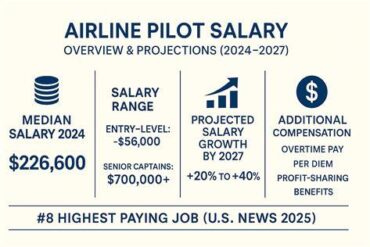
That places the estimated annual earning range for First Officers between $101,700 and $320,280, exclusive of any additional bonuses or benefits.
This rapid salary progression highlights the value of early experience and commitment within the airline. After only a few years, pilots begin earning six-figure salaries with added perks that can significantly increase total income.
Captain Salary at American Airlines
Captains — the most senior pilots on the flight deck — earn substantially higher wages. Entry-level captain pay starts at $324 per hour, climbing to $460 per hour by year 12, particularly for wide-body aircraft such as the Boeing 777-300ER.
Estimated annual earnings for captains include:
- Year 1: $309,000
- Year 5: $319,000
- Year 12: $336,000
The base pay range for American Airlines captains falls between $291,600 and $469,200 annually, again, excluding the substantial extras such as profit-sharing and long-haul international per diems.

These figures reflect American Airlines’ commitment to attracting and retaining top-tier talent by offering some of the highest pilot salaries in the commercial aviation sector.
How Pilot Hours Impact Salary
Salaries are structured around monthly flight hours, with standard schedules averaging 73–83 hours per month. While the maximum legal monthly limit under FAA rules is 100 hours, most pilots fly around 75–85 hours, depending on routes and seniority.
For instance, a First Officer flying 83 hours per month at $150/hour would gross about $149,400 annually, excluding extras. Add in per diem, overtime, and bonuses, and the total could easily approach or exceed $200,000 within a few years.
Pilot Bases at American Airlines
Pilots are assigned to one of several domiciles or bases across the United States. These locations determine where a pilot begins and ends most trips and are a major factor in commute and lifestyle. American Airlines currently operates pilot bases in:
- Dallas–Fort Worth (DFW)
- Miami (MIA)
- Chicago O’Hare (ORD)
- Charlotte (CLT)
- Phoenix (PHX)
- Philadelphia (PHL)
- Los Angeles (LAX)
- New York LaGuardia (LGA)
- Washington National (DCA)
- Boston (BOS)
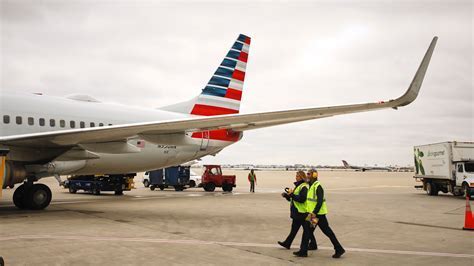
Location assignments often vary by seniority. Newer hires are generally assigned to less senior bases and may need to commute to their designated base — which can affect work-life balance and off-duty time.
American Airlines Fleet and Equipment
The aircraft a pilot operates can influence their pay and schedule. American’s diverse fleet includes narrow-body and wide-body aircraft such as:
- Airbus A319, A320, A321
- Boeing 737-800 (738)
- Boeing 757-200 (752)
- Boeing 767-300ER (763)
- Boeing 777-200ER (772), 777-300ER (773)
- Boeing 787-8 (788), 787-9 (789)
Wide-body pilots typically earn more due to longer international routes and higher base rates. Advancement to these positions depends on seniority and aircraft availability.
Pilot Workforce and Career Prospects
As of early 2025, American Airlines employs over 15,000 pilots. In 2019 alone, nearly 900 new pilots were hired, and with upcoming retirements and network growth, industry insiders forecast robust hiring for years to come.
Those seeking career security and upward mobility will find American Airlines’ pilot path to be among the most stable and well-compensated in the industry.
Requirements to Become an American Airlines Pilot
To qualify for a pilot role at American Airlines, applicants must meet both federal regulatory and company-specific requirements.
Regulatory Requirements:
- Airline Transport Pilot (ATP) Certificate
- First Class Medical Certificate
- Radiotelephone Operator’s Permit
- 1500+ hours of fixed-wing flight time
- PRIA evaluation clearance
- SIDA badge eligibility and pre-employment drug test clearance
American Airlines Minimum Requirements:
- Must be at least 23 years old
- Fluency in English (spoken and written)
- Legal right to work in the U.S.
- Vision corrected to 20/20 (distance) and 20/40 (near)
- Ability to obtain Customs and Airport Authority security clearances
- Comfort and proficiency with Personal Electronic Devices (PEDs) used in cockpit operations
How to Start Your Career with American Airlines
American Airlines primarily recruits from its regional airline partners, notably Envoy Air and PSA Airlines. Pilots usually begin their careers flying regional jets before transitioning to the mainline.
To prepare for an American Airlines pilot career, many candidates enroll in flight training academies offering accelerated programs like the Zero Time to Airline pathway, which can get new pilots flying within two years.
Applicants can find openings through the American Airlines Careers website, where they can also submit applications and track hiring windows.
The Future of American Airlines Pilot Careers
The aviation industry is undergoing a generational turnover as thousands of senior pilots near retirement age. This shift opens tremendous opportunities for the next wave of aviators, especially within legacy carriers like American Airlines.
Combined with higher pilot wages following contract revisions in 2023–2024, increased hiring, and expanded international operations, American Airlines is positioned as a prime employer for long-term, lucrative pilot careers.
Whether you’re a fresh flight school graduate or an experienced regional pilot, the path to flying for American Airlines has never been clearer — or more financially rewarding.