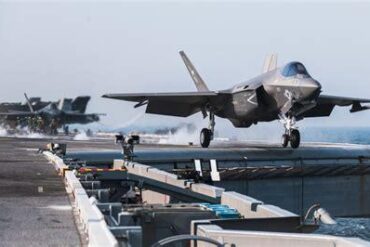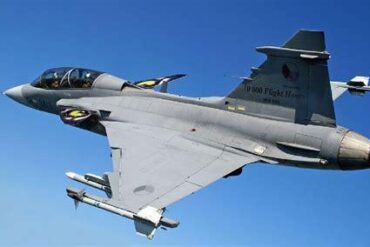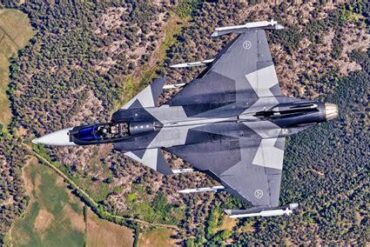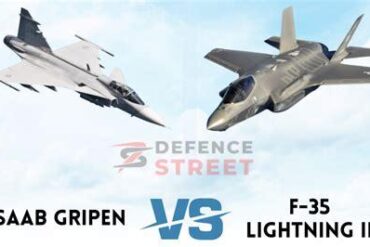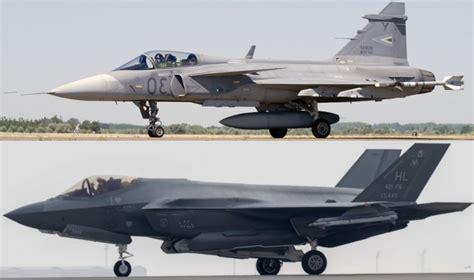
The Saab Gripen E and Lockheed Martin F-35A Lightning II represent two very different answers to the same fundamental question: what should a modern fighter be optimized to do? The F-35 pursues survivability through low observability, sensor fusion, electronic warfare, and networked operations. The Gripen E takes a different path, combining advanced sensors and electronic warfare with comparatively low operating demands, rapid turnaround, dispersed basing, and greater freedom to adapt the aircraft to national requirements.
That difference makes a simple winner difficult to identify. If the mission is to penetrate sophisticated integrated air-defense networks and survive against advanced sensors, the F-35’s fifth-generation stealth architecture gives it a major advantage. If the priority is keeping fighters dispersed, maintainable, affordable, and ready to fly from austere locations, the Gripen E presents a compelling alternative.
The debate becomes especially interesting because modern air combat is not determined by speed or maneuverability alone. A fighter must find targets, avoid detection, exchange information, launch weapons, survive electronic attack, return to base, and be repaired quickly enough to fly again. In a prolonged conflict, the aircraft that spends more time available for missions can become just as important as the aircraft with the highest theoretical performance.
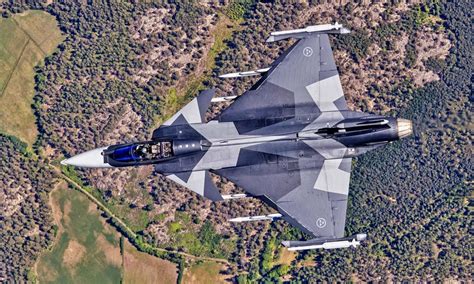
Gripen E vs. F-35: Two Completely Different Fighter Philosophies
The Gripen E is essentially a product of Sweden’s longstanding emphasis on dispersed air operations. Sweden has historically expected its air force to survive attacks against conventional air bases by spreading aircraft across numerous smaller operating locations. That requirement shaped the Gripen family from the beginning.
The result is a fighter designed around relatively simple logistics, rapid servicing, and the ability to operate away from large permanent bases. Saab states that Gripen E can operate from dispersed and unprepared road bases and can be turned around for another mission in roughly 15–25 minutes. The company also highlights the aircraft’s ability to operate with limited ground equipment and personnel.
The F-35A, by contrast, was conceived as a fifth-generation multirole combat aircraft whose greatest advantages come from the combination of stealth, sensors, computing power, electronic warfare, and secure networking. Its mission is not simply to defeat another fighter in a visual dogfight. It is intended to detect threats, build a detailed picture of the battlespace, share that information with other forces, and conduct missions in environments where conventional fighters could be detected and engaged much earlier.
That distinction explains why the F-35 can look expensive and relatively conventional in some performance categories while still being extraordinarily valuable. The F-35 is not designed to win the specification sheet’s speed contest. It is designed to change the information available to a combat force while reducing the information available to the enemy.
F-35 Stealth Gives It the Edge in Highly Contested Airspace
The most important advantage in the Gripen E vs. F-35 debate is stealth.
The F-35 incorporates a low-observable airframe, internal weapons carriage, carefully controlled electromagnetic emissions, and integrated electronic warfare. Its stealth does not make the aircraft literally invisible, but it is intended to reduce detection and tracking opportunities sufficiently to improve survivability and increase the likelihood that the F-35 can act before an opponent can establish an effective engagement.
Lockheed Martin lists a maximum speed of approximately Mach 1.6, while the aircraft’s combat effectiveness comes from far more than speed. The company emphasizes the F-35’s ability to collect, process, and share information across domains and allied forces.
This is particularly important against modern surface-to-air missile systems. A fighter attacking a heavily defended target cannot simply rely on maneuverability. Modern air defenses can combine long-range radars, passive sensors, electronic warfare, infrared detection, command networks, and multiple missile layers. A non-stealth aircraft can potentially use electronic warfare and tactics to reduce its vulnerability, but the F-35 starts with an inherent advantage because its physical signature is also part of its defensive system.
The Gripen E counters with an impressive electronic-warfare architecture. Saab describes the aircraft as having advanced electronic warfare with spherical coverage and an AESA radar, while emphasizing its ability to conduct electronic attack as well as defensive operations.
That makes the Gripen E much more than an older-style fighter with a modern radar. Its electronic warfare system is a central component of its survivability strategy. Nevertheless, electronic warfare and stealth are not interchangeable. Jamming can complicate an enemy’s ability to detect or track an aircraft, but it does not provide the same physical reduction in radar signature as a purpose-built low-observable design.
For that reason, the F-35 remains the stronger choice for the most heavily contested airspace, particularly when penetrating sophisticated air-defense networks is a central mission requirement.
Gripen E Is Built Around Electronic Warfare and Situational Awareness
The Gripen E’s strongest argument is that stealth is not the only way to survive.
Its sensor and electronic-warfare suite is designed to allow the aircraft to operate aggressively in the electromagnetic spectrum. Saab describes Gripen E as having advanced sensors, data fusion, electronic warfare, and an avionics architecture designed for continued capability growth.
This matters because modern fighters increasingly fight as part of networks rather than as isolated aircraft. A Gripen can receive information from other sensors, contribute its own information, use electronic warfare to disrupt threats, and employ long-range weapons without relying entirely on its own radar picture.
The aircraft also benefits from an architecture designed to accommodate weapons and systems from different suppliers. Saab specifically emphasizes the Gripen E’s ability to integrate weapons from around the world, giving operators greater flexibility in selecting their future arsenal.
The F-35 also has extensive sensor fusion and electronic-warfare capabilities, but its ecosystem is more tightly standardized. That standardization is both a strength and a limitation. It gives F-35 operators a common architecture and creates enormous interoperability benefits, but it can make changes to the aircraft more dependent on the wider program.
Gripen E vs. F-35 Performance: Speed Is Not the Whole Story
On paper, the Gripen E has the advantage in maximum speed. Saab’s published information lists a maximum thrust of 98 kN and a maximum takeoff weight of 16,500 kilograms, while the aircraft has ten hardpoints.
The F-35A is slower, with a maximum speed of Mach 1.6. Lockheed Martin also lists an internal weapons payload of up to 18,000 pounds for the F-35A family specification and a combat radius exceeding 590 nautical miles under the USAF profile in its published technical data.
But maximum speed rarely determines the outcome of a modern air-combat mission. An aircraft can fly at Mach 2 and still be at a disadvantage if it is detected, tracked, and engaged before it can establish the tactical situation.
The Gripen’s agility nevertheless remains useful. Its lightweight design, canard configuration, and strong thrust-to-weight characteristics contribute to its responsiveness. In a close-range engagement, where stealth advantages are reduced and visual maneuvering becomes more important, the Swedish fighter can be a formidable opponent.
Yet modern air forces generally want to avoid relying on a dogfight. The most desirable air-combat scenario is to detect the opponent first, engage from beyond visual range, and prevent the fight from becoming a traditional turning battle. This is another area where the F-35’s sensor fusion and low observability become especially important.
Meteor Gives the Gripen E a Powerful Beyond-Visual-Range Weapon
One of the most interesting aspects of the Gripen E is its integration with the MBDA Meteor beyond-visual-range air-to-air missile.
Saab highlights Gripen E’s ability to carry up to seven Meteor missiles alongside IRIS-T weapons in an air-to-air configuration. The Meteor’s ramjet propulsion gives it sustained energy during the engagement rather than relying solely on the boost-and-coast profile associated with conventional solid-fuel rocket motors.
This provides Gripen E with a particularly dangerous long-range air-combat capability. The aircraft does not need to be the fastest fighter in the sky if it can combine strong electronic warfare, high-quality sensors, networked targeting, and an advanced missile.
However, it would be misleading to claim that the F-35 is simply outgunned. The F-35 has an extensive weapons ecosystem and can employ weapons internally to preserve its low-observable configuration. The aircraft’s internal weapons carriage is fundamental to its stealth advantage.
This creates a genuine trade-off. Gripen E can carry a broad external weapons load and offers considerable flexibility, while F-35 can preserve its low-observable characteristics by keeping critical weapons inside the aircraft.
As the F-35 program receives additional Block 4 capabilities, its weapons and computing architecture are also expected to expand. Lockheed Martin describes Block 4 as a major modernization effort involving more than 70 upgrades across the three F-35 variants, including increased missile capacity, improved electronic warfare, and enhanced target recognition.
Maintenance Is Where the Gripen E Makes Its Strongest Case
If stealth is the F-35’s strongest argument, maintenance freedom is arguably the Gripen E’s strongest advantage.
Gripen was designed for dispersed operations where sophisticated permanent infrastructure could not be assumed. Saab says the aircraft can operate from narrow road strips and small airfields, with the Gripen E capable of taking off from a 500-meter road and landing on a 600-meter road under the company’s published dispersed-operations concept.
The concept goes much deeper than short-field performance. Gripen can be serviced, refueled, and rearmed close to where it operates. Saab states that a Gripen can be turned around in less than 15 minutes using a small team and limited ground-support equipment, while its engine can be changed in the field with a small crew.
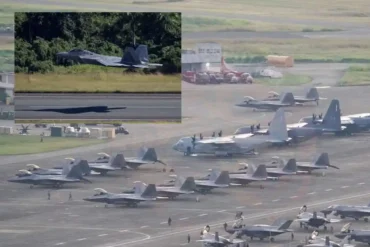
This could become extremely valuable during a major conventional conflict. A large air base is a lucrative target. Runways, fuel storage, maintenance facilities, weapons depots, aircraft shelters, and command centers can all be attacked. Dispersing fighters across numerous smaller operating locations makes the adversary’s targeting problem substantially harder.
The F-35 can also participate in dispersed operations. Scandinavian F-35 operators have demonstrated operations from austere locations, and the aircraft is not incapable of operating outside a conventional air base. The important distinction is how much infrastructure, equipment, personnel, and logistical support are required to sustain those operations.
That is where the Gripen philosophy remains particularly attractive.
F-35 Sustainment Problems Are Real, but the “Kill Switch” Story Needs Context
The F-35’s maintenance burden is not merely internet speculation. A June 2026 U.S. Government Accountability Office report found that the fleet’s mission-capable rate declined from 67% in 2021 to 44% in 2025, while its full mission-capable rate declined from 38% to 25%. The GAO also reported continuing problems involving spare parts and contractor dependence.
Those figures are significant because aircraft availability directly affects combat power. A fighter that possesses extraordinary sensors and stealth but spends substantial time waiting for parts cannot deliver its theoretical capability to the operational commander.
At the same time, claims that the F-35 contains a literal “kill switch” that Washington can press to remotely disable foreign aircraft should be treated cautiously. There is no public evidence establishing such a simple remote shutdown mechanism. The real issue is more complicated and more important: F-35 operators participate in a multinational program with centralized software, logistics, sustainment, technical data, mission-data, and upgrade structures.
The F-35’s logistics architecture provides enormous benefits, particularly interoperability and shared support. But dependence on a large international supply chain can also become a vulnerability. The GAO has repeatedly highlighted spare-parts shortages, sustainment costs, contractor dependence, and readiness problems.
Therefore, the legitimate sovereignty question is not whether America possesses a secret off-switch. It is how much control an operator has over the systems, software, logistics, upgrades, weapons integration, and industrial support required to keep its fleet operational.
That is a much more meaningful issue for countries evaluating long-term defense independence.
The F-35 Costs More Because It Does More
The Gripen E’s lower operating burden should not obscure what an F-35 fleet is buying.
The F-35 is simultaneously a fighter, sensor node, electronic-warfare platform, intelligence collector, communications hub, and strike aircraft. Its value increasingly comes from its ability to contribute to an entire combat network rather than simply from the performance of an individual airframe.
That capability has a price.
The GAO reported in 2024 that projected F-35 sustainment costs had increased by 44% from 2018 to 2023, reaching approximately $1.58 trillion in the U.S. government’s then-current estimate. It also found that F-35 availability had declined and that none of the three variants were meeting their availability goals.
These numbers should not be interpreted as evidence that the F-35 is a poor aircraft. They demonstrate something different: advanced combat capability creates an equally advanced sustainment challenge.
For a large military with substantial defense spending, that burden may be acceptable because the F-35 provides capabilities that cheaper aircraft cannot fully reproduce. For a smaller air force, however, every additional dollar spent keeping a fighter operational is a dollar unavailable for missiles, ground-based air defense, drones, pilot training, hardened facilities, electronic warfare, or additional aircraft.
This is where the Gripen E’s economics become strategically important.
Gripen E vs. F-35: Which Fighter Is Better for a Small Air Force?
There is no universal answer.
A country expecting to fight alongside the United States and other F-35 operators may find the Lightning II particularly attractive. Common data links, shared operational concepts, multinational logistics, and fifth-generation interoperability can provide advantages that cannot be measured simply by aircraft purchase price.
An F-35 operator also gains access to a massive global fleet. That network is strategically significant because allied aircraft can share information and, under appropriate arrangements, benefit from common logistics and support infrastructure.
For a country primarily concerned with territorial defense, dispersed operations, rapid regeneration after attacks, and maintaining a large number of available sorties, Gripen E can make a different kind of sense.
The Swedish fighter is especially well suited to an air force that expects its bases to come under attack and therefore wants to preserve combat power by distributing aircraft across many locations. It also offers considerable freedom in weapon selection and emphasizes rapid maintenance.
In other words, the F-35 is optimized around penetrating and dominating a sophisticated battlespace, while Gripen E is exceptionally well aligned with the problem of generating combat power repeatedly under difficult operating conditions.
Stealth Supremacy or Maintenance Freedom? The Real Answer
The title question ultimately creates a false choice if it suggests that one aircraft’s advantage makes the other’s irrelevant.
The F-35 is the stronger high-end combat system. Its stealth, sensor fusion, electronic warfare, internal weapons carriage, networking, and continual modernization give it an exceptional advantage in heavily defended airspace. Against advanced integrated air defenses, that combination is extremely difficult for a fourth- or 4.5-generation aircraft to replicate.
But Gripen E is the stronger argument for affordable and resilient air operations. Its dispersed-basing philosophy, rapid turnaround, relatively small maintenance footprint, broad weapons integration philosophy, and electronic-warfare capabilities directly address a different set of military problems.
The choice therefore depends on the war an air force expects to fight.
If the requirement is to penetrate an enemy’s most sophisticated air-defense system and operate as part of a fifth-generation coalition, F-35 is difficult to beat. If the requirement is to keep fighters flying from dispersed locations after conventional bases have been attacked, while preserving national control and limiting sustainment demands, Gripen E becomes exceptionally attractive.
The most important lesson is that combat aircraft cannot be evaluated by stealth, speed, payload, or purchase price alone. Availability is capability. Logistics is combat power. Sovereignty is operational freedom. And stealth is survivability.
The F-35 concentrates enormous capability into a technologically sophisticated and increasingly networked combat system. Gripen E concentrates capability into an aircraft designed to be easier to disperse, maintain, adapt, and regenerate. Neither philosophy is universally superior.
In a short, technologically intense conflict against a sophisticated adversary, the F-35’s stealth and sensor advantage could be decisive. In a prolonged war where bases are repeatedly attacked and logistics become increasingly constrained, the Gripen’s ability to keep operating from austere locations could become just as strategically valuable.
That is why the Gripen E vs. F-35 debate is ultimately not about whether stealth is better than maintenance freedom. It is about what an air force needs its fighter fleet to remain capable of doing when the ideal conditions disappear.
And in real war, ideal conditions tend to disappear very quickly.