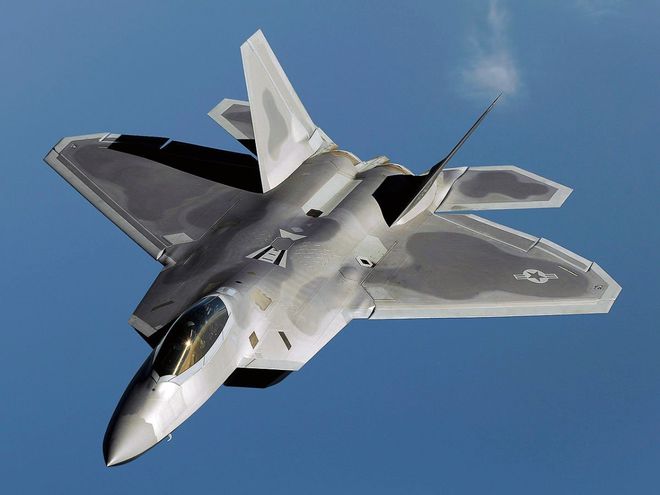
The F-22 Raptor represents the pinnacle of stealth fighter technology, with its radar cross-section (RCS) playing a pivotal role in its ability to dominate aerial combat. Developed with cutting-edge low-observable design principles, the F-22’s RCS is minuscule compared to legacy and even modern stealth aircraft. This article delves into the engineering behind the RCS, its comparative performance, and emerging countermeasures that challenge its stealth edge.
F-22 Raptor RCS: Engineering an Invisible Fighter
Ultra-Low Radar Cross Section Specifications
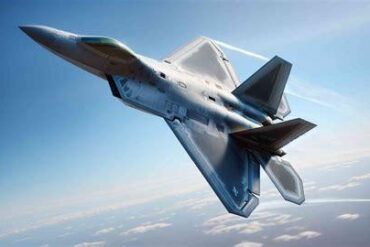
The F-22’s frontal RCS is estimated at 0.0001–0.0002 m², making it virtually undetectable by conventional radar systems. This is comparable to the radar signature of a small marble or a nail head. Achieving this level of stealth requires meticulous design, materials, and engineering innovations:
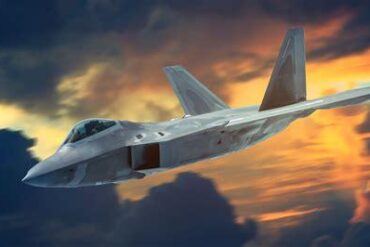
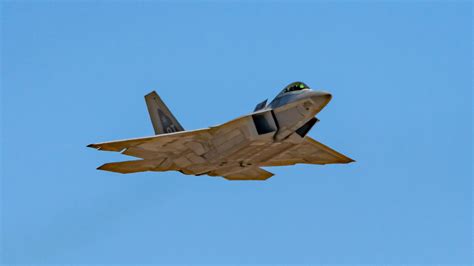
- Aerodynamic shaping: The aircraft’s diamond-like fuselage, canted vertical stabilizers, and blended wing-body configuration deflect incoming radar waves away from their source.
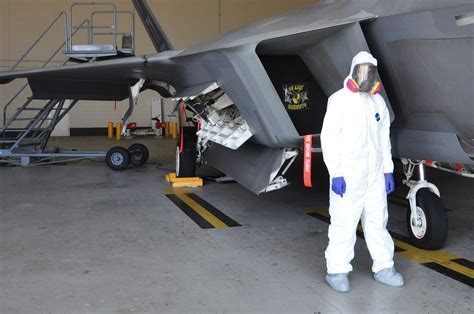
- Radar-absorbent materials (RAM): Approximately 24% of the airframe is composed of advanced composite materials and RAM coatings that absorb and dissipate radar signals.
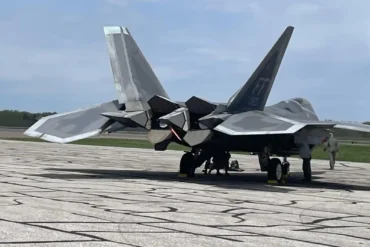
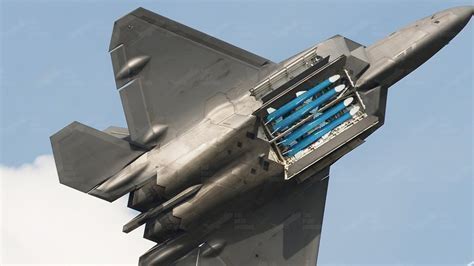
- Internal weapon bays: Unlike conventional aircraft with external stores that reflect radar waves, the F-22 conceals its weapons internally, minimizing RCS spikes.
Comparison with Other Stealth Aircraft
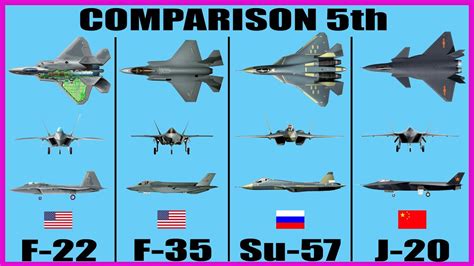
The F-22’s RCS surpasses most stealth fighters, providing a significant edge in combat scenarios:
- F-35 Lightning II: With an RCS of 0.0015 m², the F-22 is 5–10 times stealthier.
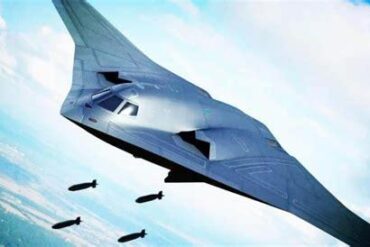
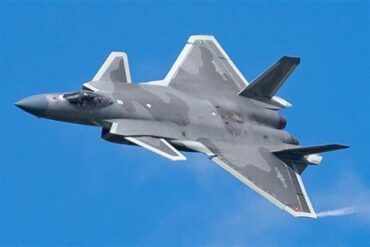
- Chengdu J-20 (China): Estimated RCS of 0.08–0.3 m², making the F-22 ~800 times harder to detect.
- Sukhoi Su-57 (Russia): With an RCS of approximately 0.5 m², the F-22 is a staggering 5,000 times stealthier.
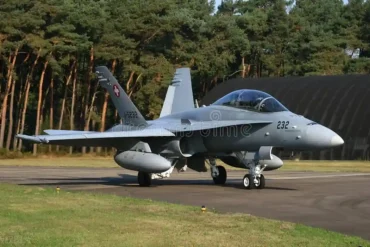
- Non-Stealth Fighters: A 4th-generation fighter like the F/A-18 Super Hornet has an RCS of around 1 m², making it orders of magnitude more detectable.
Emerging Threats: Advances in Anti-Stealth Radar
China’s Claims on Radar Breakthroughs
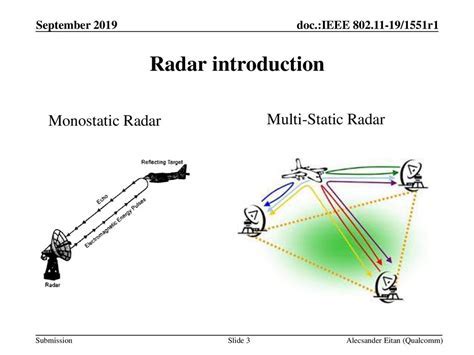
Despite the F-22’s stealth superiority, multi-static radar and adaptive detection algorithms pose new challenges. A 2024 study from China suggests that advanced radar systems could amplify the F-22’s RCS by 60,000 times (to ~6 m²), potentially compromising its stealth advantage. These systems utilize:
- Multi-static radar networks: Distributing radar sources and receivers over a wide area to detect low-RCS targets.
- Quantum radar research: Exploring photon entanglement for increased detection sensitivity.
- AI-driven signal processing: Improving the ability to differentiate stealth aircraft from background clutter.
Limitations of Anti-Stealth Technologies
Despite these advancements, countering the F-22’s stealth remains an immense challenge due to:
- Supercruise capabilities: The F-22 can sustain supersonic speeds without afterburners, reducing its infrared signature and limiting radar tracking opportunities.
- Electronic warfare tactics: The Raptor employs electronic countermeasures (ECM) to disrupt enemy radar.
- Environmental constraints: Radar effectiveness is highly dependent on atmospheric conditions and operational positioning.
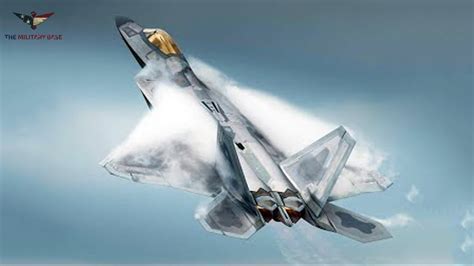
Operational Advantages of the F-22’s Low RCS
The F-22’s stealth enables game-changing combat advantages, ensuring air superiority in contested environments.
First-Look, First-Kill Capability
With its low RCS and advanced AN/APG-77 radar, the F-22 detects and engages adversaries long before being detected itself. This provides a massive tactical advantage over even the most advanced opponents.
Deep Penetration into Hostile Airspace
The F-22 can bypass dense enemy air defenses and conduct precision strikes or surveillance missions without being easily targeted by surface-to-air missile (SAM) systems.
Increased Survivability
Unlike older aircraft that rely on electronic warfare support, the F-22’s stealth-first approach reduces its reliance on external jamming, making it independently survivable in high-threat environments.
Future Outlook: Stealth vs. Next-Generation Threats
As anti-stealth technologies advance, the F-22’s role will evolve. Its reliance on physical stealth may gradually shift toward networked warfare, electronic deception, and AI-assisted evasion tactics.
Key Modernization Efforts
- Avionics Upgrades: Enhanced sensor fusion and data-sharing capabilities for network-centric warfare.
- Engine Enhancements: Improving thrust-vectoring maneuverability for better agility and sustained combat effectiveness.
- Adaptive Stealth Technologies: Future coatings and active camouflage may further reduce RCS variability based on mission needs.
Conclusion
The F-22 Raptor’s radar cross-section remains a benchmark for stealth aviation, granting it unmatched survivability and lethality. However, evolving anti-stealth radar advancements necessitate continuous adaptation. Despite these challenges, the F-22’s low observability, advanced avionics, and supercruise ensure it remains the apex predator of the skies.
FAQ
1. How does the F-22’s RCS compare to commercial aircraft?
A standard commercial airliner has an RCS of 10–100 m², making it millions of times more detectable than the F-22.
2. Can weather conditions impact the F-22’s stealth?
Yes, rain and humidity can slightly degrade RAM effectiveness, but its fundamental stealth geometry remains unaffected.
3. Why is the F-22’s RCS superior to the F-35’s?
The F-22 prioritizes air superiority with a more aggressive stealth design, whereas the F-35 balances stealth with sensor fusion and multirole capabilities.