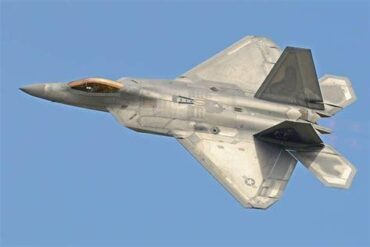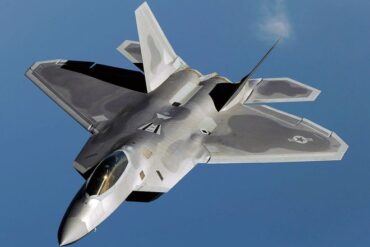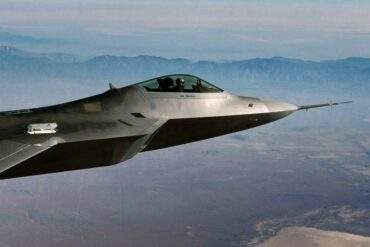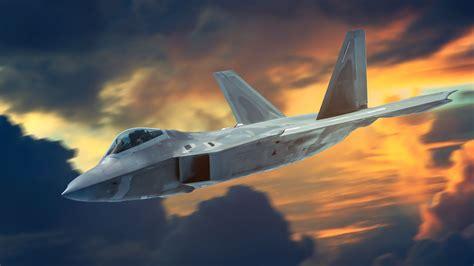
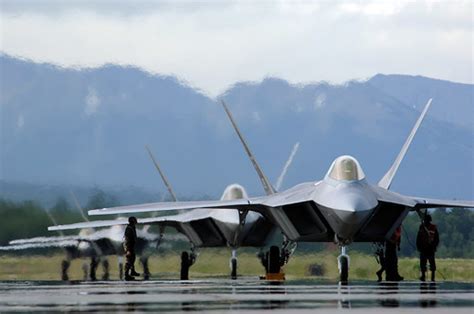
The F-22 Raptor, widely recognized as the crown jewel of the U.S. Air Force’s fighter fleet, is often lauded for its stealth capabilities, supercruise performance, and air superiority dominance. However, one frequently asked question by aviation enthusiasts and defense analysts alike is: Can an F-22 Raptor fly across the Atlantic? The answer is both straightforward and complex, hinging heavily on the aircraft’s design limitations and the strategic employment of aerial refueling.
At first glance, the numbers seem discouraging. The F-22 Raptor holds approximately 18,000 pounds of fuel internally, extending to 26,000 pounds with two external fuel tanks. Even with this boosted fuel capacity, its operational range maxes out at around 1,850 miles, a figure drastically short of the 3,600 miles typically required to traverse the Atlantic Ocean. Clearly, flying such a distance on a single tank is impossible.
The First Transatlantic Flight of the F-22 Raptor
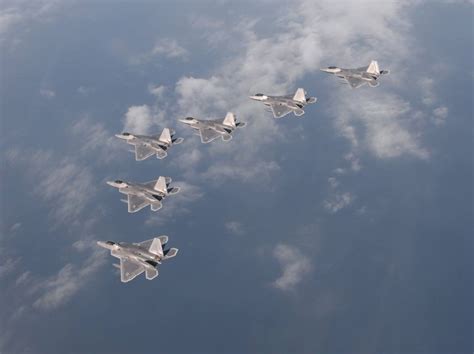
Despite these constraints, the F-22 Raptor successfully completed its first transatlantic flight in July 2008. In this mission, three F-22 Raptors departed Royal Air Force Fairford in England and landed at Langley Air Force Base in Virginia, covering approximately 3,600 miles. This milestone flight showcased the aircraft’s ability to undertake long-range missions – but not without critical support.
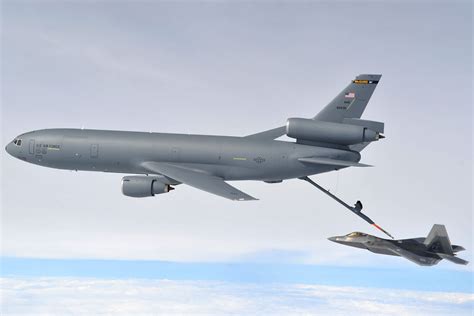
Central to this achievement was the use of the KC-10 Extender aerial refueling aircraft from the 70th Air Refueling Squadron stationed at Travis Air Force Base. As the F-22s proceeded across the Atlantic, the KC-10 tanker executed multiple mid-air refueling operations, enabling the fighters to sustain their transoceanic journey.
The Role of Aerial Refueling in Extending the Raptor’s Range
Aerial refueling is indispensable for the F-22’s long-range operations. The process involves the following technical complexities:
- Refueling Speed: Typically conducted at approximately 400 mph, the tanker and fighter aircraft must maintain this synchronized speed throughout the operation.
- Proximity Precision: Both aircraft operate within 100 feet of each other during refueling, requiring flawless coordination.
- Fuel Transfer Rates: A tanker like the KC-10 or KC-135 can deliver up to 1,000 pounds of fuel per minute. To completely replenish the F-22’s fuel tanks, the process must continue for several minutes.
The aerial refueling method transforms the F-22’s limited range into a manageable factor for transatlantic flights. However, mission planners typically schedule multiple refueling points, considering safety margins and the unpredictability of weather over the vast Atlantic expanse.
Fuel Management and Mission Planning for Long-Distance Deployments
Beyond the mere act of refueling, mission planning for transatlantic F-22 flights involves meticulous calculations and contingency protocols:
- Fuel Consumption Rates: Pilots monitor real-time consumption data, adjusting throttle settings and altitude to optimize fuel usage.
- Weather Analysis: Atmospheric conditions significantly affect fuel efficiency and refueling windows. Jet streams and turbulent air can alter mission parameters.
- Emergency Diversions: Pre-identified alternate airfields along potential routes ensure safe landing options in case of emergencies.
- Tanker Availability: KC-10 and KC-135 tankers are scheduled in tandem to cover possible mechanical failures or operational setbacks.
Such comprehensive planning is crucial not only for the mission’s success but also for pilot safety, especially when flying over the unforgiving Atlantic waters.
F-22 Raptor’s Limitations Without Tanker Support
While the F-22’s capabilities are extraordinary, without tanker assistance, the fighter is effectively confined to regional operations. Its range, though respectable for tactical engagements, falls far short of intercontinental mission parameters without mid-air refueling. The U.S. Air Force’s emphasis on strategic air refueling assets underscores this vulnerability.
In direct comparison to aircraft like the F-35 Lightning II, which also relies heavily on tanker support for extended missions, the F-22 shares similar strategic dependencies. Nevertheless, its supercruise capability at Mach 1.5 allows it to cover distances faster when fuel constraints are mitigated by tanker support.
Modern Tanker Fleet: The Backbone of F-22’s Global Reach
The KC-10 Extender and the KC-135 Stratotanker remain the workhorses of U.S. aerial refueling operations. Both aircraft offer vital support for the F-22’s transatlantic missions:
- KC-10 Extender: Capable of carrying 356,000 pounds of fuel, it can refuel multiple aircraft in a single mission.
- KC-135 Stratotanker: Slightly older but still effective, it carries approximately 200,000 pounds of fuel, ensuring it remains an essential component of the refueling fleet.
The development and gradual deployment of the KC-46 Pegasus add further resilience and capacity to aerial refueling operations, ensuring that aircraft like the F-22 can sustain extended global operations for decades to come.
Future Prospects and Strategic Considerations
As global tensions escalate and the demand for rapid fighter jet deployments across continents increases, the reliance on aerial tankers is likely to deepen. The F-22 Raptor, despite its formidable on-board fuel management systems and efficient twin Pratt & Whitney F119 engines, is not a long-range fighter without assistance.
Strategic implications extend beyond logistics. Every transatlantic deployment of F-22s signals significant operational readiness and force projection. Deploying fifth-generation fighters across oceans demonstrates both technical prowess and geopolitical influence.
Conclusion: Yes, But Not Alone
In answer to the original question: Yes, an F-22 Raptor can cross the Atlantic – but only with aerial refueling assistance. Without mid-air refueling, its inherent range is insufficient to traverse such vast distances. However, with coordinated support from tanker aircraft like the KC-10 Extender and KC-135 Stratotanker, the F-22 Raptor can deploy rapidly across the Atlantic, reinforcing U.S. air superiority in both European and African theaters.
The F-22’s dependence on aerial refueling underscores a critical aspect of modern aerial warfare: technological superiority in fighter design must be matched by equally advanced and reliable logistics infrastructure. The aerial tanker fleet, though less glamorous, remains the unsung hero behind the F-22’s ability to extend its wings across the world’s oceans.