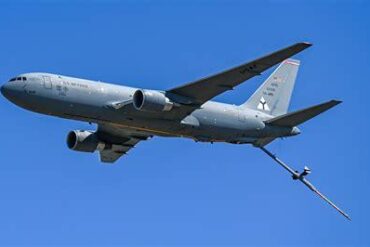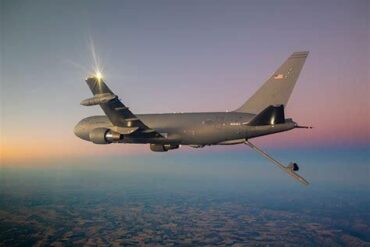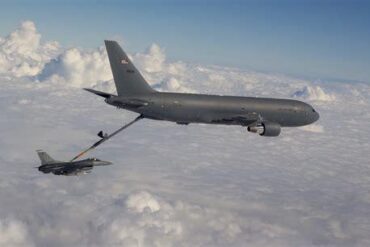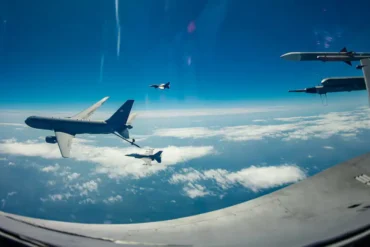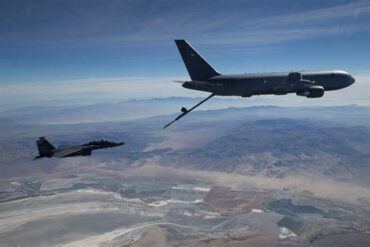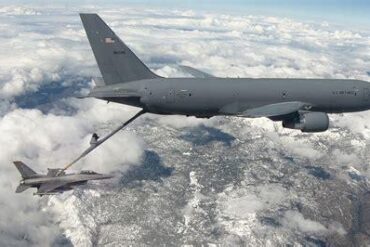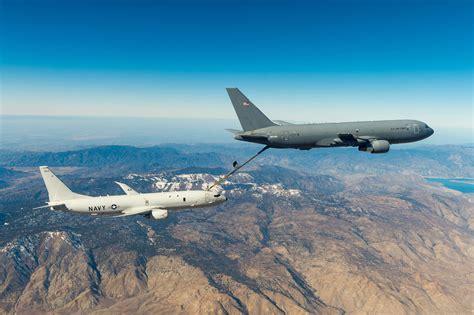
The United States Air Force has long relied on a decisive, often underappreciated advantage: the ability to refuel aircraft anywhere on Earth, at any time. This capability—quiet, technical, and largely invisible to the public—forms the backbone of American global power projection. Fighter jets, bombers, reconnaissance aircraft, and even allied air forces depend on this airborne lifeline. Without it, range collapses, response time slows, and deterrence weakens.
Yet today, that foundation is under strain. The introduction of the KC-46 Pegasus, intended as the next-generation aerial tanker, was supposed to secure this advantage for decades. Instead, it has exposed a growing mismatch between ambition and execution, between what the Air Force now demands and what its newest tanker can reliably deliver.
By 2026, the reality is unavoidable: the KC-46 fleet is not scaling fast—or smoothly—enough to meet the very operational doctrine the United States has built around it.
A Fleet Transition That Arrived Too Late—and Too Imperfect
The KC-46 was never originally conceived as the dominant pillar of America’s tanker fleet. It was designed as a bridge platform, a transitional aircraft that would replace the aging KC-135 Stratotanker and the more capable KC-10 Extender while paving the way for a future stealth tanker under the Next Generation Air-Refueling System (NGAS) program.
Instead, delays in NGAS and the retirement of the KC-10 have forced the KC-46 into a far more critical role than intended.
The transition has been anything but smooth. The KC-46 entered service in 2019, already years behind schedule. By 2021, it had earned a harsh internal label: a “lemon.” That description reflected deep frustration within the Air Force, not just with delays, but with fundamental performance limitations affecting daily operations.
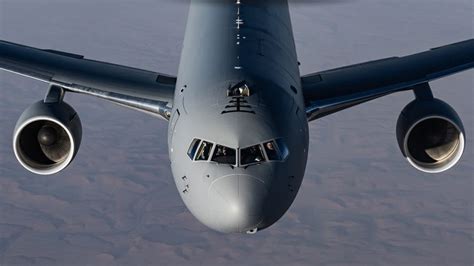
The consequences of that rocky introduction are now compounding. As older tankers age out faster than expected, the Air Force is increasingly dependent on a platform that is still maturing under real-world operational pressure.
Technical Deficiencies That Undermine Mission Reliability
At the heart of the KC-46’s struggles lies a cluster of technical problems—some minor, others deeply consequential. The most persistent and operationally disruptive issue has been the Remote Vision System (RVS), which replaces the traditional boom operator’s direct line of sight with camera-based visuals.
In theory, this system represents modernization. In practice, it has created significant challenges.
Operators have reported distorted depth perception, difficulty judging distance, eye strain, and inconsistent visibility depending on lighting conditions. These limitations directly affect the precision required to safely connect the refueling boom to receiving aircraft—an operation where millimeters matter.
The result is not just inefficiency, but risk.
Compounding the issue are recurring mechanical and structural concerns. The KC-46 has faced:
- Boom stiffness problems that complicate refueling certain aircraft
- Software malfunctions that disrupt mission readiness
- Structural cracks discovered in multiple airframes
- Fuel system irregularities that require inspection and mitigation
In one particularly telling incident, a deployment of advanced fighter aircraft was delayed mid-transit due to successive KC-46 malfunctions, highlighting how tanker reliability directly impacts frontline combat readiness.
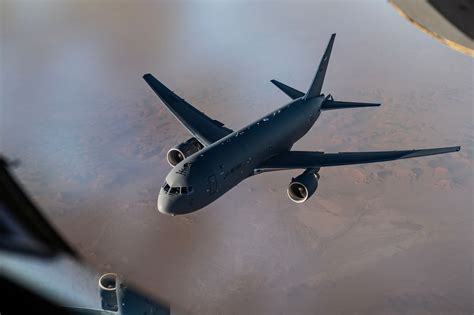
These are not isolated defects; they form a pattern. And patterns matter in military logistics, where predictability is often more valuable than peak performance.
The Strategic Miscalculation: A Bridge Aircraft Becomes the Backbone
Perhaps the most significant factor behind the KC-46’s current predicament is not purely technical—it is strategic.
The Air Force has changed its own requirements midstream.
Originally envisioned as a stopgap, the KC-46 is now being positioned as a core component of the tanker fleet, largely due to delays in NGAS and evolving geopolitical demands. The Indo-Pacific theater, with its vast distances and limited basing infrastructure, has dramatically increased the importance of long-range aerial refueling.
At the same time, the Air Force has embraced new operational concepts such as Agile Combat Employment (ACE), which relies on dispersed, flexible basing. These concepts demand more tankers, operating more frequently, across wider areas.
The result is a classic case of demand outpacing supply—not because the original plan failed, but because the plan itself changed.
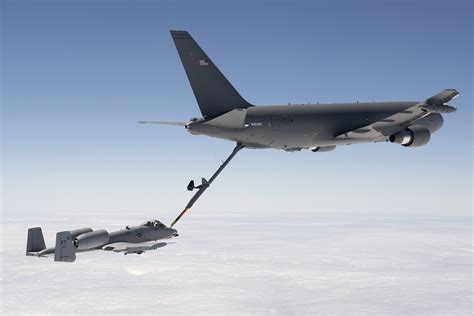
The KC-46, while more advanced than the KC-135 in many respects, was never designed to single-handedly support this expanded mission profile. It is now being asked to do exactly that.
Rising Demand Meets Sluggish Production Reality
As operational demand has surged, so too has the Air Force’s procurement ambition. What began as a planned purchase of 179 KC-46 aircraft has steadily increased—first to 188, then to 259, and now potentially to over 300 units.
This is not a marginal adjustment. It is a strategic doubling down.
However, scaling production is not instantaneous. The Air Force is pushing for increased output, aiming for up to 18 aircraft per year in the coming decade. Even at that pace, replacing aging tankers while expanding overall capacity remains a long-term challenge.
Meanwhile, costs are rising sharply. Per-unit pricing is projected to climb significantly, reflecting not just inflation but also the integration of upgrades, fixes, and enhanced survivability features.
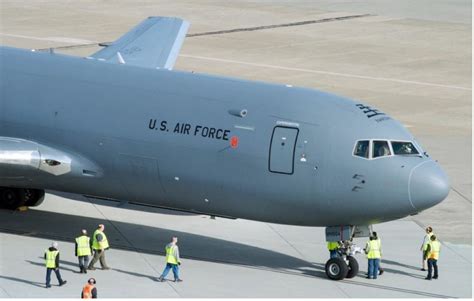
The uncomfortable reality is that the Air Force needs more tankers now, but the industrial base—and the platform itself—cannot fully deliver at the required speed.
Aging Legacy Fleet Adds Urgency to the Crisis
If the KC-46 were merely supplementing a healthy fleet, its growing pains might be manageable. But it is not.
The Air Force continues to rely heavily on the KC-135 Stratotanker, an aircraft whose oldest examples date back to the late 1950s. These planes have been remarkably durable, but age is an unforgiving adversary.
Maintenance costs are rising. Availability rates are under pressure. And at some point, structural fatigue becomes a limiting factor no amount of engineering can fully overcome.
The retirement of the KC-10 removed a highly capable tanker that could offload large amounts of fuel over long distances—precisely the kind of capability now in higher demand.
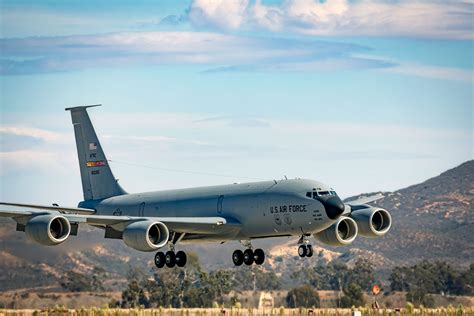
This leaves the Air Force in a narrowing window: replace legacy aircraft fast enough to avoid a capability gap, while fixing and scaling a new platform that is still evolving.
Why Alternatives Are Not a Realistic Option
On paper, alternatives exist. The Airbus A330 MRTT has demonstrated strong performance and has been widely adopted by allied nations. It boasts proven reliability, robust fuel offload capacity, and a strong export track record.
In practice, however, switching platforms is not viable.
The United States defense procurement system strongly favors domestic production, not only for economic reasons but also for strategic sovereignty and industrial security. Integrating a foreign-designed tanker into the USAF at scale would involve political, logistical, and operational complexities that make it effectively infeasible.
This leaves the Air Force with a stark reality:
the KC-46 is not just the preferred option—it is the only option.
The Long Road to Fixing a “Lemon”
History suggests that early struggles do not necessarily define an aircraft’s ultimate success. Many now-iconic military platforms experienced severe issues during their initial years.
The KC-46 is already showing signs of gradual improvement. Boeing is developing the RVS 2.0, a redesigned vision system intended to address the most critical operator complaints. Structural fixes, software updates, and incremental refinements are steadily being implemented.
But time remains the key variable.
Major upgrades are not expected to be fully fielded until the late 2020s, and even then, integration across the entire fleet will take years. In the meantime, the aircraft must continue operating under constraints, supporting missions that cannot wait.
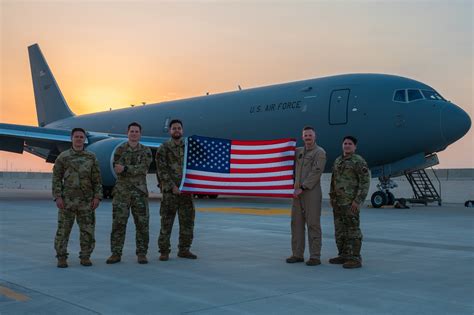
The Air Force is effectively executing a high-stakes balancing act: fixing the aircraft while relying on it at scale.
Operational Reality: The KC-46 Is Already Indispensable
Despite its challenges, the KC-46 is not a failure in operational terms. It is flying missions, supporting deployments, and contributing to real-world operations. In recent campaigns, it has played a meaningful role in sustaining airpower over long distances.
Its design does offer important advantages. Compared to the KC-135, the KC-46 features:
- Improved fuel efficiency, enabling longer-range missions
- Greater fuel offload capacity in certain profiles
- Enhanced avionics and defensive systems
- Capability to operate from shorter runways
These attributes align well with modern operational concepts, particularly in contested or semi-contested environments.
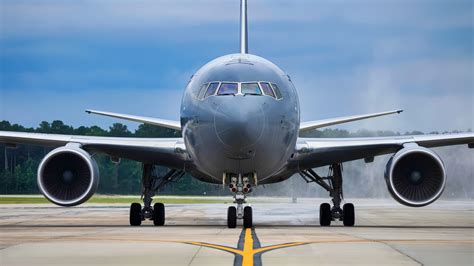
But capability alone is not enough. Reliability, scalability, and consistency are what define a true backbone platform—and those are still works in progress.
A Self-Created Gap Between Strategy and Capability
The deeper story behind the KC-46’s struggles is not simply one of engineering challenges or production delays. It is a reflection of a broader dynamic: the Air Force has expanded its strategic ambitions faster than its supporting infrastructure can adapt.
The pivot to the Indo-Pacific, the adoption of dispersed basing, and the increasing reliance on rapid global mobility have all intensified demand for aerial refueling. At the same time, modernization programs have slipped, legacy platforms have aged, and new systems have encountered predictable—but costly—growing pains.
The result is a widening gap between what is required and what is currently achievable.
Conclusion: A Critical Capability Under Pressure—but Not Collapse
The KC-46 Pegasus stands at the center of one of the most important logistical challenges facing the United States Air Force. It is an aircraft burdened by early missteps, elevated expectations, and a rapidly evolving strategic environment.
And yet, it is also a platform with no real replacement, no immediate alternative, and no margin for failure.
The path forward is clear, even if it is not easy. The Air Force must continue to invest in fixes, accelerate production, and integrate the KC-46 more deeply into its operational framework. Over time, the aircraft is likely to mature into a reliable and capable system.
But until then, the tension remains.
America’s ability to project power globally still depends on its tanker fleet—and that fleet is now racing to catch up with the very demand it was built to meet.