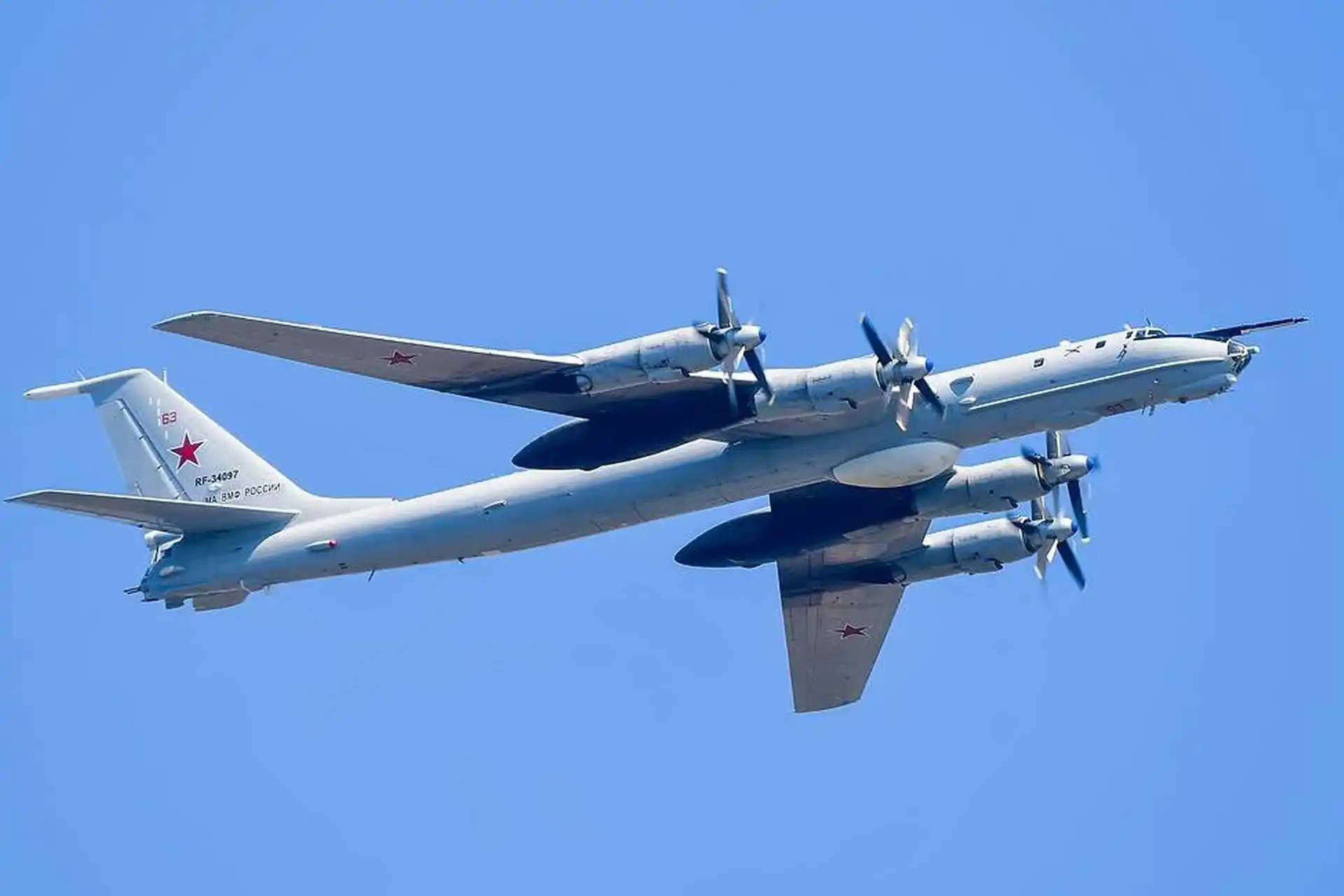
On January 9, 2026, the Russian Northern Fleet completed a historic milestone with the first-ever Arctic in-flight refueling of a Tu-142MK anti-submarine aircraft. Conducted near the North Pole, this operation wasn’t just a demonstration of pilot skill—it was a bold message of intent. Against a backdrop of escalating Arctic competition and environmental challenges, this 30-hour sortie underscores Russia’s determination to maintain sustained maritime air presence in one of the world’s most unforgiving and strategically contested theaters.
Arctic Aerial Refueling: A Feat of Endurance and Precision
The Tu-142MK, an adaptation of the Tu-95 Bear strategic bomber, is a long-range maritime patrol aircraft purpose-built for anti-submarine warfare (ASW) and oceanic surveillance. Its deployment in the Arctic through aerial refueling reveals not just the aircraft’s tactical endurance but Russia’s expanding operational doctrine. According to Russian news agency TASS, this mission has been officially recorded in the Russian Armed Forces Book of Records, signaling not a symbolic first, but a repeatable capability embedded in the nation’s strategic framework.
Conducting in-flight refueling over the Arctic Ocean—where extreme cold, magnetic anomalies, and lack of navigational infrastructure severely challenge aviation norms—marks a deliberate attempt to validate operations far beyond the temperate comfort zones where such tactics are typically tested. Navigation reliability deteriorates at high latitudes, communications degrade, and mid-air refueling becomes a high-stakes maneuver due to rapidly changing weather and minimal room for recovery.
Tu-142MK: Long-Range Sea Hunter Reforged for the Arctic
The Tu-142MK platform, evolved from Cold War necessities, was designed to patrol immense maritime zones, detect enemy submarines, and act as a forward sensor node in multi-domain naval warfare. It remains a niche but critical component in Russia’s ASW arsenal, especially in regions where range and endurance are not just advantages but operational requirements.
The aircraft’s turboprop engines enable long-endurance loiter, while its internal suite—featuring magnetic anomaly detectors, sonobuoy launchers, and radar systems—makes it adept at finding submarines attempting to exploit Arctic concealment. The 30-hour sortie, extended by mid-air refueling, proves not only technical viability but the potential for persistent surveillance coverage of choke points and undersea passages that are growing in strategic importance as polar ice recedes.
Strategic Implications: Beyond Symbolism to Operational Reach
This achievement dovetails with Russia’s broader military posture in the High North, especially in the context of its bastion defense strategy. The Northern Fleet, based in the Kola Peninsula, is charged with defending access to the Barents Sea and securing strategic deterrent submarines stationed there. Aerial refueling enables Tu-142MKs to patrol the Greenland-Iceland-UK (GIUK) gap, the Fram Strait, and even project coverage toward transpolar routes.
Fueling in the Arctic doesn’t merely add flight time—it reshapes operational flexibility. It allows for quick redeployment between patrol boxes, prolonged loiter times over suspected submarine locations, and greater responsiveness to intelligence cues. This capacity is central to maintaining a recognized maritime picture (RMP)—a comprehensive view of the surface and subsurface environment critical for deterrence, sea control, and freedom of maneuver.
Russia’s Arctic Doctrine: Presence as Power
Russian defense publications have increasingly emphasized sustainable Arctic presence. The choice to record this mission in official channels, not merely in technical logs, is a calculated move to demonstrate credibility. It implies repeatability—a fundamental aspect of military deterrence. Notably, the operation occurred amid a broader naval exercise, hinting at doctrinal integration, not isolated experimentation.
The Russian Navy’s push northward reflects the Arctic’s transformation into a geostrategic corridor. As seasonal ice retreats and sea lanes open, the High North is poised to become a frontline in resource competition, freedom of navigation disputes, and undersea warfare. With NATO submarines and maritime patrol aircraft increasingly active in the region, Russia’s demonstration of sustained ASW coverage is a message aimed squarely at western planners.
Aerial Refueling as a Doctrinal Pillar in Harsh Climates
This isn’t a standalone episode. Russia’s emphasis on aerial refueling in Arctic conditions has accelerated. In parallel to the Tu-142MK milestone, Su-24M bombers have conducted polar night refueling operations with Il-78 tankers, simulating combat deployments in conditions of total darkness, icing risk, and minimal horizon references. These drills highlight a central tenet: survivability and effectiveness in polar warfare demand self-contained, refueling-capable air packages.
Such packages can hold vital maritime avenues at risk, maintain continuous presence, and enable fast reaction even when ground-based infrastructure is sparse or under threat. These operations also provide wartime plausibility—a bridge between training and real-world combat conditions where Arctic warfare would hinge on whether a platform can show up, stay operational, and conduct missions with limited support.
Arctic Power Projection: Reinforcing Deterrence and National Prestige
The broader strategic takeaway is clear: Russia is moving to normalize power projection in the Arctic. By decoupling endurance from forward basing, the Northern Fleet gains the flexibility to scale its patrol patterns, disrupt adversarial planning, and defend vital transit corridors that could be decisive in both peace and conflict.
Aerial refueling thus becomes more than a support function—it is a force multiplier, enabling Russia to extend its maritime surveillance web over an area that is rapidly becoming a theater of strategic competition. The ability to launch and sustain ASW sorties over the Arctic Ocean reinforces the credibility of Russian deterrent postures and reflects a shift in military geography, where logistical reach becomes a proxy for influence.
Conclusion: Technical Achievement with Strategic Intent
The in-flight refueling of the Tu-142MK near the North Pole should be read not just as a technological milestone, but as a layered strategic statement. It affirms Russia’s ability to:
- Sustain long-duration anti-submarine patrols in the Arctic
- Reinforce the credibility of its maritime domain awareness
- Reduce dependency on vulnerable Arctic infrastructure
- Project enduring presence in contested waters
As Arctic military activity intensifies—driven by climate change, evolving trade routes, and resurgent great power rivalry—this capability becomes central to Russia’s narrative of Arctic ownership, resilience, and reach. The refueling of the Tu-142MK was not merely a flight—it was a geostrategic message written across the polar skies.