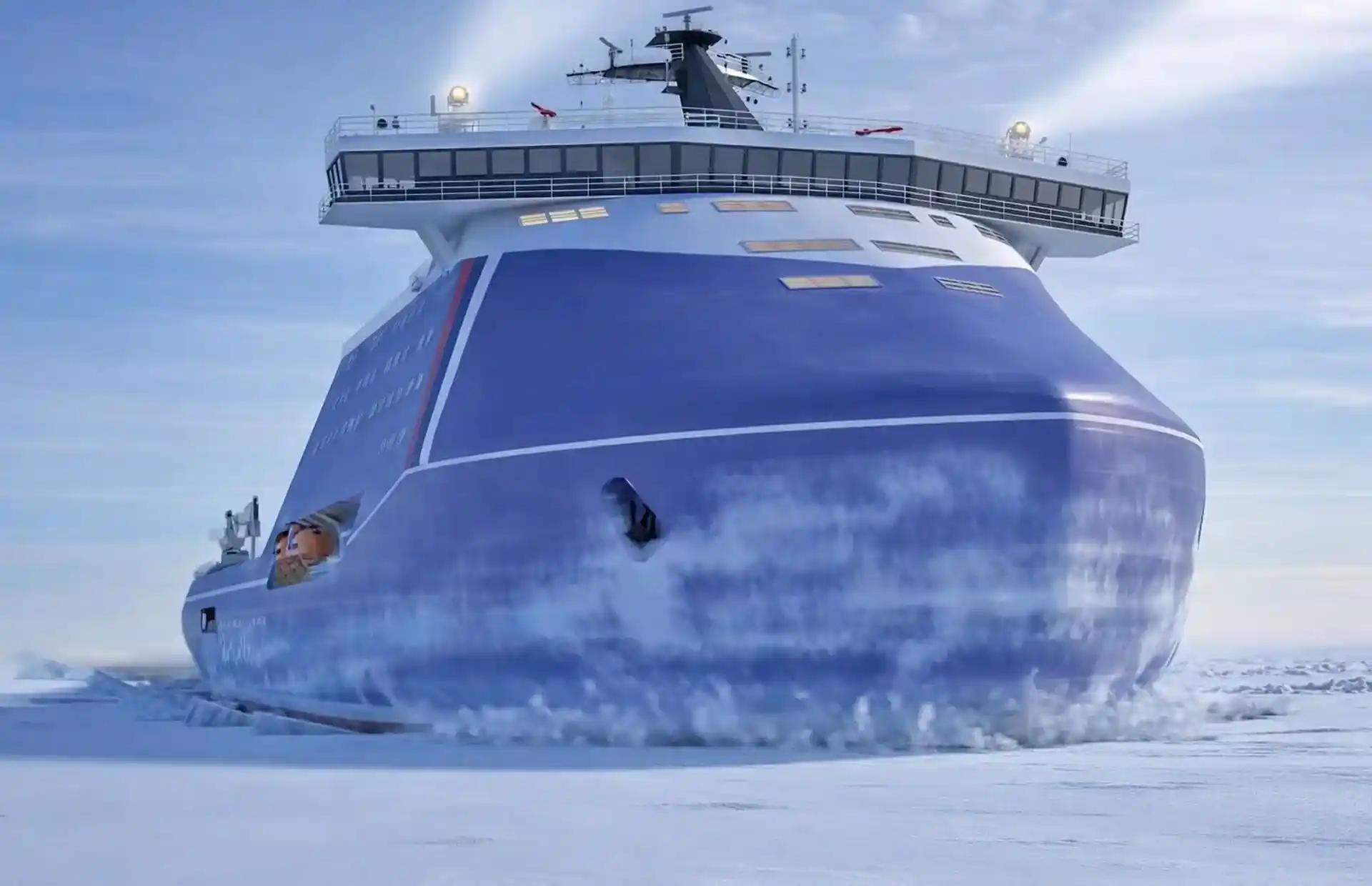
Russia is moving decisively to reshape the strategic balance in the Arctic, and the centerpiece of that effort is the Lider nuclear-powered icebreaker, a vessel designed not merely to navigate ice, but to control access to one of the world’s most consequential emerging theaters. Confirmed by President Vladimir Putin as being on schedule for completion by 2030, Lider represents a leap in icebreaking capability that places Moscow well ahead of the United States in Arctic maritime power. While officially classified as a civilian vessel, its implications reach deeply into logistics, military mobility, and long-term geopolitical leverage in the High North.
The Arctic is no longer treated by Russia as a distant frontier. It has become a core strategic zone, linking energy exports, national infrastructure, and defense posture. Climate change is reducing seasonal ice cover, but paradoxically increasing competition and the need for vessels capable of operating in extreme, unpredictable conditions. In this environment, icebreaking capacity becomes the quiet determinant of who can move, who can stay, and who can set the rules. Lider is designed to ensure that Russia does all three.
Speaking at the Moscow Institute of Physics and Technology in January 2026, Putin described Lider as a 150-megawatt-class nuclear icebreaker with no global equivalent, underscoring its scale and ambition. Built at the Zvezda shipyard under Project 10510, the ship—also known as Rossiya—is intended to guarantee year-round navigation along the Northern Sea Route. That route, hugging Russia’s Arctic coastline, is central to Moscow’s vision of a secure, controllable maritime corridor connecting Europe and Asia without reliance on southern chokepoints.
At the technical level, Lider is engineered to be the most powerful icebreaker ever constructed. Measuring roughly 209 meters in length with a beam approaching 48 meters, and displacing close to 70,000 tons, it dwarfs existing icebreakers in both mass and capability. Its propulsion system relies on two RITM-400 nuclear reactors, delivering up to 120 megawatts at the shafts through a turbo-electric drive. These numbers are not abstract engineering feats; they translate directly into operational dominance in ice conditions that stop almost every other surface vessel on Earth.
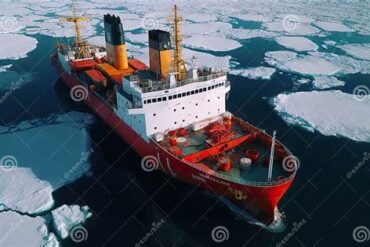
Lider is designed to break through ice more than four meters thick while carving a channel up to 50 meters wide. That channel width is strategically critical. It allows the escort of large, wide-beam commercial vessels and heavy auxiliary ships without slowing to a crawl or waiting for favorable ice patterns. In escort mode, Lider is expected to maintain speeds of around 11 knots through two-meter ice, effectively neutralizing one of the Arctic’s most persistent operational constraints: time.
The endurance profile of a nuclear-powered icebreaker further amplifies this advantage. Unlike diesel vessels, Lider can remain on station for months at a time, limited more by crew rotation than fuel. This endurance transforms Arctic planning from seasonal opportunism into sustained presence. Commercial traffic benefits from predictable schedules, but the state benefits even more from reliable logistics. Fuel, construction material, heavy vehicles, and military supplies can be moved to remote Arctic bases with fewer delays and far less warning to outside observers.
Although Russia emphasizes Lider’s civilian role, the strategic utility is impossible to ignore. A vessel capable of guaranteeing access through the harshest ice conditions becomes an enabling platform for state power, regardless of paint scheme. Russia already operates 34 diesel icebreakers and eight nuclear-powered icebreakers, with additional nuclear units under construction. Lider sits at the top of that hierarchy, designed to lead convoys and to operate where others simply cannot.
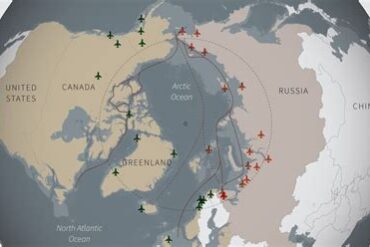
This capability directly supports Russia’s broader Arctic military posture. Over the past decade, Moscow has rebuilt airfields, radar stations, and garrisons across its northern coastline. These installations depend on consistent resupply, and airlift alone cannot meet that demand in scale or cost. Icebreakers like Lider ensure that surface routes remain viable even in peak winter, reinforcing Russia’s ability to sustain forces, rotate personnel, and maintain infrastructure across vast distances.
The implications extend beyond logistics. Persistent surface presence enables patrols, escorts, and signaling operations that shape the operational environment. In Arctic waters, where few navies can operate freely for much of the year, the side with superior icebreaking power gains an outsized influence over access and norms. Lider strengthens Russia’s ability to escort not only commercial traffic, but also auxiliary and patrol vessels, effectively expanding the operational envelope of the Russian Navy in the High North.
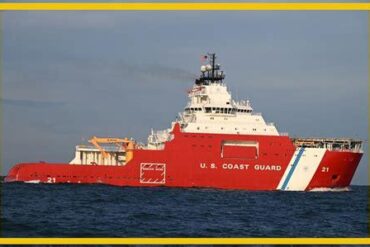
Against this backdrop, the contrast with U.S. capability is striking. The United States has long acknowledged a shortfall in polar icebreaking capacity, operating with a small and aging fleet that limits persistent presence. While Washington has launched new programs to address this gap, progress remains incremental. Even with future deliveries, the United States will struggle to match Russia’s scale, power, and nuclear endurance in icebreaking operations before the end of this decade.
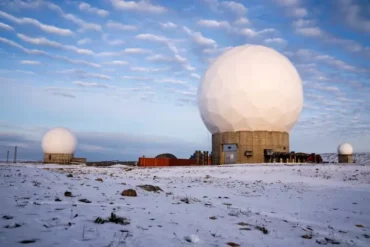
This imbalance carries particular weight around Greenland, a geographic pivot point for Arctic security. The island hosts critical early-warning and surveillance infrastructure tied to North American and NATO defense. Access to surrounding waters is constrained by ice conditions for much of the year, making heavy icebreakers a prerequisite for sustained maritime presence. In such an environment, the ability to escort, resupply, and operate without interruption becomes a strategic lever rather than a supporting function.
Lider’s completion by 2030 would further entrench Russia’s advantage in this domain. It reinforces the Northern Sea Route as a controllable artery under Russian oversight, while reducing reliance on routes exposed to geopolitical friction elsewhere. In a crisis scenario, this translates into greater strategic depth and flexibility. Supplies move north-to-east rather than south-to-west, and control over Arctic access becomes a form of indirect pressure on competitors.
Viewed in isolation, Lider is an extraordinary engineering project. Viewed in context, it is something more consequential: a strategic instrument disguised as infrastructure. By investing early and heavily in nuclear icebreaking power, Russia has positioned itself to dominate the practical realities of Arctic navigation. As climate change accelerates interest in the High North, the country that can move first, stay longest, and operate hardest will shape outcomes. With Lider, Russia is making a clear claim to that role.