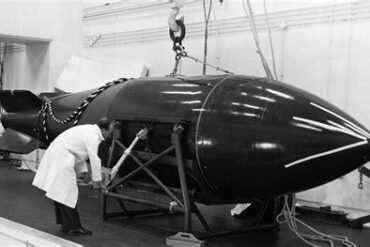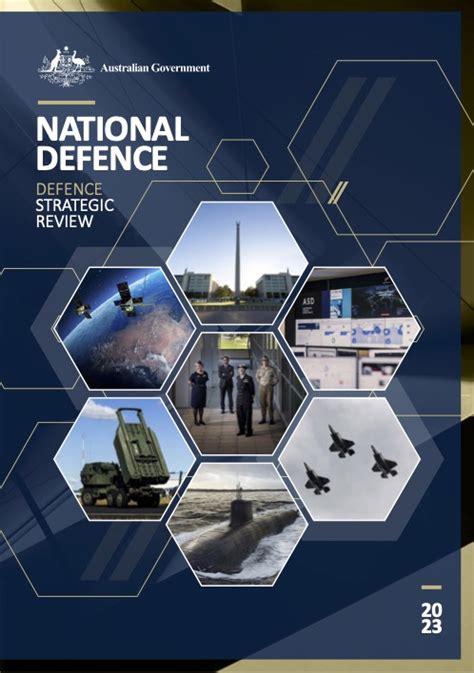
On May 31, 2025, a report from The Sunday Times signaled a profound shift in British defense posture. The upcoming Strategic Defence Review (SDR), to be officially unveiled on June 2, is poised to redefine the Royal Air Force’s (RAF) role in the nation’s nuclear deterrence strategy. For the first time in nearly three decades, the UK may return to air-delivered nuclear strike capability, a role it abandoned in 1998 with the retirement of the WE.177 free-fall nuclear bombs.
A Return to Tactical Nuclear Airpower
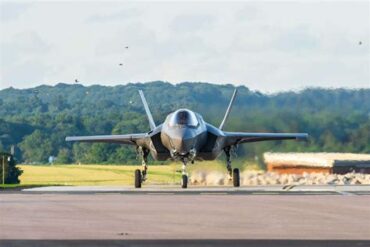
The potential reintroduction of nuclear strike capability to the RAF revolves around the procurement of the F-35A Lightning II, a variant uniquely certified to carry the B61-12 tactical nuclear bomb as part of NATO’s nuclear sharing program. This move would mark a historic departure from the UK’s exclusive reliance on Trident submarine-launched ballistic missiles (SLBMs) as the sole component of its deterrence.
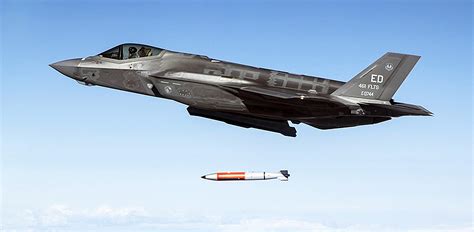
Unlike the F-35B, which is currently operated by both the RAF and the Royal Navy aboard the Queen Elizabeth class aircraft carriers, the F-35A’s compatibility with nuclear ordnance makes it the only viable option for NATO-integrated tactical deterrence from the air. The Eurofighter Typhoon, despite being the backbone of the RAF’s fast jet fleet, has never been adapted to carry nuclear payloads—a limitation shared by other European Typhoon operators like Germany, who have already begun transitioning to the F-35A for this specific role.
Strategic Implications of Joining NATO’s Nuclear Sharing Program
Joining NATO’s nuclear sharing arrangement through the F-35A would allow the UK to participate directly in collective deterrence operations. However, the B61s would remain under U.S. control, much like other shared assets in the program. This would not replace the UK’s sovereign deterrent based on Vanguard-class submarines but would complement it with flexible response options, particularly relevant in a rapidly escalating geopolitical climate.
Historically, the UK has participated in U.S.-led nuclear sharing by hosting and operating systems like the PGM-17 Thor, MGM-52 Lance, and several classes of U.S.-originated nuclear bombs. However, these arrangements did not include the B61.
Nuclear Infrastructure and RAF Marham
One of the most significant logistical hurdles is where to house such weapons. RAF Marham, the home of the UK’s F-35B fleet, is the only UK-operated airbase equipped with WS3 (Weapons Storage and Security System) vaults, purpose-built for secure underground nuclear storage. These vaults—installed during the Cold War—enabled rapid loading of nuclear bombs inside hardened aircraft shelters (HAS) without exposing them to potential air or satellite surveillance.
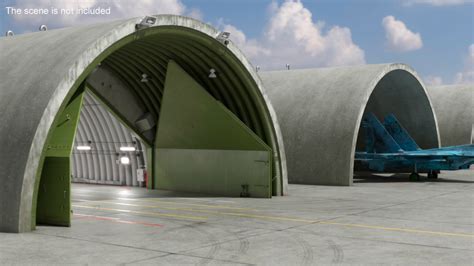
While Marham’s WS3 vaults were originally designed for the WE.177 bombs and haven’t seen active use since 1998, their current operational status is unclear. If the vaults have indeed been dismantled or sealed, recommissioning them will demand considerable expense and time. Should new infrastructure be required, RAF Lakenheath—already hosting U.S. F-35As—might also play a role, as it is similarly outfitted with WS3 vaults, although under U.S. control.
The F-35A and the Future of the UK Lightning Force
A critical unknown remains whether the UK’s acquisition of F-35As would augment or replace current F-35B orders. Presently, the UK has committed to purchasing 48 F-35Bs, though one has been lost, leaving 47 operational aircraft. This number already stretches thin the capabilities intended for the Queen Elizabeth class carriers, with carrier strike groups being a major strategic focus of the UK since the 2010s.

Switching future F-35B orders to the A variant would significantly undermine Royal Navy air operations, which have been structured entirely around the short take-off and vertical landing (STOVL) capability of the F-35B. A full acquisition of both variants would bolster RAF firepower, but at a significant budgetary cost, especially with simultaneous commitments to the GCAP/Tempest program, due mid-2030s.
Another complication arises with aerial refueling. The RAF’s Voyager fleet (A330 MRTT) lacks the boom system necessary to refuel boom-dependent aircraft like the F-35A. These aircraft, unlike the F-35B, cannot use the hose-and-drogue method. Retrofitting Voyagers would be essential to ensure full operational flexibility, especially as other UK aircraft—including the RC-135 Rivet Joint, C-17 Globemaster III, and P-8 Poseidon—also face the same incompatibility.
Policy Reorientation Amid Rising Threats
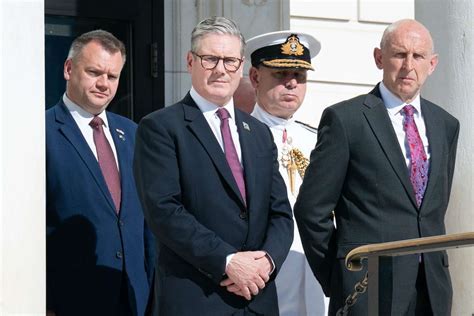
The decision to reintroduce air-launched nuclear capability is not being made in isolation. Secretary of State for Defence John Healey emphasized that the “world is definitely becoming more dangerous,” pointing to elevated nuclear risks and rising state-on-state conflict potential, particularly due to Russian aggression in Europe. This echoes a broader reassessment of defense priorities, where the UK now sees the North Atlantic and European theatre as a renewed focal point.
For years, UK defense planning emphasized global reach, with deployments stretching into the Indo-Pacific. However, the Ukraine conflict has reignited interest in traditional Cold War operational zones like the GIUK gap, the Barents Sea, and the North Atlantic. Even the Queen Elizabeth class carriers—once heralded as global power projectors—may find themselves reprising roles akin to the anti-submarine warfare platforms of the 1980s Invincible class.
With shifting U.S. strategic focus toward the Indo-Pacific, the Biden administration has encouraged UK efforts to concentrate more in Europe, allowing America and regional partners to handle Pacific responsibilities. The new nuclear strategy may be part of this realignment, signaling a deepened British commitment to European defense under the NATO umbrella.
Political Debate and Strategic Trade-offs
While the tactical nuclear initiative may bolster Britain’s image as a frontline NATO partner, it also invites political scrutiny and debate. Critics argue that reintroducing tactical nuclear weapons is a symbolic gesture that may divert resources from more pressing defense needs—such as improving cyber resilience, strengthening conventional forces, or enhancing long-range strike capabilities.
Nevertheless, proponents—including former civil servant Simon Case—have suggested that the UK’s current monolithic nuclear posture is a vulnerability. Unlike the U.S., Russia, China, and even France, the UK maintains only a single form of nuclear delivery: submarine-launched ballistic missiles. Introducing a dual-capability structure would increase flexibility, survivability, and deterrent credibility in an era of contested airspace and advanced anti-submarine warfare.
Conclusion: Deterrence in a Dangerous Decade
The possibility of reactivating the RAF’s nuclear strike role after a 27-year hiatus is a consequential development in British defense policy. It would not only restore a lost dimension of the UK’s deterrent but also anchor Britain more deeply in NATO’s nuclear framework at a time of resurgent great power competition. From upgrading infrastructure at RAF Marham to managing inter-service rivalry over airframes, this transition—if realized—will not be simple.
Still, as the global order grows more volatile, the UK may find that flexibility in nuclear delivery options is not a luxury, but a strategic necessity.
Full clarity on these initiatives is expected with the formal release of the Strategic Defence Review on June 2, a document likely to set the tone for British defense posture well into the 2030s.