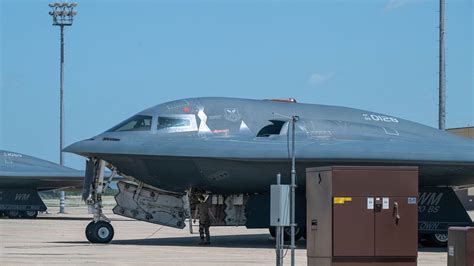
The B-2 Spirit bombers that conducted the unprecedented airstrikes on Iran’s nuclear infrastructure have safely returned to Whiteman Air Force Base in Missouri, marking the conclusion of what military leaders are calling the most significant operational deployment of the B-2 fleet in U.S. history.
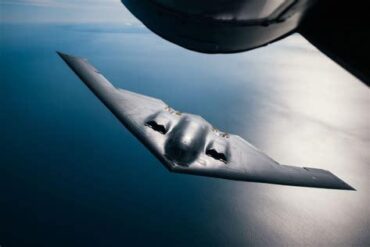
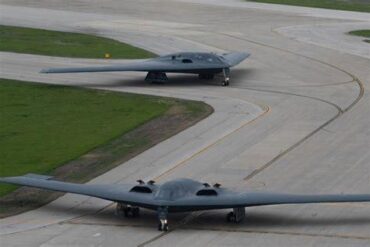
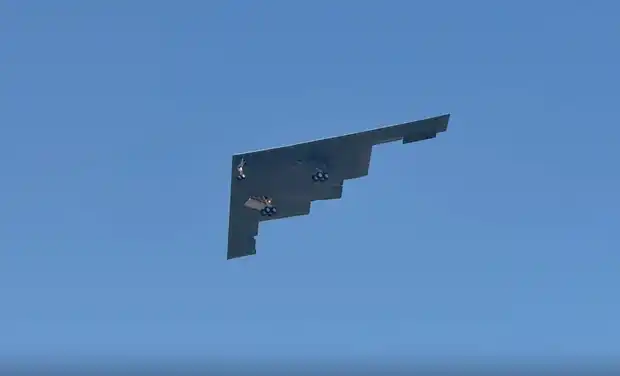
The bombers, flying back under heavy security and global attention, touched down on Sunday afternoon, their sleek, triangular silhouettes captured against the Midwestern sky by CBS News crews stationed outside the base. This moment capped off Operation Midnight Hammer, an extensive and meticulously coordinated mission designed to deliver a decisive blow to Iran’s nuclear capabilities.
The Largest B-2 Operational Strike in History
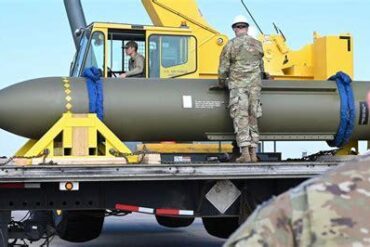
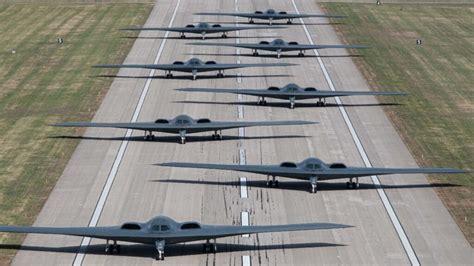
According to General Dan Caine, Chairman of the Joint Chiefs of Staff, the mission involved seven B-2 Spirit bombers, each carrying a pair of GBU-57 Massive Ordnance Penetrators (MOPs) — weapons designed to destroy deeply buried targets. Over a span of just 25 minutes, these bombers executed precision strikes on three heavily fortified Iranian nuclear facilities: Fordo, Natanz, and Isfahan.
The strikes on Fordo and Natanz, both central to Iran’s uranium enrichment program, were the primary targets for the B-2s and their bunker-busting ordnance. Meanwhile, Tomahawk cruise missiles launched from a U.S. Navy submarine targeted the Isfahan complex, known for its advanced centrifuge development.
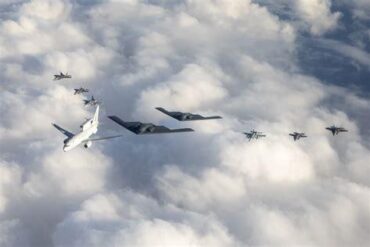
General Caine emphasized the unprecedented scale of the operation: “More than 125 U.S. military aircraft took part, including fighter escorts, surveillance platforms, and refueling tankers. Over 75 precision-guided munitions were deployed, demonstrating the full spectrum of American air power.”
Operation Midnight Hammer: Planning and Execution
Operation Midnight Hammer was the culmination of months of intelligence gathering, diplomatic maneuvering, and military rehearsals. Sources within the Pentagon suggest the operation’s timeline was accelerated after satellite surveillance and human intelligence indicated Iran was nearing a critical threshold in its nuclear enrichment efforts.
The mission’s execution required absolute stealth and precision. The B-2 Spirit, famed for its radar-evading design and global strike capability, was uniquely suited for this assignment. While seven B-2s flew eastbound towards Iranian targets, a second group of B-2s simultaneously deployed westward over the Pacific, acting as decoys to dilute enemy air defense responses and obscure the primary attack vector.
This elaborate deception underscores the strategic complexity behind modern aerial warfare, where misdirection and overwhelming force are employed in tandem.
Devastation at Iran’s Nuclear Sites
In the immediate aftermath of the strikes, satellite imagery confirmed extensive damage at all three target locations. Fordo, constructed deep beneath a mountain to withstand conventional strikes, bore the brunt of the assault. Imagery from commercial satellite provider Maxar Technologies revealed several large-diameter craters along the ridgeline concealing the underground enrichment facility.
At Natanz, Iran’s flagship uranium enrichment plant, wide-scale structural damage was evident. Roofs were collapsed, infrastructure shredded, and auxiliary support buildings reduced to rubble. Similar scenes of destruction were visible at Isfahan, particularly in areas associated with centrifuge assembly and testing.
U.S. officials described the operation’s outcome as “monumental” in degrading Iran’s nuclear capabilities. While precise assessments of the facilities’ operational status remain classified, preliminary reports indicate Iran’s ability to enrich uranium has been severely set back.
Presidential Praise and Strategic Implications
President Donald Trump, speaking via Truth Social on Sunday, hailed the mission as a testament to American military excellence. “Thank you for a job well done!!!” Trump declared, praising the precision and skill displayed by the aircrews and planners.
In a follow-up post, he emphasized the operation’s strategic success: “The hits were hard and accurate. Great skill was shown by our military.”
Defense analysts note that Operation Midnight Hammer represents not only a tactical victory but also a significant escalation in the ongoing geopolitical standoff over Iran’s nuclear ambitions. The direct targeting of nuclear infrastructure marks a sharp departure from previous covert actions, such as cyber operations or sabotage attributed to Israeli or Western intelligence services.
The Role of the B-2 Spirit: America’s Stealth Arsenal
The Northrop Grumman B-2 Spirit, often referred to as the “Stealth Bomber,” remains the pinnacle of U.S. strategic airpower. Its design minimizes radar cross-section, allowing it to penetrate sophisticated enemy air defenses undetected. With an operational range exceeding 6,000 nautical miles and aerial refueling capability, the B-2 can deliver both conventional and nuclear ordnance to targets across the globe.
During the Iran mission, the B-2s carried the GBU-57 MOP, weighing over 30,000 pounds and capable of penetrating up to 200 feet of reinforced concrete or 60 feet of hard rock. These weapons are expressly designed to defeat deeply buried and hardened facilities like Fordo.
The success of Operation Midnight Hammer not only validates the B-2’s role in modern warfare but also underscores the enduring relevance of stealth technology and precision-guided munitions in neutralizing high-value, fortified targets.
Global Reactions and the Path Ahead
The strikes have triggered swift and varied international responses. Iranian state media has condemned the operation as an act of aggression, vowing retaliation while downplaying the extent of the damage. However, independent assessments suggest that Iran’s nuclear infrastructure suffered significant setbacks, potentially delaying any weapons-grade enrichment efforts by years.
Meanwhile, key U.S. allies, including Israel and the United Kingdom, have expressed support for Washington’s decisive action, citing Iran’s repeated violations of international agreements and its refusal to allow meaningful inspections.
At the United Nations, emergency sessions have been convened, with diplomats scrambling to prevent a broader regional conflict. Pentagon officials have confirmed heightened alert statuses across U.S. bases in the Middle East and the Mediterranean.
Missouri’s Quiet Pride and the Road Home
Back in Missouri, the return of the B-2 crews was met with quiet pride and visible relief. Whiteman Air Force Base, home to the nation’s only operational B-2 wing, has long been a focal point for America’s long-range strike capabilities. Sunday’s homecoming carried the weight of history.
Families, fellow service members, and defense officials gathered near the tarmac as the bombers descended from the cloudless sky, their black silhouettes cutting through the late afternoon sun. The successful completion of Operation Midnight Hammer, while still shrouded in operational secrecy, marks a watershed moment for the men and women stationed at Whiteman.
In an era of rapidly evolving threats, the mission reaffirmed America’s ability to project power, deter adversaries, and execute complex operations with precision and resolve.
As geopolitical tensions persist, and as debates over Iran’s nuclear ambitions intensify, the images of those B-2 bombers soaring back into Missouri airspace stand as a stark reminder of the United States’ unmatched aerial capabilities—and its willingness to use them.