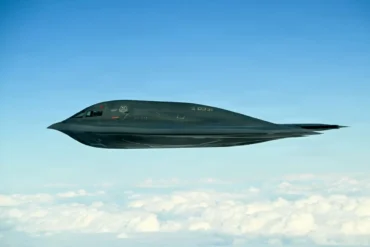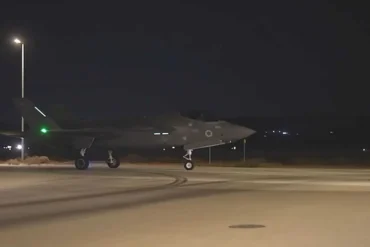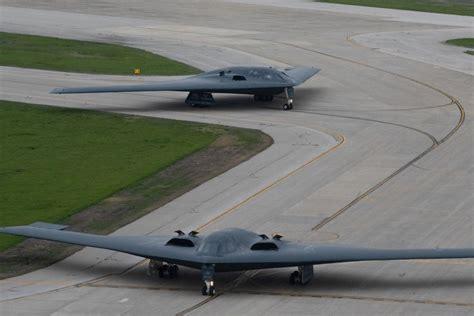
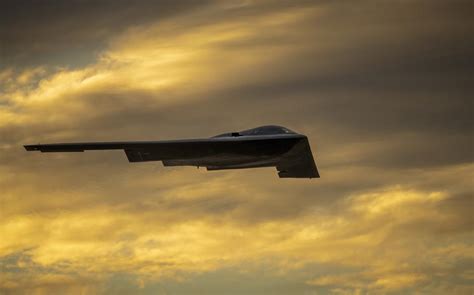
The United States has once again demonstrated the unrivaled global reach of its long-range strike capability. In a meticulously coordinated operation confirmed by U.S. Central Command (CENTCOM), B-2 Spirit stealth bombers flew a punishing 37-hour nonstop mission from Whiteman Air Force Base, Missouri, striking hardened Iranian ballistic missile facilities with precision-guided munitions. The message was unmistakable: geographic distance no longer guarantees strategic safety.
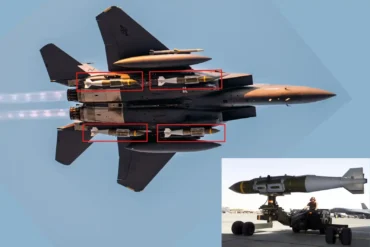
The strikes targeted deeply fortified infrastructure associated with Iran’s ballistic missile program, a system long viewed by Washington and its regional partners as a destabilizing threat. According to CENTCOM, the bombers delivered multiple guided penetrator bombs, likely including GBU-31 munitions equipped with BLU-109 warheads, specifically designed to pierce reinforced concrete bunkers before detonation. The operation formed part of a broader joint campaign known as Operation Epic Fury, aimed at degrading Tehran’s ability to project missile power across the Middle East.
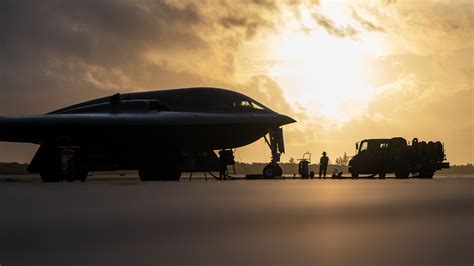
Unlike conventional bombing runs that rely on forward staging bases, this mission unfolded as a display of raw endurance and technological superiority. The B-2s launched from the continental United States, supported by aerial refueling tankers throughout the mission, eliminating the need for European or Middle Eastern basing rights. That operational decision carried both logistical and political weight.
The Strategic Context Behind the 37-Hour Mission
The extraordinary flight duration was not merely a show of capability; it was a necessity shaped by geopolitics. The United Kingdom declined permission for U.S. forces to operate offensive strikes from RAF Fairford in Gloucestershire and from the joint U.S.-U.K. facility on Diego Garcia. Historically, both bases have supported long-range American bomber missions in the Middle East, including operations targeting Houthi missile infrastructure in Yemen.
British Prime Minister Keir Starmer clarified that London would not participate in offensive operations against Iran, emphasizing a preference for diplomatic resolution. However, he later approved limited use of British bases for strictly defensive strikes targeting missile storage depots and launchers. The distinction was deliberate: London sought to balance alliance solidarity with political caution.
As a result, the United States executed the mission entirely from Whiteman AFB. This approach underscored a key truth of modern airpower: stealth platforms combined with in-flight refueling erase traditional geographic constraints. The B-2’s operational radius becomes effectively global when paired with tanker support.
Inside the B-2’s Stealth Advantage
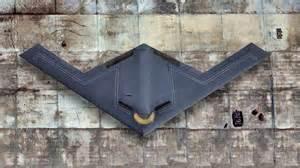
The B-2 Spirit remains one of the most formidable aircraft ever built. Designed during the Cold War to penetrate Soviet air defenses, it blends low-observable technology with aerodynamic efficiency in a flying-wing configuration. Its stealth characteristics derive from multiple signature reductions, including minimized radar cross-section, reduced infrared emissions, limited acoustic output, and carefully managed electromagnetic profiles.
Much of the engineering remains classified, yet certain elements are publicly known. The aircraft’s composite materials, radar-absorbent coatings, and smooth, blended surfaces scatter radar waves rather than reflecting them directly back to enemy sensors. The flying-wing design eliminates vertical stabilizers that would otherwise create radar hotspots. The result is an aircraft that can approach heavily defended targets with dramatically reduced detection probability.
Low observability does more than avoid radar. It expands operational freedom. By penetrating advanced integrated air defense systems, the B-2 can threaten targets considered untouchable by conventional aircraft. Hardened ballistic missile storage sites, buried command bunkers, and reinforced launch complexes fall squarely within its mission profile.
Precision Against Hardened Missile Infrastructure
Iran’s ballistic missile facilities are not lightly constructed warehouses. Many are embedded within mountainous terrain or reinforced concrete bunkers designed to withstand aerial bombardment. Destroying such sites requires specialized ordnance capable of penetrating protective layers before detonation.
The GBU-31 equipped with the BLU-109 penetrator is engineered precisely for this task. The bomb’s hardened steel casing allows it to burrow into concrete or rock before exploding internally, maximizing structural damage. In previous operations, including the large-scale Operation Midnight Hammer, B-2 bombers employed even heavier 30,000-pound Massive Ordnance Penetrator (MOP) bombs against deeply buried nuclear facilities such as Fordow and Natanz.
Defense Secretary Pete Hegseth previously described those earlier strikes as devastating to Iran’s nuclear infrastructure while emphasizing that Iranian troops and civilians were not targeted. The present mission reflects a similar doctrine: precision against strategic assets rather than indiscriminate force.
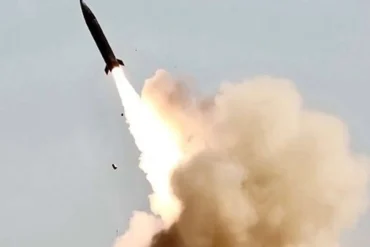
The strikes aim to disrupt Iran’s capacity to maintain, expand, or rapidly deploy its ballistic missile arsenal. These missiles have been used in retaliatory attacks across the region, altering the security calculations of neighboring states and U.S. forces alike.
Operation Epic Fury and Regional Signaling
Operation Epic Fury represents more than a tactical action; it is strategic signaling wrapped in steel and composite fiber. By deploying stealth bombers directly from American soil, Washington communicated both capability and resolve. The operation reinforced the United States’ commitment to countering missile proliferation while demonstrating that denial of regional basing rights does not eliminate strike options.
More than 125 aircraft reportedly participated in related operations under the broader campaign umbrella, indicating a layered approach involving electronic warfare, surveillance assets, tankers, and fighter escorts. The B-2s may capture headlines, but such missions depend on a vast ecosystem of supporting aircraft and intelligence networks.
For Iran, the implications are clear. Hardened facilities are no longer immune sanctuaries. For regional allies, the strikes serve as reassurance that U.S. long-range deterrence remains credible. For global observers, the mission illustrates how stealth aviation has matured into a political instrument as much as a military one.
The Future of Long-Range Stealth Warfare
The B-2 fleet is limited in number, yet its impact remains disproportionate to its size. Each aircraft embodies decades of engineering designed to outmaneuver radar physics itself. As next-generation platforms such as the B-21 Raider approach operational status, the template demonstrated over Iran—long-duration, base-independent, precision stealth strikes—will likely define future strategic operations.
The 37-hour flight stands as a reminder that modern airpower compresses distance and time. A bomber can depart the American Midwest, penetrate defended airspace thousands of miles away, neutralize hardened missile facilities, and return home without landing abroad. Geography, once a shield, has become negotiable.
In the calculus of deterrence, capability matters only when demonstrated. Over the skies of Iran, the B-2 Spirit demonstrated that hardened ballistic missile infrastructure can be reached, penetrated, and dismantled—no matter how far it lies from American shores.