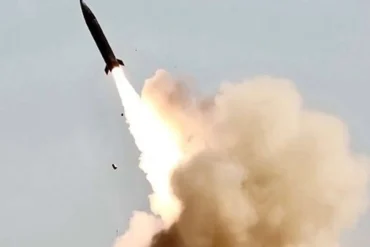
Iran has dramatically escalated tensions across the Middle East after reportedly launching its most advanced domestically developed ballistic missile, the Khorramshahr-4, against U.S. military installations in Qatar and Bahrain. The strikes were part of a far broader coordinated offensive that also included hundreds of missiles and thousands of drones directed toward Israel. Defense analysts describe the operation as one of the most extensive missile and drone attacks ever attributed to Iran, revealing both the scale of its arsenal and the maturity of its long-range strike capabilities.
The operation signaled a significant expansion of the regional conflict’s geographic scope. While Iran has previously demonstrated the ability to target adversaries through proxies and limited missile strikes, the reported use of the Khorramshahr-4 medium-range ballistic missile against Gulf states hosting major American bases marks a more direct challenge to the United States’ military posture in the region. By striking facilities associated with U.S. command and naval power, Tehran appears to be signaling that American infrastructure throughout the Gulf is within reach of its most powerful missile systems.
The strikes also coincided with an unprecedented barrage launched toward Israel involving approximately 600 missiles and nearly 2,000 unmanned aerial systems. Such a massive wave of projectiles represents a saturation strategy designed to overwhelm air defense networks through sheer volume and diversity of threats. Ballistic missiles, drones, and potentially cruise missiles can arrive simultaneously from multiple vectors, forcing defenders to divide interception resources across many different targets.
Khorramshahr-4: Iran’s Most Powerful Ballistic Missile
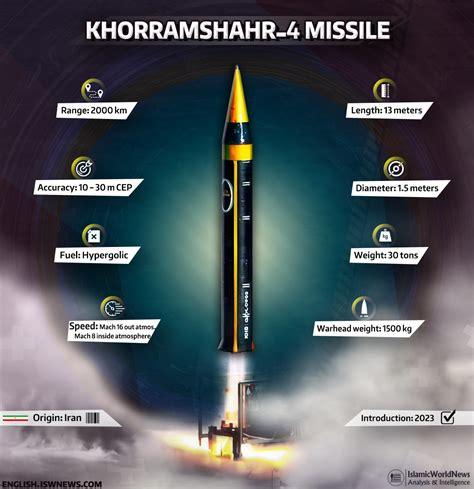
The Khorramshahr-4, sometimes referred to as the Kheibar missile, represents the most advanced system within Iran’s Khorramshahr family of medium-range ballistic missiles. Developed as part of Tehran’s long-running effort to expand strategic strike capabilities, the missile reportedly combines greater payload capacity with improved survivability features designed to defeat modern missile defenses.
With an estimated range approaching 2,000 kilometers, the Khorramshahr-4 can strike targets across much of the Middle East. From launch points inside Iran, the missile can reach Israel, the Persian Gulf, and a wide network of American and allied military bases spread across the region. This range effectively places critical infrastructure—including airbases, naval facilities, and logistical hubs—within the missile’s engagement envelope.
Equally significant is the missile’s heavy warhead capacity, believed to range between 1,500 and 1,800 kilograms. Such a large payload allows the missile to carry powerful conventional explosives capable of damaging hardened military facilities such as reinforced command centers, aircraft shelters, and runway infrastructure. In strategic terms, this makes the Khorramshahr-4 particularly suited for targeting large military bases where destruction of runways, fuel depots, or aircraft maintenance complexes could significantly disrupt operations.
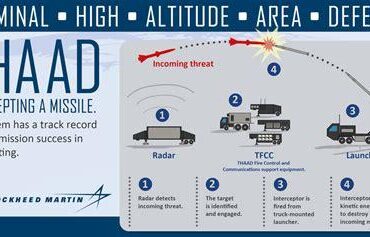
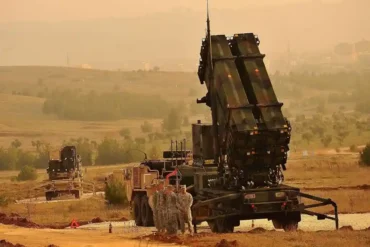
Technologically, analysts believe the missile incorporates a maneuverable re-entry vehicle, allowing it to adjust trajectory during the terminal phase of flight. This capability complicates interception by missile defense systems that rely on predicting a ballistic path. Systems such as Patriot, THAAD, Arrow, and David’s Sling, widely deployed across the Middle East, are designed to intercept ballistic threats, but maneuverability can reduce interception probabilities and force defenders to expend more interceptors per incoming missile.
Strategic Targets: Al Udeid Air Base and the Fifth Fleet Headquarters
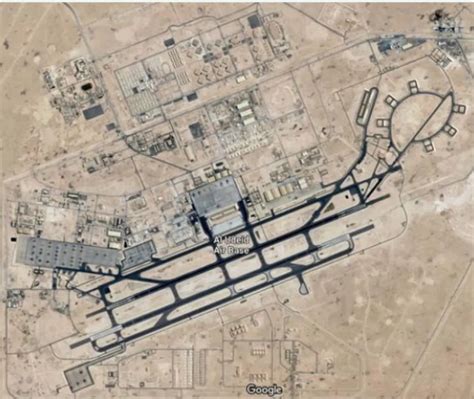
Among the most significant reported targets of the Iranian strike were Al Udeid Air Base in Qatar and American naval infrastructure in Bahrain, which hosts the headquarters of the U.S. Navy’s Fifth Fleet. Both locations represent pillars of the United States’ military architecture in the Middle East.
Al Udeid Air Base serves as the largest American military installation in the region and functions as a central command hub for U.S. Central Command’s air operations. The base supports long-range bomber missions, intelligence flights, aerial refueling operations, and coalition aircraft participating in missions across the Middle East. Disrupting operations at Al Udeid could temporarily hinder the ability of U.S. forces to coordinate airpower across multiple theaters.
In Bahrain, the Fifth Fleet oversees maritime security operations across the Persian Gulf, Arabian Sea, Red Sea, and parts of the Indian Ocean. The fleet’s responsibilities include protecting shipping lanes, deterring hostile naval activity, and coordinating multinational naval patrols in one of the world’s most strategically vital maritime corridors. Any successful strike against infrastructure supporting the Fifth Fleet would carry symbolic and operational significance, demonstrating Iran’s capacity to challenge U.S. naval dominance in the Gulf.
Massive Missile and Drone Barrage Against Israel
While the strikes against U.S. facilities in Qatar and Bahrain marked a direct confrontation with American forces, the simultaneous barrage directed toward Israel represented an operation of extraordinary scale. Reports indicate that hundreds of missiles and thousands of drones were launched in waves, creating one of the densest aerial attack environments ever faced by Israel’s defensive systems.
Israel operates a multi-layered air defense architecture designed to intercept threats at different ranges and altitudes. Systems such as Iron Dome counter short-range rockets and drones, while David’s Sling and Arrow systems intercept larger ballistic threats. However, when hundreds of projectiles approach simultaneously, even highly capable defense networks face significant strain. Each interceptor missile represents a finite and expensive resource, and saturation tactics aim to force defenders to exhaust those resources faster than attackers expend their weapons.
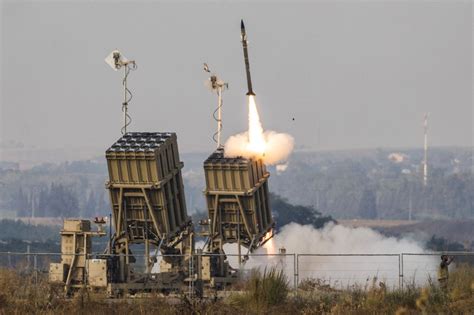
From a military perspective, combining drones with ballistic missiles presents a complex tactical challenge. Drones often fly at low altitude and slow speeds, while ballistic missiles travel at extremely high velocities along steep trajectories. Defending forces must track and intercept these very different threats at the same time, requiring rapid coordination between radar networks, command systems, and interceptor batteries.
Iran’s Expansive Ballistic Missile Arsenal
Iran’s ability to launch such a massive strike reflects the size and diversity of its missile inventory, widely considered the largest ballistic missile arsenal in the Middle East. U.S. defense assessments estimate that Tehran possesses more than 3,000 ballistic missiles across multiple categories, ranging from short-range battlefield systems to strategic medium-range missiles capable of reaching distant targets.
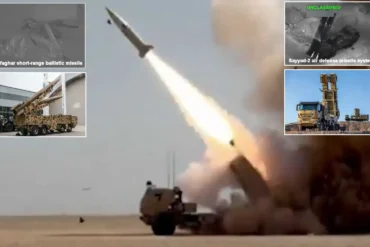
Short-range missiles such as the Fateh-110, Fateh-313, Zolfaghar, Dezful, and Qiam-1 are designed primarily for regional strike missions. These systems typically have ranges between 300 and 1,000 kilometers and can be launched from mobile transporter-erector-launcher vehicles. Mobility allows Iranian forces to relocate launchers quickly, making them harder to detect and destroy before launch.
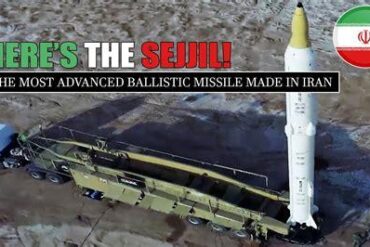
At the strategic level, Iran operates several medium-range ballistic missile systems capable of striking Israel and U.S. bases throughout the Gulf region. These include the Shahab-3, Ghadr, Emad, Sejjil, Haj Qassem, and Kheibar Shekan, alongside the Khorramshahr family. Many of these missiles feature upgraded guidance systems designed to improve accuracy against fixed infrastructure targets.
Underground “Missile Cities” and Launch Infrastructure
A central pillar of Iran’s missile strategy lies beneath its mountains. Over the past decade, the Islamic Revolutionary Guard Corps has constructed an extensive network of underground facilities commonly referred to as “missile cities.” These complexes consist of long tunnel systems carved into mountainous terrain and reinforced bunkers capable of storing missiles, launch vehicles, and support equipment.
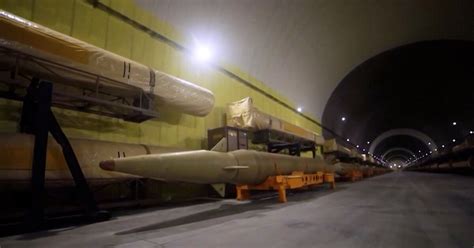
The underground infrastructure allows missiles to remain concealed from satellites and protected from air strikes. Launch crews can move transporter-erector-launcher vehicles through tunnels and prepare missiles for firing while shielded by thick layers of rock and concrete. In wartime, this system enables rapid launches while reducing vulnerability to pre-emptive attacks.
Strategically, dispersing missiles across numerous hardened facilities ensures that a significant portion of the arsenal could survive even a large-scale air campaign. This survivability is central to Iran’s deterrence doctrine, which emphasizes the ability to retaliate with mass missile salvos even after absorbing an initial strike.
Ballistic Missiles as the Core of Iran’s Military Doctrine
Iran’s reliance on ballistic missiles reflects the limitations of its conventional air force. While the country possesses a large inventory of aircraft, many are aging platforms dating back decades. Rather than attempting to compete directly with the advanced air forces of the United States and its allies, Tehran has invested heavily in missile and drone technology capable of projecting power across long distances.
Missiles provide Iran with a powerful asymmetric capability. They can be launched from deep inside the country, require minimal exposure to enemy defenses, and can reach targets hundreds or thousands of kilometers away within minutes. When used in large numbers, they can challenge even sophisticated air defense systems.
The reported use of the Khorramshahr-4 in strikes against Gulf military installations represents one of the clearest demonstrations yet of this doctrine in action. By combining heavy ballistic missiles, swarms of drones, and extensive underground launch infrastructure, Iran has developed a strike capability capable of threatening multiple countries simultaneously.
As more information emerges regarding interception rates and potential damage to U.S. and allied facilities, the events surrounding the Khorramshahr-4 launch may prove to be a defining moment in the evolving military balance of the Middle East. The operation underscores the growing importance of missile warfare in modern regional conflicts and highlights how technological advances in guidance, propulsion, and launch infrastructure are reshaping the strategic landscape.