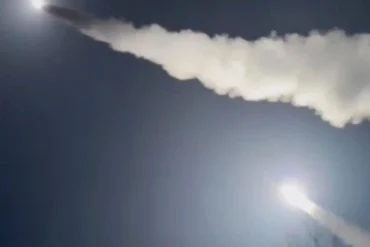
On January 9, 2026, the Russian Ministry of Defense publicly confirmed a large-scale retaliatory strike against Ukrainian targets, marking the first confirmed operational use of the Oreshnik Intermediate-Range Ballistic Missile (IRBM). The announcement, delivered through Russia’s official Telegram channel and echoed by the state-owned TASS agency, represents a strategic shift in the Kremlin’s messaging and military posture—particularly amid claims that the strike was in direct retaliation for an alleged Ukrainian attack on President Vladimir Putin’s residence in Novgorod Region in December 2025.
A New Phase in Russia’s Strategic Signaling
The assertion that the strike was a response to an attack on President Putin’s residence adds a dramatic and symbolic dimension to the military escalation. Although Ukrainian officials have not verified the alleged assault, and no independent confirmation has surfaced, Moscow’s framing of the operation underscores a deliberate narrative: that strategic retaliation will be immediate and severe if Russian leadership is directly targeted.
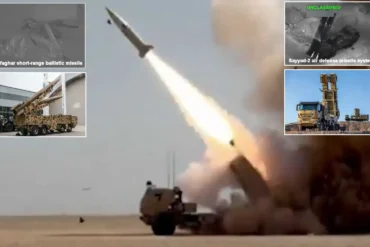
According to the Ministry of Defense, the attack involved a combination of long-range precision weaponry, including:
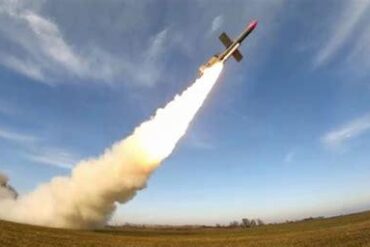
- Ground- and sea-launched missile systems
- Armed unmanned aerial vehicles (UAVs)
- The Oreshnik missile, used explicitly to strike drone production centers and critical energy infrastructure supporting Ukraine’s defense industry
Moscow declared that all mission objectives were achieved, but Ukraine has neither confirmed the targets nor the scale of destruction. No third-party battle damage assessment has been released as of this writing, leaving critical gaps in the operational outcome and its strategic effect.
Unveiling the Oreshnik Missile: Technical Capabilities and Strategic Implications
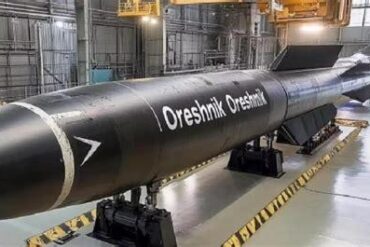
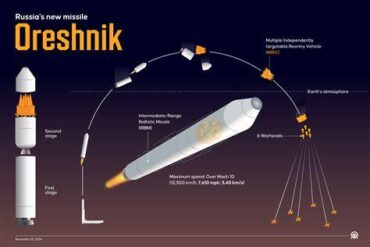
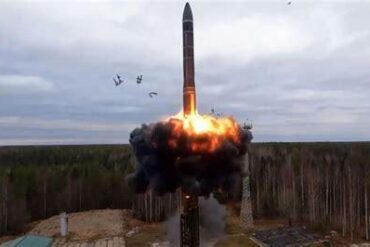
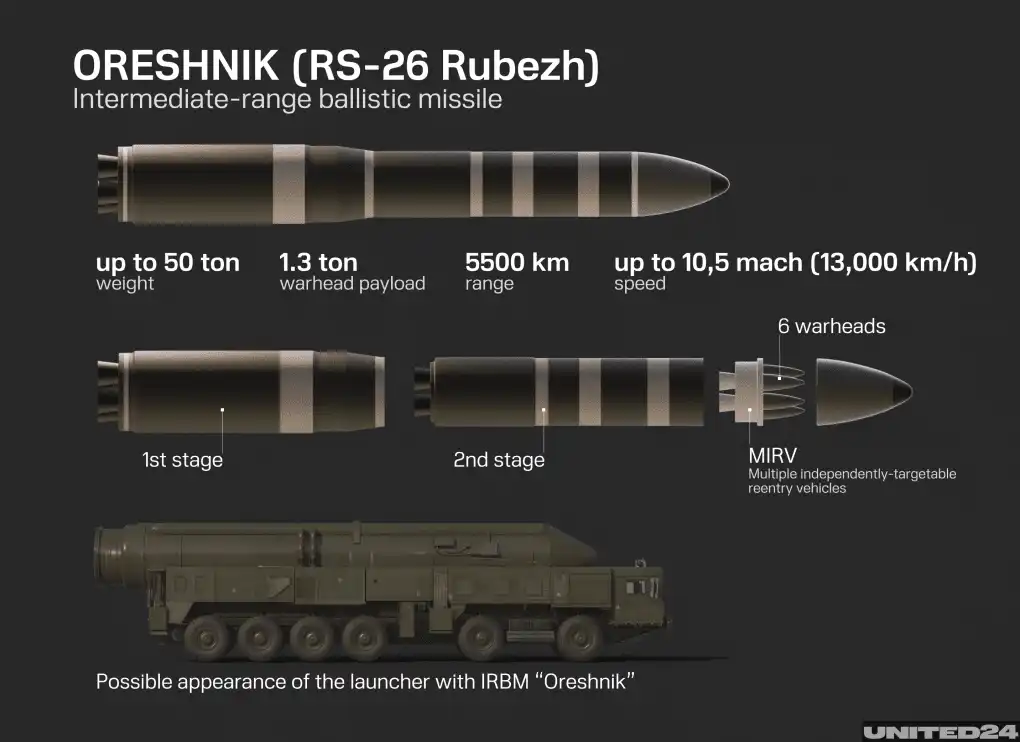
The public acknowledgement of Oreshnik’s battlefield deployment elevates the system from speculative capability to operational asset. Oreshnik—believed to have evolved from post-INF Treaty weapons research—is a solid-fueled, road-mobile IRBM with a reported range of 3,000 to 5,500 kilometers, straddling the boundary between tactical and strategic missile systems.
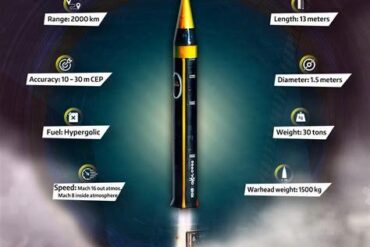
Key known or estimated specifications include:
- Two-stage solid-fuel propulsion system
- Launch weight estimated between 30 and 40 metric tons
- Length of approximately 15 to 18.5 meters; diameter around 1.86 meters
- Terminal velocity exceeding Mach 10, allowing hypersonic reentry profiles that drastically reduce interception windows
- Guidance based on inertial navigation, aided by GLONASS satellite correction, enhancing accuracy and resistance to electronic warfare disruptions
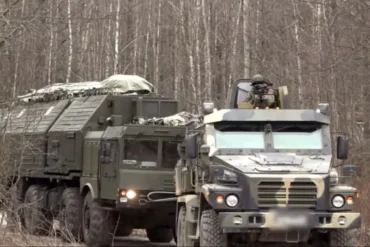
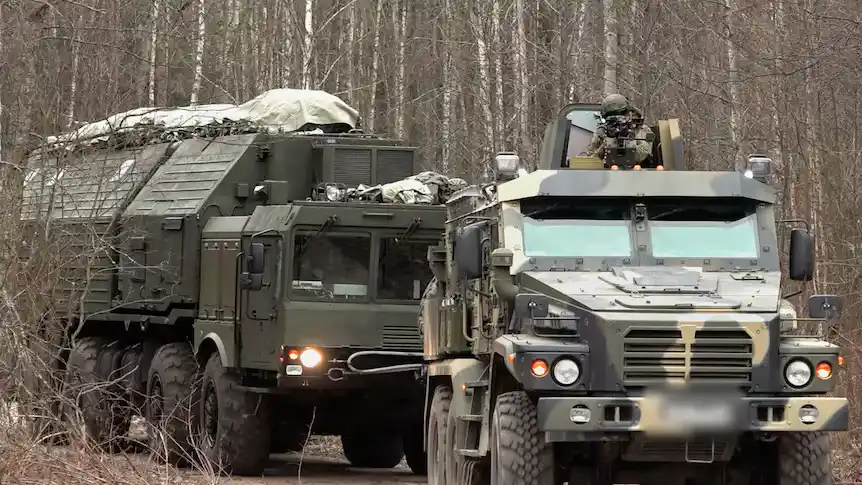
Deployed via Transporter-Erector-Launcher (TEL) platforms, the Oreshnik can be rapidly repositioned, launched from remote or concealed positions, and readied with minimal warning time—giving Russia an edge in mobile strike survivability.
Dual-Use Lethality: Nuclear and Conventional Configurations
Perhaps most concerning for regional stability, Oreshnik is assessed as dual-capable, able to deliver:
- Nuclear payloads, likely comprising 3 to 6 Multiple Independently targetable Reentry Vehicles (MIRVs), with low- to medium-yield nuclear warheads designed for theater-level deterrence and survivable second-strike options
- Conventional payloads, including high-explosive submunitions and area-denial warheads effective against hardened infrastructure, airfields, and logistics depots
Such versatility situates Oreshnik at the center of Russia’s evolving deterrence posture, enabling flexible responses across the escalation ladder—from conventional deep strikes to nuclear signaling.
Deployment Context: Echoes of the November 2024 Dnipro Strike
The Oreshnik had previously drawn attention in November 2024, when analysts attributed a strike on Dnipro to the system. However, the limited damage reported at that time led many to interpret the launch as a field test or demonstration rather than a strategic operation.
The 2026 strike appears different. With explicit naming of the system by the Russian Ministry of Defense and its association with a direct threat to the Russian president, the deployment signals a new operational normal—where advanced IRBMs are not just tools of last resort or deterrence, but integrated into Russia’s high-intensity strike campaigns.
Targeting Ukraine’s Industrial Backbone
The Ministry’s narrative emphasized the targeting of facilities critical to Ukraine’s drone manufacturing and energy sector—components essential to Kyiv’s ongoing war effort. Although exact coordinates or facility names were not disclosed, the implication is clear: by degrading industrial support hubs, Russia aims to slow the production of UAVs, munitions, and field sustainment equipment that fuel Ukraine’s resistance.
If confirmed, such a strike using a high-cost ballistic missile system like Oreshnik reflects Moscow’s prioritization of strategic disruption over battlefield attrition. It also suggests a potential pivot toward targeting the economic and logistical veins of Ukrainian defense, rather than purely military formations.
Hypersonic Entry and Missile Defense Implications
With terminal speeds surpassing Mach 10, the Oreshnik poses a unique challenge to existing missile defense architectures. Hypersonic reentry dramatically reduces the available time for interception, while potential deployment of decoys or maneuverable reentry vehicles (MaRVs) complicates detection and tracking.
Ukrainian air defense systems—largely reliant on layered Soviet-era platforms like the S-300, bolstered by Western-supplied NASAMS and IRIS-T—may be capable against cruise missiles and drones but are ill-suited for defending against ballistic missiles traveling at such extreme velocities.
This dynamic places pressure not only on Ukrainian planners but also on Western backers, as current aid packages may need to evolve to include more robust anti-ballistic missile (ABM) capabilities to mitigate the growing risk posed by platforms like Oreshnik.
Escalation Messaging and Doctrinal Signals
The Russian Ministry of Defense’s closing remarks—warning that “inevitable responses” will follow any future attacks against Russian leadership or critical infrastructure—tie Oreshnik’s deployment directly into the doctrine of calibrated escalation.
This underscores several key strategic signals:
- Russia’s willingness to escalate horizontally and vertically by expanding target sets and utilizing higher-end systems
- Continued erosion of the conventional-nuclear threshold, particularly with dual-capable delivery platforms
- An attempt to shape adversary behavior through strategic ambiguity, making it difficult for Ukraine or NATO to anticipate Russia’s proportionality framework
Implications for NATO and Global Arms Control
The deployment and public acknowledgment of the Oreshnik missile revives long-standing concerns about the destabilizing effects of intermediate-range ballistic missiles, especially in the wake of the INF Treaty’s collapse in 2019. With both the U.S. and Russia having exited the treaty framework, the door is now open for the unconstrained development and deployment of mobile IRBM systems.
For NATO planners, the January 2026 strike serves as a case study in Russia’s evolving threat spectrum:
- Intermediate-range missiles now operate as first-strike assets, not just deterrents
- Mobile basing complicates pre-launch surveillance and tracking
- Conventional variants offer plausible deniability and reduced diplomatic fallout, making them more usable than strategic nuclear systems
There is growing concern that future arms control negotiations—if they materialize—must include non-strategic nuclear forces and dual-capable systems like Oreshnik to ensure meaningful limitations on escalation pathways.
Conclusion: Strategic Ambiguity Weaponized
Russia’s use of the Oreshnik missile in the January 2026 strike marks more than just a tactical development; it is a strategic inflection point. With a single weapon system, Moscow is testing the boundaries of escalation, messaging, and survivable deterrence—forcing adversaries to reconsider assumptions about the Kremlin’s red lines and retaliatory triggers.
For Ukraine, the strike signals a perilous expansion of threat vectors—from battlefield dynamics to critical infrastructure and leadership symbolism. For the West, it is a stark reminder that the post-INF arms race is no longer theoretical—it is here, hypersonic, and on the move.
As the war grinds on, platforms like Oreshnik are likely to become not just instruments of war, but instruments of policy, where every launch echoes far beyond the battlefield.