The United Kingdom has moved decisively into a new phase of military support for Ukraine with the launch of Project Nightfall, a classified deep-strike ballistic missile initiative designed to extend Kyiv’s ability to hit high-value targets far beyond the immediate front line. Announced by the UK Ministry of Defence in January 2026, the programme reflects a strategic recalibration as the war evolves into a contest increasingly dominated by long-range precision fires, logistics interdiction, and the contest for operational depth rather than purely territorial gains.
Project Nightfall is conceived as a ground-launched, road-mobile ballistic missile system purpose-built for the Ukrainian theatre. Unlike earlier Western assistance that relied heavily on transferring existing stockpiles, Nightfall represents a bespoke capability, developed rapidly and explicitly aligned with Ukraine’s operational requirements. British officials have framed the programme as a response to Russia’s persistent use of missiles and long-range drones against Ukrainian infrastructure, command nodes, and rear-area forces, arguing that sustaining Ukraine’s battlefield momentum now requires credible, scalable deep-strike options.
The initiative also signals a broader political shift. By investing in a ballistic missile capability for Ukraine, London is moving beyond incremental aid toward structural enablement, providing tools that can shape the operational environment at depth rather than simply responding to immediate tactical pressures. In doing so, the UK is positioning itself at the forefront of European efforts to redefine long-range fires in a post-arms-control era marked by renewed high-intensity conflict.
Strategic Rationale Behind Project Nightfall
At its core, Project Nightfall addresses a fundamental asymmetry that has persisted throughout the conflict: Russia’s ability to strike deep into Ukrainian territory with relative frequency, contrasted with Ukraine’s more limited capacity to impose reciprocal costs at similar ranges. While Kyiv has made notable gains through indigenous systems and Western-supplied weapons, its long-range strike portfolio remains constrained by numbers, production capacity, and political sensitivities surrounding certain weapon types.
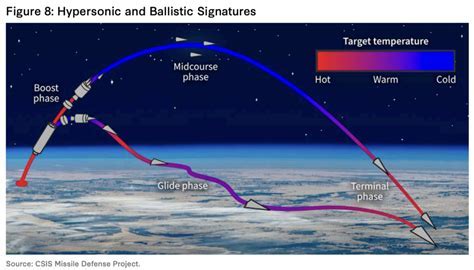
British defence planners have concluded that ballistic missiles offer a unique combination of speed, survivability, and deterrent value. Unlike cruise missiles, which are vulnerable to layered air defences over extended flight paths, ballistic missiles traverse much of their trajectory at high-supersonic or near-hypersonic speeds, compressing enemy reaction times. This makes them particularly suited for striking time-sensitive or heavily defended targets such as command posts, air defence nodes, logistics hubs, and critical infrastructure.
Nightfall is therefore not merely an incremental addition to Ukraine’s arsenal but a tool intended to reshape Russian operational planning. By holding rear-area assets at risk beyond 500 kilometres, Ukraine could force Moscow to disperse logistics, harden infrastructure, and allocate additional resources to air and missile defence, diluting combat power at the front.
Technical Profile of the Nightfall Missile System
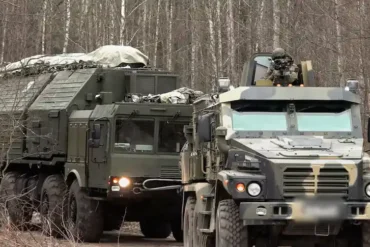
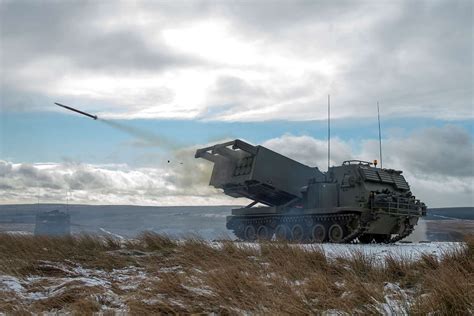
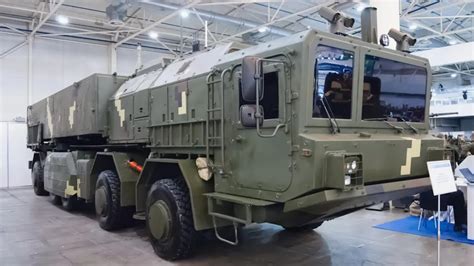
Project Nightfall is described as a road-mobile, vehicle-launched ballistic missile carried in sealed canisters mounted on heavy wheeled transporter-erector-launchers, likely in 8×8 or 10×10 configurations. This architecture mirrors proven designs such as Russia’s Iskander or the US ATACMS and PrSM families, prioritising mobility, concealment, and rapid displacement after launch.
The missile itself is expected to deliver a high-explosive warhead of approximately 200 kilograms to ranges exceeding 500 kilometres. While precise performance parameters remain classified, British sources indicate an emphasis on reliability and manufacturability over exotic propulsion or manoeuvring concepts. Solid-fuel propulsion, mature guidance components, and a relatively straightforward airframe are intended to support rapid production and sustained firing rates.
Guidance is expected to combine inertial navigation with multi-constellation satellite navigation, hardened against jamming and spoofing. Drawing on British experience with systems like Storm Shadow, future variants could incorporate terminal guidance options such as imaging infrared or digital scene-matching to refine accuracy against hardened or relocatable targets. Even without advanced seekers, modern ballistic systems can achieve accuracy measured in tens of metres, sufficient for most strategic and operational targets.
Warhead Options and Target Sets
The choice of a 200-kilogram payload reflects a deliberate balance between destructive power and missile size. Such a warhead is well suited for general-purpose blast-fragmentation effects, capable of disabling command centres, radar installations, fuel depots, and logistics facilities. British industry’s experience with multi-stage penetrator designs suggests that Nightfall could eventually field specialised warheads optimised for hardened targets, runways, or reinforced shelters.
From an operational perspective, this flexibility is critical. Rather than relying on a single, expensive munition for all missions, Ukraine could employ different Nightfall variants depending on target type, maximising efficiency and conserving high-end assets. Precision enables planners to focus on structural weak points, achieving disproportionate effects without excessive collateral damage.
Integration With Ukrainian Command and Control
A defining feature of Project Nightfall is its intended integration with Ukrainian digital command-and-control networks. British officials have emphasised open architecture and modularity, allowing the system to plug into existing Ukrainian ISR and targeting frameworks rather than imposing a standalone, foreign-controlled solution.
Targeting data would draw on a blend of Ukrainian and allied intelligence sources, including satellite imagery, high-altitude unmanned systems, and ground-based sensors. This approach reflects lessons learned throughout the conflict, where timely, fused intelligence has proven decisive in enabling precision strikes. By embedding Nightfall within Ukraine’s existing processes, the UK aims to reduce training overhead and accelerate operational readiness.
How Nightfall Fits Into Ukraine’s Existing Strike Arsenal
Ukraine has already demonstrated an ability to innovate under pressure. The domestically developed Sapsan (Hrim-2) ballistic missile marks a significant technological achievement, offering ranges around 300 kilometres and a substantial warhead. However, production constraints and vulnerability to Russian strikes limit its ability to meet sustained demand.
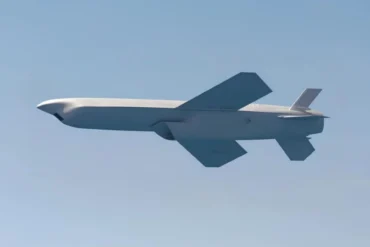
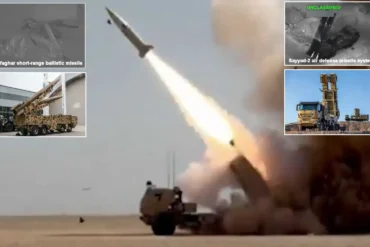
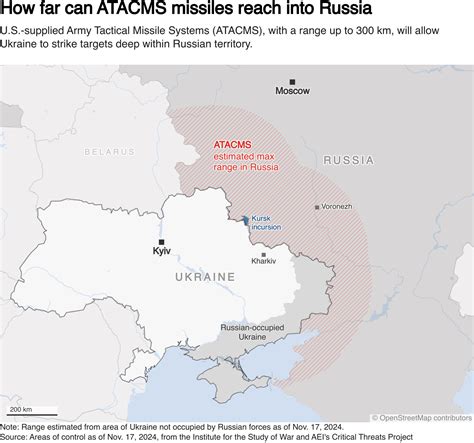
Western-supplied systems have partially filled this gap. ATACMS missiles have enabled strikes against airfields and logistics hubs, while GLSDB has extended reach beyond traditional artillery rockets. Air-launched cruise missiles such as Storm Shadow/SCALP-EG have delivered high-precision effects against hardened targets, particularly in Crimea. Yet each of these systems carries limitations in cost, availability, or platform dependency.
Project Nightfall is intended to complement rather than replace these capabilities. By providing a ground-launched ballistic option with greater range than ATACMS and higher firing rates than cruise missiles, Nightfall could form the backbone of a layered strike ecosystem. This diversity complicates enemy defence planning and allows Ukraine to match weapon type to mission with greater precision.
Operational Advantages Over Cruise Missiles
Ballistic missiles like Nightfall offer distinct advantages in the current operational environment. Their shorter time-to-target reduces opportunities for interception and limits the enemy’s ability to relocate assets. High terminal velocities increase the likelihood of penetration even against modern air defence systems, particularly when combined with coordinated salvos or decoys.
Cost is another factor. Cruise missiles are technologically complex and expensive, making them ill-suited for frequent use against routine targets. Nightfall’s design philosophy prioritises affordability and scalability, enabling regular interdiction of logistics and infrastructure rather than sporadic, high-profile strikes. Over time, this sustained pressure can erode an adversary’s operational tempo and resilience.
Industrial and Political Implications for the UK
For the United Kingdom, Project Nightfall represents more than a support package for Ukraine. It is a testbed for rapid missile development, leveraging competition, accelerated prototyping, and iterative upgrades. This approach aligns with broader Western trends that favour modular systems and software-driven enhancements over protracted development cycles.
The programme also strengthens Britain’s domestic missile industry, consolidating expertise in propulsion, guidance, and containerised launch systems. In the longer term, Nightfall could evolve into an exportable capability for European partners reassessing their own deep-strike needs amid deteriorating security conditions and the erosion of legacy arms control agreements.
Politically, the initiative underscores London’s willingness to assume risk in order to shape outcomes. By enabling a ballistic missile capability for Ukraine, the UK is sending a clear signal that it views long-range strike parity as essential to deterring further aggression and stabilising the conflict’s strategic balance.
Impact on the Wider European Security Landscape
Project Nightfall is likely to reverberate beyond Ukraine. European states have traditionally relied on air-launched or naval strike systems, with relatively limited emphasis on land-based ballistic missiles. The renewed relevance of such systems, demonstrated in Ukraine, is prompting a reassessment of continental long-range fires and their role in deterrence.
As Nightfall progresses, it may influence debates within NATO about burden-sharing, industrial cooperation, and the integration of national strike capabilities. For countries facing similar threats but lacking indigenous missile programmes, the UK’s approach could serve as a model for collaborative development and rapid fielding.
Anticipated Operational Timeline and Challenges
According to British defence officials, initial test missiles are expected roughly one year after contract award, an ambitious timeline that reflects the programme’s urgency. Achieving this schedule will require disciplined scope control, reliance on proven technologies, and close coordination between industry and government.
Challenges remain. Ensuring sufficient production rates, protecting supply chains from disruption, and managing escalation dynamics will all test the programme’s resilience. Yet proponents argue that the risks of inaction are greater, particularly as Russia continues to adapt its own long-range strike tactics.
A Capability Designed for Sustained Pressure
Ultimately, Project Nightfall is about endurance as much as impact. In a war defined by attrition and adaptation, the ability to conduct regular, precise deep strikes can gradually undermine an adversary’s operational foundation. By targeting logistics, command infrastructure, and air defence networks, Ukraine can force Russia into a reactive posture, stretching resources and complicating offensive planning.
For Kyiv, the arrival of a purpose-built ballistic missile system would mark a significant step toward strategic self-reliance, even as it remains integrated within a broader network of allied support. For London, it represents a calculated investment in shaping the conflict’s trajectory rather than merely responding to it.
Conclusion: Project Nightfall and the Future of Long-Range Fires
Project Nightfall stands as one of the most consequential developments in Western military assistance to Ukraine since the introduction of long-range cruise missiles. By focusing on speed, range, and scalability, the UK is addressing a critical gap in Ukraine’s strike capabilities while simultaneously advancing its own industrial and strategic interests.
As the programme moves from concept to hardware, its success will be measured not only in kilometres or kilograms but in its ability to alter adversary behaviour and sustain Ukrainian resilience. In an era where operational depth and precision define battlefield advantage, Nightfall embodies a recognition that long-range fires are no longer auxiliary tools but central instruments of modern warfare.