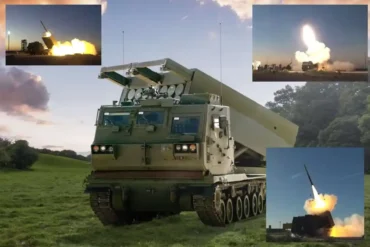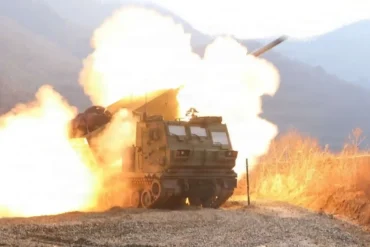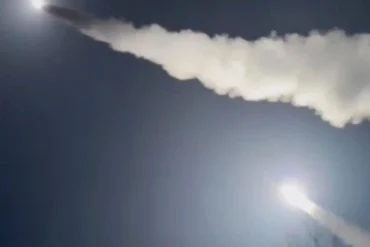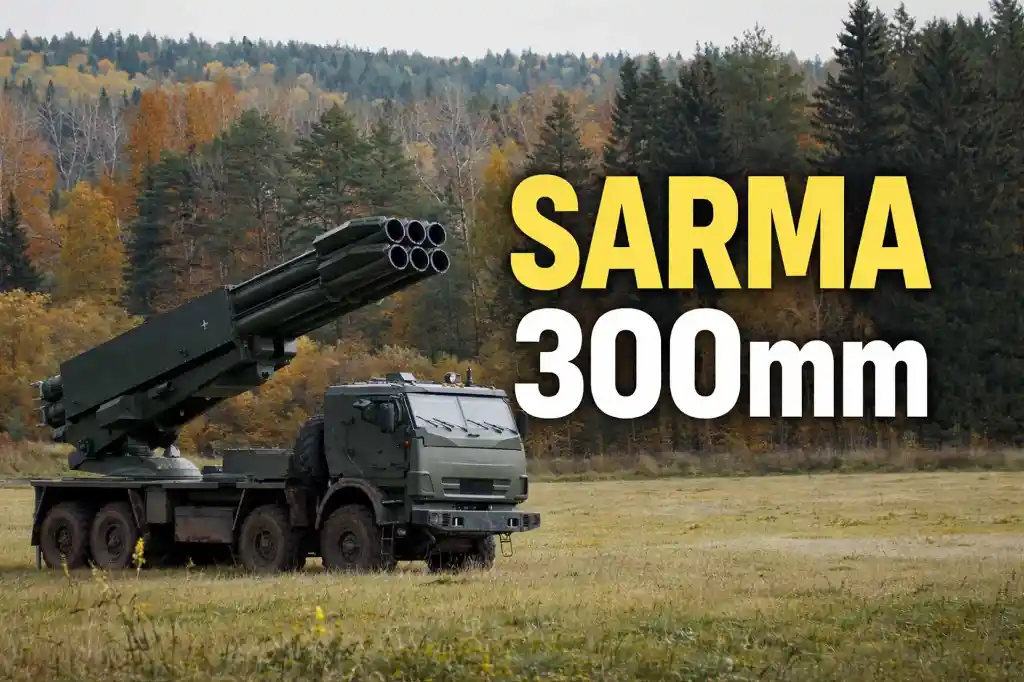
Russia has introduced the Sarma 300mm Multiple Launch Rocket System (MLRS) as part of a broader modernization effort aimed at strengthening its long-range precision firepower and reinforcing its operational deep-strike doctrine. Positioned within the evolving architecture of Russian ground-based fires, Sarma is designed to extend engagement ranges beyond conventional tube artillery while enhancing mobility, survivability, and digital integration on the modern battlefield.
The system emerges at a time when long-range rocket artillery has reasserted itself as a decisive factor in high-intensity warfare. Russian forces have relied heavily on layered fire systems—combining tube artillery, heavy rockets, and tactical missiles—to suppress enemy air defenses, conduct counter-battery operations, and disrupt logistics networks. The introduction of Sarma signals a calculated effort to refine that architecture, increasing responsiveness and strike precision while reducing vulnerability to counter-battery detection and drone-enabled targeting.
Unlike legacy systems conceived primarily for massed saturation fire, Sarma reflects an evolution toward hybrid capability—retaining high-volume salvo potential while incorporating precision-guided munitions. This dual-role design aligns with the operational demands of contemporary conflict, where commanders require both area suppression and the ability to neutralize hardened or time-sensitive targets at extended ranges.
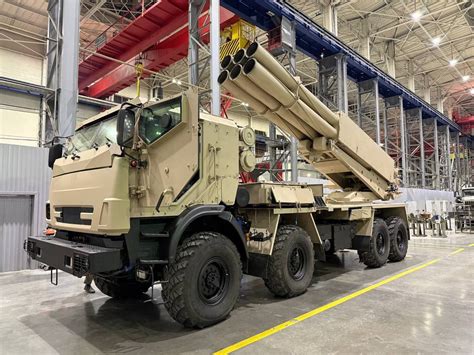
Sarma 300mm MLRS: Expanding the Reach of Russian Rocket Artillery
The 300mm caliber places Sarma within the same heavy rocket artillery family as the BM-30 Smerch and the more modern Tornado-S systems. This suggests likely interoperability with Russia’s existing 300mm rocket inventory, including both unguided high-explosive projectiles and satellite-guided precision munitions equipped with GLONASS-based navigation correction.
Standard 300mm rockets historically offer ranges exceeding 70 kilometers. However, modern guided variants associated with Tornado-S have been assessed to reach well beyond 100 kilometers depending on payload configuration and flight profile. If Sarma leverages these advanced munitions, it would significantly enhance Russia’s ability to conduct deep operational strikes without resorting to higher-cost ballistic missile systems.
This extended reach positions Sarma in a critical niche between conventional 152mm howitzers and short-range ballistic missile platforms. Compared to tube artillery, heavy rockets deliver greater payload mass and broader area coverage. Compared to ballistic missiles, they provide more cost-efficient saturation options while maintaining operational flexibility.
Mobility and Survivability in the Age of Counter-Battery Warfare
Modern artillery duels are increasingly defined by speed. Counter-battery radars, loitering munitions, and persistent surveillance drones drastically compress the time between detection and retaliation. In such an environment, survivability depends on rapid firing, immediate displacement, and reduced electromagnetic signature.
Preliminary visual assessments suggest that Sarma is mounted on a modernized high-mobility wheeled chassis, potentially improving cross-country performance and enabling faster repositioning after salvo execution. This “shoot-and-scoot” capability is no longer a tactical luxury; it is an operational necessity.
Automation appears central to the system’s design. Integrated digital fire-control systems likely support rapid mission planning, automated targeting input, and networked coordination with reconnaissance assets. By shortening the sensor-to-shooter cycle, Sarma could allow Russian units to respond more effectively to fleeting targets such as mobile artillery batteries or logistical convoys.
Precision Strike and Deep-Fire Doctrine
Heavy rocket artillery has long been a cornerstone of Russian ground-force doctrine, emphasizing massed fires to achieve operational shock and disruption. Sarma represents a refinement of that doctrine rather than a departure from it. The addition of precision-guided capability transforms what was traditionally an area-saturation weapon into a system capable of engaging point targets at operational depth.
Potential target sets for a 300mm precision MLRS include:
- Logistics hubs and ammunition depots
- Air defense batteries and radar sites
- Command-and-control nodes
- Troop concentrations and staging areas
In high-intensity conflict scenarios, such capabilities are critical for degrading an adversary’s sustainment capacity and decision-making structure. When integrated into reconnaissance-strike complexes—networks linking drones, ground sensors, and command posts—Sarma could significantly reduce response times and improve strike accuracy against dynamic targets.
The evolution of guided 300mm munitions also reflects lessons learned from recent combat environments, where both sides have deployed precision artillery and electronic warfare systems to contest the electromagnetic spectrum. Enhanced navigation correction and digital integration increase resilience against jamming and targeting disruption.
Strategic Significance and Industrial Continuity
Beyond its tactical implications, Sarma underscores sustained investment in Russia’s heavy artillery sector. The 300mm segment remains one of the most impactful conventional strike tools in the Russian Ground Forces inventory. Modernizing this category reinforces deterrence posture without crossing into overt ballistic missile escalation.
Enhancements in guidance systems, reload efficiency, and digital networking increase operational credibility along contested frontiers, particularly in regions where rapid-fire dominance can shape escalation dynamics. By extending ground-based strike reach, Russia maintains a layered fires structure that complicates adversary planning and force protection strategies.
Industrial considerations are equally important. The development and production of Sarma sustain manufacturing lines for rocket motors, guidance electronics, and heavy vehicle platforms. Maintaining this industrial ecosystem ensures continuity in a sector that has historically provided Russia with a comparative advantage in massed artillery fires.
If Sarma is intended to complement or gradually evolve beyond Tornado-S units, it may incorporate battlefield lessons regarding maintenance cycles, survivability challenges, and logistical sustainment observed in ongoing operations. Adaptability, in this context, becomes a strategic asset.
The Future of Long-Range Rocket Artillery
The introduction of the Sarma 300mm MLRS highlights the enduring centrality of artillery in modern warfare. Despite advances in airpower and unmanned systems, ground-based rocket artillery remains one of the most cost-effective means of delivering sustained high-volume fire at operational depth.
Should Sarma achieve full integration with advanced guided rockets and digital command networks, it would represent a measurable reinforcement of Russia’s long-range conventional strike architecture. In contemporary conflicts defined by rapid detection, precision engagement, and layered defenses, systems capable of combining saturation and accuracy hold decisive influence.
As global militaries reassess their artillery doctrines in light of evolving battlefield realities, the Sarma 300mm MLRS stands as a clear indicator that heavy rocket artillery continues to adapt—extending range, improving precision, and redefining the balance between mass and accuracy in modern deep-strike operations.