The United States Air Force is advancing plans to reintroduce external fuel tanks for the F-35 Joint Strike Fighter, marking a pivotal shift in strategy to bolster the aircraft’s long-range operational capabilities. This move, embedded within the Fiscal Year 2026 budget, signals a renewed emphasis on maximizing the reach and versatility of America’s fifth-generation stealth aircraft, especially as sixth-generation platforms face developmental delays.
Renewed Focus on Extending F-35 Combat Radius
The F-35, particularly the F-35A and F-35C variants, has long been lauded for its advanced stealth features, sensor fusion, and multirole flexibility. However, its combat radius—approximately 670 nautical miles for the F-35A and slightly more for the carrier-capable F-35C—has drawn scrutiny, especially in vast theaters like the Indo-Pacific. With adversaries enhancing anti-access/area-denial (A2/AD) networks, the ability to strike deep into contested areas without over-reliance on vulnerable aerial refueling assets has become a top priority.
The Air Force’s FY2026 budget allocates nearly $432 million toward continuous F-35 upgrades under the Block 4 modernization program, with a portion explicitly earmarked for evaluating the feasibility of integrating external fuel tanks. This initiative aims to enhance the aircraft’s operational endurance while maintaining its critical low observability features.
Historical Hurdles and Israeli Innovations
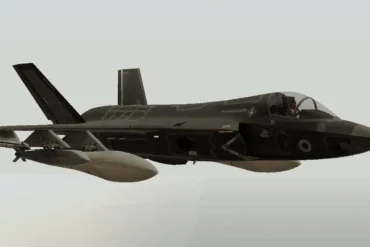
Efforts to equip the F-35 with external fuel tanks date back nearly two decades. Between 2004 and 2007, Lockheed Martin pursued the development of 480- and 460-gallon drop tanks for the aircraft. However, these early designs encountered significant aerodynamic separation problems and compromised stealth performance, leading to the project’s shelving.
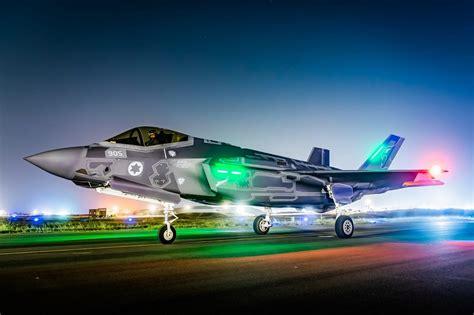
Recent developments, however, suggest renewed optimism. The Israeli Air Force, operating its unique F-35I Adir variant, has successfully explored external fuel solutions. While details remain classified, sources indicate that conformal fuel tanks (CFTs) and modified drop tanks have been tested, demonstrating that increased range can be achieved without excessively degrading radar cross-section or maneuverability.
Strategic Imperatives in a Shifting Threat Environment
The urgency behind extending the F-35’s range stems from multiple converging factors. Firstly, the Indo-Pacific region presents operational challenges due to its sheer geographic scale. From U.S. Pacific bases to potential conflict zones, distances routinely exceed the F-35’s current unrefueled range, creating dependency on aerial tankers. However, tankers like the KC-135 Stratotanker and KC-46 Pegasus are increasingly vulnerable to long-range anti-aircraft missiles and hypersonic threats.
By equipping F-35s with external fuel tanks, the U.S. Air Force and U.S. Navy can reduce reliance on these exposed assets, enabling deeper penetration missions and prolonged loiter time over contested airspace. The delays in deploying next-generation platforms such as the Navy’s F/A-XX carrier-based fighter and the setbacks in the MQ-25 Stingray tanker drone program further underscore the need to optimize existing platforms like the F-35.
Moreover, an extended-range F-35 significantly enhances deterrence posture. The aircraft’s stealth capabilities, combined with increased endurance, would allow strike packages to operate further from adversary radar networks, targeting critical infrastructure or mobile missile launchers with greater flexibility.
Technical Pathways: Overcoming Aerodynamic and Stealth Barriers
The core challenge in integrating external fuel tanks remains preserving the F-35’s stealth profile. Large, angular drop tanks increase radar cross-section, diminishing one of the aircraft’s defining advantages. However, advancements in computational fluid dynamics, materials science, and stealth shaping have opened new avenues.
Modern design approaches include:
- Conformal Fuel Tanks (CFTs): These low-profile tanks blend into the aircraft’s fuselage, minimizing aerodynamic drag and radar signature while providing additional fuel capacity.
- Redesigned Pylon and Tank Geometry: Innovations in pylon mounting and tank shape aim to reduce radar reflections and ensure safe separation during jettison operations.
- Removable Configurations: In low-threat scenarios, external tanks can be carried to maximize range, while in high-threat environments, pilots can jettison them to revert to full stealth mode.
The FY2026 budget explicitly calls for studies to “evaluate feasibility and decompose requirements” for integrating both underwing drop tanks and CFTs on the F-35. If successful, these modifications could extend the aircraft’s effective combat radius by several hundred nautical miles.
Global Impact for Allied Operators
While the U.S. military leads F-35 development, the program’s international footprint is extensive. Allies including the United Kingdom, Japan, Italy, Australia, and others field or plan to field F-35 variants. For many of these nations, tanker fleets are limited in number or aging, constraining long-range mission profiles.
The introduction of external fuel options offers allied operators a pathway to enhance independent deep-strike capabilities without expanding vulnerable support infrastructure. In particular, nations in the Indo-Pacific region, such as Japan and Australia, face vast maritime operational spaces where extended-range F-35s could prove decisive.
Moreover, the F-35’s interoperability ensures that any range-enhancing modifications developed by the U.S. can cascade to allied fleets, reinforcing coalition readiness and joint operational flexibility.
Block 4 Modernization: A Comprehensive Capability Upgrade
The push for external fuel tanks aligns with the broader Block 4 modernization effort—a sweeping upgrade package designed to keep the F-35 at the forefront of fifth-generation combat capabilities. Key enhancements under Block 4 include:
- Advanced Electronic Warfare (EW) Systems: Improving survivability against modern air defenses.
- Upgraded Radar and Sensors: Expanding detection range and target tracking.
- Expanded Weapons Integration: Incorporating new air-to-air and air-to-ground munitions.
- Improved Mission Endurance: Enhancing range, loiter time, and system reliability.
Together, these upgrades position the F-35 not merely as a stopgap until sixth-generation fighters arrive but as a continuously evolving asset capable of meeting emerging threats into the 2030s and beyond.
Conclusion: Practical Enhancements for Immediate Strategic Gains
As geopolitical tensions intensify, particularly in the Indo-Pacific and European theaters, ensuring that the F-35 remains relevant and operationally flexible is paramount. The reintroduction of external fuel tanks—once dismissed due to technical constraints—now represents a pragmatic solution to a long-standing capability gap.
Backed by nearly half a billion dollars in the FY2026 budget, the renewed focus on extending the F-35’s range reflects a clear recognition by defense planners: the strategic environment is evolving, and so too must America’s frontline combat aircraft.
While sixth-generation platforms remain on the horizon, the F-35, enhanced with extended-range options, advanced sensors, and expanded weapons, will continue to serve as the backbone of U.S. and allied airpower—capable of deterring aggression, projecting power, and prevailing in contested battlespaces well into the next decade.