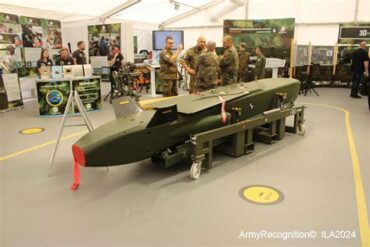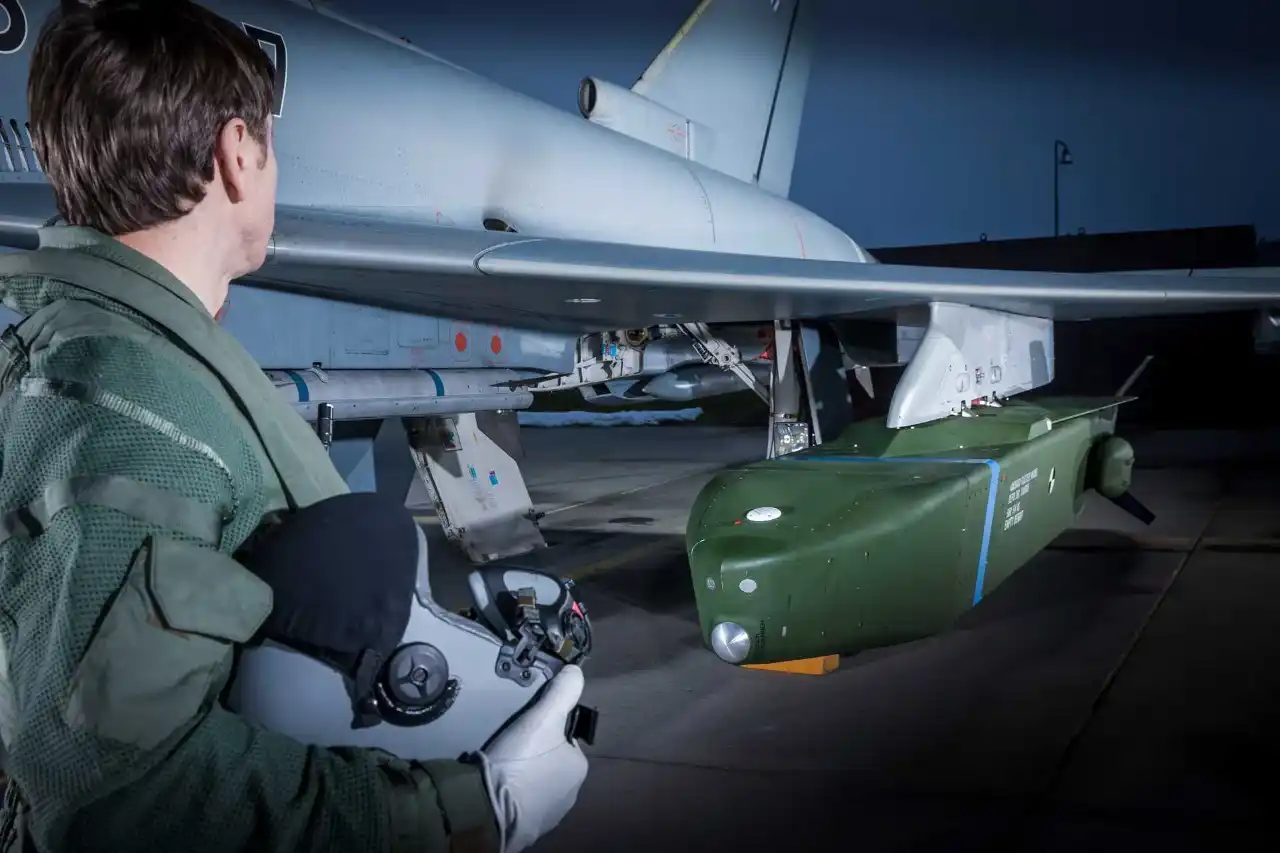
Germany’s long-range strike posture is entering a new and consequential phase as MBDA Deutschland confirms that the TAURUS NEO precision cruise missile has officially transitioned into series production preparation. This step moves the program beyond conceptual modernization and firmly into industrial reality, signaling that Berlin is no longer content with incremental upgrades to legacy systems but is instead committing to a future-ready, sovereign strike capability designed for contested, high-intensity warfare.
The announcement, made on January 7, 2026, follows the signing of a key contract between MBDA Deutschland and the Federal Office of Bundeswehr Equipment, Information Technology and In-Service Support (BAAINBw). With this agreement, the TAURUS NEO program shifts from development and qualification toward full industrialization, anchoring production entirely within Germany and reinforcing national control over one of the Bundeswehr’s most strategically sensitive weapon systems.
At a time when European defense planning is increasingly shaped by the realities of peer-level conflict, electronic warfare saturation, and hardened underground targets, TAURUS NEO is positioned as more than a missile upgrade. It represents a deliberate recalibration of Germany’s role within NATO’s deep-strike ecosystem, emphasizing survivability, autonomy, and precision at extended range.
From Taurus KEPD 350 to TAURUS NEO: Evolution Driven by Modern Warfare
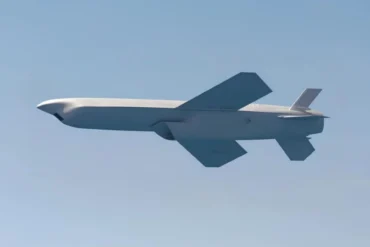
The original Taurus KEPD 350, jointly developed by MBDA Germany and Saab Dynamics, entered service in the mid-2000s as a long-range, air-launched cruise missile optimized for deep-penetration missions. With a range exceeding 500 kilometers, terrain-following flight, and the formidable Mephisto dual-stage penetrator warhead, it was designed to defeat hardened, high-value targets while allowing launch aircraft to remain well outside hostile air defense envelopes.
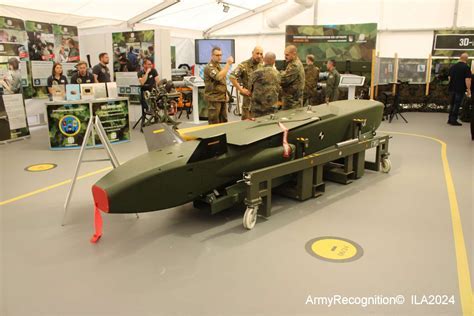
However, the operational environment that shaped the KEPD 350 no longer exists in its original form. Integrated air defense systems have become denser, sensor fusion has improved dramatically, and electronic attack capabilities now routinely challenge GPS-dependent weapons. TAURUS NEO, short for Next Enhanced Option, emerges as a direct response to these realities, preserving the strengths of the original missile while fundamentally reengineering its digital, electronic, and mission-system backbone.
Rather than a clean-sheet replacement, TAURUS NEO is best understood as a generational leap built on proven physics. The airframe, propulsion philosophy, and penetration logic remain rooted in a combat-tested concept, but nearly everything that governs how the missile thinks, navigates, and survives has been redesigned.
Advanced Navigation for GPS-Denied Battlespaces
One of the most consequential upgrades in TAURUS NEO lies in its navigation and guidance architecture. Modern conflicts have demonstrated that GPS availability can no longer be assumed, especially in the opening phases of high-intensity warfare. In response, MBDA has introduced a fully digitized, multi-layer navigation suite that blends advanced inertial navigation with encrypted GPS and a significantly enhanced Terrain Contour Matching (TERCOM) system.
This architecture allows TAURUS NEO to maintain extreme accuracy even under heavy jamming or spoofing conditions. By correlating onboard terrain databases with real-time sensor input, the missile can autonomously correct its flight path at very low altitude, weaving through complex terrain while remaining largely invisible to ground-based radar. The result is a weapon that treats electronic warfare not as a vulnerability, but as a design assumption.
Equally important is the system’s digital openness. The new navigation core is software-defined, enabling future updates without structural redesign. As terrain databases, counter-jamming algorithms, or encryption standards evolve, TAURUS NEO can evolve with them, extending its operational relevance well beyond the timelines typically associated with cruise missile systems.
Survivability Against Modern Integrated Air Defense Systems
Survivability has become the defining metric for modern standoff weapons, and TAURUS NEO addresses this challenge head-on. MBDA has confirmed the integration of a new electronic counter-countermeasures (ECCM) suite, specifically designed to defeat layered, networked air defense systems that rely on sensor fusion and cooperative engagement.
Low-observable refinements further enhance the missile’s survivability. While not marketed as a stealth weapon in the traditional sense, TAURUS NEO benefits from reduced radar cross-section through shaping improvements and signature management. Combined with its terrain-hugging flight profile and electronic defenses, the missile is engineered to arrive at its target with minimal warning, compressing defender reaction times to near zero.
This survivability package transforms TAURUS NEO into a true first-night weapon, optimized for degrading enemy air defense nodes, command bunkers, and critical infrastructure during the opening phase of conflict, when defenses are most intact and most dangerous.
Precision Penetration and the Mephisto Warhead Legacy
Despite the extensive modernization, MBDA has retained the Mephisto dual-stage warhead, a decision that reflects both confidence in its performance and recognition of its continued relevance. Designed to defeat deeply buried and reinforced targets, Mephisto combines a precursor charge with a follow-through penetrator, enabling controlled detonation at precisely calculated depths.
TAURUS NEO enhances this capability through refined fuzing options and updated penetration algorithms. These improvements allow mission planners to tailor effects against a broader range of targets, from reinforced command centers and underground storage facilities to critical infrastructure nodes protected by modern construction techniques.
In an era where adversaries increasingly rely on subterranean facilities to shield high-value assets, this focus on penetration is not merely tactical but strategic. TAURUS NEO is designed to hold at risk the kinds of targets that shape operational decision-making at the highest levels.
Software-Defined Modularity and Mission Flexibility
Perhaps the most transformative aspect of TAURUS NEO is its software-defined mission architecture. Unlike earlier cruise missile designs that relied on rigid, pre-programmed mission profiles, the NEO variant introduces a level of flexibility that aligns more closely with modern network-centric warfare concepts.
Mission data can be updated more rapidly, attack profiles can be adapted to evolving threat intelligence, and the system is designed with growth margins that support future capabilities such as collaborative targeting or integration with unmanned platforms. This modularity reduces lifecycle costs while dramatically increasing operational adaptability, ensuring that the missile remains relevant even as doctrines and threat environments shift.
Platform Integration and the Path Toward FCAS
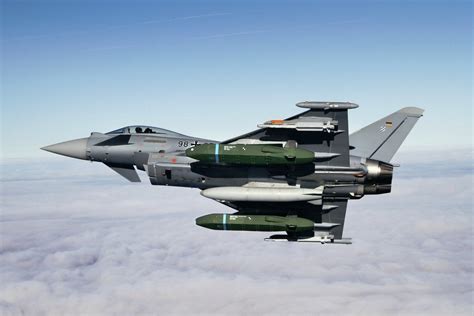
Integration flexibility has been a central design requirement for TAURUS NEO. While the original KEPD 350 was limited to platforms such as the Tornado and Eurofighter Typhoon, the new variant has been engineered with broader cross-platform compatibility in mind.
In the near term, TAURUS NEO is expected to be fully integrated with Germany’s Eurofighter Typhoon fleet, providing the Luftwaffe with a modern standoff strike option as Tornado aircraft approach retirement. Looking further ahead, the missile is widely viewed as a natural candidate for integration into the Future Combat Air System (FCAS) ecosystem, where manned and unmanned platforms are expected to operate as a tightly networked strike complex.
This forward compatibility underscores the missile’s role not just as a weapon, but as a node within a larger combat system, capable of contributing to coordinated, multi-domain strike operations.
Industrial Sovereignty and Domestic Production
A defining feature of the January 2026 announcement is the confirmation that TAURUS NEO will be produced entirely within Germany. Manufacturing and final integration will take place at MBDA’s facilities in Schrobenhausen, Bavaria, with production lines expanded to support sustained serial output.
This domestic focus reflects a broader German and European push toward defense industrial sovereignty. By securing the supply chain, quality assurance, and intellectual control of a strategic weapon system, Germany reduces external dependencies and gains greater freedom of action in both procurement and operational planning.
The contract with BAAINBw establishes the framework for manufacturing readiness, supplier qualification, and high-rate production processes. While official procurement numbers have not been disclosed, defense industry sources suggest that several hundred missiles could be acquired over the coming decade, replacing and expanding the existing TAURUS inventory.
Strategic Implications for Germany and NATO
Operationally, TAURUS NEO reshapes Germany’s long-range strike doctrine. It provides the Bundeswehr with a credible, survivable, and precise deep-strike capability capable of operating in heavily defended airspace without exposing launch platforms to unacceptable risk.
Within NATO, the missile strengthens the alliance’s collective ability to conduct precision strikes against high-value targets early in a conflict, complementing other standoff systems and contributing to deterrence by denial. Its emphasis on hardened and underground targets aligns closely with alliance planning priorities in scenarios involving peer adversaries.
As series production moves forward, TAURUS NEO is poised to become one of the most strategically significant weapons in Germany’s arsenal. It embodies a shift from reactive modernization to proactive capability shaping, ensuring that Germany remains a credible, technologically advanced contributor to European and transatlantic security in an increasingly unforgiving strategic environment.