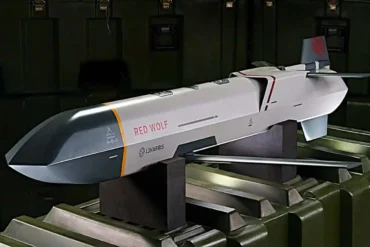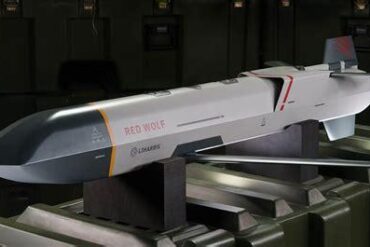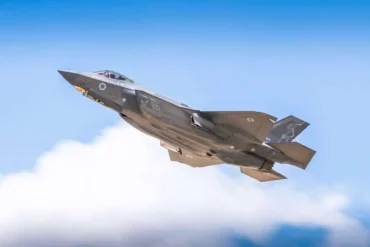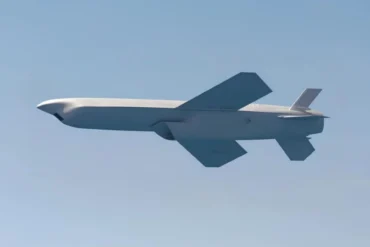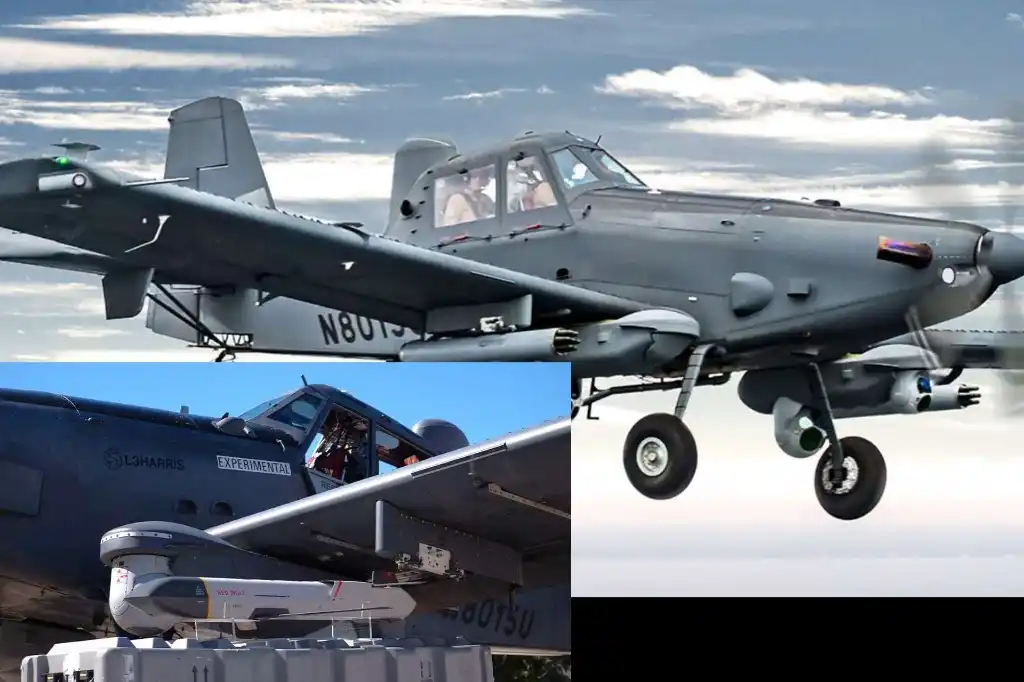
The United States defense sector has taken a decisive step toward modular, adaptable airpower as L3Harris Technologies unveils a new integration concept pairing its Red Wolf launched-effects cruise missile with the Sky Warden light attack aircraft. This development reflects a broader shift in modern warfare: the fusion of persistent, austere-capable crewed platforms with long-range, networked precision munitions designed to operate deep into contested battlespace.
Announced on February 9, 2026, the integration concept demonstrates how a relatively low-footprint aircraft can be transformed into a multi-role standoff strike platform without the need for a new fleet procurement cycle. Instead of designing an entirely new aircraft to meet emerging threats, L3Harris is advancing a modular approach—leveraging open standards architecture to rapidly reconfigure mission sets ranging from armed ISR (Intelligence, Surveillance, and Reconnaissance) to electronic warfare support and long-range precision attack.
Sky Warden: An Austere-Capable Light Attack Platform
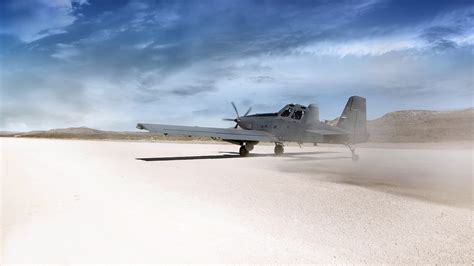
At the center of this integration stands the Sky Warden, a rugged, short takeoff and landing (STOL) aircraft derived from the Air Tractor AT-802U baseline. Optimized for operations from semi-prepared runways and forward operating locations, Sky Warden is engineered to operate close to supported ground forces, delivering endurance and payload flexibility in environments where larger, high-end aircraft may struggle.
With a reported six-hour loiter time at a 200 nautical mile combat radius, Sky Warden offers persistence that is increasingly valuable in distributed operations. Its payload capacity—up to 6,000 pounds of mixed munitions and mission systems—provides commanders with flexibility rarely associated with light attack aircraft. Integrated communications suites enable both line-of-sight and beyond line-of-sight connectivity, positioning the aircraft as a forward sensor, relay node, and strike enabler.
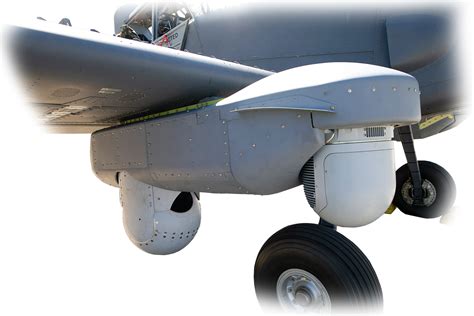
The platform is also closely associated with U.S. Special Operations Command’s OA-1K Skyraider II program, where the concept of “collapsing the stack” seeks to consolidate missions traditionally requiring multiple aircraft types. Rather than dispatching separate ISR, electronic attack, and strike platforms, Sky Warden aspires to merge these roles within a single adaptable framework.
Red Wolf: A Modular Long-Range Launched Effect
The integration of Red Wolf fundamentally expands Sky Warden’s reach. Described by L3Harris as a multi-domain launched-effects vehicle, Red Wolf functions as a long-range cruise missile capable of extended loiter and autonomous engagement beyond the launching aircraft’s line of sight.
Selected by the U.S. Naval Air Systems Command (NAVAIR) for the U.S. Marine Corps’ Precision Attack Strike Munition (PASM) program, Red Wolf reportedly demonstrated a proven reach of 200 nautical miles. This capability dramatically extends the engagement envelope of the Sky Warden platform, allowing it to deliver precision effects against targets well outside heavily defended zones.
Red Wolf also incorporates beyond-line-of-sight communications and autonomous over-the-horizon engagement capabilities. These features enable operators to maintain connectivity and control even when terrain, jamming, or distance would traditionally disrupt command links.
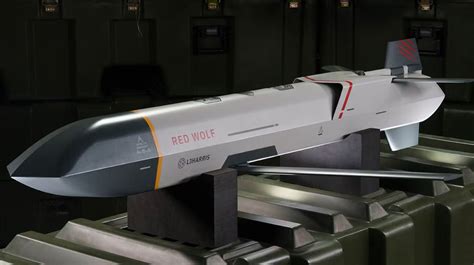
Importantly, Red Wolf is part of a broader family. Its sibling, Green Wolf, is oriented toward electronic warfare missions, signaling L3Harris’ commitment to a modular ecosystem in which kinetic and non-kinetic payloads share common integration pathways.
Operational Testing and Program Momentum
The integration concept is not emerging in isolation. L3Harris cites 52 launched-effects vehicle flights as part of its maturation pathway, including a notable low-altitude test firing from a USMC AH-1Z helicopter in late 2025. These demonstrations helped validate performance parameters and operational suitability prior to its selection for PASM.
The company also links Red Wolf’s evolution to the Long-Range Advanced Missile (LRAM) program under the Defense Innovation Acceleration initiative. Operational demonstrations served to refine requirements while accelerating procurement decisions—a sign that the U.S. defense establishment is prioritizing rapid capability fielding in response to evolving threat environments.
This testing lineage enhances credibility. It suggests that Red Wolf is not merely conceptual but approaching operational maturity, supported by flight data and real-world firing events.
Expanding the Concept of Standoff Strike
Integrating a 200-nautical-mile standoff missile onto a low-cost-per-hour aircraft redefines risk calculus in contested airspace. In scenarios where traditional close air support or ISR aircraft face elevated threats from integrated air defense systems, Sky Warden can remain closer to friendly territory or austere forward strips while Red Wolf extends its lethal reach.
The pairing enables a distributed operational model:
- Sky Warden provides persistent ISR and network connectivity near the forward edge.
- Red Wolf conducts time-sensitive precision strikes deep within contested zones.
- Modular architecture allows rapid mission reconfiguration without fleet replacement.
Such a structure complicates adversary defense planning. Instead of defending against predictable strike platforms operating from fixed bases, opponents must contend with dispersed aircraft capable of delivering precision effects from unexpected vectors.
Open Architecture and Rapid Reconfiguration
A defining feature of the Red Wolf–Sky Warden concept is its adherence to open standards-based mission systems. Open architecture reduces integration friction, allowing new payloads or software updates to be incorporated without wholesale redesign. This is particularly significant in an era defined by rapidly proliferating threats, including mass-produced drones and evolving electronic warfare tactics.
By avoiding proprietary bottlenecks, L3Harris positions the platform as adaptable not only for U.S. forces but also for allied operators. Coalition interoperability benefits from shared standards, while incremental upgrades can be introduced at lower cost and shorter timelines.
The approach reflects a strategic recognition: replacing entire aircraft fleets every decade is neither economically sustainable nor operationally agile. Instead, modularity and scalable launched effects offer a path to sustained relevance.
Implications for Distributed Airpower
The Red Wolf–Sky Warden integration underscores a broader transformation in air combat doctrine. Rather than concentrating capability in a small number of highly sophisticated and expensive aircraft, airpower is increasingly disaggregated—spread across more platforms operating from more locations.
This model enhances survivability and flexibility. Smaller aircraft operating from austere fields present less lucrative targets and can be repositioned rapidly. When paired with networked launched effects, they deliver reach previously reserved for larger, more complex strike assets.
In practical terms, the integration suggests that future conflicts may hinge not solely on aircraft performance but on how effectively sensing, connectivity, electronic effects, and precision strike are combined. The operational advantage shifts toward those who can assemble mission-ready packages rapidly—without waiting for a next-generation airframe to enter service.
A Direction of Travel for Modern Warfare
The unveiling of this integration concept signals more than a product announcement. It reflects an accelerating trend toward pairing persistent crewed platforms with adaptable launched effects capable of operating across domains. As programs like PASM progress and modular mission systems mature, the Red Wolf–Sky Warden combination may represent a template for future light attack and special operations aviation.
By merging endurance, connectivity, and long-range precision strike within a modular architecture, L3Harris positions the Sky Warden as a force multiplier in contested environments. The capability to sense, relay, and deliver effects from a single adaptable platform compresses decision timelines and expands commanders’ options.
In an era defined by contested airspace and rapid technological evolution, the integration of Red Wolf cruise missiles onto the Sky Warden aircraft demonstrates how adaptable systems—not just advanced platforms—are reshaping the future of long-range standoff strike operations.