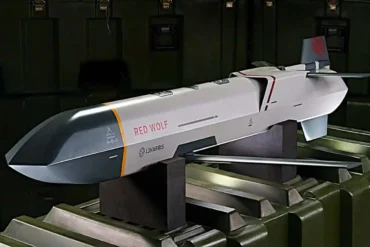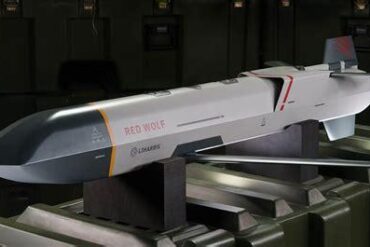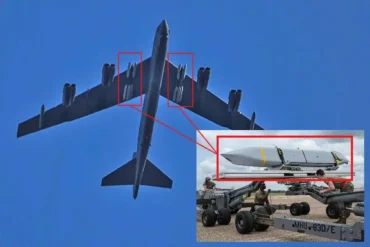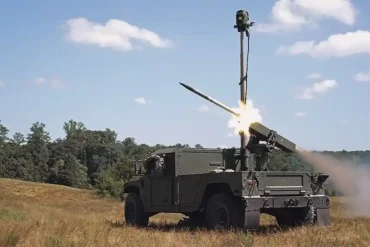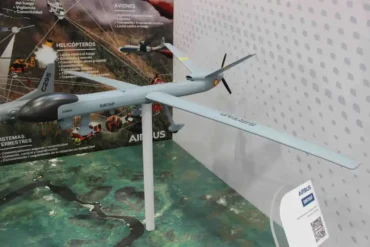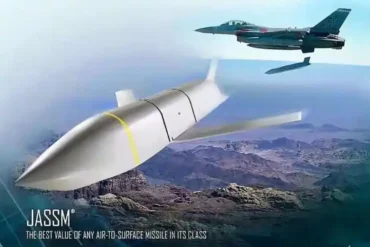
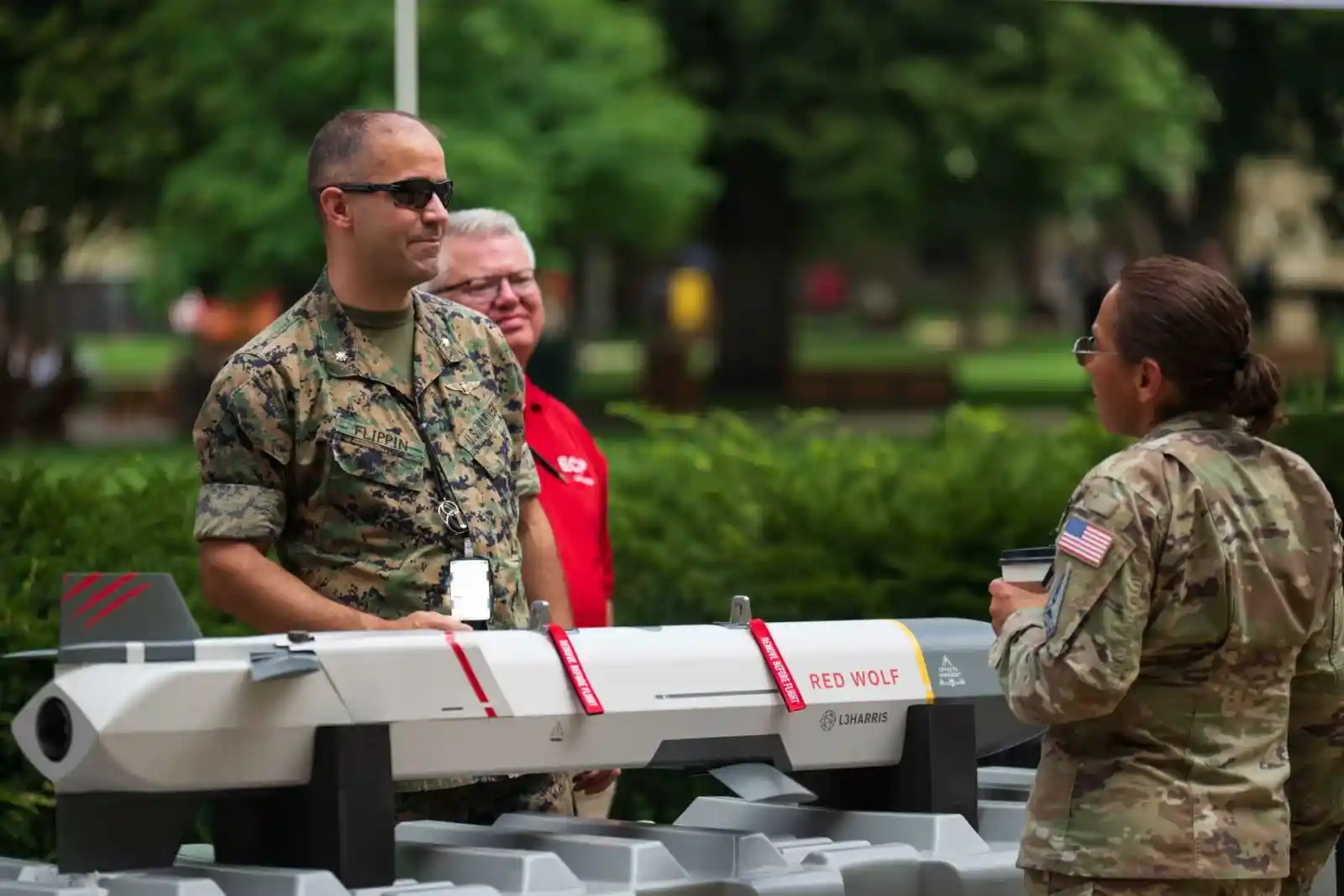
During the Rapid Prototype Display held on July 16, 2025, at the Pentagon Center Courtyard, defense giant L3Harris Technologies introduced its most ambitious unmanned combat platform to date—Red Wolf. This next-generation Air-Launched Effects (ALE) vehicle represents a significant leap in the U.S. Department of Defense’s pursuit of long-range, high-precision strike capabilities, designed for deep penetration and strategic standoff attacks.
The Strategic Purpose Behind Red Wolf
As the geopolitical landscape continues to evolve—with mounting tensions across the Indo-Pacific and Eastern European theaters—the U.S. military is prioritizing weapons systems that offer both lethality and survivability. The Red Wolf platform is the embodiment of that dual purpose. Built to penetrate contested environments and strike from extended ranges, Red Wolf can neutralize time-sensitive, high-value targets while keeping manned platforms safely beyond enemy reach.
Red Wolf addresses an urgent need within the Joint All-Domain Operations (JADO) doctrine: to project power in denied-access regions, overcome integrated air defense systems (IADS), and carry out precision engagements without risking American lives. In essence, it amplifies the U.S. Armed Forces’ ability to outpace and outmaneuver adversaries, leveraging unmanned lethality.
What Makes Red Wolf Unique in the ALE Landscape
The Red Wolf isn’t just another unmanned platform—it stands out in a crowded field of Air-Launched Effects systems. Its role goes far beyond reconnaissance or jamming. Instead, it is a kinetic solution, a guided strike weapon designed to destroy, not merely disrupt.
What defines Red Wolf’s battlefield advantage are the following elements:
- AI-Driven Sensor Fusion: Red Wolf uses cutting-edge AI algorithms to synthesize data from multiple onboard sensors, creating a unified situational picture. This allows the system to autonomously detect, identify, and engage targets with pinpoint accuracy.
- Modular Architecture: Its flexible framework allows for quick reconfiguration depending on mission requirements—whether the need is for loitering munitions, surveillance payloads, or electronic warfare modules.
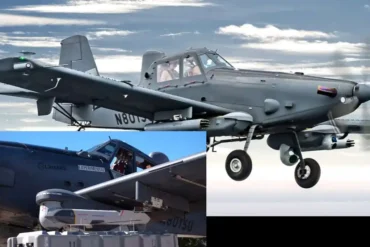
- Cross-Domain Compatibility: Uniquely, Red Wolf is the only ALE known to have been successfully deployed from the U.S. Marine Corps AH-1Z Viper attack helicopter. This milestone opens pathways for integration with a range of rotary and fixed-wing platforms.
How Red Wolf Enhances U.S. Long-Range Fires Strategy
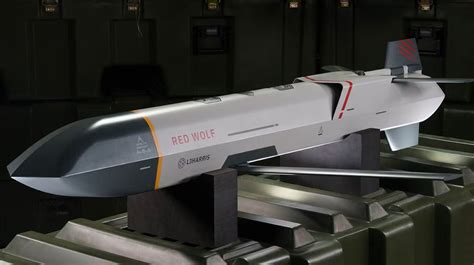
The Department of Defense has made long-range precision fires a central component of its modernization blueprint, especially in areas where anti-access/area denial (A2/AD) threats loom large. Red Wolf complements this doctrine by serving as a stand-in weapon system—able to engage targets deep in hostile territory without endangering the human operators or platforms that deploy it.
As a modular ALE with strike capability, Red Wolf expands the envelope of multi-domain operations (MDO) by extending situational awareness and strike reach well beyond the forward edge of battle. It can act in coordination with manned aircraft, ground units, or naval assets, delivering firepower from previously unreachable vantages.
Rapid Integration and Deployment: The L3Harris Edge
One of Red Wolf’s most compelling attributes is L3Harris’s rapid integration methodology. This isn’t just a weapon; it’s a plug-and-play strike solution that can be deployed from third-party launchers or integrated into existing platforms with minimal latency. L3Harris emphasizes speed, affordability, and combat readiness—and Red Wolf exemplifies all three.
According to L3Harris engineers, the Red Wolf platform was built with a standardized interface protocol, allowing it to be launched not just from L3Harris systems but from a broad array of legacy and next-gen vehicles. This flexibility significantly reduces deployment timelines and costs.
The Wolf Pack: Red Wolf’s Broader Family of Unmanned Systems
Red Wolf is part of a broader unmanned ecosystem L3Harris calls the “Wolf Pack.” This family of unmanned aerial, ground, and maritime vehicles operates on shared architecture principles, enabling seamless collaboration and mission layering. Each unit—whether airborne, sea-launched, or ground-mobile—can be tasked with surveillance, communications relay, or direct attack roles.
The Wolf Pack concept aligns with modern military emphasis on swarming tactics, distributed lethality, and unmanned autonomy. In this ecosystem, Red Wolf plays a critical role as a forward-deployed strike agent, gathering ISR data while also delivering ordnance when needed.
From Pentagon to Battlefield: Operational Readiness
The fact that Red Wolf was publicly demonstrated at the Pentagon Rapid Prototype Display event is a clear indicator of its near-term deployment potential. Such a high-profile unveiling, attended by senior Pentagon officials and uniformed commanders, underscores the urgency behind integrating systems like Red Wolf into real-world combat scenarios.
Defense analysts have noted that Red Wolf could play a significant role in deterring Chinese expansionism in the South China Sea, as well as in rapid response operations across Eastern Europe, particularly near NATO’s eastern flank. It represents a paradigm shift in how the U.S. military approaches remote, precision warfare.
The Role of AI in Targeting and Decision-Making
Unlike traditional munitions, Red Wolf is capable of real-time decision-making based on evolving battlefield conditions. Through AI-enabled fire control systems, Red Wolf can adjust its flight path, update mission parameters mid-flight, and even coordinate its actions with other unmanned or manned assets in the field.
Such autonomy reduces human cognitive burden and compresses the kill chain, allowing for quicker engagements. In the fog of war, where decisions must be made in seconds, Red Wolf can independently analyze threat matrices, prioritize targets, and execute precision strikes with minimal human input.
Challenges and Future Prospects
While the Red Wolf platform is groundbreaking, it is not without challenges. There are questions about its resilience to enemy jamming, survivability against peer-level countermeasures, and rules of engagement for autonomous lethality. However, these are hurdles inherent to all next-gen unmanned systems, and L3Harris appears committed to rigorous testing and iteration.
Furthermore, future versions of Red Wolf may include hypersonic variants, enhanced loitering capabilities, or modular payloads for directed energy weapons. These possibilities position Red Wolf not as a one-off innovation, but as a foundational system in the next phase of U.S. warfighting doctrine.
Conclusion: Red Wolf as a Force Multiplier for the U.S. Military
Red Wolf is not just another unmanned strike drone. It is a carefully crafted, AI-enhanced, long-range kinetic platform designed to meet the most critical challenges of 21st-century warfare. With the ability to be launched from a range of air, sea, and land platforms, integrated with both L3Harris and third-party systems, and capable of autonomous, precise lethality—it is nothing short of a battlefield multiplier.
In a world where speed, precision, and survivability define the outcome of conflicts, Red Wolf promises to become a core element of U.S. military superiority. As it moves from prototype to deployment, its impact will likely reshape how America projects power and deters adversaries for decades to come.