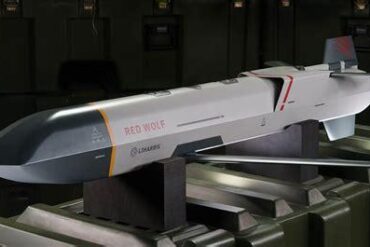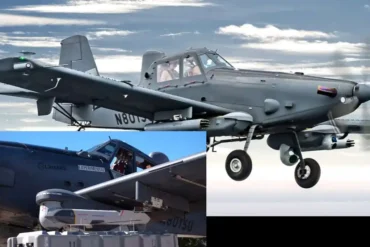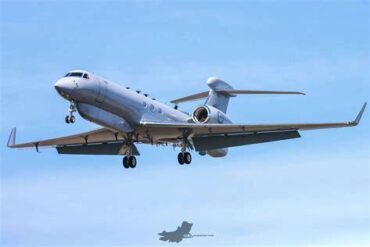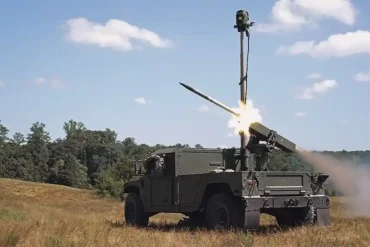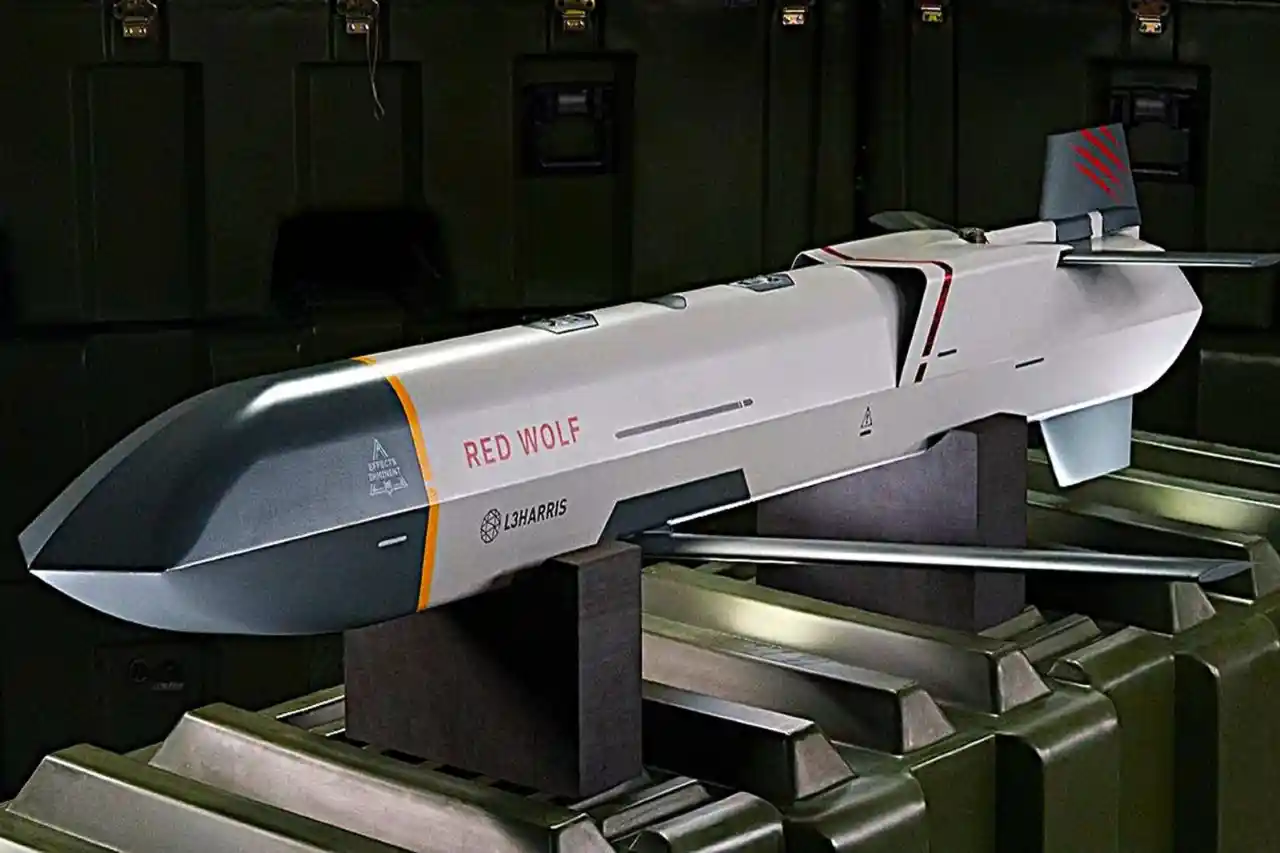
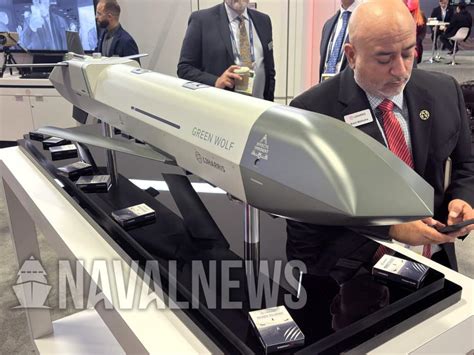
On July 17, 2025, L3Harris Technologies officially unveiled two groundbreaking launched effects vehicles—Red Wolf and Green Wolf—poised to redefine the strategic calculus of U.S. military operations in the Indo-Pacific theater. These advanced systems mark a transformative leap in cost-effective, modular precision strike and electronic warfare (EW) capabilities, aligning directly with the Department of Defense’s focus on “affordable mass” and multi-domain interoperability.
A New Era of Modular Munitions for Precision and EW Dominance
At the core of L3Harris’ development is a modular architecture engineered for cross-domain deployment—air-, land-, or sea-launched—and adaptable to rapidly evolving battlefield requirements. Both Red Wolf and Green Wolf share this foundational design, enabling seamless integration across existing platforms while maintaining a high subsonic velocity, an operational ceiling of 40,000 feet, and a standoff range of over 200 nautical miles.
The Red Wolf is designed explicitly for kinetic engagement, delivering long-range precision strikes against mobile or static targets. Its design reflects an understanding of the U.S. military’s evolving needs in high-threat environments, offering deep strike capability with flexible targeting dynamics. Meanwhile, the Green Wolf serves in the electronic warfare domain, carrying payloads for electronic attack, signals intelligence, and real-time surveillance, positioning it as both a complementary and potentially disruptive force within EW operations.
Strategic Design with Tactical Flexibility
Unlike traditional munition systems, these vehicles are not only remotely operated, but also equipped for swarming operations, mid-flight collaboration, and dynamic re-targeting. These features are not merely enhancements—they redefine what launched effects vehicles can accomplish in a contested battlespace, where Anti-Access/Area Denial (A2/AD) environments increasingly challenge American and allied freedom of maneuver.
L3Harris’ investment in interoperability and affordability is notable. With an estimated unit cost between $300,000 and $400,000, Red Wolf and Green Wolf offer significant savings over legacy systems such as the AGM-158 JASSM or ADM-160 MALD, which can cost millions per unit. This pricing model allows commanders to deploy these systems in mass, saturating enemy defense networks and forcing adversaries to commit higher-cost interceptors against lower-cost threats.
Development Driven by Combat Lessons and Industrial Agility
The conception of the Wolf Pack—as the broader family of launched effects vehicles is known—began five years ago. Rapid prototyping and close alignment with end-user feedback accelerated its evolution from concept to low-rate initial production. To date, over 40 successful test flights have validated not only the aerodynamics and propulsion, but also software-defined modular payloads and real-time communications across swarm members.
L3Harris has centralized the assembly process at a dedicated modular manufacturing facility in Ashburn, Virginia, which is now scaling to support high-volume, low-cost output. Enhanced by automated production lines and infrastructure upgrades, the facility represents a long-term investment in ensuring affordability and responsiveness. The company’s partnerships with U.S. Navy and Marine Corps aviation commands have further grounded the system’s development in real-world operational demands, with early deployment models being integrated with AH-1Z Viper and MH-60 Seahawk rotary-wing platforms.
Indo-Pacific Relevance: Countering China’s A2/AD Strategy
The unveiling of these systems is not merely a technological milestone—it’s a geopolitical signal. The Indo-Pacific region, particularly in relation to Chinese military expansion, has emerged as the critical theater where these capabilities are most urgently needed. China’s A2/AD strategy has relied heavily on overlapping layers of long-range sensors, missile systems, and electronic warfare assets designed to deter U.S. intervention in places like the South China Sea or around Taiwan.
With Red Wolf and Green Wolf, the U.S. now has scalable munitions that can be dispersed across distributed launch platforms—from surface vessels to rotary aircraft and palletized munitions systems. These weapons are designed to overwhelm enemy defenses, either by sheer volume or by electronic disruption, thus creating windows of opportunity for manned platforms or more strategic strikes to exploit.
Green Wolf: A Flexible EW Platform for the Modern Battlespace
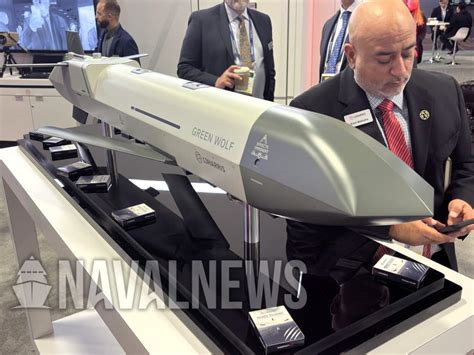
While Red Wolf promises firepower, the Green Wolf may be the true revolution in modern combat. Its ability to adapt EW payloads for jamming, signal interception, or decoy roles provides a highly versatile and rapidly deployable countermeasure against increasingly sophisticated enemy sensors.
This system is not just a replacement for MALD-J or similar platforms—it’s a next-generation node in the broader information warfare architecture. With onboard AI processing, Green Wolf units can coordinate EW effects in real-time, react to enemy emissions, and even provide targeting data back to fleet command centers. Its modular nature allows for custom payload configurations based on mission type, enabling flexible deployment scenarios without the need for costly reengineering.
Red Wolf: Precision Targeting Without the Premium Cost
Whereas Green Wolf dominates in the electronic spectrum, Red Wolf delivers lethal kinetic precision at a fraction of the traditional cost. Utilizing advanced targeting algorithms, GPS-denied navigation, and inertial guidance systems, it is designed to hit mobile or time-sensitive targets in denied airspace. Red Wolf’s cost-efficiency also enables tactical commanders to launch coordinated strikes without the operational hesitation that typically accompanies the use of multimillion-dollar missiles.
More importantly, Red Wolf introduces real-time retargeting, allowing the missile to be redirected mid-flight based on sensor input from UAVs, satellites, or swarm members. This capability provides commanders with unprecedented tactical agility, particularly vital in naval combat environments or amphibious operations, where enemy positions and priorities can shift rapidly.
A Foundation for Manned-Unmanned Teaming and Swarm Warfare
One of the most visionary aspects of the Wolf Pack is its integration into future manned-unmanned teaming (MUM-T) doctrines. These doctrines, which envision piloted aircraft controlling or collaborating with autonomous systems, are likely to define the next two decades of aerial warfare.
The ability of Red and Green Wolf systems to communicate, adapt roles, and swarm autonomously makes them ideal force multipliers for these operations. For example, a single Seahawk or Viper could launch a pod of Red Wolves and Green Wolves to perform synchronized attacks, suppress enemy radar, and relay battlefield intelligence, all while the human pilot focuses on command and situational awareness.
This introduces a new kind of battlefield equation—one where low-cost autonomous systems bear the brunt of risk, enabling higher-value assets to survive longer and operate more effectively. In a region as vast and contested as the Indo-Pacific, such an approach could prove decisive.
Modular Affordability, Strategic Impact
Beyond their capabilities, the real story of Red Wolf and Green Wolf lies in their affordability and adaptability. These systems are not luxury additions to America’s arsenal—they are scalable, mission-tailored weapons built for volume deployment in a resource-constrained environment. Their cost-benefit ratio ensures they can be used in both day-to-day deterrence and high-end conflict, reducing reliance on exquisite, high-cost platforms while maintaining operational effectiveness.
In a world where peer adversaries are adapting quickly and where emerging technologies threaten to upend traditional advantages, the Wolf Pack represents a deliberate shift in U.S. military posture. It’s not about one silver bullet—it’s about building resilience through numbers, interoperability, and technological agility.
Looking Ahead: A Blueprint for Future Warfare
With production ramping up and initial integrations underway, the Red and Green Wolf systems are poised to become core components of U.S. Indo-Pacific strategy. More than just tools of war, they embody a doctrine of proactive deterrence, distributed lethality, and networked operations.
L3Harris has not only built missiles; it has built a platform for continuous innovation. The modular payload system allows for future upgrades, whether in AI targeting, new EW techniques, or next-gen propulsion systems. This flexibility ensures that Red and Green Wolf will remain relevant well into the 2030s, adapting as threats and technologies evolve.
As the geopolitical landscape intensifies and conflicts shift toward electronic, cognitive, and autonomous domains, systems like the Wolf Pack are no longer optional—they are essential to maintaining operational superiority.
The future of precision and electronic warfare has arrived, and it flies under the banners of Red and Green Wolf.