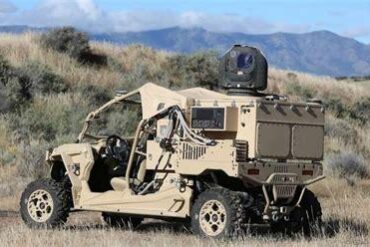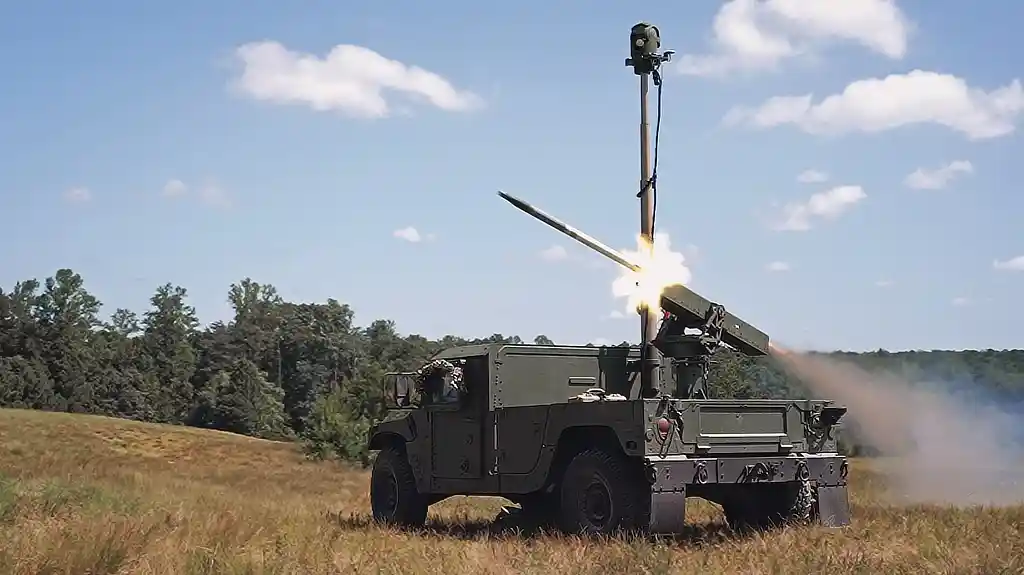
L3Harris Technologies has officially unveiled its multi-platform VAMPIRE (Vehicle-Agnostic Modular Palletized ISR Rocket Equipment) anti-UAV system, marking a new phase in modern counter-drone warfare. Originally conceived as a rapid-response weapon to address Ukraine’s urgent air defense needs, VAMPIRE has evolved from a simple vehicle-mounted rocket launcher into a sophisticated, modular, and AI-enhanced defense ecosystem capable of operating across land, sea, and air.
This latest development roadmap, released by L3Harris, outlines a future where the VAMPIRE family moves far beyond its original Hummer-mounted laser-guided 70mm rocket configuration. The company’s engineers envision a networked, multi-domain defense suite integrating advanced electro-optical sensors, artificial intelligence (AI), and electronic warfare (EW) capabilities—designed to hunt, track, and neutralize everything from small FPV drones to larger, fast-flying UAVs and cruise missiles.
Evolution from Ukraine’s Battlefield to Global Defense Platforms
The VAMPIRE system entered combat service in Ukraine in 2023, just eight months after its concept approval. Its rapid deployment highlighted both L3Harris’ engineering agility and the urgent need for cost-effective anti-drone systems capable of defending against swarming threats like the Shahed-series loitering munitions.
According to Jon Rambeau, President of L3Harris Integrated Mission Systems, “VAMPIRE users have successfully shot down hundreds of enemy drones,” demonstrating the platform’s effectiveness and cost efficiency. Each engagement using laser-guided 70mm APKWS II rockets costs a fraction of traditional surface-to-air missile intercepts—making it ideal for sustained defense in high-drone-density environments.
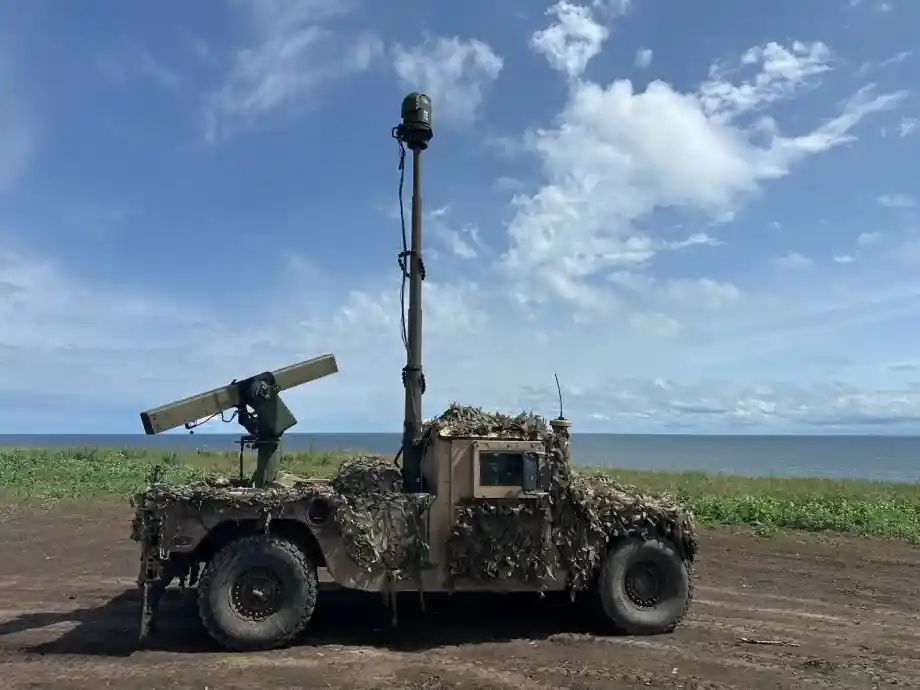
In Ukraine, fourteen VAMPIRE systems mounted on Humvees have been confirmed operational. These vehicles are valued for their off-road capability, speed, and compatibility with the lightweight modular launcher. However, as combat data accumulated, it became evident that the same weapon system could be repurposed across vastly different environments, sparking L3Harris’ ambition to create a “family of systems” capable of defending across domains.
Modular Architecture and Platform Agility
The VAMPIRE system’s vehicle-agnostic design is central to its success. The weapon suite can be mounted on nearly any flatbed or cargo vehicle with sufficient payload capacity, offering armed forces unmatched flexibility.
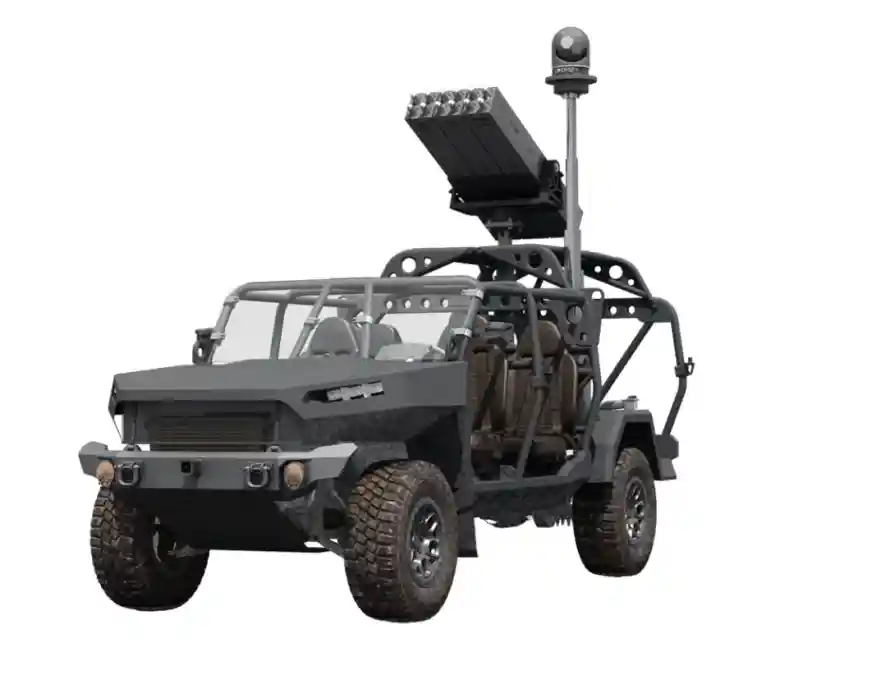
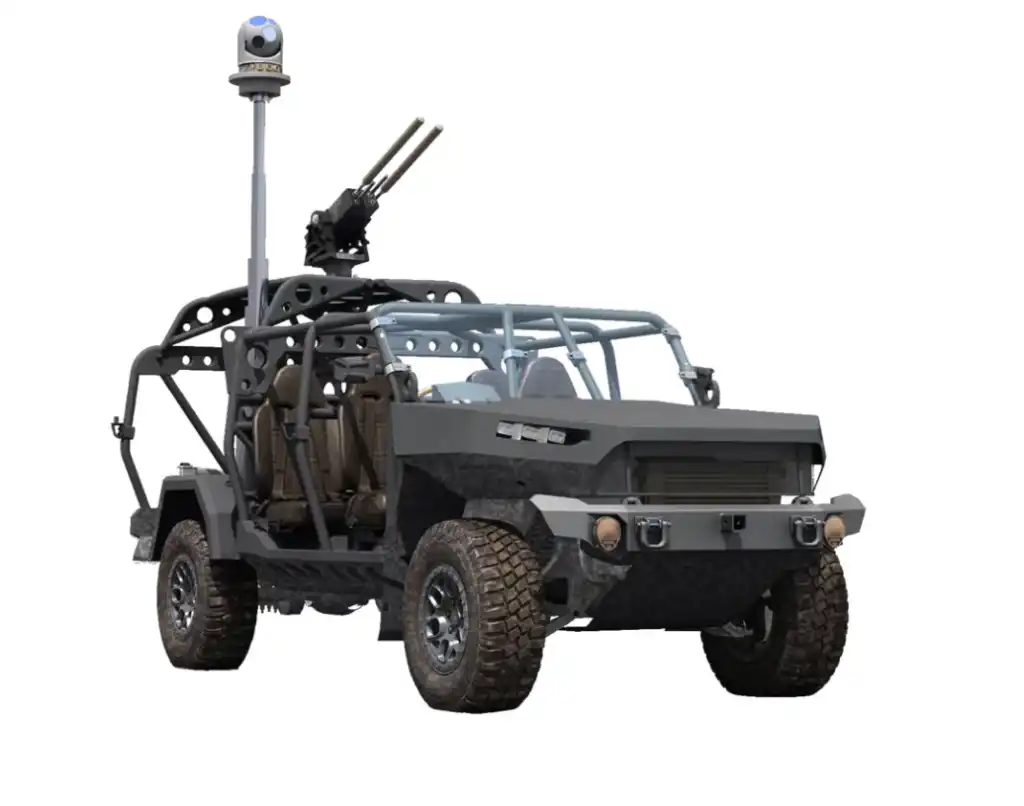
Concept art released by L3Harris shows VAMPIRE systems installed on M1301 Infantry Squad Vehicles (ISVs), Joint Light Tactical Vehicles (JLTVs), and even the Small Multi-Purpose Equipment Transport (SMET)—an unmanned ground vehicle used by the U.S. Army. This adaptability enables operators to deploy anti-drone firepower virtually anywhere.
A particularly notable configuration is the VAMPIRE Stalker XR, a high-capacity variant mounted on the ISV platform. Unlike the standard four-rocket launcher, the Stalker XR carries 12 effectors, dramatically enhancing firepower and persistence during swarm engagements.
Containerized and Fixed-Site Variants: Expanding Beyond Vehicles
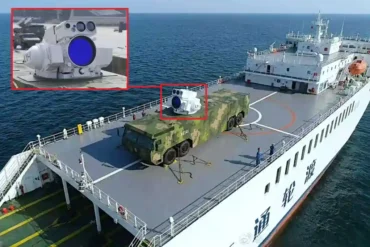
Beyond mobile platforms, L3Harris has also introduced containerized and stationary versions of VAMPIRE. The VAMPIRE CASKET (Containerized Kinetic Effector Drone Defense System) encapsulates the entire defense suite into a self-contained module deployable on trailers, flatbeds, or even maritime platforms.
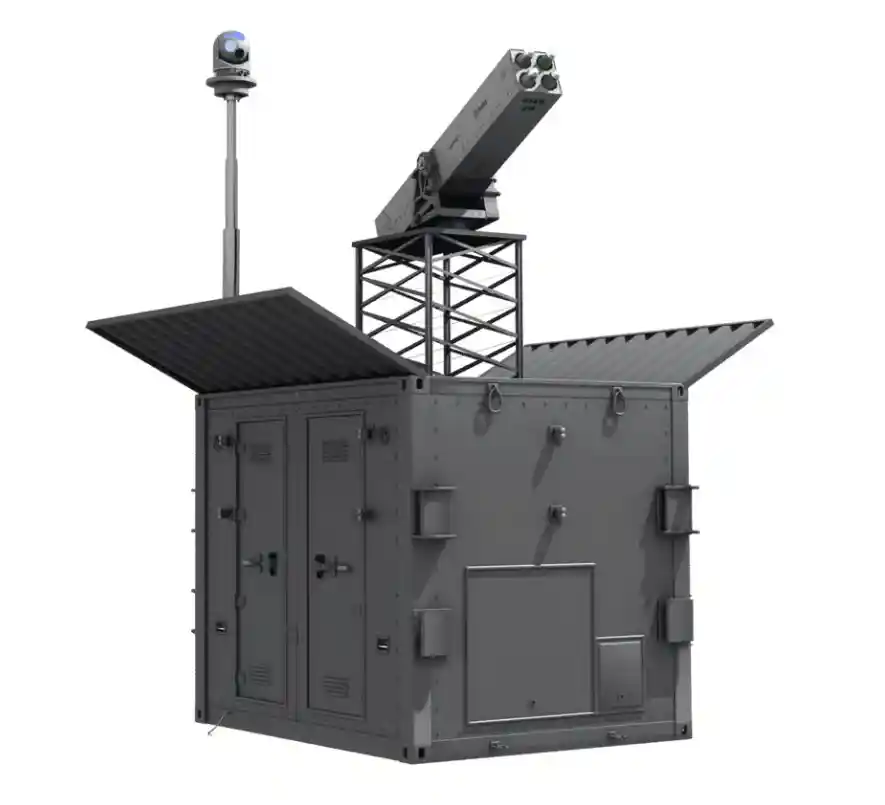
This design allows rapid field deployment and simplifies logistics—ideal for critical infrastructure protection, temporary base defense, or coastal installations. Interestingly, the U.S. Army has already conducted field tests on a similar containerized anti-drone concept, closely resembling the CASKET layout, suggesting potential procurement interest.
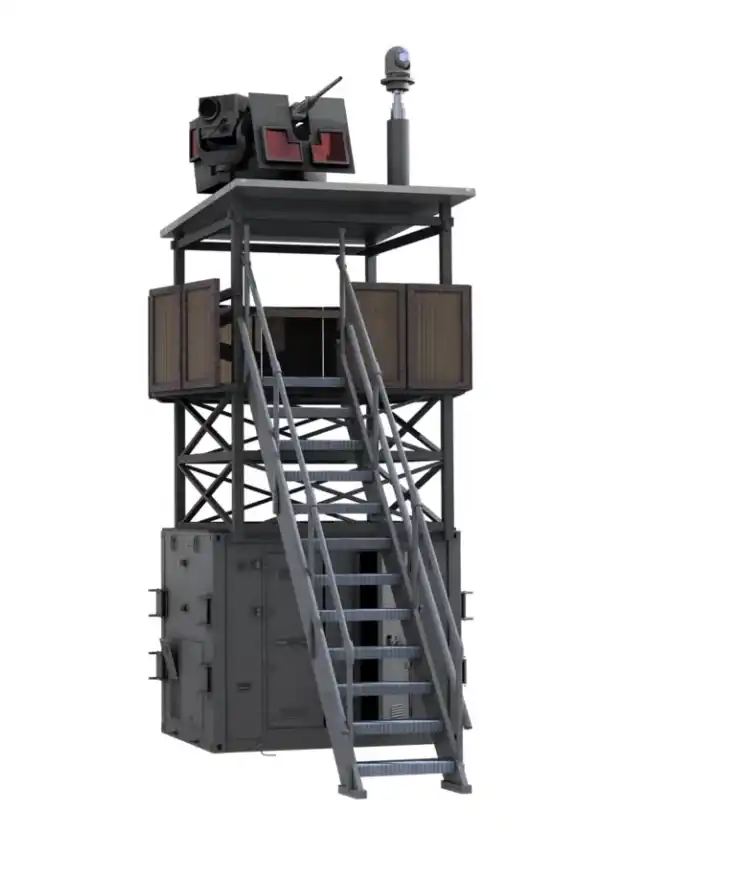
Complementing this system is the VAMPIRE BAT (Basic Anti-Drone Turret)—a static installation optimized for point defense. Unlike the rocket-equipped variants, the BAT relies on automatic cannons and non-kinetic effectors, such as high-power microwave (HPM) systems. In partnership with Epirus, L3Harris is integrating HPM technology capable of disrupting or destroying drone electronics with bursts of electromagnetic energy.
Maritime Variant: The Black Wake USV Integration
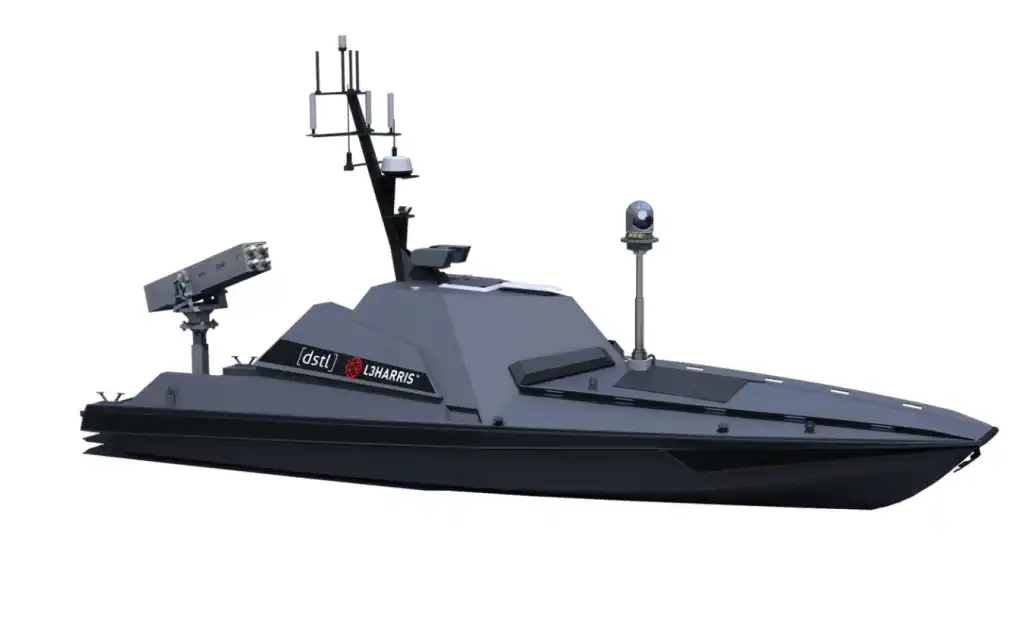
Taking the modularity principle to the seas, L3Harris unveiled the VAMPIRE Black Wake, an autonomous maritime variant mounted on an unmanned surface vessel (USV). The testbed for this system is the Maritime Autonomy Surface Testbed (MAST) 13, a 41-foot high-speed craft featuring the company’s proprietary ASView autonomous control system.
In this configuration, the rocket launcher is positioned at the stern, while a telescopic mast-mounted sensor tower sits at the bow, granting 360-degree surveillance capability. Functionally, the Black Wake mirrors Ukraine’s rocket-armed drone boats, but incorporates advanced AI-assisted targeting and remote command integration.
This innovation opens the door for naval forces to conduct autonomous counter-drone patrols without endangering crew, crucial in littoral zones or harbor defense operations where low-flying UAVs threaten surface ships.
Airborne Variant: The Dead Wing Concept
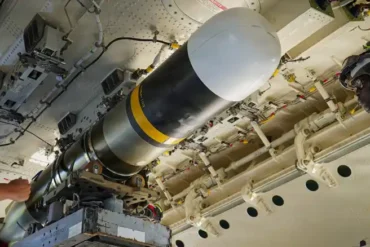
In the air domain, L3Harris’ VAMPIRE Dead Wing system extends anti-UAV capability to rotary platforms such as the AH-64 Apache attack helicopter. Leveraging existing APKWS II rockets, this airborne adaptation transforms the Apache into a mobile aerial counter-drone asset, ideal for both escort and defensive missions.
While previous APKWS II air-launched applications were mostly limited to fighter jets, integrating the system onto attack helicopters provides greater operational endurance and responsiveness. Unlike the ground-based models, Dead Wing variants can also intercept UAVs at higher altitudes or defend convoys from airborne threats in real time.
Interestingly, the Dead Wing system does not rely on the Wescam MX-series sensors, though it can be upgraded with these advanced electro-optical turrets to improve detection and tracking precision. This aligns with a broader global trend—mirroring Israel’s long-standing use of Apache helicopters in anti-UAV operations, where they deploy AGM-114 Hellfire missiles and 30mm cannons for layered air defense.

Integrating AI, Sensors, and New Effectors
A cornerstone of the VAMPIRE modernization roadmap lies in its integration of AI and next-generation sensors. The system now incorporates Wescam MX-series electro-optical/infrared (EO/IR) designators, capable of automatic target detection, laser designation, and tracking—even in cluttered airspace.
The inclusion of AI-driven command-and-control software allows the system to autonomously classify aerial objects, calculate engagement probabilities, and coordinate with other defense systems for networked response. This machine learning capability is vital for countering small FPV drones, which often evade radar detection due to their size and flight profiles.
Furthermore, L3Harris is moving beyond kinetic weaponry. The VAMPIRE Killcode variant removes all physical effectors, relying purely on electronic warfare systems to jam or hijack drones mid-flight. Such flexibility gives operators the ability to scale response intensity—ranging from soft-kill disruption to hard-kill destruction—depending on mission requirements.
Alternative Effectors and Ammunition Flexibility
While the original VAMPIRE platform relied on the Boeing/BAE Systems APKWS II laser-guided rocket, L3Harris has now expanded compatibility to other precision munitions. The Thales 70mm laser-guided rocket has already been integrated and tested, offering unique airburst warheads that release thousands of steel pellets to increase hit probability against fast or agile UAVs.
Each APKWS II round costs around $20,000–$30,000, providing an exceptional cost-per-kill advantage over traditional air defense missiles that can cost hundreds of thousands of dollars per shot. This economic efficiency, combined with modular ammunition compatibility, positions VAMPIRE as a scalable solution for both major and emerging defense forces.
L3Harris has also hinted at future integration with alternative kinetic effectors, potentially enabling interoperability with existing military stockpiles—further enhancing operational flexibility and reducing dependency on proprietary ammunition systems.
Combat Proven Performance and Operational Feedback
Field data from Ukraine has validated the VAMPIRE system’s performance under real combat conditions. The system has been credited with hundreds of drone kills, primarily targeting Shahed-series kamikaze drones and smaller reconnaissance UAVs. Reports suggest that Ukrainian operators have even employed VAMPIRE units against cruise missiles and ground targets, demonstrating impressive adaptability.
This combat record has not only proven the system’s tactical reliability but also provided valuable telemetry data for AI model refinement and sensor fusion optimization. According to defense analysts, the lessons learned from Ukraine’s battlefield will directly shape the production versions destined for NATO and U.S. use.
Production and Global Expansion Potential
Recognizing growing international interest, L3Harris has significantly expanded its VAMPIRE production capacity, with the ability to manufacture 20 to 40 units per month. Given the modular architecture, this allows rapid scaling of different configurations depending on end-user demand—whether for land vehicles, maritime patrols, or containerized base defense.
The company has also hinted at upcoming contracts with U.S. and allied defense forces focused on protecting forward-operating bases, coastal assets, and logistics convoys from UAV threats.
With its modularity, affordability, and rapid deployability, the VAMPIRE family could soon become the standardized anti-drone toolkit for NATO-aligned nations seeking versatile counter-UAV capabilities without the logistical burden of traditional missile defense systems.
Future Outlook: AI Warfare and the Drone Arms Race
The expanded VAMPIRE ecosystem underscores a pivotal shift in modern warfare’s technological paradigm—one defined by automation, adaptability, and affordability. By integrating AI-based targeting, electronic warfare, and directed energy weapons, L3Harris is positioning the VAMPIRE as both a drone killer and a digital warfare node.
As nations race to counter ever-evolving UAV threats, systems like VAMPIRE represent the new frontier of scalable air defense, offering a multi-layered, platform-agnostic solution for future conflicts. Whether mounted on a truck, ship, or helicopter, its essence remains the same: a versatile, intelligent shield against the drone revolution.