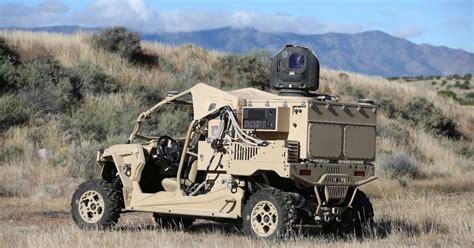
In an era where unmanned aerial vehicles (UAVs) are reshaping both commercial and military landscapes, the rise of rogue and hostile drone operations has compelled nations to rethink their defense infrastructure. The development and deployment of anti-drone laser systems marks a pivotal advancement in counter-drone warfare, offering unparalleled accuracy, efficiency, and adaptability. These systems use concentrated beams of light to disable, disrupt, or destroy UAVs by targeting key structural or electronic components with pinpoint accuracy.
The concept of directed energy weapons is not new, but their application in neutralizing small, agile aerial targets is revolutionizing counter-UAV strategies. Unlike kinetic weapons or electronic jamming systems, lasers can engage targets silently, precisely, and at the speed of light, minimizing collateral damage and operational disruption.
The strategic value of anti-drone lasers extends far beyond battlefield scenarios. From critical infrastructure protection to airport security and border surveillance, these systems are now central to modern airspace defense strategies.
High-Energy Precision: How Anti-Drone Lasers Work
At the core of anti-drone laser technology lies a high-power laser beam that delivers intense energy to a target. This energy rapidly heats the surface of the drone, causing physical damage, ignition, or critical system failure. Unlike traditional firearms or missiles, there are no moving projectiles or explosive warheads involved, which significantly reduces operational costs and logistic complexity.
Key mechanisms include:
- Optical Tracking: Advanced sensors and AI-based algorithms are used to track UAVs in real-time.
- Beam Steering Systems: These mechanisms adjust the laser’s direction with extreme precision, compensating for drone movement.
- Thermal Destruction: The laser concentrates energy on a single point until the drone’s critical systems or airframe are compromised.
The Silent Hunter, developed in China, exemplifies this principle. With a 4 km effective range and the ability to ablate steel plates at distance, this fiber optic laser system is tailored for high-value target defense and urban security applications.
Modular Deployment: Versatile Platforms for Varied Missions
Anti-drone lasers have evolved into highly modular and scalable systems that can be deployed across a variety of platforms:
- Ground-Based Stations: Ideal for static defense of infrastructure and military bases.
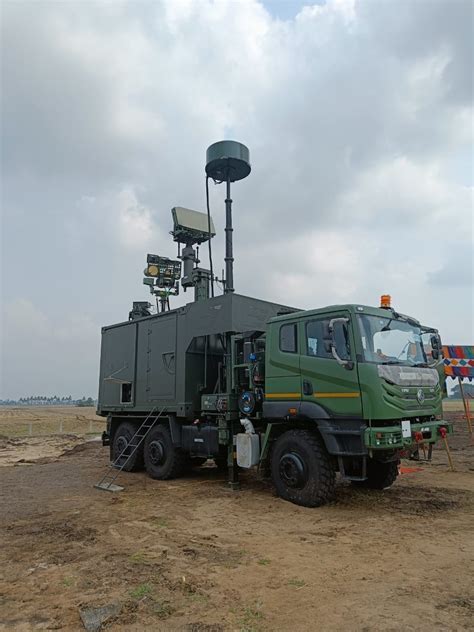
- Vehicle-Mounted Systems: For mobile operations in conflict zones or on patrol.
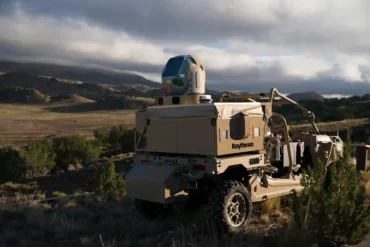
- Palletized Units: Such as Raytheon’s H4, which allow quick deployment via aircraft or land transport.
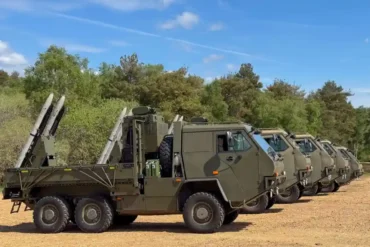
One of the most notable U.S. contributions is the C-UAS Stryker, an advanced hybrid system that integrates laser-directed energy weapons with conventional arms. Deployed by the U.S. Army, it enables dynamic defense against drone swarms in varied terrain.
In South Korea, the Block-I Laser-Based Anti-Aircraft Weapon is built for neutralizing drones within 2-3 km. Its integration into local defense protocols underscores the growing importance of laser systems in the Asia-Pacific region, where UAV threats are intensifying.
Cost-Effectiveness Meets Cutting-Edge Efficiency
While anti-drone laser systems may require substantial initial investment—often running into millions of dollars—their operational costs are astonishingly low. In some cases, the cost per shot can be as little as $1.50, a fraction of the cost of interceptor missiles or kinetic munitions.
This affordability is amplified by:
- Unlimited “Ammo”: As long as there’s power, the system can fire repeatedly.
- No Supply Chain Dependence: No need for reloading or replenishing physical munitions.
- Low Maintenance: Fewer moving parts and wear mechanisms reduce lifecycle costs.
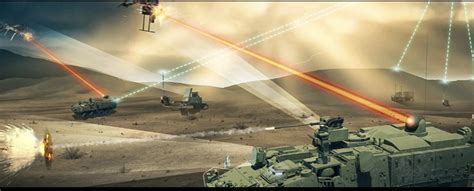
The U.S. Navy, actively researching directed energy applications, notes that AI integration is critical to overcoming current limitations, such as sustained beam targeting required to inflict damage. AI helps anticipate drone maneuvers and optimizes laser alignment, drastically improving engagement success rates.
Challenges and Technological Constraints
Despite the promise, anti-drone lasers face notable challenges. Chief among them is the need for sustained laser exposure to damage a target—a requirement that can be compromised by:
- Weather Conditions: Fog, rain, or dust can scatter the beam and reduce effectiveness.
- Drone Speed and Agility: Smaller drones may evade targeting systems if not managed by advanced AI.
- Power Requirements: Generating high-energy beams necessitates significant power, often limiting mobile applications.
Laser systems also must be carefully integrated with detection and classification radars, as effective engagement begins with identifying the threat correctly. Misclassification can waste valuable seconds or, worse, result in an unsuccessful engagement.
Leading Systems Defining the Market
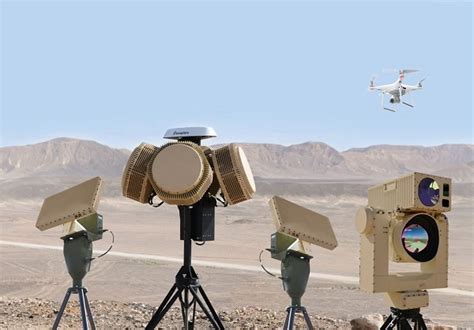
The current defense landscape features several prominent laser systems, each offering unique tactical benefits:
- Silent Hunter (China): Stationary fiber laser with urban combat focus.
- C-UAS Stryker (USA): Versatile, hybrid system for field deployment.
- H4 (Raytheon): Palletized system for rapid airbase defense.
- LOCUST (BlueHalo): Modular solution with high-precision optics.
- Block-I (South Korea): Focused on rapid drone neutralization within mid-range distances.
- Laser Shield Anti-Drone System (LSAD): A promising joint development from Laser Photonics and Fonon Technologies, designed for both military and civilian markets.
Global Arms Race in Directed Energy
As global drone proliferation increases—driven by both military and commercial interest—so does the urgency of developing responsive countermeasures. Nations are investing heavily in laser defense technology to establish deterrence, particularly in contested zones like the South China Sea, Eastern Europe, and the Middle East.
Research institutions and private sector companies are also contributing to a rapidly expanding ecosystem, bringing innovation in:
- Thermal Management: Ensuring lasers can fire continuously without overheating.
- Beam Control Software: Using predictive modeling to optimize target tracking.
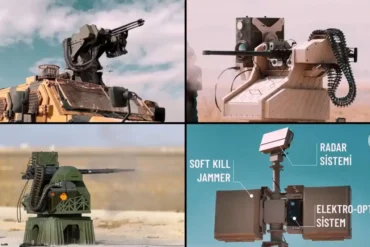
- AI Fusion: Merging radar, EO/IR sensors, and laser control under unified AI platforms.
The arms race for anti-drone supremacy is no longer theoretical—it is active, intense, and fundamentally reshaping future warfare and security doctrines.
The Future of Anti-Drone Laser Defense
Looking ahead, the next evolution of anti-drone lasers will likely include:
- Swarm Neutralization: Systems designed to tackle multiple drones simultaneously.
- Portable Field Units: Lightweight, man-portable lasers for special forces and border units.
- Civilian Integration: Protecting airports, stadiums, and public events from drone incursions.
The convergence of AI, machine learning, and energy storage technology will further shrink system footprints while increasing operational efficiency. As this happens, laser defense will become not only more accessible but also far more versatile.
In conclusion, anti-drone laser systems represent a transformative leap in airspace defense, delivering unmatched precision, rapid response capabilities, and scalable cost-effectiveness. As drone threats evolve, so too must our defenses—laser systems provide a powerful answer to this modern challenge.