The United Kingdom has moved decisively to strengthen Ukraine’s short-range air defense network by delivering Raven and Gravehawk systems, signaling a shift toward highly mobile, low-cost interceptors designed for the realities of modern high-intensity warfare. As Russia continues to rely heavily on drones, cruise missiles, and mixed strike packages to pressure Ukrainian forces and civilian infrastructure, London’s latest contribution reflects hard-earned battlefield lessons rather than theoretical doctrine.
According to disclosures made to the UK Parliament in early January 2026, 13 Raven short-range air defense systems and two prototype Gravehawk launchers have already been delivered to Ukraine, with additional Gravehawk units expected imminently under a separate 15-system contract. British officials have been explicit about their intended roles: Raven is meant to travel with maneuver units at the front, while Gravehawk is optimized to defend fixed and semi-fixed critical infrastructure against sustained aerial attack.
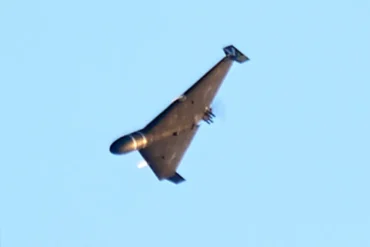
This package arrives at a moment when Ukraine’s air defense challenge is no longer defined solely by intercepting high-end ballistic or cruise missiles, but by enduring relentless, attritional drone warfare. Russian forces have refined the use of Shahed-type loitering munitions, decoy UAVs, and low-flying cruise missiles to exhaust Ukrainian interceptors, reveal radar positions, and open gaps for follow-on strikes. The UK’s answer, embodied in Raven and Gravehawk, is density, mobility, and adaptability rather than a small number of exquisite systems.
Raven Air Defense System Brings Jet-Borne Missiles to the Front Line
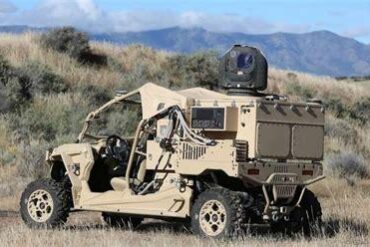
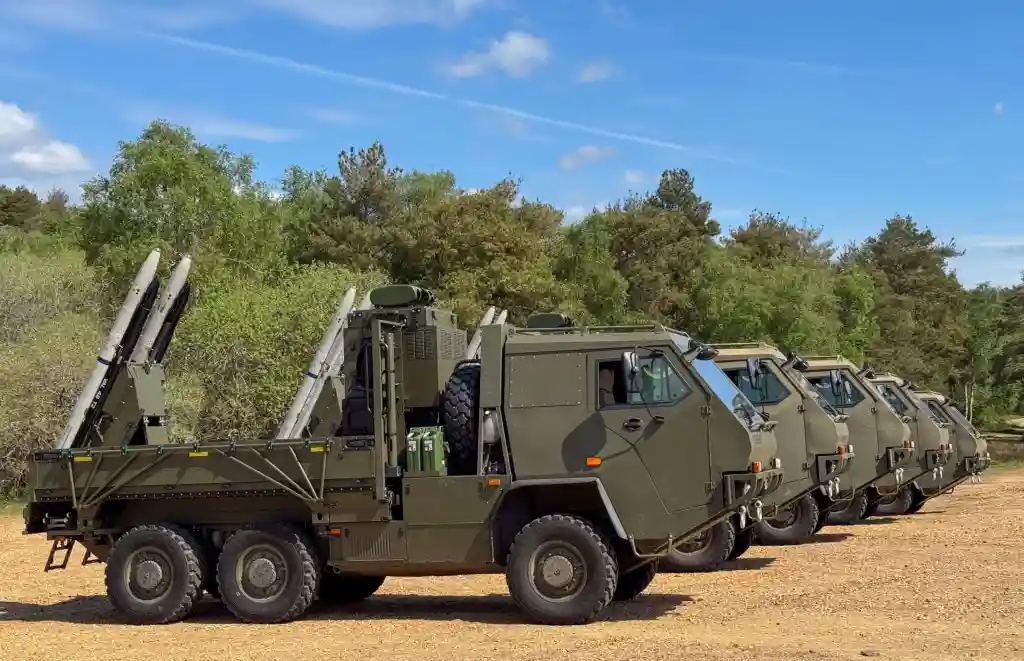
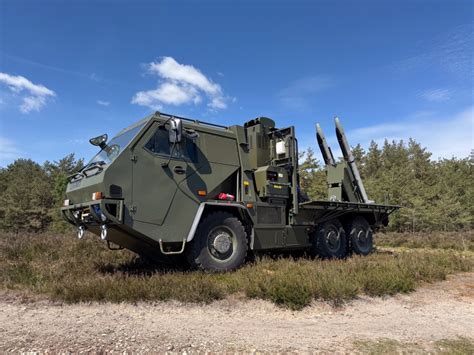
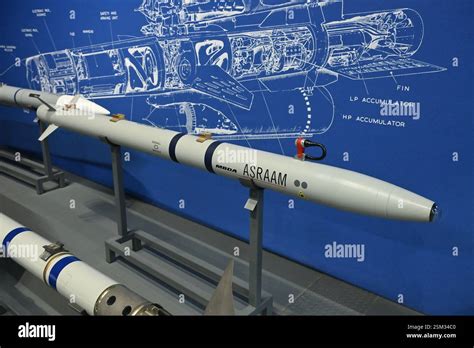
At the heart of the Raven system is the AIM-132 ASRAAM, a high-agility imaging infrared air-to-air missile originally designed for fast jet combat. Rather than reinventing the interceptor, UK engineers adapted what already existed, mounting two ASRAAM missiles on aircraft-derived launch rails fixed to a Supacat HMT 600 6×6 high-mobility truck. The result is a compact, fast-deploying SHORAD platform capable of engaging drones, helicopters, and low-flying aircraft with minimal setup time.
Raven’s sensor suite is deliberately simple and resilient. A mast-mounted electro-optical and infrared (EO/IR) package provides passive search and tracking, allowing crews to detect and engage targets without emitting radar energy. In Ukraine’s dense electronic warfare environment, this matters enormously. Radar emissions can be triangulated, jammed, or attacked by loitering munitions, while an infrared-based kill chain keeps Raven comparatively stealthy and survivable.
In its ground-launched role, ASRAAM’s engagement envelope is generally described as extending out to approximately 15 kilometers, a reduction from its air-launched performance but more than sufficient for point defense and maneuver protection. What Raven sacrifices in raw range, it regains in responsiveness. Crews can relocate rapidly, fire, and displace before Russian countermeasures arrive, embodying the “shoot-and-scoot” philosophy that has become essential on the Ukrainian battlefield.
Why Raven Fits Ukraine’s Tactical Reality
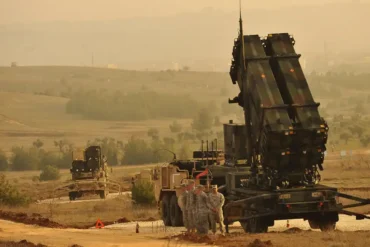
Raven is not intended to replace medium- or long-range air defense systems such as NASAMS, IRIS-T SLM, or Patriot. Instead, it fills the dangerous gaps that appear at brigade and battalion level, where drones scout for artillery targets, guide loitering munitions, or directly attack logistics vehicles and troop concentrations. Russian helicopters and strike aircraft operating at low altitude have also exploited these gaps when opportunities arise.
An infrared-guided interceptor like ASRAAM is not without limitations. Performance depends on weather conditions, background clutter, and the thermal signature of the target. Saturation attacks can force rapid reloads, stressing crews and logistics. Yet open-source reporting credits Raven with hundreds of combat engagements and success rates exceeding 70 percent, suggesting Ukrainian operators have developed effective tactics, disciplined firing criteria, and robust coordination with other air defense layers.
Crucially, Raven demonstrates how speed of fielding can outweigh doctrinal purity. The system was assembled and delivered in months, not years, using existing missiles, proven vehicles, and simplified interfaces. In a war where threats evolve faster than procurement cycles, that agility is a strategic advantage.
Gravehawk Turns Existing Missiles into Infrastructure Shields
If Raven is the fast-moving frontline guardian, Gravehawk represents a different philosophy: protecting high-value sites with affordable, locally sustainable interceptors. Gravehawk is built into a standard ISO shipping container, a choice that allows it to be concealed, transported easily, and integrated into existing infrastructure. A roll-back roof exposes a twin-rail launcher when the system is activated, while the container itself blends into industrial or logistics environments.
The launcher rails are adapted from Soviet-era fighter aircraft, enabling Gravehawk to fire Ukraine’s existing stocks of Vympel R-73 air-to-air missiles. This decision is both pragmatic and strategic. Ukraine already understands how to store, maintain, and handle the R-73, reducing training and logistical friction. Every R-73 launched from Gravehawk is also one less expensive Western interceptor consumed against relatively low-cost targets.
Target acquisition and engagement rely on a passive infrared camera paired with a compact remote command module. Like Raven, Gravehawk minimizes electromagnetic emissions, enhancing survivability against Russian electronic intelligence and suppression efforts. The trade-off is a lack of organic wide-area radar cueing, making Gravehawk most effective when integrated into a broader sensor network or used to defend known approach corridors.
The R-73 Missile in a New Role
The R-73 is a familiar weapon across Eastern Europe and beyond, having entered service in the 1980s and been widely exported for use on MiG and Sukhoi fighters. In its traditional air-to-air role, it is known for high off-boresight capability, strong maneuverability, and a top speed of around Mach 2.5. Its nominal air-to-air range of roughly 20 miles does not directly translate to surface launch, but remains sufficient for intercepting drones and cruise missiles within line-of-sight constraints.
Ukraine has repeatedly demonstrated ingenuity in repurposing the R-73 for ground-based air defense, and Gravehawk represents an effort to standardize and industrialize those wartime adaptations. Rather than ad hoc launchers, Gravehawk provides a repeatable, maintainable solution that can be produced and deployed at scale.
From a cost-exchange perspective, this matters enormously. Shooting down a relatively cheap drone with an expensive interceptor is strategically unsustainable over time. Gravehawk improves the economics of air defense by matching missile cost and capability more closely to the threat.
Layered Defense Against Russia’s Drone-Centric Strategy
Russia’s air campaign against Ukraine has evolved into a layered system of its own, combining reconnaissance drones, decoys, loitering munitions, cruise missiles, and occasional ballistic strikes. The objective is not always immediate destruction, but exhaustion: forcing Ukraine to expend interceptors, reveal positions, and strain air defense crews night after night.
Raven and Gravehawk fit neatly into a layered Ukrainian defense architecture. Long-range systems address ballistic and high-end cruise missile threats. Medium-range systems provide area coverage. Raven protects maneuver forces and mobile assets, while Gravehawk guards power plants, substations, airfields, and command centers. Density and overlap reduce the chance that a single failure or depletion creates a catastrophic gap.
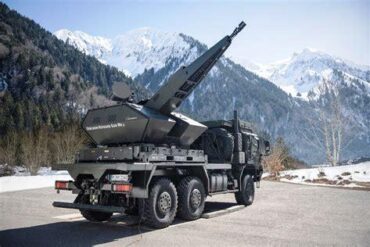
The UK’s December 2025 air defense package explicitly tied these systems to winter defense needs, when Russian strikes on energy infrastructure are most damaging. It also aligned with plans to deliver remotely guided counter-drone turrets acquired from Estonia, further thickening Ukraine’s short-range defensive layer. The emphasis is clear: resilience through numbers, mobility, and integration.
A Signal to NATO and the United States
Neither Raven nor Gravehawk is presented as a standard, peacetime British Army system. They are bespoke wartime solutions, built for speed and relevance rather than long-term doctrinal elegance. Yet their significance extends beyond Ukraine. The United States and NATO allies are watching closely, as many face the same drone and missile challenges revealed so starkly in Ukraine.
The lesson is uncomfortable but unavoidable. Traditional air defense, optimized for a limited number of high-value threats, struggles against massed, low-cost aerial systems. Adaptation requires accepting imperfection, reusing existing weapons creatively, and prioritizing deployment timelines over ideal specifications. Raven and Gravehawk embody that mindset.
ASRAAM’s combat pedigree, including its use by the RAF to shoot down a hostile drone over Syria in 2021, underscores the value of proven missiles in new roles. The R-73’s longevity and adaptability tell a similar story. These are not experimental technologies; they are recontextualized tools applied to a new problem.
Pragmatism as a Strategic Advantage
The delivery of Raven and Gravehawk reinforces a broader truth about the Russia–Ukraine war: adaptability wins time, and time saves infrastructure, forces, and lives. By focusing on mobile, infrared-guided, and economically sustainable air defense, the UK has contributed systems that align closely with Ukraine’s operational needs rather than imposing abstract solutions.
As Russian drones and missiles continue to probe for weaknesses, Ukraine’s ability to respond with layered, flexible defenses will remain decisive. Raven and Gravehawk do not promise invulnerability, but they materially raise the cost of attack and complicate Russian planning. In a conflict defined by endurance, that may be their most important contribution.